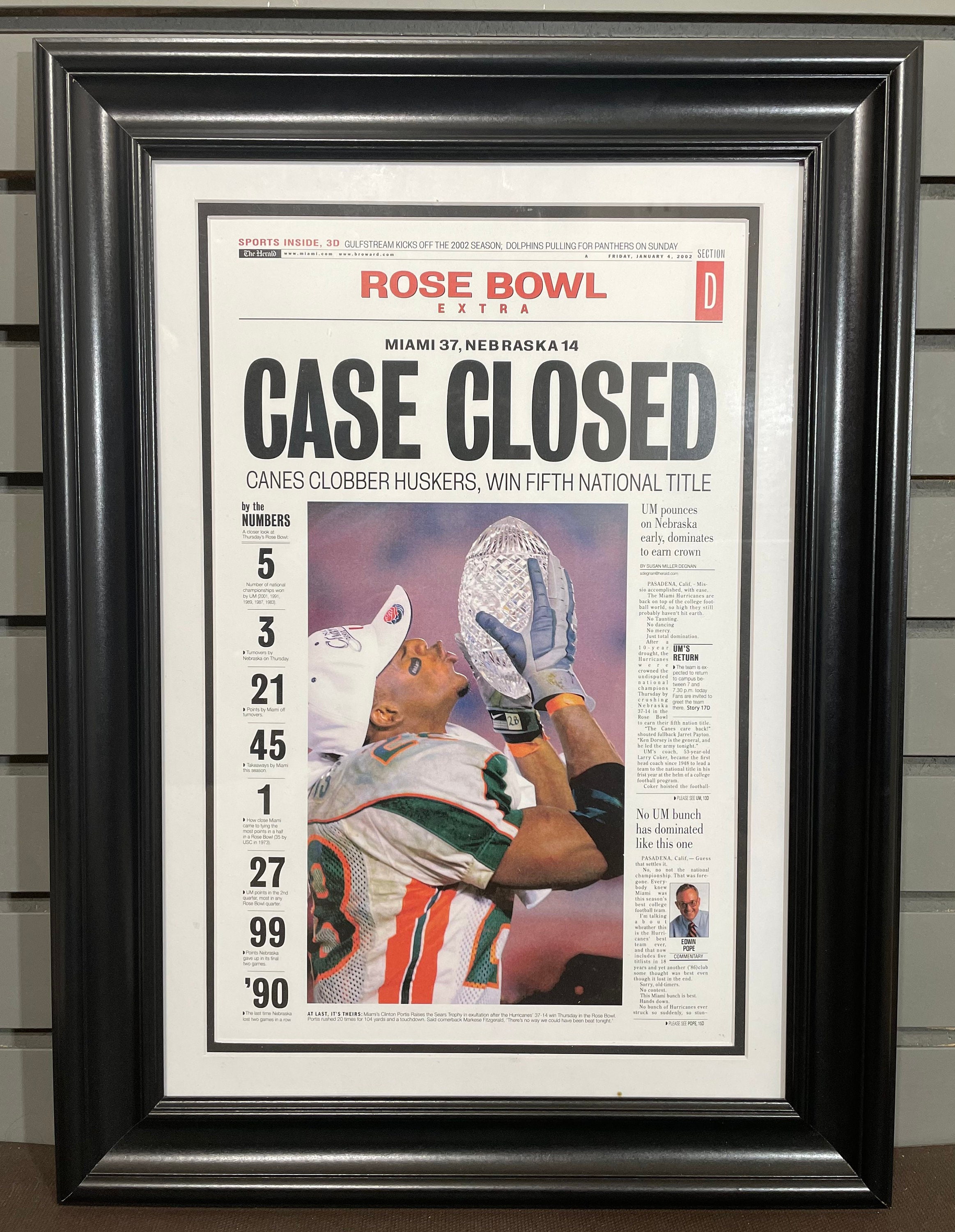
The 2001 Miami Hurricanes football team featured one of the most dominant rosters in college football history, boasting an astonishing 38 future NFL draft picks, including 17 first-round selections. Led by head coach Larry Coker, the squad compiled an undefeated 12-0 record and captured the national championship by defeating the Nebraska Cornhuskers 37-14 in the Rose Bowl.
Introduction to the 2001 Miami Hurricanes Phenomenon
When historians and sports analysts discuss the greatest single-season college football teams of all time, the conversation almost invariably centers on the 2001 Miami Hurricanes. Operating under the banner of "The U," this roster was not merely a collection of talented college athletes; it was a professional-caliber assembly of talent that dominated opponents through sheer athletic superiority, speed, and swagger.
Coming off an 11-1 season in 2000 under head coach Butch Davis—who departed for the NFL's Cleveland Browns just before the 2001 campaign—offensive coordinator Larry Coker stepped into the head coaching role. Coker inherited a treasure trove of elite talent recruited during the late 1990s. Rather than missing a beat, the Hurricanes streamlined their execution, steamrolling opponents by an average margin of victory of nearly 33 points per game. Understanding the architecture of this historic team requires examining its coaching staff, offensive machinery, defensive terror, and special teams prowess.
The Coaching Staff and Systemic Philosophy
The success of the 2001 Miami Hurricanes began in the offices and practice fields of the Murray Building in Coral Gables. While Larry Coker assumed the ultimate responsibility as head coach, the program's infrastructure was built on brilliant coordinators who designed schemes specifically tailored to maximize the unique skill sets of their personnel.
Larry Coker provided a steady hand, maintaining the fierce competitive culture established by Dennis Erickson and Butch Davis. However, the tactical genius on the field belonged to offensive coordinator Rob Chudzinski and defensive coordinator Randy Shannon.
- Offensive Strategy: Chudzinski implemented a pro-style, attacking offense that utilized multiple formations, misdirection, and elite vertical passing concepts. The philosophy was simple: isolate dynamic playmakers in space and let them win one-on-one matchups.
- Defensive Strategy: Shannon ran a aggressive, multiple-front defense predicated on a fast, attacking 4-3 scheme. The defense relied on dominant defensive linemen who could penetrate gaps single-handedly, athletic linebackers who could sideline-to-sideline pursuit, and shutdown cornerbacks who played aggressive man coverage, freeing the safeties to create turnovers.
The Offensive Lineup: Pro-Style Power and Big-Play Explosiveness
The 2001 Miami offense averaged 42.7 points per game, dismantling opponents with a balanced attack that featured an elite passing game and a punishing ground attack. The lineup was anchored by future NFL All-Pros and Pro Bowlers at nearly every position.
Quarterbacks
At the controls of the offense was sophomore quarterback Ken Dorsey, a cool, cerebral passer who possessed an uncanny knack for reading defenses and delivering accurate throws under pressure. Though not a dual-threat runner, Dorsey's precision passing earned him finalist status for the Heisman Trophy and consensus All-American honors. Behind Dorsey was backup Brock Berlin, a highly touted recruit who provided quality depth.
Running Backs
The backfield featured a deep rotation of explosive runners. Clinton Portis led the team in rushing with 1,200 yards and 12 touchdowns, displaying devastating speed and burst through the tackle box. Complementing Portis was bruising power back Najeh Davenport and a freshman sensation named Willis McGahee, who provided a lethal change of pace with his rare combination of size and breakaway speed. Fullback Howard Clark served as a punishing lead blocker in short-yardage and goal-line situations.
Wide Receivers and Tight Ends
Miami’s wide receiver corps presented an impossible matchup nightmare for opposing defensive secondaries. Andre Johnson, a physical specimen with elite size and speed, dominated on the outside and earned MVP honors in the national championship game. Opposite Johnson was Kevin Beard, a reliable possession receiver who moved the chains.
The tight end position featured future Pro Football Hall of Famer Jeremy Shockey, whose fierce competitiveness, exceptional route-running, and yards-after-catch ability made him Dorsey’s favorite security blanket. Shockey was complemented by blocking specialist Kellen Winslow Jr., who was then an emerging tight end option before his own breakout collegiate stardom.
Offensive Line
An elite skill-position group is nothing without protection, and the Hurricanes' offensive line was among the best in college football history. Anchored by future NFL stalwarts Brett Romberg at center, Sherko Haji-Rasouli at guard, and tackle Joaquin Gonzalez, this unit controlled the line of scrimmage, allowing Dorsey ample time to dissect coverages and opening massive running lanes for Portis and Davenport.
The Defensive Lineup: The "Shark Tank" Front Seven
If the offense provided the explosive fireworks, the defense supplied the terror. The 2001 Miami defense surrendered just 9.4 points per game, pitching two shutouts and holding opponents to under 10 points on seven occasions.
Defensive Line
The defensive front was a relentless wave of pass-rushing fury. Defensive end Daryl Jones and defensive tackle William Joseph anchored the interior with power and leverage. However, the headliner of the front seven was sophomore defensive end Jerome McDougle, whose explosive first step resulted in a team-leading 8 sacks and constant disruption in the opponent's backfield.
Linebackers
The linebacker corps combined speed, intelligence, and ferocious hitting. Jonathan Vilma, the defensive quarterback, roamed sideline-to-sideline, calling plays and diagnosing formations with elite football IQ. Flanking Vilma were fierce hitters like D.J. Williams and Wesley Brittain, who ensured that opposing running backs found no daylight between the tackles.
The Secondary: The "U" DB Tradition
The defensive backfield of the 2001 Hurricanes is widely regarded by draft analysts as the greatest secondary in college football history. Every single starter and key contributor in this defensive backfield went on to be drafted in the first or second round of the NFL draft.
- Cornerbacks: Phillip Buchanon and Roland Williams (later known as Kelly Jennings in subsequent years, alongside veterans like James Lewis) locked down opposing wide receivers in single-coverage, allowing coordinator Randy Shannon to blitz extra defenders. Buchanon was also a lethal weapon in the return game.
- Safeties: Ed Reed, the team captain and emotional heartbeat of the defense, patrolled the deep secondary. Reed intercepted nine passes in 2001, returning them for touchdowns and game-changing yardage. His range, ball skills, and leadership made him a unanimous All-American and eventual Pro Football Hall of Inductee. Partnering with Reed at safety was Antrel Rolle, a phenomenal athlete who exhibited shutdown coverage skills even as a young contributor.
Roster Overview and NFL Draft Impact
The true scale of the 2001 Miami Hurricanes roster becomes apparent when looking at its professional legacy. A staggering number of players from this team heard their names called on NFL draft night, transforming college success into long-term professional careers.
| Position Group | Key Starters & Contributors | NFL Draft Outcome / Highlights |
|---|---|---|
| Quarterback | Ken Dorsey, Brock Berlin | 7th Round Draft Pick (Dorsey); Long NFL career as a backup and coordinator. |
| Running Back | Clinton Portis, Willis McGahee, Najeh Davenport | 1st & 2nd Round Picks; Multiple Pro Bowls and 1,000-yard NFL seasons. |
| Wide Receiver | Andre Johnson, Kevin Beard | 3rd Overall Pick (Johnson); Multiple Pro Bowls, Hall of Fame finalist. |
| Tight End | Jeremy Shockey, Kellen Winslow Jr. | 1st Round Picks; Pro Bowlers and Super Bowl champions. |
| Offensive Line | Brett Romberg, Joaquin Gonzalez, Sherko Haji-Rasouli | Multi-year starters; Rimington Trophy winner (Romberg). |
| Defensive Line | Jerome McDougle, William Joseph, Daryl Jones | 1st Round Picks; Dominant professional interior presence. |
| Linebacker | Jonathan Vilma, D.J. Williams | 1st Round Picks; Defensive Rookie of the Year (Vilma), Pro Bowlers. |
| Secondary | Ed Reed, Phillip Buchanon, Antrel Rolle, James Lewis | 1st Round Picks; Pro Football Hall of Famer (Reed), Super Bowl champions. |
Special Teams Excellence
No championship team is complete without reliable special teams play, and the 2001 Hurricanes excelled in the third phase of the game. Placekicker Todd Sievers provided clutch scoring, converting crucial field goals under pressure. Punter Freddie Capshaw flipped field position consistently with high hang-time punts that neutralized opponent return games. In the return game, Phillip Buchanon and Roscoe Parrish terrorized opposing coverage units, turning routine punts and kickoffs into potential scoring plays that added to Miami's overwhelming field-position advantage.
Frequently Asked Questions
Who was the quarterback for the 2001 Miami Hurricanes?
Ken Dorsey was the starting quarterback for the 2001 Miami Hurricanes. He guided the team to a 12-0 record, throwing for 2,652 yards and 23 touchdowns while earning consensus All-American honors and finishing as a Heisman Trophy finalist.
How many players from the 2001 Miami Hurricanes were drafted into the NFL?
A total of 38 players from the 2001 Miami Hurricanes roster were eventually selected in the NFL draft, with an unprecedented 17 of those players drafted in the first round. This stands as one of the highest concentrations of professional talent on a single college roster in football history.
Who was the head coach of the 2001 Miami Hurricanes?
Larry Coker served as the head coach of the 2001 Miami Hurricanes. He took over the program just prior to the season following Butch Davis's departure to the NFL, leading the team to a national championship in his rookie season as a head coach.
Which star players won major individual awards in 2001?
Safety Ed Reed was a unanimous All-American and finished seventh in Heisman voting. Center Brett Romberg won the Rimington Trophy as the nation's best center. Additionally, multiple players earned first-team All-Big East honors and consensus All-American recognition, including offensive tackle Joaquin Gonzalez and tight end Jeremy Shockey.
Did the 2001 Miami Hurricanes win the national championship?
Yes, the 2001 Miami Hurricanes finished the season with a 12-0 record and defeated the Nebraska Cornhuskers 37-14 in the Rose Bowl on January 3, 2002, to capture the BCS National Championship.
Conclusion and Legacy
The 2001 Miami Hurricanes football roster remains the gold standard for individual and collective talent in the history of the collegiate sport. From Ken Dorsey's steady hand at quarterback and Clinton Portis's explosive runs to Ed Reed's ball-hawking heroics in the secondary, every position group was fortified with elite, professional-grade ability. Analyzing their lineup offers a masterclass in how dominant recruiting, visionary coaching, and unmatched swagger can combine to create an immortal sports dynasty.