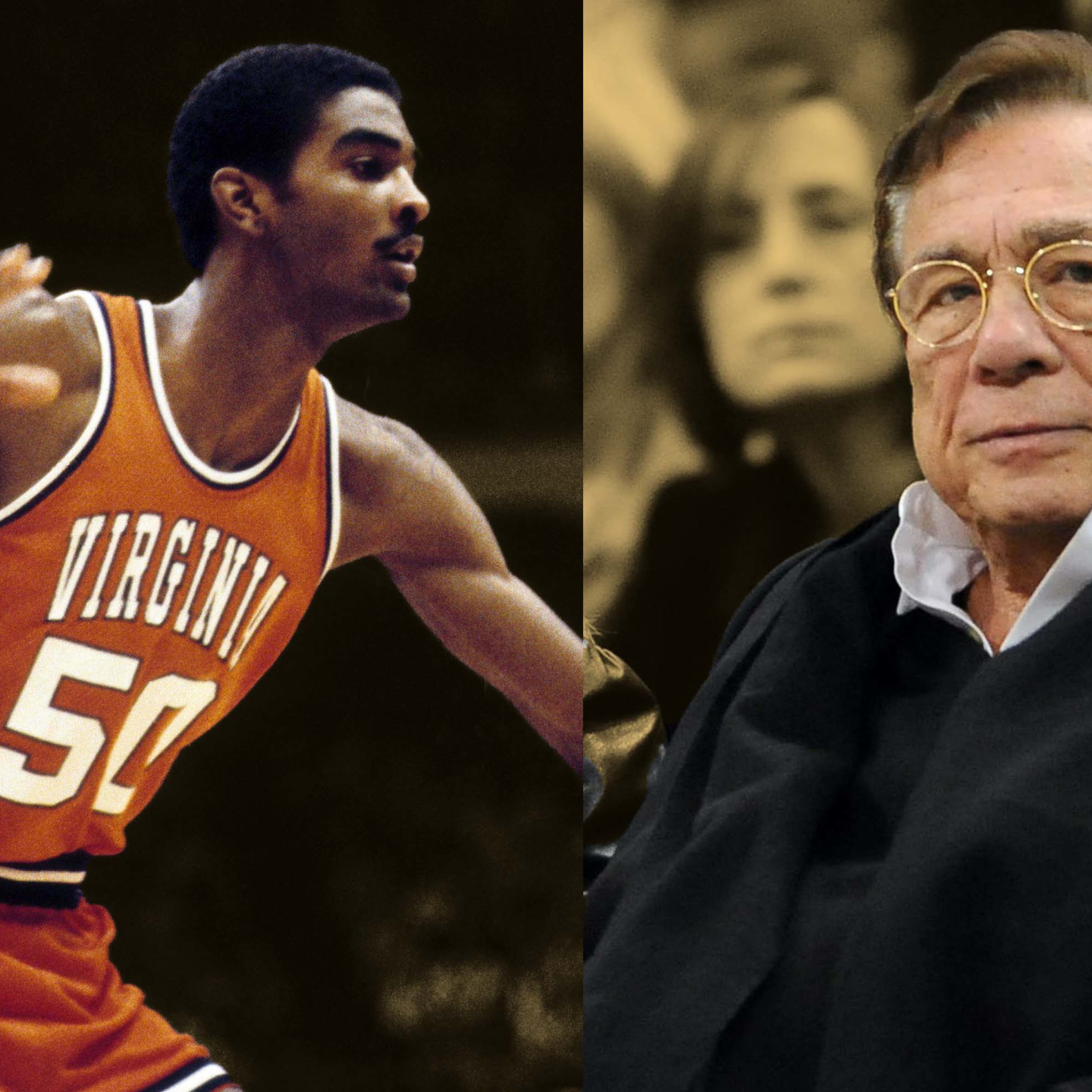
Ralph Sampson’s NBA career remains one of professional basketball's most compelling "what-if" scenarios, defined by a meteoric rise, historic collegiate dominance, and a devastating series of knee injuries that derailed his path to immortality. Standing 7-foot-4 with the mobility, shooting touch, and ball-handling skills of a guard, Sampson redefined the center position before injuries robbed him of his athletic prime. Evaluating his career averages, statistical peaks, and enduring legacy provides a clearer picture of a transcendent talent whose impact on the game extended far beyond raw box scores.
The Collegiate Foundation and NBA Arrival
Before analyzing professional statistics, understanding Ralph Sampson's entry into the National Basketball Association (NBA) is vital. Playing for the University of Virginia from 1979 to 1983, Sampson captured three consecutive Naismith College Player of the Year awards—a feat matched only by a select few in college basketball history. His rare blend of perimeter skill, defensive dominance, and unprecedented height made him the undisputed number-one overall pick in the 1983 NBA Draft, selected by the Houston Rockets.
Entering the league with immense expectations, Sampson immediately justified the hype. In his rookie season (1983-84), he played and started all 82 games, averaging 21.0 points, 11.1 rebounds, 2.0 assists, and 2.4 blocks per game. This stellar campaign earned him the NBA Rookie of the Year award unanimously. Sampson was not merely a tall player catching lobs; he was a dynamic offensive hub who could face up from the high post, run the fast break, and anchor a defense. His production in his first two seasons proved that his collegiate dominance would seamlessly translate to the professional ranks, setting the stage for one of the most feared frontcourts in NBA history.
The Twin Towers Era: Statistical Peak in Houston
The defining chapter of Sampson’s career occurred when the Houston Rockets drafted 7-foot center Hakeem Olajuwon in 1984, creating the original "Twin Towers" frontcourt. The combination of Olajuwon’s ferocious interior scoring and shot-blocking alongside Sampson’s versatile, multi-positional play created a matchup nightmare for every opponent in the league.
During the 1984-85 season, Sampson earned his first of four consecutive NBA All-Star Game selections, averaging 22.1 points, 10.4 rebounds, 2.7 assists, and 1.7 blocks per contest. His statistical peak arguably arrived during the 1985-86 season, when he averaged 25.8 points and 10.8 rebounds per game while shooting over 48% from the field.
| Season | Team | GP | MPG | PPG | RPG | APG | BPG | SPG |
|---|---|---|---|---|---|---|---|---|
| 1983-84 | Houston Rockets | 82 | 32.8 | 21.0 | 11.1 | 2.0 | 2.4 | 0.9 |
| 1984-85 | Houston Rockets | 82 | 37.6 | 22.1 | 10.4 | 2.7 | 1.7 | 1.0 |
| 1985-86 | Houston Rockets | 79 | 36.3 | 25.8 | 10.8 | 3.6 | 1.6 | 1.1 |
| 1986-87 | Houston Rockets | 43 | 34.9 | 15.6 | 8.7 | 1.8 | 1.8 | 0.5 |
| 1987-88 | Hou / GSW | 38 | 27.5 | 10.4 | 6.4 | 1.4 | 1.1 | 0.5 |
| 1988-89 | Golden State Warriors | 61 | 27.6 | 6.4 | 5.0 | 1.3 | 1.1 | 0.2 |
| 1989-90 | GSW / Sacramento | 29 | 16.1 | 4.6 | 3.0 | 0.6 | 0.9 | 0.2 |
| 1991-92 | Washington Bullets | 10 | 10.8 | 2.2 | 3.0 | 0.3 | 0.8 | 0.2 |
The pinnacle of Sampson’s career occurred in the 1986 Western Conference Finals against the heavily favored Los Angeles Lakers. In Game 5, Sampson hit a dramatic, spinning, buzzer-beating jumper at the final horn to lift the Rockets past the Lakers and into the NBA Finals. Although Houston eventually lost to the legendary Boston Celtics in six games, Sampson averaged 23.5 points and 11.2 rebounds during that postseason run, cementing his status as one of the elite players in the game.
The Turning Point: Injuries and Decline
The trajectory of Sampson’s career shifted permanently due to a series of severe knee injuries. During the 1986-87 season, chronic back problems and knee issues began to sap his explosiveness. He missed significant time, appearing in only 43 games that year.
As Sampson’s mobility decreased, the Rockets traded him to the Golden State Warriors in December 1987. Though he flashed occasional brilliance under coach Don Nelson, his body could no longer withstand the physical rigors of the NBA. Subsequent stops with the Sacramento Kings and Washington Bullets saw his playing time and production diminish drastically. By the early 1990s, the player once heralded as the future of basketball was fighting merely to stay on the court. His career regular-season averages settled at 15.4 points, 8.8 rebounds, 2.3 assists, and 1.6 blocks per game over 456 total appearances—numbers that reflect elite production compressed into a frustratingly brief window.
Analyzing Career Averages in Context
When reviewing Ralph Sampson's career averages, context is essential. A superficial glance at his lifetime marks of 15.4 points and 8.8 rebounds per game might suggest a very good, but not historically great, player. However, isolating his first four seasons reveals a different statistical reality:
- Games 1 through 243 (1983–1986): Averaged 22.9 points, 10.8 rebounds, 2.7 assists, and 1.9 blocks per game.
- Games 244 through 456 (1987–1992): Averaged 6.8 points, 5.0 rebounds, 1.1 assists, and 1.0 blocks per game while playing through severe structural knee damage.
This sharp statistical bifurcation illustrates how injuries robbed the basketball world of his prime years. Between ages 22 and 25, Sampson was performing at an All-NBA level, putting up numbers that few centers in league history ever reached. His decline was not a result of skill erosion or a failure to adapt, but rather a physical breakdown that turned a perennial MVP candidate into a situational role player before his 30th birthday.
Legacy and Tactical Influence on Modern Basketball
Despite the brevity of his prime, Ralph Sampson’s legacy in basketball history is profound. He bridged the gap between traditional interior centers and the modern, versatile big men who dominate the game today. Long before Dirk Nowitzki, Kevin Durant, or Victor Wembanyama showcased the ability to handle the ball, shoot from the perimeter, and protect the rim at extreme heights, Sampson was pioneering that archetype.
Coaches frequently deployed Sampson across multiple positions, leveraging his height to alter opponent shots while utilizing his passing vision to orchestrate the offense from the elbow. His partnership with Hakeem Olajuwon also established a blueprint for pairing elite frontcourt talents, influencing how roster construction evolved in subsequent decades.
In recognition of his collegiate achievements and early professional impact, Sampson was inducted into the Naismith Memorial Basketball Hall of Fame in 2012. While his professional statistics do not reflect the full scope of his talent due to injuries, his induction underscores the reality that greatness is measured not only by longevity, but by the peak impact a player leaves on the sport.
Frequently Asked Questions
What were Ralph Sampson's career averages in the NBA?
Ralph Sampson finished his NBA career with averages of 15.4 points, 8.8 rebounds, 2.3 assists, and 1.6 blocks per game. These numbers encompass his entire 9-year career, heavily weighted down by the severely limited production of his injury-plagued final seasons. During his first four healthy seasons, his averages were significantly higher, hovering near 23 points and 11 rebounds per game.
How many All-Star selections did Ralph Sampson earn?
Sampson earned four consecutive NBA All-Star selections from 1984 to 1987. He was also named the MVP of the 1985 NBA All-Star Game after scoring 24 points and grabbing 10 rebounds for the Western Conference.
Did Ralph Sampson win any championships?
Sampson did not win an NBA championship. He reached the NBA Finals once in 1986 with the Houston Rockets, where they were defeated by the Boston Celtics in six games. However, he won an NBA Rookie of the Year award and was a three-time National College Player of the Year at Virginia.
What caused the decline in Ralph Sampson's career?
His decline was caused by chronic knee and back injuries that began during the 1986-87 season. Multiple knee surgeries robbed him of his leaping ability, lateral quickness, and endurance, forcing him into a reserve role and ending his career prematurely at age 32.
Why is Ralph Sampson considered a pioneer for modern big men?
Sampson combined a 7-foot-4 frame with guard-like skills, including perimeter shooting, ball-handling, and court vision. He predated the modern era of stretch-fivers and hybrid forwards, serving as an early prototype for the versatile, multi-talented big men who dominate contemporary basketball.