The 2016 American Music Awards (AMAs), held on November 20, 2016, at the Microsoft Theater in Los Angeles, served as a defining cultural snapshot of mid-2010s popular music, highlighted by Drake’s record-breaking nominations, major wins for Ariana Grande and Justin Bieber, and politically charged live performances.
Introduction and Cultural Context
The 2016 American Music Awards arrived at a unique crossroads in the music industry, bridging the gap between physical-to-digital sales transitions and the early dominance of streaming-first metrics. Broadcast live on ABC and hosted by supermodel Gigi Hadid and comedian Jay Pharoah, the ceremony captured the anxieties and triumphs of a turbulent year in global culture. As a fan-voted awards show, the AMAs historically reflect the immediate commercial pulse and passionate grassroots fandoms of the era rather than the insular tastes of industry critics.
In 2016, this meant pop, hip-hop, and electronic dance music commanded the mainstream conversation. Drake entered the evening with a staggering 13 nominations, breaking the previous record held by Michael Jackson since 1984. Meanwhile, Justin Bieber, Rihanna, and twenty one pilots dominated multiple categories, showcasing a diverse commercial landscape. Beyond the accolades, the night is widely remembered for its sharp political undercurrents, high-concept stage productions, and emotional acceptance speeches that mirrored the shifting social landscape of late 2016.
Nominations and Major Milestones
Drake’s historic 13 nominations set the tone for the 2016 ceremony, signaling the unstoppable ascent of streaming-era hip-hop and R&B dominance. His genre-bending album Views and its global smash hit "One Dance" saturated radio waves and streaming playlists alike, positioning him as the undisputed commercial titan of the year. However, nominations did not automatically guarantee a clean sweep, as the fan-voted nature of the AMAs often led to fierce grassroots campaigns by rival fandoms.
Following Drake, Rihanna secured seven nominations, driven by the success of her experimental and critically acclaimed eighth studio album, Anti. Justin Bieber, Adele, and pop duo twenty one pilots also pulled heavy nomination counts across multiple cross-genre categories, including Favorite Pop/Rock Male Artist, Favorite Pop/Rock Album, and Artist of the Year.
A notable aspect of the 2016 nominations was the increasing integration of Latin music, electronic dance music (EDM), and streaming-specific achievements into mainstream categories. Artists like The Chainsmokers and Justin Bieber benefited heavily from the explosive growth of Spotify and Apple Music, which had been fully integrated into the Billboard tracking data used to determine AMA eligibility and finalist pools.
Key Winners and Category Breakdowns
While Drake led in total nominations, Justin Bieber emerged as one of the night's biggest individual winners, taking home four major trophies, including Favorite Pop/Rock Male Artist, Favorite Pop/Rock Album for Purpose, and Video of the Year for "Sorry." Bieber accepted several of his awards remotely via satellite from his Purpose World Tour in Zurich, Switzerland, maintaining his heavy global touring schedule while still capturing the attention of voters at home.
Ariana Grande claimed the coveted and prestigious Artist of the Year award, beating out a powerhouse field that included Adele, Beyoncé, Justin Bieber, Drake, Rihanna, Selena Gomez, Shawn Mendes, twenty one pilots, and The Weeknd. Grande’s victory reflected her strong multi-platform presence and the deep engagement of her fan base, known as Arianators.
In the hip-hop and R&B categories, Drake converted several of his nominations into wins, securing Favorite Rap/Hip-Hop Artist, Favorite Rap/Hip-Hop Album (Views), and Favorite Rap/Hip-Hop Song ("Hotline Bling"). Meanwhile, Rihanna secured wins for Favorite Soul/R&B Female Artist and Favorite Soul/R&B Album (Anti), cementing the enduring commercial appeal of her core catalog.
| Category | Nominees (Highlights) | Winner |
|---|---|---|
| Artist of the Year | Adele, Beyoncé, Justin Bieber, Drake, Ariana Grande, Rihanna, twenty one pilots | Ariana Grande |
| Favorite Pop/Rock Male Artist | Justin Bieber, Drake, The Weeknd | Justin Bieber |
| Favorite Pop/Rock Album | Adele (25), Justin Bieber (Purpose), Drake (Views) | Justin Bieber (Purpose) |
| Favorite Rap/Hip-Hop Album | Drake (Views), Drake & Future (What a Time to Be Alive), Fetty Wap (Fetty Wap) (Note: Drake won Favorite Rap/Hip-Hop Artist and Song) | Drake (Views) |
| Collaboration of the Year | The Chainsmokers ft. Halsey ("Closer"), Fifth Harmony ft. Ty Dolla $ign ("Work From Home"), Rihanna ft. Drake ("Work") | Fifth Harmony ft. Ty Dolla $ign |
Memorable Performances and Live Highlights
The 2016 American Music Awards featured a dynamic lineup of live performances that blended high-end theatrical production with raw emotional delivery. Because the ceremony took place mere weeks after the contentious 2016 United States presidential election, several artists utilized the national television platform to make subtle or direct statements regarding unity, diversity, and social justice.
Green Day delivered one of the most talked-about moments of the night when they performed their single "Bang Bang." During the performance, frontman Billie Joe Armstrong altered the song's lyrics to include an anti-Trump chant ("No Trump, no KKK, no fascist USA"), reflecting the anxieties of a polarized American public and tying back to the band's long history of politically charged punk rock.
Lady Gaga delivered a stripped-down, emotionally resonant performance of "Million Reasons" from her country-infused album Joanne. Accompanied only by a small acoustic band and seated at an illuminated piano, Gaga offered a stark contrast to the pyrotechnics-heavy pop numbers of the evening, showcasing her vocal range and songwriting vulnerability.
Other standout performances included:
- The Weeknd: Performed his chart-topping hit "Starboy" amidst a neon-lit, futuristic stage setup.
- Ariana Grande and Nicki Minaj: Teamed up for a jungle-themed, high-energy rendition of "Side to Side," complete with elaborate choreography and fitness-inspired staging.
- Sting: Received the American Music Award of Merit and delivered a medley of his legendary solo work and Police classics, reminding viewers of enduring songwriting craftsmanship.
Fashion and Red Carpet Moments
As is standard for major televised music ceremonies, the red carpet of the 2016 AMAs served as a major cultural focal point for fashion trends of the mid-2010s. The stylistic choices of the evening highlighted a mix of avant-garde streetwear, structured tailoring, and nostalgic nods to early 2000s silhouettes.
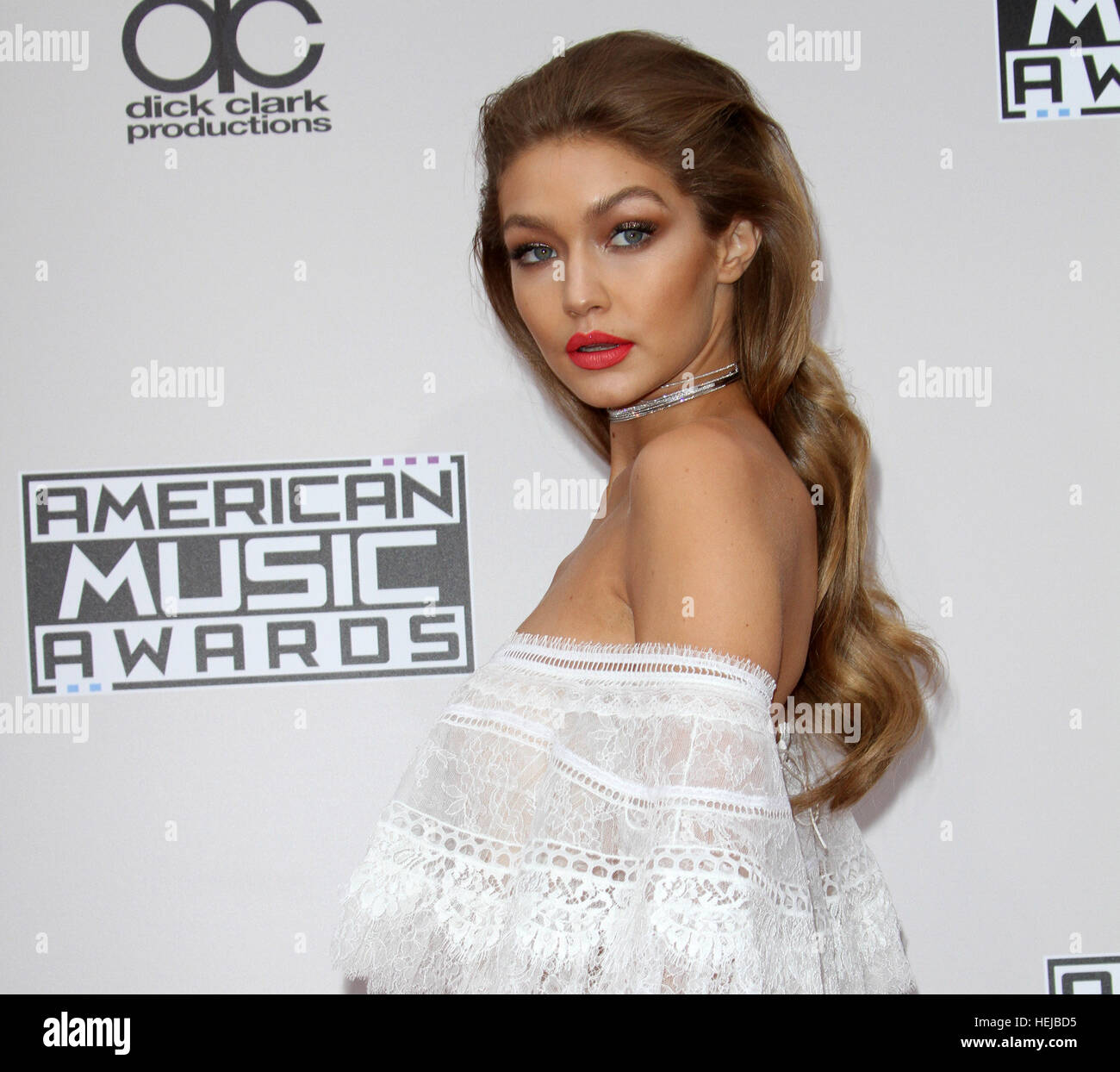
Host Gigi Hadid made multiple outfit changes throughout the night, moving from a dramatic, off-the-shoulder lace white gown on the red carpet to athletic-inspired couture and tailored power suits on stage. Selena Gomez made her highly anticipated return to the public eye on the red carpet, wearing a striking red Prada gown and delivering a deeply moving acceptance speech later in the evening for Favorite Pop/Rock Female Artist, where she openly discussed her personal struggles with mental health and exhaustion.
Boy band member-turned-soloist Niall Horan, electronic duo The Chainsmokers, and singer-songwriter Shawn Mendes showcased the era's preference for sleek, slim-cut tailoring paired with casual footwear or unstructured shirts, defining the accessible yet polished male pop aesthetic of 2016.
Industry Impact and Legacy
Reflecting on the 2016 American Music Awards from the vantage point of 2026, the ceremony marks a definitive turning point in how popular music was consumed, measured, and celebrated. It captured the exact moment streaming services fully eclipsed traditional physical and digital downloads as the primary metric of commercial viability, fundamentally altering how artists built and sustained fan bases.
Furthermore, the 2016 ceremony demonstrated the growing intersection between mainstream entertainment and sociopolitical commentary. In an era marked by significant cultural shifts, artists increasingly viewed major broadcast platforms not merely as promotional vehicles for singles and albums, but as pulpits for personal expression and solidarity. The success of multi-genre artists like Drake and twenty one pilots also accelerated the erosion of rigid radio-format boundaries, paving the way for the playlist-driven, genre-fluid music industry of the late 2010s and 2020s.
Frequently Asked Questions
Who hosted the 2016 American Music Awards?
The 2016 ceremony was co-hosted by supermodel Gigi Hadid and comedian, actor, and impressionist Jay Pharoah. Their opening monologue featured a series of musical impressions and lighthearted banter reflecting the pop culture headlines of the year.
Who won Artist of the Year at the 2016 AMAs?
Ariana Grande won the coveted Artist of the Year award at the 2016 American Music Awards. The category was determined entirely by fan votes, reflecting her immense popularity and active digital engagement across social media platforms during that album cycle.
Why was Justin Bieber not present to accept his awards?
Justin Bieber won multiple awards—including Favorite Pop/Rock Album and Favorite Pop/Rock Male Artist—but could not attend the ceremony in person because he was in Europe performing stops on his massive, multi-leg Purpose World Tour. He accepted his awards via live video broadcast from his concert venue in Zurich, Switzerland.
How are winners determined at the American Music Awards?
Unlike the Grammy Awards, which are voted on by members of the Recording Academy, the American Music Awards winners are determined by public and fan voting. Depending on the specific year's rules, voting typically takes place online and via social media platforms, making the results a direct reflection of commercial fandom power and active listener engagement.
Which artist received the most nominations in 2016?
Drake received a record-breaking 13 nominations at the 2016 American Music Awards. This shattered the previous record of 11 nominations held by Michael Jackson, which had stood since 1984, propelled by the massive commercial success of his fourth studio album, Views.