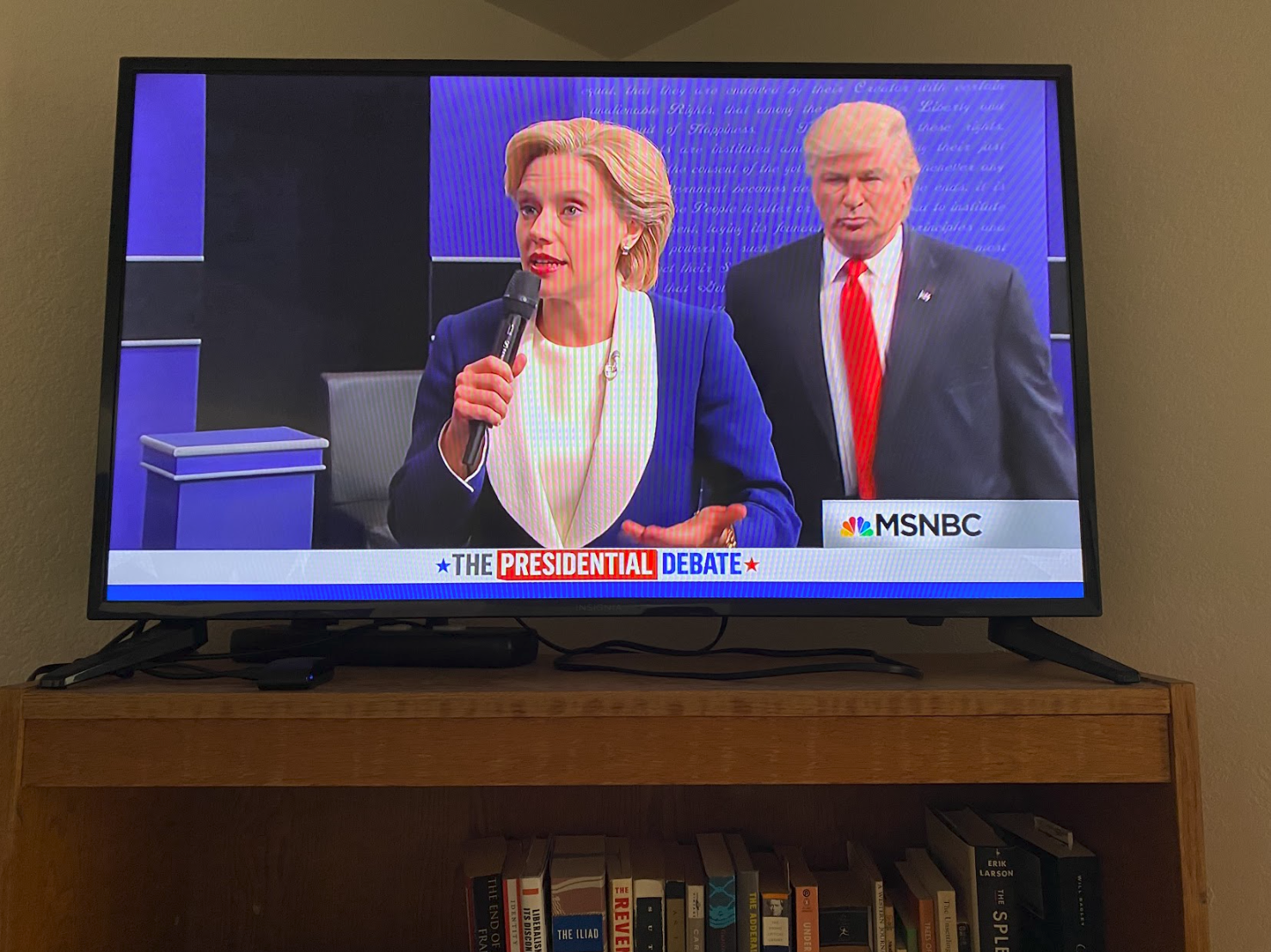
The 2016 presidential debates between Democratic nominee Hillary Clinton and Republican nominee Donald Trump drew historic television audiences, reshaping modern political communication through confrontational exchanges, unconventional town hall dynamics, and unprecedented digital media engagement that altered the trajectory of the general election.
The 2016 United States presidential election cycle featured four major televised debates: three presidential match-ups organized by the Commission on Presidential Debates (CPD) and one vice presidential debate. These encounters served as critical focal points for a polarized electorate, drawing tens of millions of viewers across broadcast and cable networks as well as digital streaming platforms. Understanding the structural mechanics, historical context, thematic focus, and lasting political impact of these debates requires examining how the candidates utilized these high-stakes platforms to present competing visions for the country.
Institutional Framework and the Commission on Presidential Debates
The Commission on Presidential Debates, a nonpartisan organization established in 1987, managed the scheduling, site selection, formatting, and moderator selection for the 2016 general election debates. The CPD's role is designed to ensure that general election debates occur between major-party candidates who meet constitutional requirements, demonstrate significant national organization, and achieve a threshold level of support in national public opinion polls.
Qualification Criteria
To participate in the 2016 CPD-sponsored presidential debates, candidates had to satisfy three primary criteria:
- Constitutional Eligibility: Meet the requirements outlined in Article II of the United States Constitution (natural-born citizen, at least 35 years old, and a resident of the United States for 14 years).
- Ballot Access: Appear on enough state ballots to mathematically secure a majority of 270 electoral votes in the Electoral College.
- Polling Threshold: Achieve an average of at least 15 percent support in five selected national public opinion polling organizations, as determined by the CPD prior to each debate.
While third-party candidates such as Libertarian nominee Gary Johnson and Green Party nominee Jill Stein campaigned vigorously for inclusion on the debate stage, none met the 15 percent polling threshold. Consequently, the stage featured exclusively two-person encounters between Hillary Clinton and Donald Trump for the presidential debates, and a single match-up between vice presidential nominees Tim Kaine and Mike Pence.
Schedule, Locations, and Formats
The 2016 debate schedule spanned from late September to mid-October, taking place at university campuses and civic centers across the United States. Each debate utilized a distinct structural format intended to test different facets of the candidates' preparation, policy knowledge, and temperament.
| Date | Event Type | Venue | Host University / Location | Primary Moderator(s) |
|---|---|---|---|---|
| September 26, 2016 | First Presidential | Hofstra University | Hempstead, New York | Lester Holt (NBC News) |
| October 4, 2016 | Vice Presidential | Longwood University | Farmville, Virginia | Elaine Quijano (CBS News) |
| October 9, 2016 | Second Presidential | Washington University | St. Louis, Missouri | Martha Raddatz (ABC News) & Anderson Cooper (CNN) |
| October 19, 2016 | Third Presidential | University of Nevada, Las Vegas | Las Vegas, Nevada | Chris Wallace (Fox News) |
The First Presidential Debate: Policy and Confrontation
Hosted at Hofstra University on September 26, 2016, the first debate was structured into six distinct 15-minute segments focusing on three broad themes: achieving prosperity, securing America, and America's direction. NBC News anchor Lester Holt moderated the event.
The format allowed for direct clashes between the candidates over economic policy, taxation, trade agreements, and foreign policy. Clinton emphasized her extensive government experience and detailed policy proposals, while Trump focused on critiques of existing trade deals, national debt, and the need for economic revitalization through deregulation and tax cuts. The debate attracted a record television audience estimated at over 84 million viewers, making it the most-watched presidential debate in U.S. history.
The Vice Presidential Debate: Detail and Demeanor
Held on October 4, 2016, at Longwood University in Farmville, Virginia, the sole vice presidential debate featured Democratic Senator Tim Kaine of Virginia and Republican Governor Mike Pence of Indiana. Moderated by CBS News correspondent Elaine Quijano, the debate followed a traditional single-moderator format divided into nine 10-minute segments.
The encounter was characterized by aggressive questioning from Kaine regarding Trump's tax returns and past statements, countered by a calm, steady defense of the Republican ticket's policies by Pence. While vice presidential debates rarely alter the fundamental dynamics of a presidential race, the Farmville match-up provided voters with a detailed look at the surrogates chosen to support the top-of-the-ticket nominees.
The Second Presidential Debate: Town Hall Dynamics
The October 9, 2016 encounter at Washington University in St. Louis utilized a town hall format where half of the questions were posed directly by uncommitted voters selected by the Gallup organization, and the other half were formulated by moderators Martha Raddatz of ABC News and Anderson Cooper of CNN based on topics of public concern.
This debate occurred in the immediate wake of the public release of a 2005 Access Hollywood video featuring controversial remarks by Donald Trump, creating an exceptionally tense political and atmospheric environment. The staging allowed voters to question the candidates face-to-face on issues ranging from healthcare and the tax code to Islamophobia and the Syrian civil war. The open-floor format permitted the candidates to move around the stage, leading to frequently sharp exchanges and visible personal animosity.
The Third Presidential Debate: Deep Policy Divergence
The final debate took place on October 19, 2016, at the University of Nevada, Las Vegas, moderated by Fox News anchor Chris Wallace. Structured similarly to the first debate into six 15-minute segments, the topics included debt and entitlements, immigration, the economy, the Supreme Court, foreign flashpoints, and fitness to be president.
Wallace maintained strict control over the proceedings, pressing both candidates on substantive policy differences. A notable moment occurred when Trump declined to explicitly state whether he would accept the outcome of the upcoming election, asserting that he would look at the results at the time they occurred. This exchange dominated post-debate news coverage and intensified national discussions regarding democratic norms and the peaceful transfer of power.
Key Themes, Rhetorical Strategies, and Policy Clashes
The substantive discourse throughout the 2016 debates reflected profound ideological divisions within the American electorate. The candidates approached foundational national issues through sharply contrasting lenses.
Economy, Trade, and Taxation
Hillary Clinton advocated for progressive tax adjustments, proposing higher taxes on corporations and high-income earners while expanding investments in infrastructure, clean energy, and education. She defended multilateral trade agreements while acknowledging the need for stricter enforcement mechanisms to protect American manufacturing jobs.
Donald Trump positioned himself as an anti-establishment populist, campaigning against established trade agreements such as the North American Free Trade Agreement (NAFTA) and the proposed Trans-Pacific Partnership (TPP). He proposed sweeping tax cuts, major reductions in federal regulations, and the imposition of protective tariffs on imported goods to revitalize domestic industrial output.
Foreign Policy and National Security
Foreign policy discussions centered on the ongoing conflicts in the Middle East, the rise of the Islamic State (ISIS), relations with Russia, and compliance with the Iran nuclear agreement. Clinton emphasized the importance of maintaining traditional alliances through NATO, pursuing a diplomatic and coalition-based approach to international security, and maintaining a firm stance against foreign adversaries.
Trump criticized past U.S. military interventions in the Middle East, questioned the financial contributions of NATO allies, and advocated for a foreign policy doctrine prioritizing American interests above international commitments. His willingness to pursue a more cooperative diplomatic relationship with Russian President Vladimir Putin drew sustained criticism from Clinton.
Domestic Institutions and the Supreme Court
The vacancy on the Supreme Court of the United States, following the death of Justice Antonin Scalia in February 2016, served as a powerful mobilizing issue for both bases. Clinton pledged to appoint jurists who would protect established constitutional rights, voting access, and reproductive freedom. Trump released a public list of conservative judges he would consider nominating, reassuring conservative and evangelical voters seeking a judicial shift toward originalism.
Impact on Voter Perception and Electoral Dynamics
The 2016 debates played a decisive role in shaping voter perceptions regarding the candidates' qualifications, character, and leadership capabilities. Both Clinton and Trump entered the general election cycle facing historically high unfavorable ratings among the American public, and the debate stages served as the primary arena where these impressions were reinforced or challenged.
- Media Fragmentation and Fact-Checking: The debates accelerated the integration of real-time fact-checking by major media organizations. Print, broadcast, and digital journalists continuously evaluated candidate claims during and immediately after each broadcast, establishing a permanent record of contested statements regarding crime statistics, economic records, and past public positions.
- Digital and Social Media Engagement: Millions of viewers participated in real-time commentary across platforms like Twitter and Facebook, transforming the traditional living-room viewing experience into a decentralized national dialogue. Video clips of memorable exchanges, facial expressions, and candidate movements circulated globally within minutes of broadcast.
- Turnout and Undecided Voters: The final weeks of the campaign demonstrated that while the debates solidified partisan loyalties, they also heavily influenced a critical margin of undecided and third-party-leaning voters who ultimately determined the outcome in closely contested battleground states such as Pennsylvania, Michigan, and Wisconsin.
Frequently Asked Questions
Who organized and moderated the 2016 presidential debates?
The general election debates were organized by the Commission on Presidential Debates (CPD). The moderators were Lester Holt of NBC News (first presidential debate), Elaine Quijano of CBS News (vice presidential debate), Martha Raddatz of ABC News and Anderson Cooper of CNN (second presidential debate), and Chris Wallace of Fox News (third presidential debate).
Why were third-party candidates excluded from the 2016 debates?
To participate in the CPD debates, candidates had to meet a polling threshold of achieving an average of at least 15 percent support in five designated national public opinion polls. Neither Libertarian nominee Gary Johnson nor Green Party nominee Jill Stein met this requirement.
What were the major formats used during the 2016 presidential debates?
The debates utilized three formats: a thematic six-segment single-moderator format (first and third debates), a traditional single-moderator format divided into ten segments (vice presidential debate), and a town hall format featuring questions from uncommitted voters alongside moderator-led inquiries (second debate).
How did the 2016 debate viewership compare to historical records?
The first presidential debate between Hillary Clinton and Donald Trump drew an estimated 84 million television viewers, breaking the previous audience record set during the 1980 presidential debate between Ronald Reagan and Jimmy Carter.
Did the 2016 debates change the outcome of the election?
While debates rarely single-handedly determine election outcomes, the 2016 encounters served as crucial inflection points that influenced voter mobilization, shaped national narratives regarding candidate fitness, and impacted public opinion in decisive battleground states during the final weeks of the campaign.