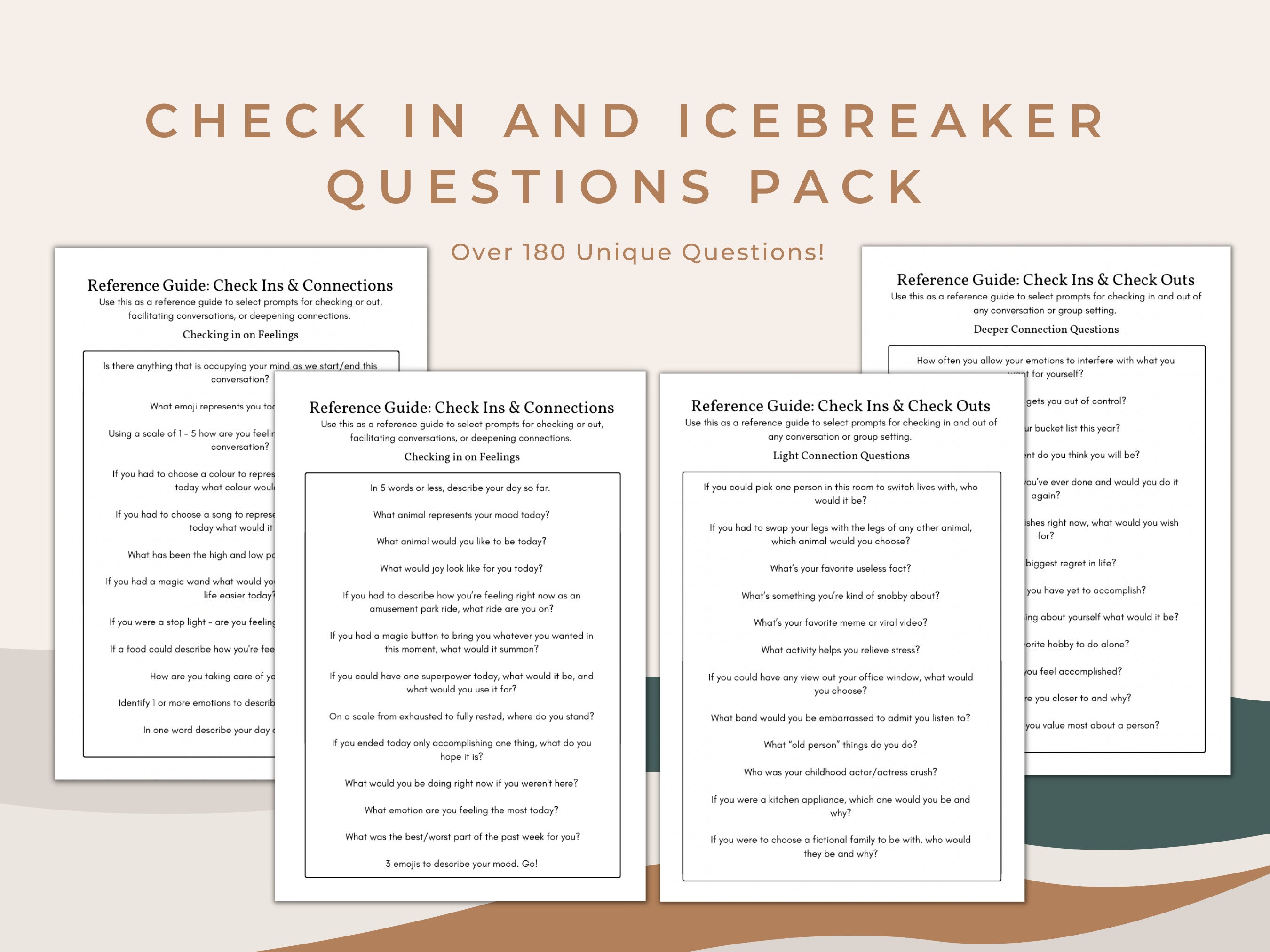
Deepening the bonds within a friend group requires moving beyond superficial updates and into the realm of intentional self-disclosure. By utilizing structured deep-dive questions, groups can foster psychological safety and empathy, transforming routine social gatherings into meaningful emotional experiences that strengthen long-term loyalty and understanding among peers.
The Evolution of Connection in 2026
As we navigate the social landscape of 2026, the value of intentional conversation has never been higher. In an era where digital interactions often prioritize brevity over depth, friend groups are increasingly seeking "analog" ways to reconnect. The "Deep Dive" is no longer just a trend; it is a necessary practice for maintaining mental well-being and social cohesion.
Research into social dynamics suggests that the quality of our relationships is directly proportional to the depth of our shared vulnerability. According to the Greater Good Science Center at UC Berkeley, structured self-disclosure—the process of revealing personal information—is a primary driver of intimacy. When friend groups engage with targeted icebreakers, they bypass the "small talk barrier," allowing for a more profound exploration of values, history, and future aspirations.
The Psychological Framework of Deep Dive Questions
The concept of using specific questions to build closeness is rooted in the "Fast Friends" technique developed by psychologist Arthur Aron. This method posits that gradually increasing the intensity of personal questions can accelerate the bonding process between individuals.
In a group setting, this serves a dual purpose. First, it levels the playing field, ensuring that even the most introverted members have a structured opportunity to share. Second, it creates a "collective narrative," where the group develops a shared understanding of each member's internal world. This reduces misunderstandings and builds a support system that is resilient against external stressors.
Tier 1: Foundation-Building Icebreakers
Before diving into the most vulnerable topics, it is essential to establish a baseline of comfort. These first seven questions are designed to be engaging without being overly intrusive, serving as a "warm-up" for the group's emotional muscles.
1. What is the most significant "small" decision you ever made that changed your life?
This question focuses on the "Butterfly Effect." It encourages friends to look back at seemingly mundane moments—like choosing a specific elective in college or attending a particular party—and trace how those moments led to their current reality. It reveals what they value in hindsight.
2. If you could have a 30-minute conversation with your fifteen-year-old self, what would you say?
This explores growth and self-compassion. It allows the group to see how each person has evolved and what struggles they have overcome. It often elicits advice that reflects the speaker's current core values.
3. What is a skill or hobby you’ve always wanted to master but felt too intimidated to start?
Sharing aspirations that are coupled with fear builds immediate empathy. It opens the door for other friends to offer encouragement or even suggest starting that hobby together, moving the conversation from the past to the future.
4. Which fictional character do you identify with most, and why?
Archetypes are powerful tools for self-expression. Identifying with a character allows a person to describe their personality traits, flaws, and strengths through a lens that feels safe yet revealing.
5. What does your "perfect day" look like in 2026?
By specifying the current year, this question grounds the answer in the present reality. It highlights what the person prioritizes for their mental and physical health, whether it’s solitude, adventure, or productivity.
6. What is the best piece of advice you’ve ever received that you actually ignored?
This adds a layer of humility and humor. It acknowledges that we aren't always wise and explores the lessons learned through trial and error rather than through instruction.
7. What is your "guilty pleasure" that you are actually starting to feel quite proud of?
This reclaims the concept of the "guilty pleasure." Whether it’s a love for niche documentaries or a specific brand of kitsch, it celebrates individuality and the rejection of social pretension.
Tier 2: Navigating Personal History and Nostalgia
Once the group is warmed up, questions can shift toward the past. Understanding where a person comes from is vital to understanding where they are going. This tier focuses on the formative experiences that shaped the group members.
8. What was the "culture" of your household growing up regarding expressing emotions?
This is a high-value question for long-term friendship. Knowing if someone comes from a "stiff upper lip" background versus a highly expressive one helps friends navigate future conflicts or emotional support needs more effectively.
9. Is there a specific smell, sound, or taste that immediately transports you to a happy childhood memory?
Sensory nostalgia is a powerful bonding tool. These answers are often vivid and evocative, helping the group visualize each other's early lives in a way that dry facts cannot.
10. Who was your first non-family mentor, and what did they teach you about the world?
This identifies the external influences that shaped the individual's professional or moral compass. It highlights the traits they admire in others, such as integrity, persistence, or creativity.
11. What was the most difficult "goodbye" you’ve ever had to say?
Vulnerability begins to deepen here. Whether it’s leaving a city, a job, or a relationship, understanding how someone handles loss provides deep insight into their attachment style and resilience.
12. What is a tradition from your past that you want to carry into your future family or friend group?
This bridges the gap between history and legacy. it shows what the person finds sacred and what they believe is worth preserving in an ever-changing world.
13. What is the most adventurous thing you did before the age of 20?
This often reveals a side of a person that their current peers might not know. It highlights their capacity for risk and their thirst for experience before the responsibilities of adulthood took hold.
14. If you could relive one year of your life without changing anything, which year would it be?
This focuses on pure gratitude. It identifies the periods of life where the person felt most aligned, happy, and fulfilled, providing a roadmap for what they might be seeking in the present.
15. What is the most significant "cultural shock" you’ve ever experienced?
Whether through travel or moving between different social strata, this question explores the person’s ability to adapt and their awareness of the broader world.
Tier 3: Core Values and Ethical Perspectives
This section moves into "Deep Dive" territory. These questions are designed to reveal the internal compass that guides each member's life. These are the conversations that build "cognitive empathy"—the ability to understand how another person thinks.
16. What is a "hill you are willing to die on," even if it’s unpopular?
This identifies core convictions. It could be something trivial (the correct way to load a dishwasher) or something profound (ethical stances). It helps the group understand the boundaries of each member’s personality.
17. How do you define "success" at this stage of your life?
Definitions of success change. In 2026, many are pivoting from financial metrics to those of time-freedom or community impact. This question ensures the group is supporting each other’s actual goals, not just societal expectations.
18. What is the most misunderstood part of your personality?
This is an invitation for the speaker to correct the record. It allows them to explain behaviors that might be misinterpreted (e.g., "My silence isn't anger; it's just how I process information").
19. If you were guaranteed to succeed, what one thing would you change about the world today?
This reveals the person's primary empathy point. Are they focused on environmental issues, social justice, technological advancement, or local community health?
20. What does "loyalty" mean to you in a friendship?
Friendships often fail because of unstated expectations. By defining loyalty, the group can align on what they owe one another, whether it’s brutal honesty, constant presence, or defensive support.
21. When was the last time you significantly changed your mind about a major issue?
Intellectual humility is a rare and valuable trait. This question highlights the person's ability to process new information and admit when they were previously wrong, which is essential for group growth.
22. What is your relationship with "failure"?
Does the person see failure as a catastrophe or a data point? Understanding this helps friends know how to provide support when things go wrong in a member's life.
23. If you had to describe your personal "moral code" in three words, what would they be?
Brevity forces clarity. This requires the speaker to distill their entire ethical framework into its most essential components, such as "Kindness, Justice, Curiosity."
Tier 4: Future Aspirations and Vulnerabilities
The final tier focuses on the "now" and the "next." These questions are designed to foster mutual support and long-term vision. They are the most intimate and should be saved for when the group feels most connected.
24. What is the biggest fear you have regarding the next five years?
Naming a fear often diminishes its power. Sharing these anxieties with a friend group allows for the "burden-sharing" that is the hallmark of true community.
25. What is one thing you are currently struggling with that you haven't told anyone yet?
This is the ultimate deep-dive question. It requires a high level of trust. In the right environment, this can be a transformative moment for the group's bond.
26. What do you want your legacy to be within this specific group of friends?
This encourages the person to think about their role in the lives of the people sitting around them. Do they want to be the "rock," the "adventurer," or the "comforter"?
27. What is a dream you’ve "shelved" that you’d like to take back down and look at?
Life often gets in the way of our deepest desires. This question allows friends to act as catalysts, potentially helping a member revive a dormant passion.
28. How do you want to be supported when you are at your lowest point?
Some people want to be left alone; others want a distraction; others want to talk it out. This is a practical, vital piece of information for any healthy friend group.
29. What is the most important lesson your current job/career has taught you about human nature?
Most people spend a third of their lives at work. This question bridges the gap between the professional and personal, showing how their daily grind affects their worldview.
30. If we were to meet again in ten years, what is the one thing you hope will still be true about our friendship?
This reinforces the group's commitment to one another. It focuses on the enduring qualities of the bond and sets a collective intention for the future.
Quick-Reference: Question Intensity and Best Settings
| Category | Intimacy Level (1-5) | Best Setting | Primary Goal |
|---|---|---|---|
| Foundation Icebreakers | 1-2 | Casual Dinner / Happy Hour | Energy and Comfort |
| History & Nostalgia | 3 | Quiet Night In / Road Trip | Context and Origins |
| Values & Ethics | 4 | Weekend Retreat / Coffee | Intellectual Alignment |
| Future & Vulnerability | 5 | Late Night / One-on-One | Emotional Bonding |
Facilitation and Psychological Safety
To successfully implement these questions, the environment must be conducive to sharing. Facilitation is not about interrogation; it is about creating a "brave space." According to Harvard University's resources on social capital, the most effective groups are those that practice "active listening," where the focus is entirely on understanding the speaker rather than preparing a response.
The "Opt-Out" Rule
For deep-dive conversations to remain healthy, every participant must have the right to pass on any question. Forced vulnerability is not true vulnerability; it is a violation of boundaries. Establishing an "opt-out" rule at the beginning of the session ensures that everyone feels in control of their own narrative.
The Power of the Follow-Up
A deep-dive question is only as good as the follow-up. Instead of moving quickly to the next person, ask: "What made you feel that way?" or "How does that impact your life today?" This demonstrates that the group is truly listening and values the contribution.
Managing Group Dynamics
When introducing these questions, be mindful of the group's size and current energy level.
- Small Groups (3-5 people): These are ideal for the Tier 3 and Tier 4 questions. Everyone has time to give a long-form answer and the atmosphere remains intimate.
- Large Groups (6+ people): It may be better to break into pairs or trios for the deeper questions and then return to the larger group to share "one thing I learned about my partner."
- Time Management: Do not attempt to get through all 30 questions in one night. Pick 3-5 that suit the current mood. Quality of conversation always trumps quantity of questions.
Frequently Asked Questions
What if the conversation becomes too heavy or uncomfortable?
If the mood shifts from "deep" to "distressing," it is important to acknowledge the weight of the topic. You can say, "That’s a really heavy thing to share, and I appreciate your trust. Do we want to sit with this for a moment, or would the group prefer to shift to something lighter?" Having a "buffer" question—something silly or lighthearted—ready to go can help reset the emotional temperature.
How often should a friend group do a "deep dive"?
There is no set frequency, but many groups find that a quarterly "check-in" or a dedicated "deep dive night" every few months keeps the connection fresh. It prevents the friendship from becoming purely transactional or activity-based.
Can these questions be used for a new friend group?
Yes, but start strictly with Tier 1 and Tier 2. Jumping into "deepest fears" with people you met last week can lead to "vulnerability hangovers," where a person feels over-exposed and subsequently retreats from the group. Build the foundation first.
Is it better to have the questions written down or ask them spontaneously?
Having a list (digital or physical) takes the pressure off the "host" and makes the process feel like a shared game rather than an interview. It also allows people to look ahead and choose the questions they feel most comfortable answering.
Final Recommendation: Implementing Your First Deep Dive
To begin, schedule a dedicated time—perhaps a "Connection Night"—where the primary goal is conversation rather than an activity like a movie or a loud game. Start with one question from the Foundation-Building tier to set the tone. As the host, lead by example; be honest and slightly more vulnerable than you expect others to be. This signals that the environment is safe for others to do the same. By the end of the session, you will likely find that the group feels more cohesive, supported, and energized for the challenges of 2026.