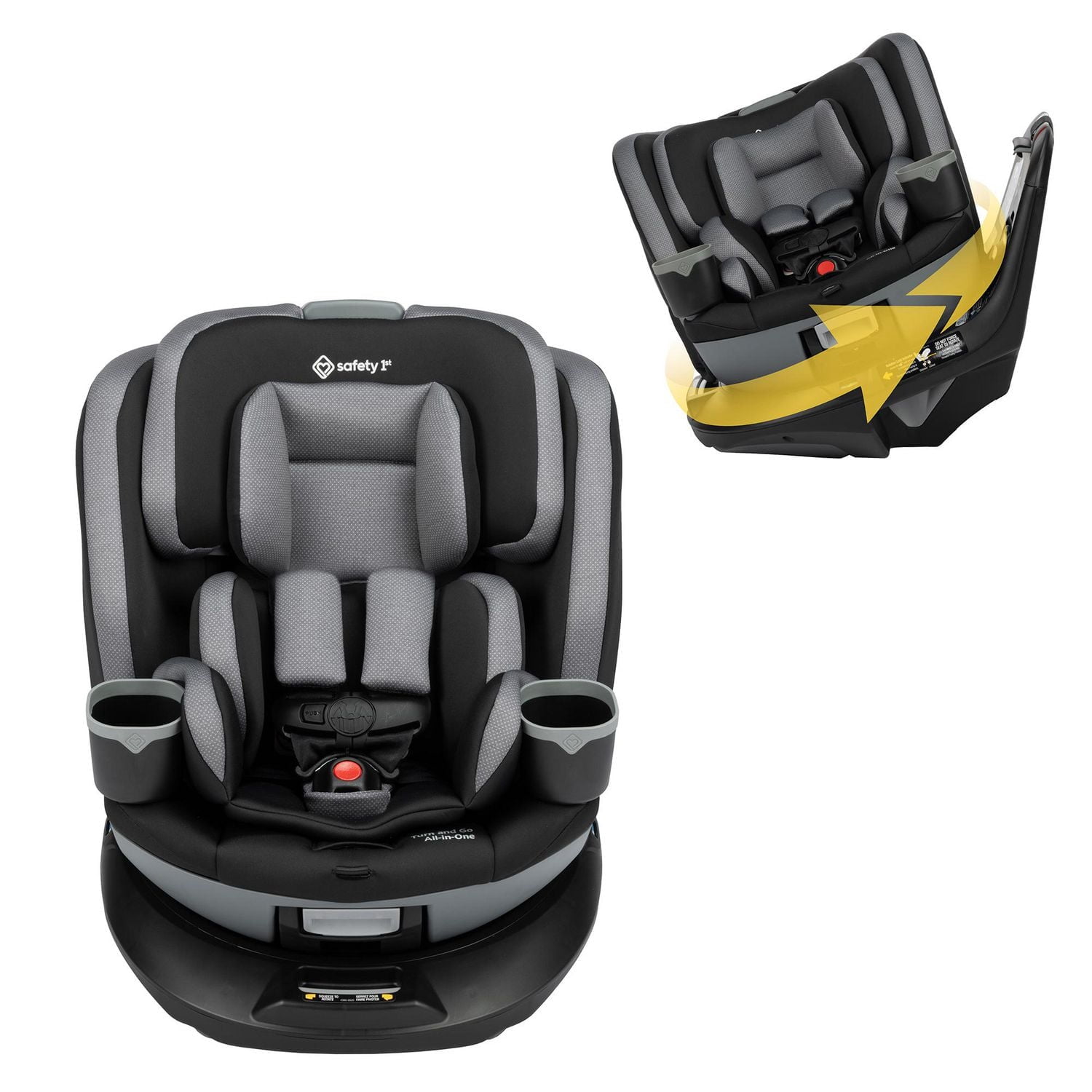
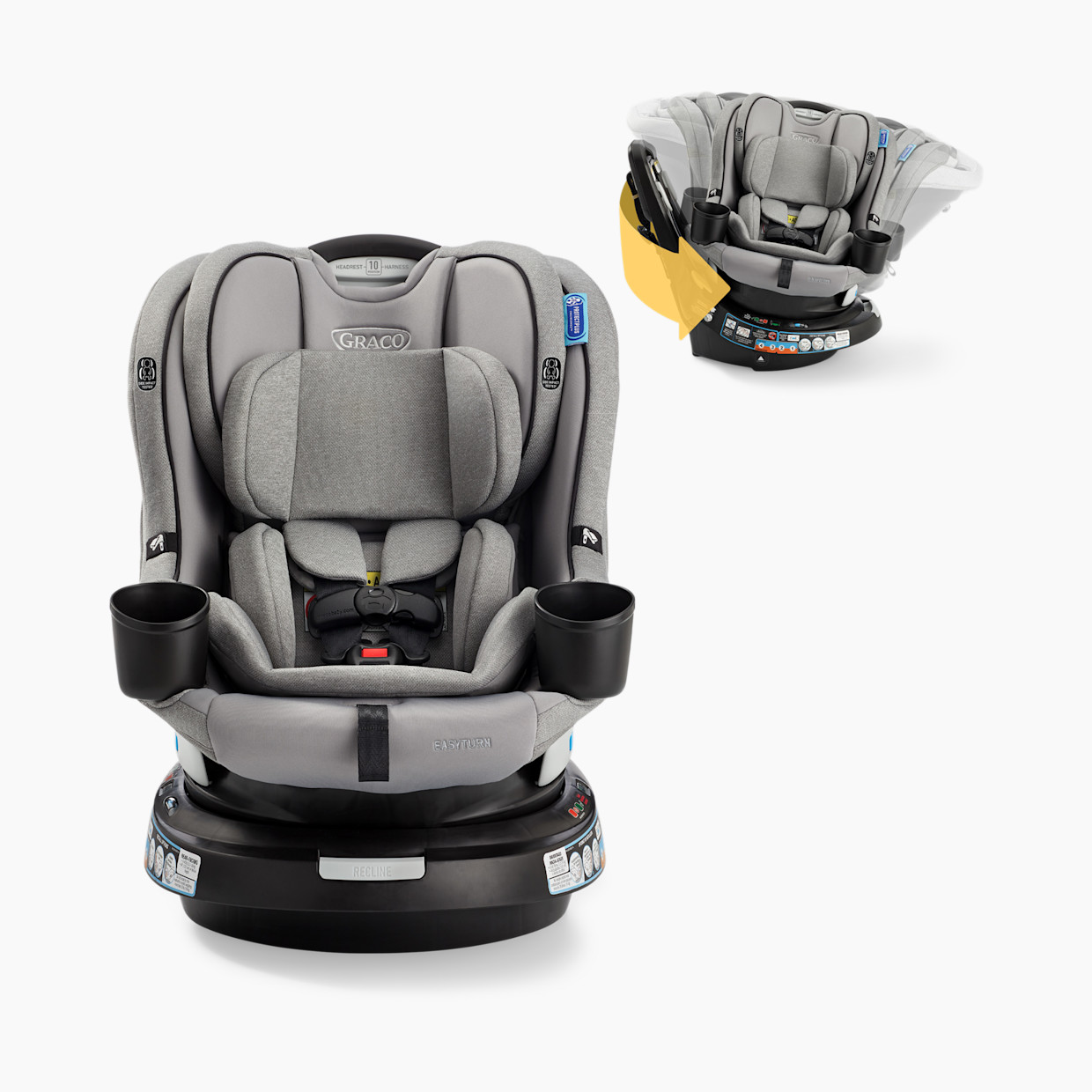
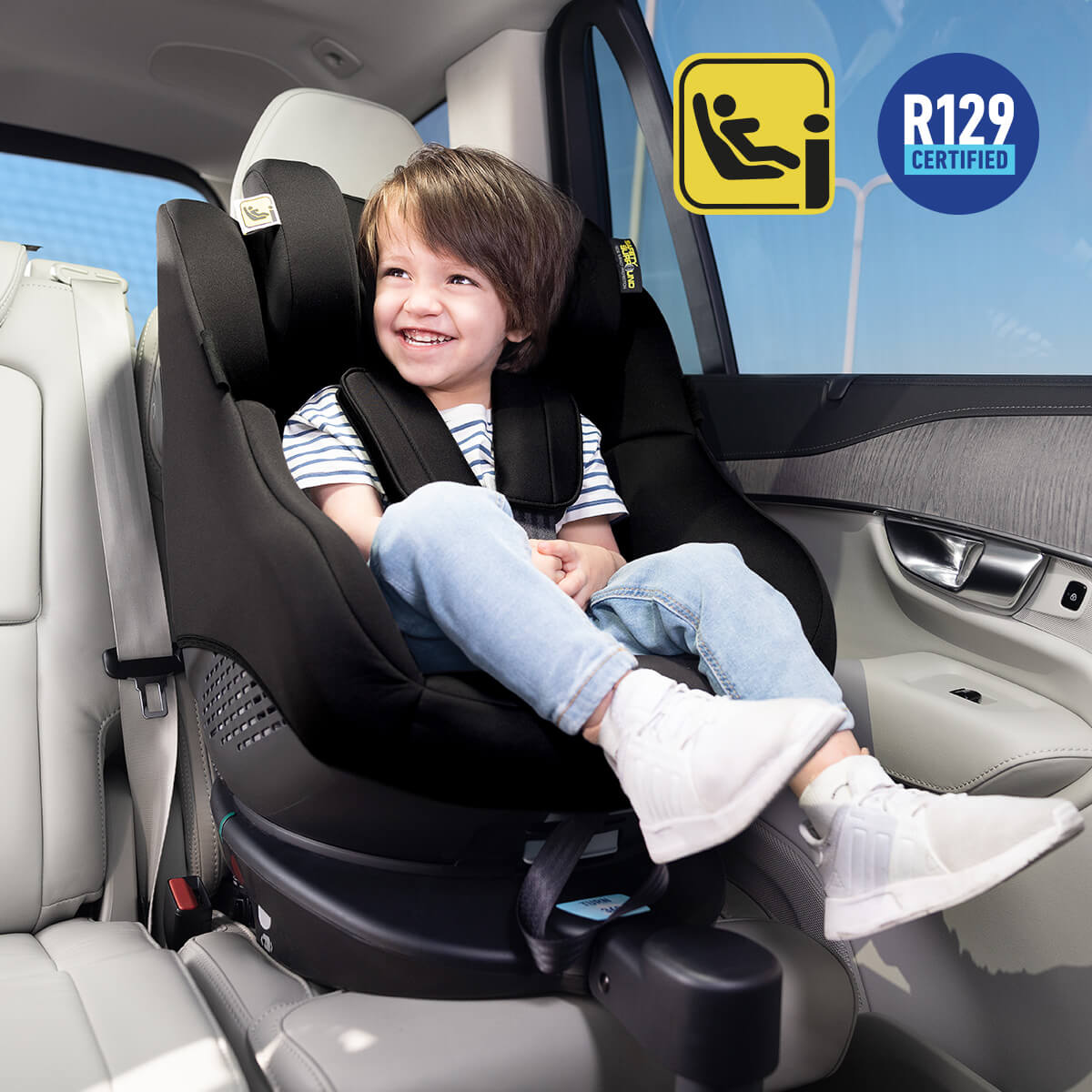
A 360 rotating car seat allows the seat shell to swivel on its base, turning toward the open vehicle door to simplify loading and buckling. This mechanism facilitates an easier transition between rear-facing and forward-facing positions without reinstalling the base, while significantly reducing parental back strain and improving harness tightening accuracy.
The landscape of child passenger safety has shifted dramatically by 2026. With the full integration of the ECE R129 (i-Size) standards and advanced side-impact technologies, the 360 rotating car seat has moved from a luxury niche to a primary choice for modern parents. This guide explores the technical mechanics, safety implications, and practical considerations of choosing a rotating seat in the current market.
Understanding the Mechanics of 360-Degree Rotation
The primary innovation of a rotating car seat is the integration of a turntable mechanism between the seat shell and the ISOFIX-tethered base. Unlike traditional convertible seats that are fixed in one direction, these units use a high-tension central pivot point designed to withstand multi-directional crash forces.
The Swivel Mechanism
The "360" designation refers to the seat's ability to spin in a full circle, though many models include "smart" locks that prevent the seat from being turned forward-facing before the child reaches a specific height (usually 76 cm or 15 months). The rotation is typically engaged via a side-mounted or front-mounted lever that retracts locking pins, allowing the seat to glide along a lubricated track.
Base Integration
In 2026, nearly all high-end rotating seats are "modular." This means the seat is either permanently attached to an ISOFIX base or part of a system where different seats (infant through toddler) can click into the same rotating platform. Because the rotation adds weight and complexity, these seats almost exclusively use ISOFIX connectors rather than vehicle seat belts to ensure a rigid, error-free attachment to the car's chassis.
Safety Standards and the i-Size Evolution
When discussing rotating seats, safety is the paramount concern. In years past, critics worried that a swivel mechanism could be a "point of failure" during an accident. However, modern engineering and rigorous testing have neutralized these concerns.
ECE R129 (i-Size) Compliance
As of 2026, the older ECE R44/04 standard has been largely phased out in favor of R129. The i-Size standard requires mandatory side-impact testing—a crucial factor for rotating seats, which often sit slightly higher on their bases. R129 also moves away from weight-based categorization to height-based, which aligns better with a child's physiological development.
Extended Rear-Facing (ERF)
One of the most significant safety advantages of 360 seats is their role in promoting extended rear-facing. Physics dictates that rear-facing is significantly safer for a child’s developing neck and spine because the seat shell absorbs the impact energy and cradles the head. Rotating seats make the "struggle" of loading a heavy toddler into a rear-facing seat obsolete, as the seat turns to face the parent, allowing for a straight-on harness adjustment.
The Ergonomic Benefit: Protecting the Parent
While child safety is the priority, the "smoother turns" mentioned in this guide also refer to the ergonomic movement for the caregiver. Musculoskeletal injuries among parents—specifically in the lumbar region—are a common byproduct of awkward lifting angles required by fixed car seats.
- Direct Access: By rotating the seat 90 degrees to face the door, parents can stand with their feet planted firmly on the ground while securing the child. This eliminates the need to lean into the car and twist the torso while holding the weight of a child.
- Harness Precision: A common safety error is a loose harness. When a parent can look directly at the buckle and chest clips without reaching around a seat back, they are statistically more likely to tighten the harness to the "pinch test" standard.
- Ease of Transition: As the child grows, the seat can be switched from rear-facing to forward-facing (after the legal and safety minimums are met) with a single click, ensuring the base remains perfectly installed.
Technical Components of a Rotating Seat
To maintain stability despite the moving parts, rotating seats utilize several specialized safety components.
Load Legs (Support Legs)
Because a rotating seat cannot usually use a top tether (as the strap would wrap around the seat and block the rotation), they utilize a load leg. This is a telescopic metal bar that extends from the base to the floor of the vehicle. In a collision, the load leg transfers the rotational energy into the car's floor, preventing the seat from tipping forward and reducing the force exerted on the child.
Anti-Rebound Bars
An anti-rebound bar is a reinforced metal frame that sits against the back of the vehicle seat. Its job is to prevent the car seat from "bouncing" or rotating toward the rear window during a secondary impact. In rotating seats, this bar is often integrated into the swivel base.
Side Impact Protection (SIP)
Modern seats in 2026 feature "active" or "static" side impact protection. These are energy-absorbing pods that extend from the side of the seat shell to reduce the distance between the car door and the seat, minimizing the "jolt" during a side collision.
Comparing Leading 360 Rotating Seat Features
When selecting a seat, it is essential to compare the technical limits and installation requirements.
| Feature | Standard Rotating Seat | Extended-Range Rotating Seat | Modular Rotating System |
|---|---|---|---|
| Height Range | 40 cm to 105 cm | 40 cm to 125 cm | 40 cm to 105 cm (Interchangeable) |
| Max Weight | 18 kg (Approx. 4 years) | 25 kg (Approx. 7 years) | 18 kg |
| Installation | ISOFIX + Load Leg | ISOFIX + Load Leg + Tether | ISOFIX + Load Leg |
| Rotation | 360 Degrees | 360 Degrees | 360 Degrees |
| Primary Benefit | Standard toddlers | Longer rear-facing use | Cost-effective for multiple kids |
Installation and Compatibility Requirements
Before purchasing a 360 rotating seat, vehicle compatibility must be verified. Not every car is suitable for these high-tech units.
ISOFIX Anchorage Points
Rotating seats almost universally require ISOFIX. You must ensure your vehicle has these metal anchors hidden in the seat bight (the crease between the seat back and the cushion).
Underfloor Storage Warning
If your vehicle has storage compartments in the floor of the back seat (common in some SUVs and minivans), you cannot use a seat with a load leg unless the compartment is filled with a manufacturer-approved spacer. The floor must be solid to support the pressure of the load leg during a crash.
Seat Clearance
Rotating seats have a wider "turning circle" than fixed seats. In smaller cars, the seat might hit the B-pillar or the front passenger seat while rotating. It is vital to test the rotation with the front seat in your usual driving position.
Common Mistakes and Troubleshooting
Even the most advanced seat can fail if used incorrectly. Here are the most frequent issues encountered with rotating models:
- Leaving the Seat Unlocked: A rotating seat must be locked into either the rear-facing or forward-facing position before the vehicle moves. Most seats have a green indicator to show the lock is engaged. Never drive with the seat in the 90-degree "loading" position.
- Premature Forward-Facing: Just because a seat can rotate forward doesn't mean it should. Safety experts and the American Academy of Pediatrics (and global equivalents in 2026) recommend rear-facing for as long as the seat's height and weight limits allow.
- Load Leg Misalignment: The load leg must be firm against the floor, but it should not lift the base off the vehicle seat. Indicators should turn green when the pressure is correct.
Frequently Asked Questions
1. Are rotating car seats as safe as fixed car seats?
Yes. In 2026, rotating car seats must pass the same rigorous crash tests as fixed seats under the R129 (i-Size) regulations. The rotation mechanism is designed with heavy-duty locking pins that ensure the seat remains stationary during an impact. Many rotating seats, such as those that pass the Swedish Plus Test, are among the safest on the market.
2. Can I install a 360 rotating seat using a seat belt?
Generally, no. The swivel mechanism requires a stable, fixed platform provided by an ISOFIX base. While a few rare models exist that allow seat belt installation, they often lose the 360-degree rotation functionality or become much harder to operate. Always prioritize ISOFIX for rotating models.
3. At what age can I turn the seat forward?
Legally, under i-Size, a child must remain rear-facing until at least 15 months and 76 cm. However, safety experts strongly recommend keeping the seat in the rear-facing position until the child reaches the maximum height or weight limit of the seat (usually 105 cm or approximately 4 years old).
4. Why are rotating car seats so heavy?
The weight comes from the reinforced steel internal frame and the heavy-duty turntable mechanism in the base. While this makes the seat harder to move between cars, the added mass contributes to the structural integrity and stability of the seat during a collision.
5. Do rotating seats take up more room in the car?
Because they sit on a base with a rotation track, they can sometimes be "deeper" than a standard infant carrier. This might require the front passenger seat to be moved forward. However, because you don't need to maneuver the child through a tight gap at the side, they can often feel more space-efficient in practice.
Final Recommendation
When choosing a 360 rotating car seat in 2026, prioritize a model that is i-Size (R129) certified and offers a high height limit for rear-facing (up to 105 cm or 125 cm). Before buying, verify your vehicle’s compatibility with load legs and ISOFIX anchors. The investment in a rotating seat is not merely for the convenience of "smoother turns" during loading, but for the long-term safety benefit of a more precise harness fit and the physical health of the caregiver.