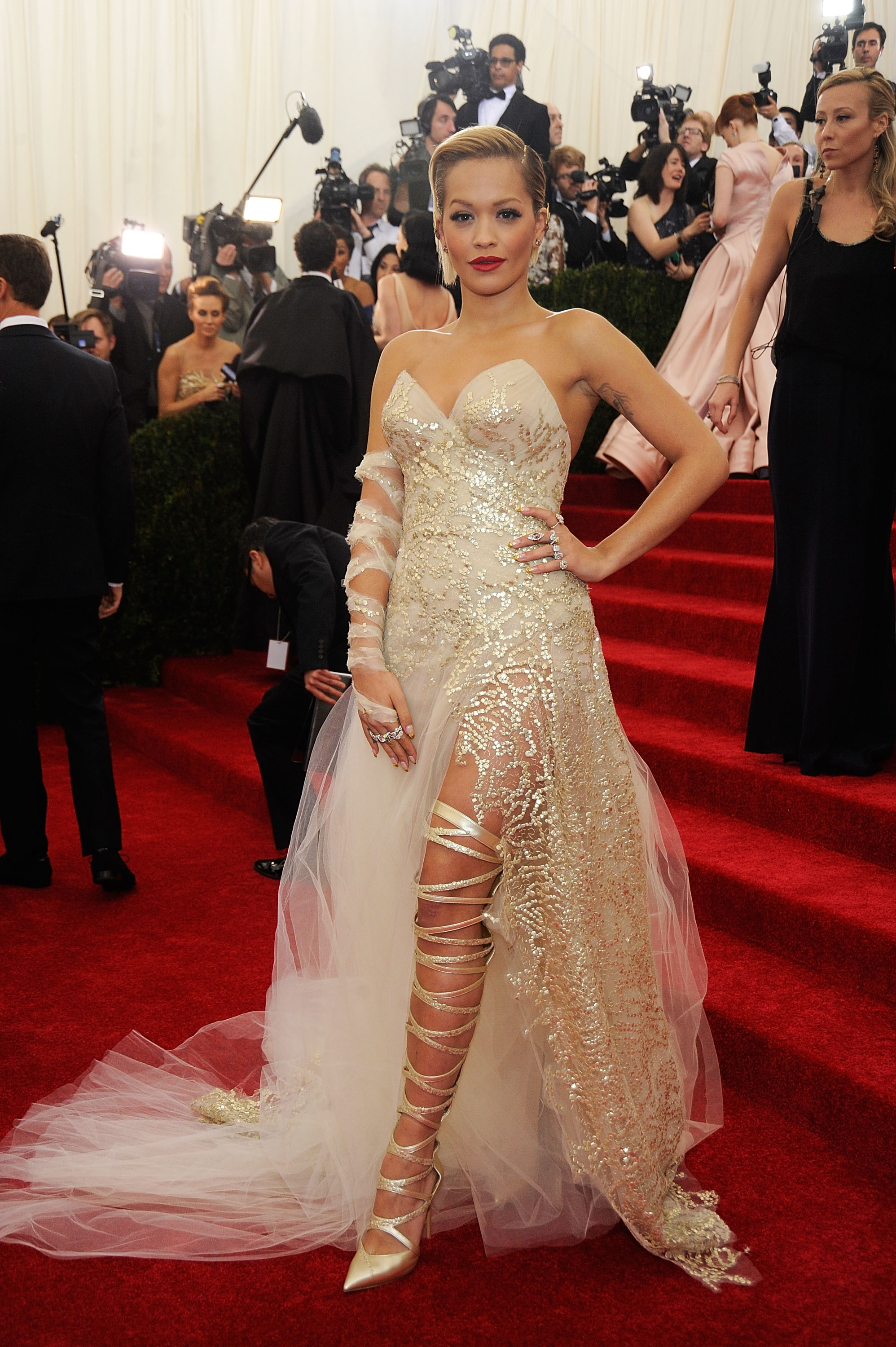
The 2014 Met Gala, officially themed "Charles James: Beyond Fashion," celebrated the legacy of America's first couturier through a strict white-tie dress code that yielded some of the most dramatic, highly scrutinized fashion moments in the event's history. Held on May 5, 2014, at the Metropolitan Museum of Art in New York City, the evening honored the architectural brilliance and meticulous craftsmanship of a designer known for his complex ballgowns and structural mastery. Co-chaired by Aerin Lauder, Bradley Cooper, Colin Firth, Sarah Jessica Parker, and Anna Wintour, the gala successfully married historical museum curation with contemporary celebrity culture, setting a new benchmark for themed red-carpet compliance.
Understanding the Theme: Charles James and the White-Tie Mandate
To understand why the 2014 Met Gala stands out in fashion history, one must examine the exhibition it supported and the specific dress code imposed upon its attendees. The Costume Institute unveiled its newly renovated Anna Wintour Costume Center with the exhibition Charles James: Beyond Fashion, curated by Harold Koda. Charles James, active from the 1930s through the 1950s, was celebrated not merely as a dressmaker, but as a sculptor, mathematician, and theorist of design. His garments—characterized by heavy padding, complex internal boning, spiral draping, and voluminous silhouettes like the "Four-Leaf Clover" and "Butterfly" gowns—demanded a level of reverence that casual black-tie attire could not fulfill.
Consequently, Vogue and the museum leadership issued a rare and strict mandate: white-tie dress for men and grand, evening-appropriate ballgowns for women. White-tie is the most formal traditional Western dress code, requiring men to wear a black tailcoat, matching trousers with a double stripe of satin or braid, a white pique wing-collared shirt, a white pique waistcoat, and a white hand-tied bow tie. For women, the expectation leaned heavily toward sculptural volumes, dramatic trains, and silhouettes that echoed James’s preoccupation with geometry and physics.
This strict parameters acted as a high-stakes filter for celebrity stylists. While previous galas often tolerated modern cocktail dresses or loose thematic interpretations, the 2014 event punished deviation. Attendees who treated the evening like a standard Hollywood awards show stood out unfavorably, whereas those who leaned into the architectural, theatrical nature of white-tie and voluminous evening wear dominated the cultural conversation.
Red Carpet Standouts and Interpretations of the Theme
The red carpet of the 2014 Met Gala proved that when given a rigid, historically rooted brief, contemporary designers and their celebrity muses can produce extraordinary sartorial moments. The interpretations ranged from literal homages to Charles James’s structural engineering to avant-garde modernizations that captured his spirit of innovation.
Sarah Jessica Parker, serving as a co-chair, delivered one of the most photographed looks of the evening. Dressed in a custom black-and-white ballgown by Oscar de la Renta, Parker embraced the voluminous silhouette synonymous with James. The gown featured a dramatic flared skirt and a grand, sweeping train emblazoned with the designer's signature script across the back. The look was completed by traditional white-tie evening gloves, perfectly aligning with the strict dress code while offering a theatrical flair that dominated fashion media cycles.
Blake Lively and Ryan Reynolds provided a masterclass in classic, old-Hollywood elegance. Lively wore a rose-gold, sequin-embroidered Gucci Première column gown with a dramatic, sheer-paneled train, accompanied by classic cascading waves. Reynolds fully committed to the male dress code, appearing in a custom Ralph Lauren Black Label black tailcoat with white pique accessories, demonstrating that traditional menswear could feel modern and sharp on a contemporary red carpet.
| Celebrity | Designer / Brand | Interpretation of Theme | Notable Design Elements |
|---|---|---|---|
| Sarah Jessica Parker | Oscar de la Renta | Literal Ballgown Homage | Voluminous skirt, embroidered signature on train, white gloves |
| Blake Lively | Gucci Première | Modernized Glamour | Sequin-embroidered column, dramatic sheer-paneled train |
| Lupita Nyong'o | Prada | Avant-Garde Thematic | Feathered netting, beaded mesh flapper-style overlay, emerald headband |
| Rihanna | Stella McCartney | Minimalist Subversion | Two-piece crop top and floor-length skirt in clean white silk |
| Dita Von Teese | Zac Posen | Structural Elegance | Chartreuse structured ballgown with intricate sweetheart bodice |
Lupita Nyong'o, fresh off her Academy Award win, offered a polarizing yet unforgettable take by collaborating with Prada. While traditionalists debated whether her beaded mesh, flapper-inspired net dress with brown feather netting aligned with a 1950s ballgown aesthetic, the look showcased the boundary-pushing nature of the modern Met Gala. Conversely, Rihanna bypassed the traditional ballgown silhouette entirely while respecting the color palette and craftsmanship expected of haute couture, wearing a pristine, long-sleeved white crop top and high-waisted floor-length skirt by Stella McCartney. Her minimalist approach sparked widespread debate regarding adherence to strict historical dress codes versus personal brand identity.
The Architectural and Structural Legacy of Charles James
The critical acclaim of the 2014 exhibition lay in its ability to demystify the mechanics of couture. Charles James did not merely design clothes; he engineered them. His garments were heavy—sometimes weighing up to fifteen pounds or more—due to the dense inner construction required to maintain gravity-defying shapes without relying on rigid external hoops.
James treated fabric as a medium for sculptural expression. His famous taxidermy-like approach to padding created curves that defied the biological reality of the wearer, carving out wasp-waists and cantilevered hips through precision cutting. For fashion historians and design students visiting the Metropolitan Museum of Art in the summer of 2014, the exhibition served as a masterclass in pattern making. The galleries displayed garments alongside X-rays and technical sketches, revealing the hidden infrastructure of boning, buckram, and weighted hems that gave his work its legendary permanence.
This engineering focus directly influenced the 2014 red carpet. Designers like Zac Posen, known for his commitment to traditional construction techniques and fish-tail gowns, found a natural alignment with the theme. Posen dressed multiple attendees in garments that utilized internal corsetry and heavy silk satins to achieve the sweeping, unbroken lines that defined mid-century American couture.
Cultural Impact and Media Landscape in 2014
The 2014 Met Gala arrived at a critical inflection point for digital media, celebrity culture, and fashion journalism. While social media platforms were well-established, 2014 predated the total dominance of real-time algorithmic feeds and vertical video formats that govern contemporary red-carpet coverage. Even so, the event catalyzed the shift toward digital-first fashion critique.
Anna Wintour’s tightening grip on the guest list and media access transformed the Met Gala from an elite charity fundraiser into the preeminent global pop-culture spectacle of the spring. The requirement for strict adherence to the white-tie dress code created a collective cultural puzzle for the public: Would celebrities follow the rules, or would they attempt to subvert them? This tension generated millions of impressions across digital publishers, style blogs, and early-stage Instagram accounts.
Furthermore, the opening of the Anna Wintour Costume Center provided a physical institutional anchor that legitimized fashion as a fine art discipline worthy of rigorous academic study. By choosing Charles James—a brilliant designer who spent his final years in relative obscurity and financial distress—as the inaugural subject, the museum honored foundational American design history over safe, commercial pop-culture retrospectives.
Common Misconceptions Regarding the 2014 Met Gala
Because the Met Gala is often viewed through the modern lens of internet memes and viral costume choices, several misconceptions persist regarding the 2014 event:
- Misconception: The dress code was optional. Many assume that Met Gala themes are mere suggestions. In 2014, the white-tie and grand ballgown mandate was enforced more strictly than in previous years, leading to a notably cohesive aesthetic among male attendees who wore genuine tailcoats rather than standard business tuxedos.
- Misconception: It was Anna Wintour's first gala. While the newly minted Anna Wintour Costume Center opened during this gala, Wintour had been leading the event's curation and guest list since 1995. The 2014 naming honored her multi-million-dollar fundraising efforts and institutional leadership.
- Misconception: Charles James was a European couturier. Although James spent significant time in Paris and London, he was born in England to an American mother and British father, and he established his most influential couture house in New York City, earning him the title of America's first couturier.
Frequently Asked Questions
What was the official theme of the 2014 Met Gala?
The official theme was "Charles James: Beyond Fashion," which honored the life, career, and architectural design methodologies of the mid-20th-century Anglo-American couturier Charles James.
Why was the 2014 dress code unique?
The event enforced a strict "white-tie" dress code for men and grand evening ballgowns for women. This traditional standard is rarely enforced on modern red carpets, making the 2014 event visually distinct from contemporary iterations that favor experimental or casual attire.
Which exhibition did the 2014 Met Gala support?
The gala served as the opening benefit for the Metropolitan Museum of Art’s Costume Institute exhibition of the same name, which also marked the grand opening of the newly renovated Anna Wintour Costume Center.
Who were the co-chairs of the 2014 Met Gala?
The evening was co-chaired by Aerin Lauder, Bradley Cooper, Colin Firth, Sarah Jessica Parker, and Vogue editor-in-chief Anna Wintour.
How did Charles James influence modern fashion design?
James revolutionized garment construction by treating clothing as sculpture and engineering. His complex draping, heavy internal padding, and mathematical approach to pattern-making influenced generations of designers seeking to manipulate the human silhouette through structure rather than simple tailoring.
Conclusion and Historical Significance
The 2014 Met Gala remains a watershed moment in fashion exhibition history. By tethering contemporary celebrity culture to the rigorous, demanding standards of mid-century American couture, the event proved that historical retrospectives could capture the global imagination just as effectively as modern pop-culture tributes. For scholars, designers, and fashion enthusiasts, the evening offered a rare celebration of craftsmanship, geometry, and uncompromising artistry that continues to define the gold standard of museum fundraising galas.