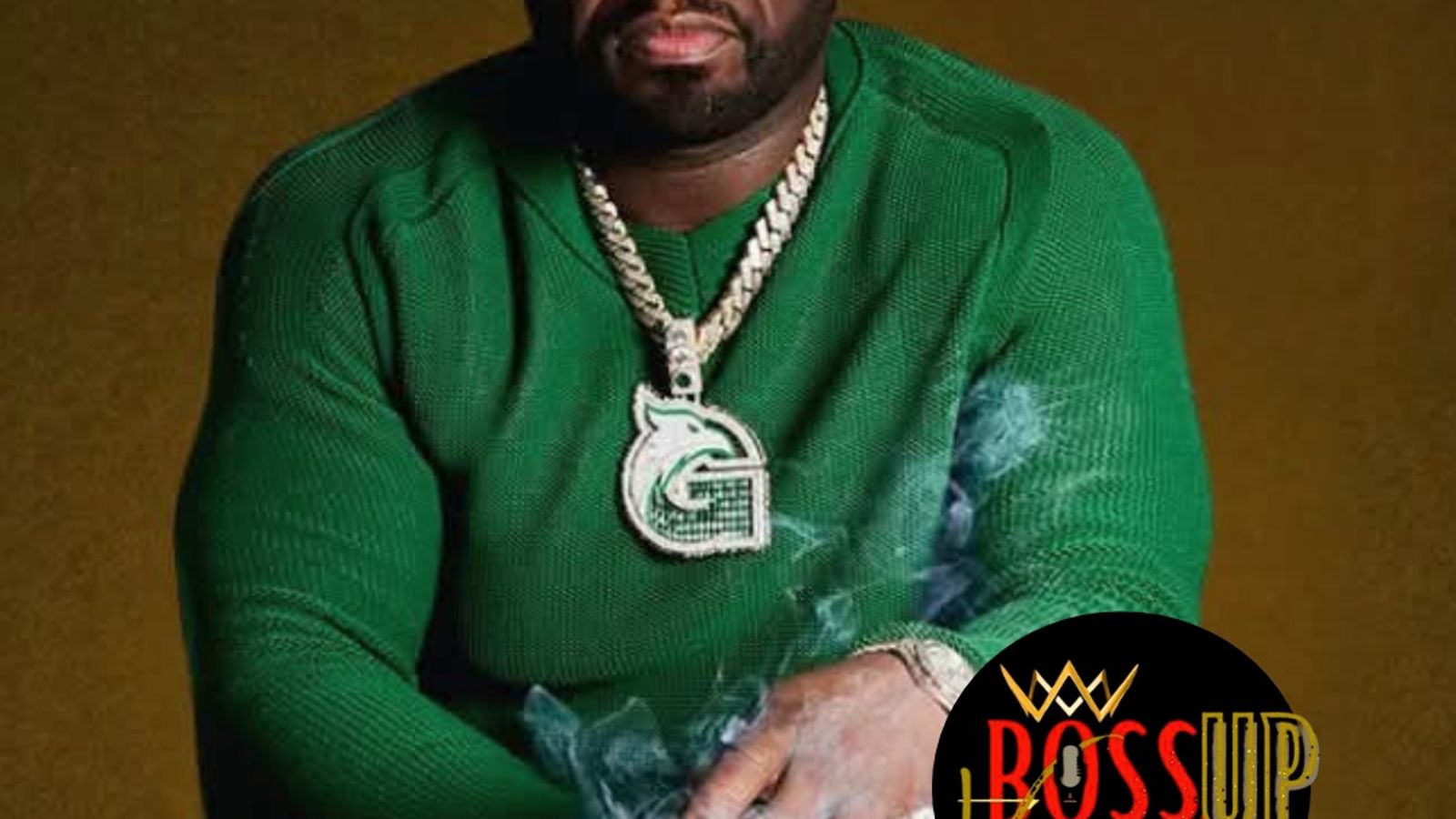
The rise of Curtis Jackson, known globally as 50 Cent, is a definitive narrative of resilience, strategic branding, and the transition from street-level survival to global corporate dominance. By 2026, his legacy encompasses a multi-platinum music career, a multi-billion dollar business portfolio, and a television empire that has redefined the Starz and non-fiction landscape.
The Crucible of South Jamaica: Early Life and Influences
Born on July 6, 1975, in the South Jamaica neighborhood of Queens, New York, Curtis James Jackson III was thrust into an environment defined by the crack cocaine epidemic of the 1980s. His mother, Sabrina Jackson, was a drug dealer who provided the primary financial support for the family until her mysterious death in a fire when Curtis was only eight years old. Following her death, Jackson was raised by his grandparents in a crowded household.
The loss of his mother left a void that Jackson sought to fill with the pursuit of financial security. By the age of 12, he began selling drugs on the streets of Queens, balancing a life of athletics—specifically boxing—with the illicit trade that dominated his neighborhood. This period was foundational; the discipline of the boxing ring and the high-stakes negotiation of the street corner informed the tactical mindset he would later apply to the music industry.
During the early 1990s, Jackson was arrested multiple times, culminating in a period at a correctional boot camp. It was during these years of legal turmoil that he began to see music not just as a hobby, but as a legitimate exit strategy from the criminal justice system. He adopted the moniker "50 Cent," inspired by Kelvin Martin, a 1980s Brooklyn robber. Jackson chose the name because it embodied the "change" he sought to bring to his life and the "by any means" mentality of survival.
The Jam Master Jay Era and the Columbia Records Fallout
In 1996, a mutual friend introduced Jackson to Jam Master Jay of Run-D.M.C., who was operating JMJ Records. Jay became a mentor to Jackson, teaching him the fundamentals of song structure, hooks, and rhythm. Under Jay’s tutelage, Jackson learned how to craft "radio-friendly" music without losing the edge of his street persona.
Jackson eventually signed with Columbia Records in 1999 and began working on his debut album, Power of the Dollar. This era was marked by the controversial single "How to Rob," a satirical track where he detailed how he would rob various high-profile industry figures. While the song garnered massive underground attention and buzz, it also created friction with established artists.
However, his momentum was violently halted on May 24, 2000. While sitting in a car outside his grandmother’s house in South Jamaica, Jackson was shot nine times at close range with a 9mm handgun. The injuries were catastrophic, including shots to the hand, arm, hip, both legs, chest, and his left cheek. The shot to his face resulted in a permanent alteration of his voice—a slight slur that would eventually become one of his most recognizable vocal trademarks.
Columbia Records, fearing the liability of his violent lifestyle, dropped him from the label and shelved Power of the Dollar. For most artists, this would have been the end of their career. For Curtis Jackson, it was the catalyst for a revolutionary comeback.
The Mixtape Revolution: Redefining the Industry
Blacklisted by the major labels in the United States, Jackson took his talents to Canada and the underground circuit. Alongside his business partner Sha Money XL, he began a relentless campaign of releasing mixtapes. This was a strategic pivot; instead of waiting for a label to validate him, he went directly to the streets.
The G-Unit mixtapes, such as 50 Cent Is the Future, No Mercy, No Fear, and God's Plan, were revolutionary for several reasons:
- Vocal Consistency: He used the mixtapes to showcase his ability to ride beats better than the original artists.
- Branding: He introduced the G-Unit brand (Gerrilla Unit) as a collective, creating a "movement" rather than just a solo act.
- Market Saturation: By flooding the streets with free or low-cost CDs, he made his voice unavoidable in New York City and beyond.
The buzz became so deafening that it caught the attention of Eminem. After hearing Jackson’s mixtapes, Eminem brought the music to Dr. Dre. In 2002, 50 Cent signed a $1 million joint-venture deal with Shady Records, Aftermath Entertainment, and Interscope Records.
Get Rich or Die Tryin': The Commercial Peak
The release of Get Rich or Die Tryin' on February 6, 2003, was a seismic event in hip-hop history. Produced by Dr. Dre and Eminem, the album combined gritty street narratives with polished, high-fidelity production. It debuted at number one on the Billboard 200, selling over 872,000 copies in its first four days.
The lead single, "In Da Club," became a global anthem, showcasing Jackson's ability to create a club hit that maintained his "tough guy" image. Other tracks like "21 Questions" and "P.I.M.P." proved his versatility. By the end of 2003, 50 Cent was the most famous rapper in the world. He followed this success with the G-Unit group album Beg for Mercy and his sophomore solo effort The Massacre (2005), which also saw massive commercial success.
Key Career Milestones and Metrics
The following table outlines the pivotal moments that defined the rise of Curtis Jackson from the early 2000s through his transition into a mogul by 2026.
| Year | Milestone | Impact / Result |
|---|---|---|
| 1999 | Signed to Columbia Records | Recorded Power of the Dollar; released "How to Rob." |
| 2000 | The Nine-Shot Incident | Dropped by Columbia; began the independent mixtape run. |
| 2002 | Shady/Aftermath Deal | Signed by Eminem and Dr. Dre for $1 million. |
| 2003 | Get Rich or Die Tryin' | Sold 12M+ copies; solidified global superstardom. |
| 2007 | Vitamin Water Sale | Coca-Cola acquisition netted Jackson an estimated $100M+. |
| 2014 | Power Premiere | Launched a multi-series TV franchise on the Starz network. |
| 2024 | G-Unit Studios Launch | Established a massive production hub in Shreveport, Louisiana. |
| 2026 | Legacy Consolidation | Recognized as a top-tier executive in scripted and unscripted TV. |
The Vitamin Water Deal: A Masterclass in Equity
While many rappers sought traditional endorsement deals, 50 Cent sought equity. In 2004, he partnered with Glacéau to create his own flavor of Vitamin Water called "Formula 50." In exchange for his likeness and promotion, he negotiated a minority stake in the company.
When Coca-Cola purchased Glacéau in 2007 for $4.1 billion, Jackson’s share resulted in a payout estimated between $100 million and $150 million after taxes. This deal changed the blueprint for celebrity business ventures. It proved that "the artist" could be "the owner," moving beyond mere "work-for-hire" marketing roles. This financial windfall provided the capital necessary for Jackson to weather future industry shifts and legal challenges.
The Pivot to Television: The Power Universe
As the music industry transitioned to streaming, Jackson noticed a shift in consumer attention toward premium cable and digital content. He partnered with Courtney A. Kemp to develop Power, a gritty drama about a drug kingpin trying to go legitimate. The show premiered on Starz in 2014 and became a cultural phenomenon.
Jackson didn't just act in the show; he was an executive producer who understood the demographics of the audience. When Power ended its original run, Jackson expanded the brand into a "Universe," including:
- Power Book II: Ghost (following the protagonist's son)
- Power Book III: Raising Kanan (a prequel focused on Jackson’s own character)
- Power Book IV: Force (following the fan-favorite character Tommy Egan)
His success with Power led to other hits like BMF (Black Family Mafia), further solidifying his position as one of the most successful producers in television history. By 2026, his G-Unit Film & Television company has become a prolific producer of both scripted dramas and high-stakes documentaries.
Resilience and Reinvention in 2026
By 2026, Curtis Jackson has moved into the "elder statesman" phase of his career, but without the slowing down typical of the role. His recent focus has been the development of G-Unit Studios in Shreveport, Louisiana. This massive production facility represents his commitment to domestic film production and providing economic opportunities in underserved areas, mirroring his own origins in Queens.
His business strategy in 2026 continues to emphasize ownership. Whether it is his spirits brands (Branson Cognac and Le Chemin du Roi) or his media properties, Jackson maintains a hands-on approach to marketing and distribution. He remains a master of social media, using platforms to "troll" competitors and promote his projects with a level of engagement that few executives can match.
Frequently Asked Questions
How many times was 50 Cent actually shot?
Curtis Jackson was shot nine times on May 24, 2000. The shots hit his hand, arm, hip, both legs, chest, and his left cheek. He spent thirteen days in the hospital and several months in recovery, during which he had to relearn how to walk. The incident is widely considered the most significant turning point in his life, as it led to his removal from Columbia Records and the start of his independent mixtape career.
How did 50 Cent get discovered by Eminem?
After being dropped by Columbia, 50 Cent released the mixtape 50 Cent Is the Future. Eminem's manager, Paul Rosenberg, played the mixtape for Eminem, who was immediately impressed by the songwriting and the "hungry" delivery. Eminem then brought the music to Dr. Dre, leading to the joint signing between Shady Records and Aftermath Entertainment.
Is 50 Cent still making music in 2026?
While his primary focus has shifted to television production and business ventures, 50 Cent remains active in the music industry through executive production and occasional features. In 2026, he is viewed more as a media mogul than a full-time recording artist, though his catalog remains among the most streamed in hip-hop history.
What is 50 Cent's most successful business venture?
Financially, the Vitamin Water deal remains his most famous and successful exit. His equity stake in Glacéau earned him an estimated $100 million+ when the company was sold to Coca-Cola. However, in terms of long-term brand value and influence, the Power television franchise is arguably more significant, as it established him as a major player in the Hollywood executive ranks.
Why did 50 Cent change his name from Curtis Jackson?
He adopted the name "50 Cent" as a metaphor for change. He was inspired by a 1980s robber from Brooklyn named Kelvin Martin, who was known as 50 Cent. Jackson stated that he chose the name because "I'm the same kind of person 50 Cent was. I provide for myself by any means."
Practical Lesson: Applying the Jackson Business Model
For entrepreneurs and creators studying the rise of Curtis Jackson, the most valuable takeaway is the concept of strategic leverage. Jackson never viewed himself as just an employee of a label; he used his music to build a brand, and then used that brand to acquire equity in other industries.
Next Actions for Aspiring Moguls:
- Prioritize Ownership: Whenever possible, negotiate for a percentage of the "back end" or equity rather than just a flat fee.
- Control the Narrative: Use your personal platform to speak directly to your audience, bypassing traditional media gatekeepers.
- Diversify Early: Do not rely on a single stream of income. Jackson moved into water, spirits, and television while his music career was at its peak.
- Resilience as a Asset: View setbacks (like the 2000 shooting or the Columbia fallout) as opportunities to pivot and own your distribution.