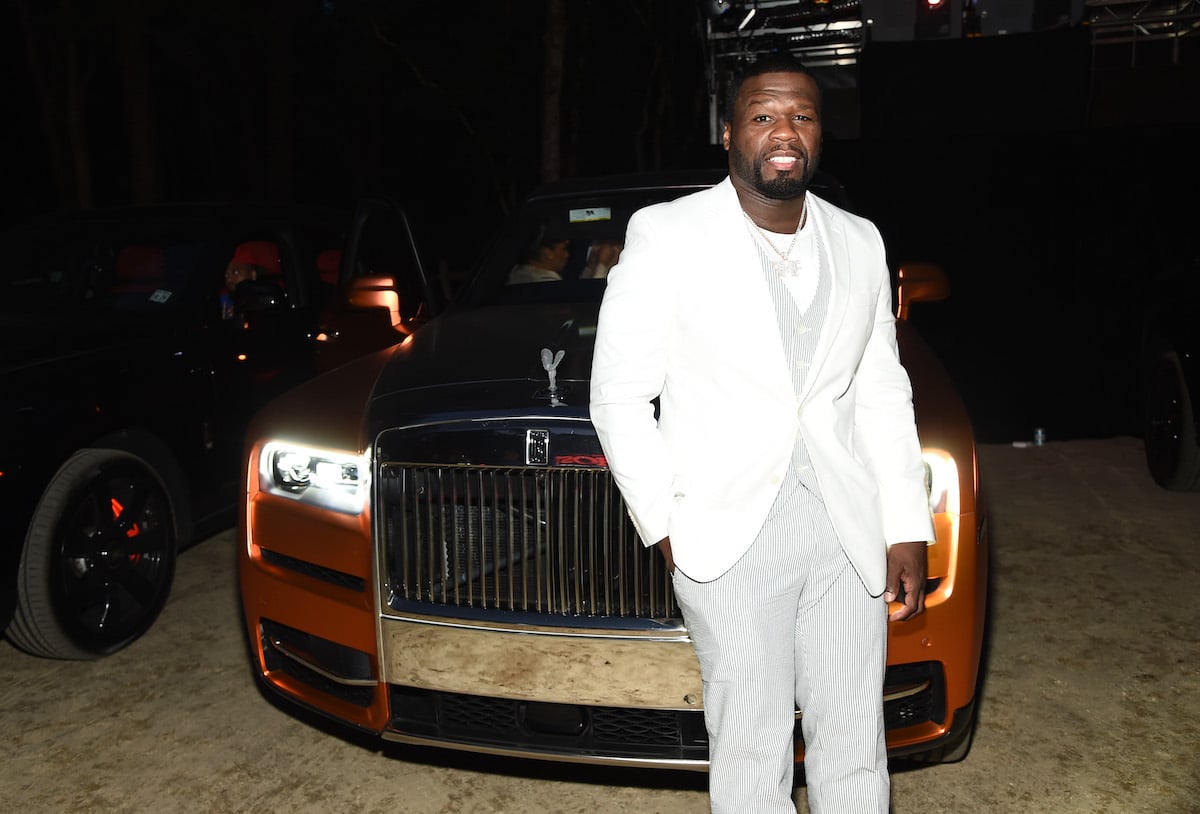
50 Cent’s net worth is a complex intersection of hip-hop branding, strategic bankruptcy filings, and massive entrepreneurial pivots. While public estimates in 2026 often place his value between $40 million and $60 million, court records from his 2015 Chapter 11 filing revealed a more grounded reality, documenting approximately $24.8 million in assets against $32.5 million in liabilities at that time.
The Discrepancy Between Public Persona and Legal Documentation
In the world of celebrity finance, "net worth" is often a speculative figure generated by media outlets based on gross earnings, social media displays of wealth, and assumed investment returns. However, for Curtis "50 Cent" Jackson, the most accurate financial snapshot ever made public came not from a magazine, but from a federal courthouse.
In 2015, the rapper filed for Chapter 11 bankruptcy protection in the U.S. Bankruptcy Court for the District of Connecticut. This move followed a series of legal setbacks, including a $7 million judgment related to a private video of Lastonia Leviston and a $17 million judgment involving a failed headphone venture with Sleek Audio. For the first time, Jackson was required to submit "Schedules of Assets and Liabilities," providing a rare, audited look at the finances of a mogul who famously bragged about his "Get Rich or Die Tryin'" lifestyle.
The court records showed that while Jackson remained wealthy by any standard, the "hundreds of millions" often attributed to him following the Vitaminwater deal were largely absent from his immediate liquid accounts. Understanding his true financial standing requires looking at how assets are valued in court versus how they are perceived by the public.
The 2015 Bankruptcy: A Strategic Financial Reset
It is a common misconception that 50 Cent was "broke" during his bankruptcy. In legal terms, a Chapter 11 filing is a "reorganization" rather than a Chapter 7 "liquidation." It allowed Jackson to freeze the collection of massive legal judgments while he structured a plan to pay his creditors.
What the Schedules Revealed
The initial filings disclosed that Jackson’s monthly income was approximately $185,000, primarily from royalties and interest on investments. However, his monthly expenses were nearly $108,000, which included over $72,000 for the maintenance of his 50,000-square-foot mansion in Farmington, Connecticut.
Key Asset Disclosures in 2015:
- Real Estate: His Connecticut estate (formerly owned by Mike Tyson) was valued at roughly $8.25 million, though it eventually sold for significantly less ($2.9 million in 2019).
- Liquidity: He reported approximately $2.7 million in various bank accounts.
- Investments: His stakes in various G-Unit entities and other ventures were listed, but their market value was debated during the proceedings.
- Personal Property: This included a fleet of luxury vehicles and jewelry, which totaled nearly $500,000.
The court records underscored a vital lesson in high-net-worth management: high revenue does not always equal high liquidity. Much of Jackson's wealth was tied up in brands, intellectual property, and illiquid real estate.
The Vitaminwater Factor: Myth vs. Reality
One of the most enduring stories in hip-hop finance is 50 Cent’s windfall from Coca-Cola’s $4.1 billion acquisition of Glacéau (the maker of Vitaminwater) in 2007. Initial reports suggested Jackson walked away with anywhere from $60 million to $100 million.
However, during the bankruptcy proceedings, these figures were scrutinized. While the deal was undoubtedly lucrative and served as the foundation for his business reputation, the court records did not show a $100 million cash pile. By 2015, much of that capital had been reinvested into other ventures—some successful, like SMS Audio, and others less so. The "Vitaminwater money" had largely transitioned from liquid cash into a portfolio of diversified business interests, many of which faced valuation challenges during his legal battles.
Rebuilding the Empire: Post-Bankruptcy Growth to 2026
Since emerging from bankruptcy in 2017—having paid off approximately $22 million in debt ahead of schedule—50 Cent has undergone a financial renaissance. His strategy shifted from being a "brand spokesperson" to being a "content creator and owner."
The Power Universe and G-Unit Film & Television
The most significant contributor to his 2026 net worth is his massive footprint in television. His deal with Starz, which began with the hit series Power, evolved into a multi-series "Universe" (including Book II: Ghost, Raising Kanan, and Force). These deals provided not only massive upfront production fees but also long-term backend equity.
Industry analysts suggest that his television production company, G-Unit Film & Television, is now his most valuable asset. Unlike music royalties, which have a long tail but often smaller annual yields for legacy artists, television ownership provides consistent, high-volume cash flow through licensing and international distribution.
Sire Spirits: The New Frontier
Following the blueprint of successful alcohol brands like Jay-Z’s Ace of Spades, 50 Cent launched Sire Spirits, which includes Le Chemin du Roi champagne and Branson Cognac. By 2026, these brands have secured significant market share through strategic partnerships, such as being the official spirits of several NBA and NFL teams (e.g., the Houston Rockets and the Sacramento Kings).
Court filings in separate legal disputes (such as his lawsuit against a former business consultant and his public battle with Beam Suntory) have indicated that Sire Spirits is a multi-million dollar enterprise. While the exact valuation remains private, the scale of distribution suggests it rivals his previous successes in the beverage industry.
Comparing Financial Realities: Court Records vs. Estimates
To understand the difference between legal "fact" and media "estimation," the following table compares the figures disclosed during his 2015 legal nadir with the projected metrics of his 2026 recovery.
| Financial Category | 2015 Court Record Figures | 2026 Projected/Reported Status |
|---|---|---|
| Total Reported Assets | ~$24.8 Million | Estimated $50M - $100M+ (Enterprise Value) |
| Primary Debt | ~$32.5 Million | Minimal (Emergence from Chapter 11 in 2017) |
| Real Estate Portfolio | $8.25M (Connecticut Mansion) | Diversified (New York, Texas, International) |
| Monthly Income | $184,960 | Estimated $1M+ (TV Production & Spirits) |
| Liquid Cash/Equivalents | $2.7 Million | Estimated $10M - $15M |
| Legal Status | Chapter 11 Protection | Active Litigant (Protecting Brand Assets) |
The Role of Intellectual Property and Royalties
Court records frequently mention Jackson’s music catalog as a "fluctuating asset." As a legacy artist with diamond-selling albums like Get Rich or Die Tryin', 50 Cent earns substantial passive income from streaming. In 2026, with the resurgence of early-2000s hip-hop nostalgia, his music royalties remain a consistent "floor" for his net worth.
However, the "value" of a music catalog in court is often calculated based on a multiple of annual earnings (usually 10x to 15x). If his catalog generates $2 million a year, a court might value that asset at $20 million to $30 million. Jackson has resisted selling his publishing rights, a move many of his peers have made for immediate eight-figure payouts, choosing instead to maintain the long-term cash flow to fund his other business operations.
Frequently Asked Questions
Did 50 Cent lose all his money in the bankruptcy?
No. The bankruptcy was a Chapter 11 reorganization, which is a legal tool used to restructure debt. 50 Cent used the process to negotiate the $24 million he owed to creditors down to a manageable payment plan. He successfully completed the plan in 2017, paying off the debt early using $13.65 million of his own money and $8.7 million from a legal malpractice settlement.
How much did he actually make from Vitaminwater?
While 50 Cent never officially confirmed the exact take-home amount, court records and financial analysts from the era suggest his stake was approximately 10%. When Coca-Cola bought the company for $4.1 billion, his pre-tax payout was likely between $60 million and $100 million. After taxes and fees, the liquid amount was lower, which explains why his 2015 filings did not show a nine-figure cash balance.
What is 50 Cent’s biggest source of income in 2026?
His primary income streams in 2026 are his television production deals with various networks and the revenue from Sire Spirits (Branson Cognac and Le Chemin du Roi). While music continues to provide royalties, his "mogul" status is now driven by his roles as an executive producer and a spirits entrepreneur.
Why do net worth websites list him at $40 million if he made so much more?
Net worth is a "snapshot" of current assets minus liabilities. It does not track total career earnings. While 50 Cent has likely earned over $300 million throughout his career, taxes, high-end lifestyle expenses, legal fees, and business reinvestments significantly reduce the "net" total. The $40 million to $60 million range reflects his estimated current liquid and semi-liquid holdings.
Does 50 Cent still own the Mike Tyson mansion?
No. One of the key steps in stabilizing his finances post-bankruptcy was the sale of the Farmington, Connecticut, estate. The 52-room mansion was a significant financial drain, costing over $700,000 annually in taxes and maintenance. It was sold in 2019 for $2.9 million, with the proceeds going toward his debt obligations.
Practical Recommendation: Interpreting Celebrity Wealth
When evaluating "net worth" for a public figure like 50 Cent, it is essential to distinguish between brand value and audited assets. Court records provide the latter, which is almost always lower than the former.
If you are looking for the most accurate picture of his wealth, focus on his verified business exits and production credits. In 2026, his financial health is robust not because of his past music success, but because of his ability to leverage the legal system to reset his liabilities and pivot into high-margin industries like premium spirits and television production. For those tracking celebrity finance, the takeaway is clear: liquid cash is fleeting, but controlled intellectual property and brand ownership are the true drivers of long-term wealth.