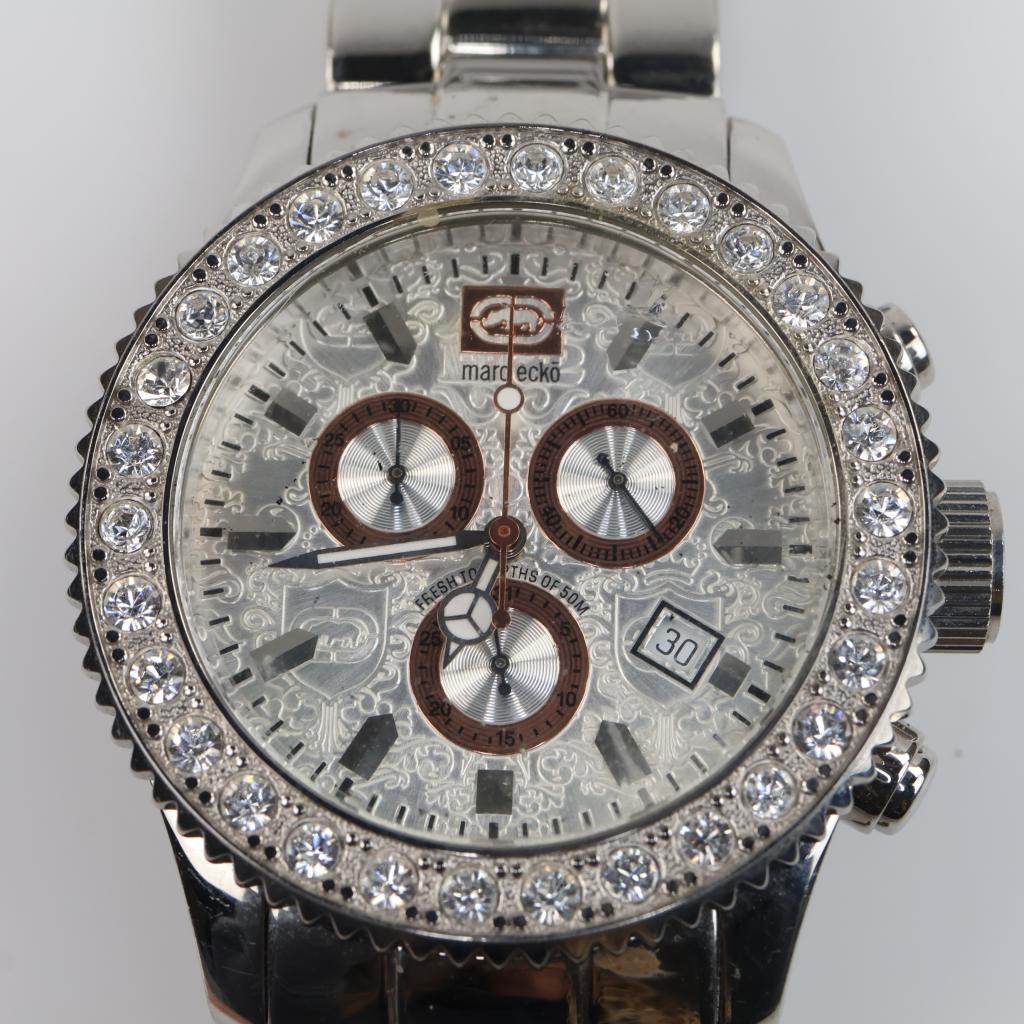
Marc Ecko is the visionary founder behind Ecko Unltd., a brand that fundamentally reshaped global streetwear starting in 1993. By blending graffiti aesthetics, hip-hop culture, and skate influences, Ecko transformed a modest T-shirt business into a multi-billion dollar empire encompassing apparel, media, and digital entertainment, leaving an indelible mark on 21st-century youth culture.
The Genesis of an Icon: Marc Ecko’s Early Vision
The story of Ecko Unltd. begins not in a boardroom, but in a garage in Lakewood, New Jersey. Born Marc Milecofsky, the young artist who would become Marc Ecko was immersed in the burgeoning hip-hop and graffiti scenes of the late 1980s and early 1990s. While he was a pharmacy student at Rutgers University, his true passion lay in the airbrush and the stencil.
In 1993, with a small investment from his sister Marci and friend Seth Gerszberg, Ecko launched "Ecko Unltd." with just six T-shirt designs. The brand was built on the ethos of the "unlimited" potential of youth culture. Unlike the rigid fashion houses of the time, Ecko sought to represent the "world-famous" rhino—a mascot inspired by his father’s collection of rhino figurines. The rhino became a symbol of a brand that was thick-skinned, resilient, and impossible to ignore.
In those early years, Ecko was a pioneer of what we now call "streetwear." He understood that clothing was more than fabric; it was a medium for identity. By utilizing airbrush techniques that mimicked the look of subway graffiti, he provided a way for suburban and urban youth alike to wear the art form that the mainstream still largely considered vandalism.
Building the Streetwear Empire: Scaling the Rhino
By the late 1990s, Ecko Unltd. had moved beyond the garage and into the global spotlight. The brand’s growth was fueled by its ability to bridge disparate subcultures. While other brands focused strictly on skating or strictly on hip-hop, Ecko lived at the intersection. This "all-inclusive" approach allowed the brand to scale at an unprecedented rate.
The brand's expansion was meticulously managed through various sub-labels that targeted different demographics:
- Ecko Unltd.: The core streetwear line focused on graphic tees, hoodies, and denim.
- Marc Ecko Cut & Sew: A more sophisticated, "grown-up" contemporary line featuring tailored shirts and knitwear.
- eckōred: A dedicated female line that catered to the "girl power" movement of the early 2000s.
- Zoo York: Though founded separately by Rodney Smith, Eli Morgan Gesner, and Adam Schatz, Ecko eventually acquired a majority stake, further cementing his dominance in the skate and action sports world.
This diversification was a strategic masterstroke. By 2004, the company was reporting global sales exceeding $1 billion. Ecko wasn't just selling clothes; he was selling a lifestyle that resonated from the streets of New York to the shopping malls of the Midwest and the fashion boutiques of Tokyo.
Marketing Genius and the "Still Free" Phenomenon
Perhaps Marc Ecko’s greatest contribution to the business of fashion was his revolutionary approach to marketing. Long before "viral marketing" was a standard industry term, Ecko was executing stunts that blurred the line between reality and performance art.
The most famous of these occurred in 2006: the "Still Free" video. Ecko released a grainy, handheld video that appeared to show a group of graffiti artists breaking into a secure military hangar and tagging "Still Free" on the engines of Air Force One. The video caused an international media firestorm. The Pentagon was forced to issue three separate denials, asserting that the President's plane had not been compromised.
In reality, Ecko had rented a decommissioned Boeing 747 and painted it to look exactly like the presidential aircraft. The stunt cost roughly $300,000 but generated tens of millions of dollars in earned media coverage. It was a defiant statement of the brand's rebellious spirit and a masterclass in how to capture the digital age’s attention span. This event remains a case study in marketing schools for its audacity and its ability to challenge authority while promoting a commercial brand.
Beyond Apparel: Complex Media and Digital Frontiers
Marc Ecko recognized early on that a clothing brand’s longevity depended on its cultural relevance. To ensure Ecko Unltd. remained at the center of the conversation, he expanded into media and technology.
The Launch of Complex Magazine
In 2002, Ecko founded Complex magazine. At the time, it was a bi-monthly print publication that utilized a unique "buy-it-now" format, featuring products and prices directly on the pages—essentially a catalog disguised as a lifestyle magazine. However, Ecko’s vision for Complex was much broader. He wanted to create a platform that covered the convergence of sneakers, music, sports, and pop culture.
Today, Complex Networks is a massive media entity, though Ecko eventually sold his remaining stakes. Its success proved that Ecko understood the "convergence culture" of the 2000s better than almost any of his peers. He realized that the consumer who bought his hoodies was the same consumer who listened to Jay-Z, watched Pulp Fiction, and played video games.
Marc Ecko Entertainment and Gaming
In 2006, Ecko ventured into the video game industry with Marc Ecko's Getting Up: Contents Under Pressure. Developed for the PlayStation 2 and Xbox, the game was a love letter to graffiti culture. It combined platforming, combat, and a deep "blackbook" system that allowed players to collect and use real-world graffiti tags from legendary artists.
The game was controversial, facing bans in countries like Australia for "encouraging" graffiti. However, it was a critical success among its target audience for its authentic portrayal of the art form. It represented Ecko's desire to use every available medium to tell the story of the streets.
Strategic Milestones and Brand Evolution
The growth of the Ecko empire was marked by several key financial and operational shifts. Understanding these milestones is essential for grasping how the brand transitioned from a founder-led startup to a globally licensed entity.
| Milestone Year | Event | Strategic Impact |
|---|---|---|
| 1993 | Official Founding | Launched with six T-shirts and a $5,000 investment. |
| 2002 | Foundation of Complex | Established a media arm to dictate and report on youth trends. |
| 2004 | Global Expansion | Surpassed $1 billion in retail sales worldwide. |
| 2006 | "Still Free" Campaign | Defined the brand's rebellious identity through viral marketing. |
| 2009 | Sale to Iconix | Sold 51% stake to Iconix Brand Group for $109 million. |
| 2013 | Full Acquisition | Iconix acquired the remaining interests in Ecko Unltd. |
| 2026 Status | Heritage Brand | Operates as a global licensed brand with a focus on core streetwear. |
Financial Challenges and the Shift to Licensing
The rapid expansion of the mid-2000s brought significant challenges. The 2008 financial crisis hit the retail sector hard, and Ecko Unltd., with its massive overhead and diverse product lines, found itself overextended. The company faced mounting debt and the complexities of managing a sprawling global supply chain.
In 2009, Marc Ecko made the difficult decision to sell a 51% majority stake in the brand to Iconix Brand Group. This move shifted the brand from an independently owned and operated entity to a licensing model. Iconix, a specialist in brand management, took over the intellectual property, while Ecko remained involved in the creative direction for several years.
By 2013, Iconix had acquired the remaining 49% of the company. While this marked the end of Ecko’s ownership, it ensured the brand's survival. The licensing model allowed the Rhino logo to remain in stores worldwide—from big-box retailers to international franchises—even as the high-fashion streetwear landscape began to change with the rise of brands like Supreme and Off-White.
The Marc Ecko Legacy in 2026
As of 2026, the legacy of Marc Ecko is visible in every corner of the fashion industry. While Ecko Unltd. is now categorized as a heritage brand, the path Marc Ecko blazed is the blueprint for modern "lifestyle" moguls.
- The Democratization of Fashion: Ecko was one of the first to prove that you didn't need a degree from Parsons or a lineage in Paris to build a fashion empire. His "by the people, for the people" approach paved the way for the current era of creator-led brands.
- The Multimedia Blueprint: Before Kanye West or Virgil Abloh, Marc Ecko was the original "creative director" of a multi-platform universe. He showed that a brand should be a magazine, a video game, a social movement, and a clothing line simultaneously.
- Graffiti as High Art: By incorporating authentic graffiti artists into his designs and his video games, Ecko helped transition graffiti from a marginalized subculture to a respected aesthetic in the commercial world.
Marc Ecko himself has transitioned into a role as a mentor and serial entrepreneur. His 2013 book, Unlabel: Selling You Without Selling Out, has become a foundational text for young entrepreneurs looking to build brands with authenticity in an era of mass commercialization.
Common Obstacles and Industry Comparisons
When analyzing the Ecko empire, it is useful to compare it to its contemporaries, such as FUBU or Sean John. While those brands were deeply rooted in the urban market, Ecko Unltd. had a broader "omni-channel" appeal that allowed it to penetrate the skate and action sports markets—a feat few others achieved.
However, the brand faced the common "middle-market" trap. As it became more accessible in large retail chains, it lost some of the "cool factor" that defined its early years in boutique streetwear shops. This is a recurring challenge for any brand that achieves massive scale; the transition from "exclusive" to "available" often necessitates a shift in brand perception from "trendsetter" to "lifestyle staple."
Troubleshooting Brand Longevity
For modern entrepreneurs, the Ecko story offers several lessons in troubleshooting brand stagnation:
- Avoid Over-Extension: Rapidly launching too many sub-labels can dilute the core brand's message.
- Media Integration: Owning the platform (like Complex) that covers your industry provides a competitive moat that rivals cannot easily replicate.
- Authenticity Maintenance: Even when scaling, maintaining a connection to the original "tribe" (in Ecko's case, the graffiti community) is vital for long-term credibility.
FAQ: Understanding the Ecko Empire
What is the significance of the Rhino logo in Ecko Unltd.?
The rhino logo was inspired by Marc Ecko’s father’s collection of rhino figurines. Beyond the personal connection, Ecko felt the rhino represented the "thick-skinned" nature of the brand and the resilient spirit of the youth culture it served. It was designed to be a recognizable, sturdy icon that could stand alongside the most established logos in fashion.
Did Marc Ecko really tag Air Force One?
No, the "Still Free" video was a highly successful marketing stunt. Ecko and his team rented a Boeing 747, painted it to match the President's plane, and filmed a staged "break-in" and tagging. The goal was to promote the brand's rebellious ethos and generate viral conversation, which it achieved globally.
Why did Marc Ecko sell his brand to Iconix?
Following the 2008 economic downturn, the company faced financial liquidity issues and high operational costs. Selling to Iconix Brand Group allowed the brand to transition into a more stable licensing model. This ensured the brand’s global presence while allowing Ecko to focus on other creative and business ventures, such as Complex and his personal brand.
Is Ecko Unltd. still a popular brand in 2026?
In 2026, Ecko Unltd. is viewed as a "heritage streetwear" brand. While it may not hold the same "hype" status as emerging niche labels, it maintains a massive global footprint through licensing agreements and has seen a resurgence among collectors and fans of 90s/00s "vintage" streetwear aesthetics.
What was Marc Ecko's role in the creation of Complex?
Marc Ecko was the founder and initial driving force behind Complex. He envisioned it as a way to provide a voice for the "complex" young man who didn't fit into a single category. He used the magazine to create a synergy between his clothing and the broader culture, effectively turning media into a marketing engine for his products.
Practical Recommendation: Exploring the Ecko Legacy
For those looking to understand the history of streetwear or build their own brand, the most practical next step is to study the "Ecko Blueprint" of cultural convergence.
- Read "Unlabel": Marc Ecko’s book provides an honest, technical look at the mistakes and successes of building the Rhino empire. It is essential reading for anyone interested in the intersection of art and commerce.
- Study Early Streetwear Archives: Look at the early 90s Ecko Unltd. designs to understand how graffiti was first successfully commercialized for a mass audience.
- Analyze Current Licensing Models: For business students, studying how Iconix managed the Ecko brand post-2009 offers a deep dive into the pros and cons of the licensing business model versus the founder-led operational model.
The Ecko empire remains a testament to what happens when a creator refuses to stay in one lane. Marc Ecko didn't just build a brand; he built a world where the rhino—symbolizing strength, art, and the "unlimited"—could roam free across every medium of youth culture.