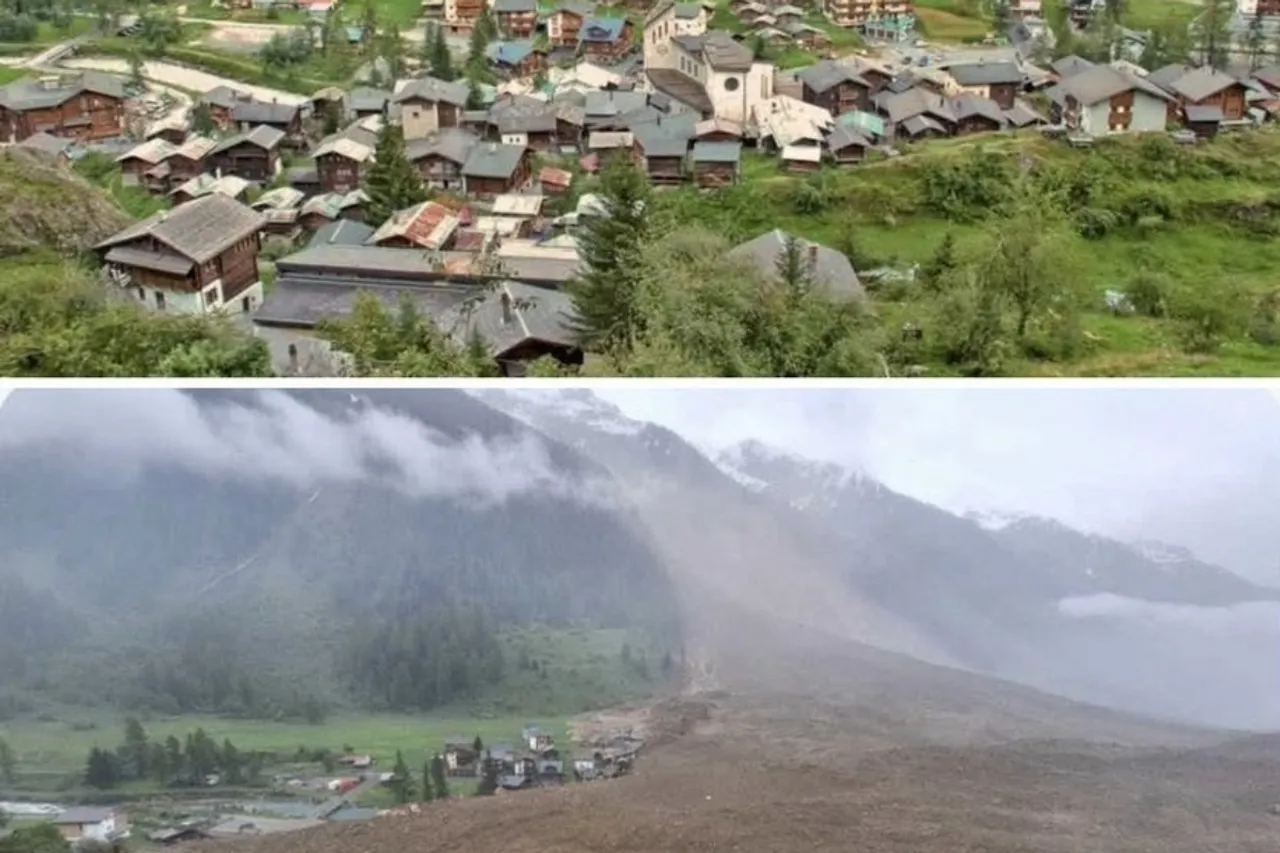
As of 2026, the cumulative death toll from major glacial collapses and related alpine instabilities in Switzerland exceeds 100 individuals in the modern era, with the 1965 Allalin disaster accounting for the vast majority. Economically, Switzerland faces billions of Swiss Francs (CHF) in projected losses due to declining tourism revenues, infrastructure damage from permafrost thaw, and the disruption of hydroelectric power generation—the nation's primary energy source.
Historical Context: Major Glacier Collapse Events and Death Tolls
Switzerland’s relationship with its glaciers has transitioned from one of reverence and utility to one of acute risk management. While "glacier collapse" specifically refers to the detachment and fall of ice masses (seracs), the term is often used synonymously with the broader category of glacial-related disasters, including glacial lake outburst floods (GLOFs) and rockfalls triggered by the retreat of ice.
The Allalin Glacier Disaster (1965)
The most significant glacier-related catastrophe in Swiss history occurred on August 30, 1965, at the Mattmark dam construction site in the Saas Valley. A massive tongue of the Allalin Glacier broke off, sending approximately two million cubic meters of ice and debris onto the living quarters of the dam workers.
- Death Toll: 88 workers were killed instantly.
- Context: The tragedy remains a foundational moment in Swiss civil engineering and Alpine safety protocols, highlighting the unpredictable nature of "hanging glaciers."
The Piz Cengalo Landslide and Bondasca Glacier (2017)
While primarily a rockfall, the 2017 event in Bondo was exacerbated by the melting of the Bondasca Glacier and the underlying permafrost. The collapse of 3 million cubic meters of rock onto the glacier ice triggered a massive mudflow (debris flow) that reached the village.
- Death Toll: 8 hikers disappeared and were later presumed dead.
- Economic Impact: The village of Bondo suffered tens of millions in property damage, and the subsequent reconstruction of flood defenses cost the Canton of Graubünden significant capital.
Modern-Day Casualties (2020–2026)
In more recent years, including the particularly warm seasons of 2022 and 2023, the death toll has shifted from large-scale industrial disasters to smaller, isolated incidents involving mountaineers and skiers. As of 2026, the Swiss Alpine Club (SAC) and local authorities continue to report annual fatalities caused by serac falls (collapsing ice towers) and crevasses opening in previously "safe" zones due to rapid thinning.
The Mechanics of Collapse: Why Swiss Glaciers Are Falling
To understand the economic and safety implications, one must understand the "Why" behind the increasing frequency of these events. Swiss glaciers have lost more than 10% of their total volume in just the last few years leading up to 2026.
- Subglacial Lubrication: As temperatures rise, meltwater penetrates the base of the glacier. This water acts as a lubricant, reducing the friction between the ice and the underlying bedrock. For glaciers on steep slopes, this can lead to a sudden "surge" or a complete detachment.
- Permafrost Degradation: High-altitude rock faces are held together by permafrost—ground that remains frozen year-round. As this "geological glue" thaws, it not only causes rockfalls but also removes the support structures that many glaciers lean against.
- Loss of Buttressing: When a lower section of a glacier (the tongue) melts away, the upper sections lose their physical support, increasing the likelihood of a gravitational collapse.
Economic Impact: The High Cost of Melting Ice
The economic consequences of glacier retreat and collapse in Switzerland are multifaceted, affecting national energy security, the multi-billion-dollar tourism industry, and the maintenance of essential transit corridors.
The Hydroelectric Power Crisis
Switzerland is often called the "Water Tower of Europe," with over 57% of its electricity generated by hydropower. Glaciers act as natural reservoirs, storing water in the winter and releasing it during the dry summer months.
- The "Peak Water" Phenomenon: Many Swiss catchments have already passed "peak water"—the point at which annual runoff reaches its maximum. Beyond this point, the volume of water available for hydropower begins a steady decline.
- Infrastructure Stress: Increased sedimentation from glacial melt and debris flows clogs turbines and reduces the storage capacity of reservoirs, leading to higher maintenance costs.
Impact on the Tourism Sector
Tourism contributes roughly 3% to Switzerland's GDP, but in mountainous regions like Valais and Graubünden, this figure is significantly higher.
- Loss of Summer Skiing: Iconic resorts such as Zermatt and Saas-Fee have faced repeated closures of summer skiing areas on the Theodul and Fee glaciers. By 2026, the "year-round skiing" marketing model has become nearly impossible to sustain.
- Landscape Degradation: The "Swiss Brand" relies on the aesthetic of pristine white peaks. The transition to grey, rocky landscapes reduces the appeal for international tourists, potentially leading to a long-term decline in hotel stays and local commerce.
- Artificial Snow Costs: To compensate for shorter seasons and less reliable glacial bases, resorts are investing hundreds of millions in snowmaking technology, which further increases the carbon footprint and operational overhead.
Infrastructure and Transportation
Switzerland’s dense network of mountain railways and roads is under constant threat from the increasing instability of the terrain.
- Protective Measures: The Swiss Federal Railways (SBB) and cantonal road departments must invest in sophisticated monitoring systems (radar and LiDAR) to detect movement in slopes above critical tracks and tunnels.
- The "Wrapping" Expense: In some locations, such as the Titlis or Rhone glaciers, expensive UV-resistant blankets are used to slow the melt of specific ice sections near tourist facilities. While effective on a micro-scale, this is not a viable national solution and represents a recurring cost.
Comparative Data: Deaths and Economic Variables
The following table contextualizes the relationship between glacial stability and the Swiss economy.
| Event / Factor | Historical Impact (Approx.) | Current Status (2026 Perspective) | Primary Economic Driver |
|---|---|---|---|
| Allalin Collapse (1965) | 88 Deaths | Site now monitored by automated sensors | Construction / Labor Safety |
| Bondo Debris Flow (2017) | 8 Deaths | Village partially rebuilt; new dams | Civil Engineering / Real Estate |
| Summer Skiing Revenue | High / Reliable | 40-60% reduction in viable days | Tourism / Hospitality |
| Hydropower Contribution | ~60% of national power | Decreasing summer reliability | Energy Security |
| Mitigation Spending | Moderate | Exceeding 1 Billion CHF annually | Government / Taxpayer funded |
Safety and Monitoring: Technological Interventions
To mitigate the death toll, Switzerland has become a world leader in alpine monitoring technology. The Swiss Glacier Monitoring Network (GLAMOS) and research institutions like ETH Zurich play a critical role in early warning.
Advanced Detection Systems
- Ground-Based Interferometric Radar: These systems can detect movements of just a few millimeters in ice faces from several kilometers away, providing hours of warning before a serac collapse.
- Satellite InSAR: Space-borne radar is used to monitor large-scale mountain deformations that are invisible to the naked eye.
- Seismic Sensors: Glaciers "groan" before they break. Micro-seismic monitoring allows scientists to hear the internal fracturing of ice before a collapse occurs.
Legal and Insurance Implications
The increasing risk has led to a shift in Swiss liability law. Mountain guides and tour operators are now under stricter requirements to prove they have consulted the latest glacial stability data before leading groups. Furthermore, insurance premiums for properties in "Red Zones" (high risk of debris flow or avalanche) have surged, forcing some businesses to relocate or close.
FAQ: Frequently Asked Questions
Which Swiss glacier is currently considered the most dangerous?
While "danger" is relative, the Eiger Glacier and the hanging glaciers above the Saas Valley (like the Allalin) are under constant surveillance. The Morteratsch Glacier in the Bernina Range is also closely watched due to its rapid retreat and the high volume of tourists in the vicinity.
Can the collapse of a glacier be predicted exactly?
No, but it can be forecasted. Much like weather forecasting, glaciologists look for "acceleration phases." If an ice mass starts moving 10 times faster than its baseline speed, a collapse is likely within 24 to 48 hours. However, sudden failures due to internal water pressure can still occur without warning.
How much do glaciers contribute to the Swiss economy via water?
Glacial melt contributes significantly to the rivers Rhine, Rhone, and Inn. In a hot summer, up to 20% of the water flowing in these rivers can originate from melting Swiss glaciers. This water is vital not just for Swiss hydropower, but for agriculture and shipping throughout Europe.
Are there any positive economic effects of glacier retreat?
In the very short term, increased meltwater can boost hydropower production. Additionally, the retreat of ice sometimes reveals archaeological finds or new minerals. However, these "positives" are vastly outweighed by the long-term costs of infrastructure instability and the loss of natural water storage.
What happens to the death toll if the permafrost melts completely?
If permafrost thaws entirely at higher elevations, the risk of massive rock-ice avalanches increases exponentially. This would move the threat beyond just high-altitude hikers and into the valleys where permanent settlements and transit routes are located, potentially increasing the risk to the general population.
Practical Recommendations for Travelers and Stakeholders
- For Mountaineers: Always consult the MeteoSwiss and SLF (Swiss Institute for Snow and Avalanche Research) bulletins. Avoid resting under seracs or hanging ice, especially during the afternoon when melting is at its peak.
- For Investors: When considering real estate in Alpine regions, consult the cantonal "Hazard Maps" (Gefahrenkarten). These documents outline which areas are susceptible to future glacial collapses or debris flows.
- For Local Authorities: Continued investment in decentralized energy sources (solar and wind) is necessary to offset the future decline in reliable summer hydropower.
- For Tourists: Support sustainable "low-impact" tourism. The shift from glacier-dependent activities to hiking and cultural tourism is essential for the long-term survival of mountain economies.