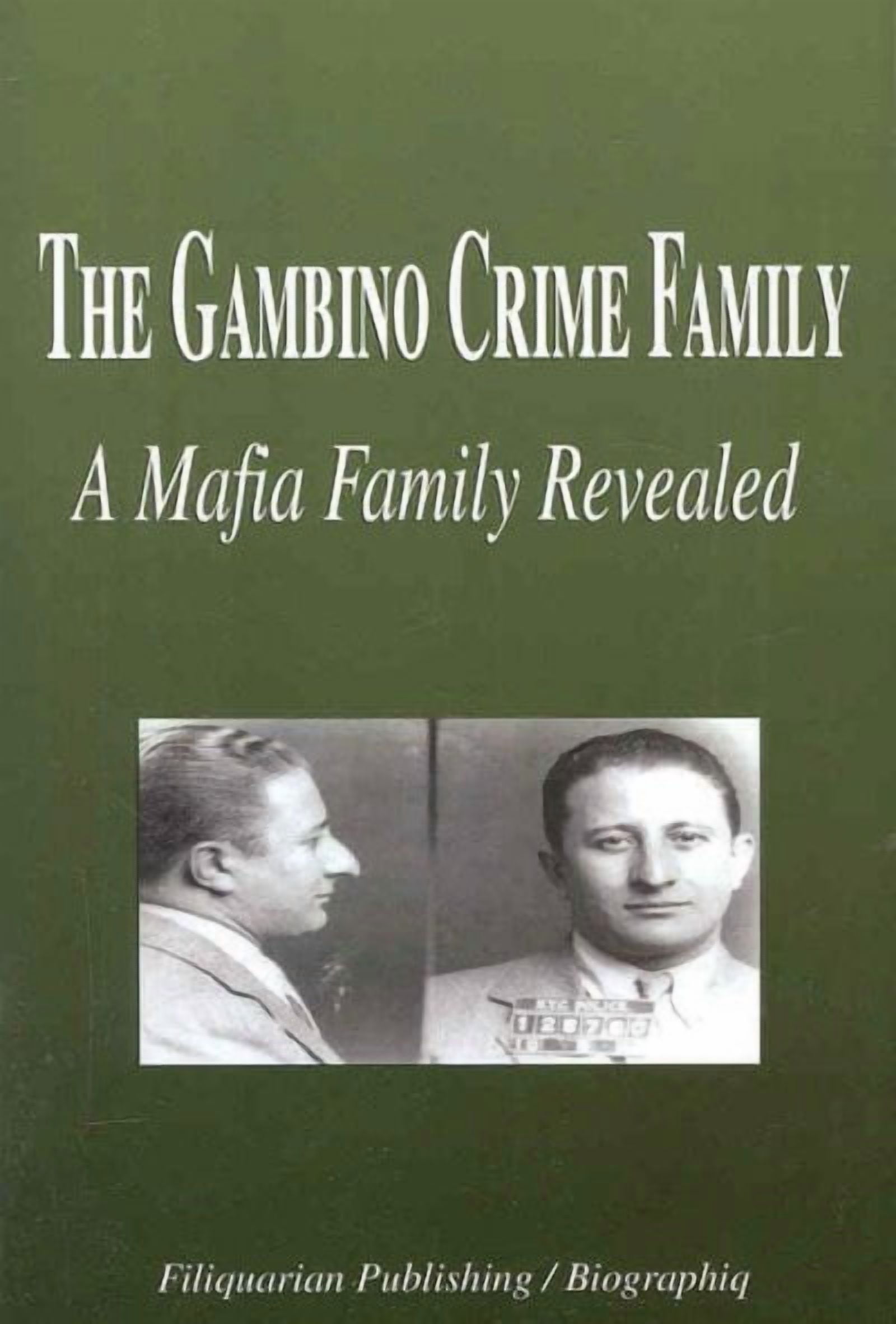
The Gambino crime family remains one of the most thoroughly documented and historically significant organized crime syndicates in American history. Tracing its lineage back to the early 20th-century Sicilian mafia roots in New York City, the organization evolved through distinct eras of violent expansion, corporate infiltration, and federal persecution. Understanding the structural mechanics, historical figures, and contemporary realities of the Gambino syndicate requires examining how traditional Cosa Nostra has adapted to modern law enforcement and economic shifts as of 2026.
Origins and Rise of the Five Families Architecture
The foundation of the Gambino family traces back to Salvatore D'Aquila and later migration patterns that brought Sicilian mafiosi to Brooklyn and Manhattan. During the Prohibition era, the faction consolidated power under bosses such as Francesco Scalice and Vincent Mangano. The pivotal structural transformation occurred in the aftermath of the 1931 Castellammarese War, which established the modern Commission system and carved New York City's Italian-American underworld into five distinct crime families.
Vincent Mangano ruled the family with traditional Sicilian secrecy until his disappearance in 1951. His underboss, Albert Anastasia—known widely as the head of Murder, Inc.—assumed control. Anastasia's violent reign ended abruptly in a Manhattan barbershop in October 1957, clearing the path for Carlo Gambino to take over. Under Gambino's stewardship, the family expanded exponentially, absorbing smaller crews and establishing dominance over unions, garment districts, and construction industries across the metropolitan area.
Structural Anatomy and Operational Hierarchy
The traditional structure of the Gambino syndicate follows a rigid paramilitary hierarchy derived from Sicilian traditions. At the apex sits the Boss, supported by an Underboss and a Consigliere (counselor). Below this administration operate the Captains (referred to as capos or caporegimes), who manage individual crews composed of inducted members (made men) and uninducted associates.
Modern law enforcement analysis indicates that while the structural framework remains intact in 2026, operational methods have shifted away from traditional street-level extortion toward sophisticated white-collar fraud, digital financial crimes, and transnational illicit enterprises.
| Organizational Role | Primary Responsibilities | Operational Focus |
|---|---|---|
| Boss | Overall strategic direction, dispute resolution, and commission representation | High-level oversight and financial approval |
| Underboss | Second-in-command, supervises captains, oversees day-to-day enforcement | Crew coordination and internal discipline |
| Consigliere | Acts as an advisor, mediator, and financial strategist | Conflict mediation and legal/financial counsel |
| Caporegime | Manages a specific crew of soldiers and associates | Localized rackets, labor union infiltration, and extortion |
| Soldiers & Associates | Executes core criminal activities, generates revenue | Gambling, loansharking, fraud, and street operations |
Key Historical Eras and Notorious Figures
The legacy of the Gambino family is inextricably linked to high-profile leaders who dominated headlines for decades. Carlo Gambino's quiet, low-profile leadership style allowed the family to amass immense wealth and political influence while avoiding the intense public scrutiny that plagued other syndicates. Upon Gambino's death of natural causes in 1976, power transferred to Paul Castellano.
Castellano’s executive style—focusing on white-collar crime and distancing the family from traditional drug trafficking—alienated ambitious street captains. This internal friction culminated in the high-profile assassination of Castellano outside Sparks Steak House in December 1985, ordered by rising capo John Gotti.
John Gotti, the "Dapper Don," ushered in an era of media saturation. Gotti’s flamboyant public persona and multiple high-profile courtroom acquittals earned him legendary status before federal RICO statutes and the cooperation of underboss Salvatore "Sammy the Bull" Gravano led to Gotti's life sentence in 1992.
Law Enforcement Impact and RICO Prosecutions
The passage of the Racketeer Influenced and Corrupt Organizations (RICO) Act in 1970 fundamentally altered the operational landscape for the Gambino family. Federal prosecutors utilized the statute to target the entire leadership structure rather than isolated criminals.
- The Commission Trial (1986): Convicted top leadership figures from multiple New York families, dismantling traditional mafia governance boards.
- The Gotti Convictions (1992): Resulted in life imprisonment for John Gotti, effectively ending the era of the high-profile, celebrity mob boss.
- Operation Old Bridge (2008): A joint US-Italian operation that disrupted a major alliance between the Gambino family and the Sicilian Mafia, resulting in dozens of arrests targeting international narcotics trafficking and extortion.
- Contemporary Investigations: Federal and state agencies continue to target modern iterations of the family, focusing on cybercrime, cryptocurrency laundering, and healthcare fraud alongside legacy rackets.
Modern Status and Operational Realities
As of 2026, the Gambino crime family persists, though operating with a severely diminished footprint compared to its mid-20th-century peak. Modern federal indictments indicate that the organization has decentralized, relying heavily on trusted associates and familial ties to evade sophisticated surveillance technologies.
Traditional revenue streams such as illegal gambling, loansharking, and labor racketeering persist on a smaller scale, supplemented by modern financial crimes. Law enforcement agencies maintain active surveillance on suspected leadership factions, ensuring that traditional organized crime remains a priority target despite the evolution of transnational cyber syndicates.
Frequently Asked Questions
Who is the current head of the Gambino crime family?
Law enforcement intelligence indicates that leadership frequently shifts due to federal indictments and internal restructuring, with leadership roles often filled by acting bosses rather than undisputed permanent heads. Modern federal filings point toward decentralized faction management rather than a single dominant boss of the Gotti era.
Is the Gambino family still active today?
Yes, federal indictments and law enforcement operations confirm that the Gambino family remains active, though operating with heightened discretion and reduced public visibility compared to past decades.
How did John Gotti impact the Gambino family?
John Gotti brought unprecedented media attention to the syndicate through his public lifestyle, which ultimately triggered aggressive federal crackdowns, high-level defections, and devastating RICO convictions that weakened the organization's infrastructure.
What are the primary criminal enterprises of modern mob families?
Modern syndicates focus heavily on white-collar fraud, digital financial crimes, traditional extortion, loansharking, and localized labor racketeering while minimizing high-visibility street violence.
How does the RICO Act affect organized crime prosecution?
The RICO Act allows prosecutors to charge multiple individuals with belonging to a corrupt enterprise, enabling the government to target entire leadership hierarchies for the criminal acts committed by subordinate members.
Conclusion
The trajectory of the Gambino mob family reflects the broader evolution of American organized crime from brutal street-level gangs to corporate-style criminal enterprises. While federal law enforcement and modern surveillance techniques have severely constrained their operations, the syndicate's historical legacy and persistent underground networks ensure it remains a subject of ongoing study for criminologists and security experts alike.