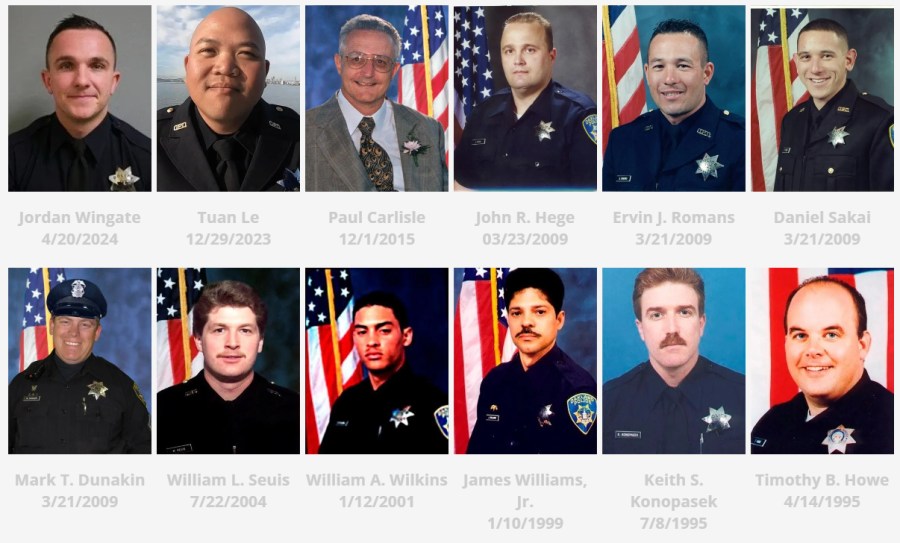
Tracking 2024 officer line of duty deaths involves examining data compiled by organizations like the Officer Down Memorial Page (ODMP) and the National Law Enforcement Officers Memorial Fund (NLEOMF) to document law enforcement fatalities. This tracking includes various causes of death, such as gunfire, vehicular crashes, and medical emergencies, providing critical data for safety policy, operational changes, and historical analysis.
Understanding how line of duty deaths are tracked requires looking at the historical context, the methodologies used by non-profit and federal entities, and the evolving classification standards for law enforcement fatalities. As public safety agencies and researchers analyze these numbers, tracking mechanisms provide essential insights into the risks facing law enforcement professionals across the United States.
The Purpose and Significance of Tracking Line of Duty Deaths
The systematic tracking of law enforcement fatalities serves several vital functions within public safety, legislative policy, and organizational accountability. Without accurate data collection, identifying emerging threats to officer safety becomes guesswork. Memorial organizations and federal agencies track these incidents to honor fallen personnel, understand systemic risks, and drive safety improvements.
Public safety research relies on comprehensive data to evaluate the effectiveness of protective equipment, tactical training, and emergency medical protocols. For instance, analyzing vehicular-related fatalities has historically led to updated department policies regarding high-speed pursuits, mandatory seatbelt use, and emergency vehicle operations courses (EVOC). Similarly, tracking medical-related deaths—such as heart attacks or line-of-duty health conditions—informs wellness programs and fitness standards.
Furthermore, accurate tracking ensures that families of fallen officers receive appropriate federal, state, and local benefits, such as those provided by the federal Public Safety Officers' Benefits (PSOB) program. Establishing a definitive line of duty determination is often the legal prerequisite for survivor compensation, insurance payouts, and inclusion on national monuments.
Major Organizations Responsible for Tracking Fatalities
Multiple entities track and verify law enforcement fatalities in the United States, each employing specific criteria and verification standards. The two most prominent non-governmental organizations maintaining continuous historical logs are the Officer Down Memorial Page and the National Law Enforcement Officers Memorial Fund.
In addition to non-profit organizations, federal agencies collect and publish statistical data on law enforcement deaths. The Federal Bureau of Investigation (FBI) manages the Law Enforcement Officers Killed and Assaulted (LEOKA) program, which serves as an official statistical compilation based on voluntary reporting from local, state, tribal, and federal law enforcement agencies.
| Organization / Program | Primary Role | Data Source and Verification Method |
|---|---|---|
| Officer Down Memorial Page (ODMP) | Maintains a real-time, public database of fallen law enforcement officers. | Direct agency reporting, media verification, and documentation review. |
| National Law Enforcement Officers Memorial Fund (NLEOMF) | Manages the national monument and publishes mid-year and end-of-year fatality reports. | Comprehensive historical research, agency confirmation, and board review. |
| FBI LEOKA Program | Collects official annual crime and safety statistics for federal reporting. | Standardized agency reporting through the National Incident-Based Reporting System (NIBRS). |
| Bureau of Justice Statistics (BJS) | Conducts periodic census data collection on arrest-related deaths and fatalities. | Federal statistical surveys and independent research studies. |
Categorization of Line of Duty Deaths in 2024
When analyzing data regarding law enforcement fatalities, deaths are typically sorted into distinct categories based on the immediate or proximate cause. The distribution of these causes varies significantly from year to year, reflecting shifts in tactical environments, public health crises, and roadway hazards.
Firearm-Related Incidents
Deaths resulting from felonious assaults involving firearms remain one of the most closely scrutinized categories. This classification includes officers killed during ambush attacks, routine traffic stops, disturbance calls, tactical operations, and warrant service. Tracking these incidents helps law enforcement trainers adjust defensive tactics, positioning, and threat assessment protocols.
Vehicular and Transportation Fatalities
Automobile crashes, motorcycle accidents, and struck-by incidents historically represent a leading cause of line of duty deaths. This category encompasses:
- Single-vehicle crashes during routine patrol or transit.
- Multi-vehicle collisions during emergency response or pursuits.
- Struck-by incidents, where officers are hit by passing motorists while conducting traffic stops, clearing crash scenes, or directing traffic.
Medical Emergencies and Health-Related Causes
Heart attacks, strokes, and physical exertion-related medical crises occurring on duty or shortly after strenuous activity constitute a significant portion of annual fatalities. Public safety agencies increasingly track these events to implement early cardiovascular screening, mental health support, and physical fitness initiatives.
Other Causes
This category captures specialized incidents, including aircraft accidents, falls, drownings, and line-of-duty exposures to environmental hazards or chemical agents.
Comparison of Tracking Methodologies and Criteria
Different organizations maintain distinct inclusion criteria, which can lead to variations in annual fatality totals. Understanding these methodological differences is essential for researchers and policy analysts examining multi-year trends.
| Criteria Factor | ODMP Approach | NLEOMF Approach | FBI LEOKA Approach |
|---|---|---|---|
| Inclusion Timing | Updated continuously in real-time as incidents are verified. | Published periodically (mid-year and end-of-year comprehensive reports). | Published annually following the close of the calendar year data collection window. |
| Medical / Illness Deaths | Includes verified medical conditions directly triggered by physical exertion or stress on duty. | Includes verified medical conditions that meet specific causal criteria for line-of-duty status. | Follows specific statutory guidelines, historically focusing heavily on felonious acts and accidental trauma. |
| Geographic Scope | Federal, state, local, territorial, and tribal law enforcement officers. | Federal, state, local, tribal, and campus law enforcement personnel. | Participating local, state, tribal, and federal agencies reporting through NIBRS. |
Accessing and Verifying Official Data Sources
Researchers, journalists, and public safety professionals seeking to examine tracking data must navigate multiple platforms. Official reports provide granular breakdowns by state, agency size, gender, and specific circumstance.
When referencing historical data or current tracking metrics, it is recommended to consult primary portals directly rather than relying on secondary summaries.
- The Officer Down Memorial Page provides searchable databases sorted by year, state, and cause of death.
- The National Law Enforcement Officers Memorial Fund publishes detailed research reports, historical data visualizations, and methodology explanations.
- The FBI LEOKA Program offers comprehensive annual statistical tables and methodology documentation through the Crime Data Explorer.
Frequently Asked Questions
What constitutes a line of duty death for a police officer?
A line of duty death is generally defined as any death of a law enforcement officer that occurs while the officer is performing official duties, responding to an emergency, or facing a hazard inherent to the profession, resulting in fatal trauma, illness, or injury.
Why do different tracking organizations report different fatality numbers?
Discrepancies between organizations stem from variations in inclusion criteria, particularly regarding medical emergencies like heart attacks, off-duty incidents, and the timeline for reporting verification. Some organizations include historical cases added to memorials long after the occurrence, while others strictly count incidents within a specific calendar year.
How does the FBI LEOKA program collect its data?
The FBI's Law Enforcement Officers Killed and Assaulted program collects data primarily through voluntary reporting by local, state, and tribal law enforcement agencies using standardized incident-reporting frameworks.
Are federal law enforcement officers included in these statistics?
Yes, tracking data encompasses local, state, tribal, territorial, and federal law enforcement personnel, provided the incident meets the established line-of-duty criteria of the respective monitoring organization.
Where can the public view historical data on law enforcement fatalities?
Publicly accessible databases are maintained by non-profit memorial organizations such as the Officer Down Memorial Page and the National Law Enforcement Officers Memorial Fund, offering decades of searchable historical records.
Conclusion and Next Actions
Tracking law enforcement fatalities requires careful attention to verification standards, agency reporting methodologies, and categorical definitions. For researchers, policy analysts, and public safety administrators, examining data from multiple recognized sources provides a balanced view of officer safety trends. Reviewing annual reports from ODMP, NLEOMF, and the FBI LEOKA program allows stakeholders to identify operational risks and support evidence-based safety measures within law enforcement agencies.