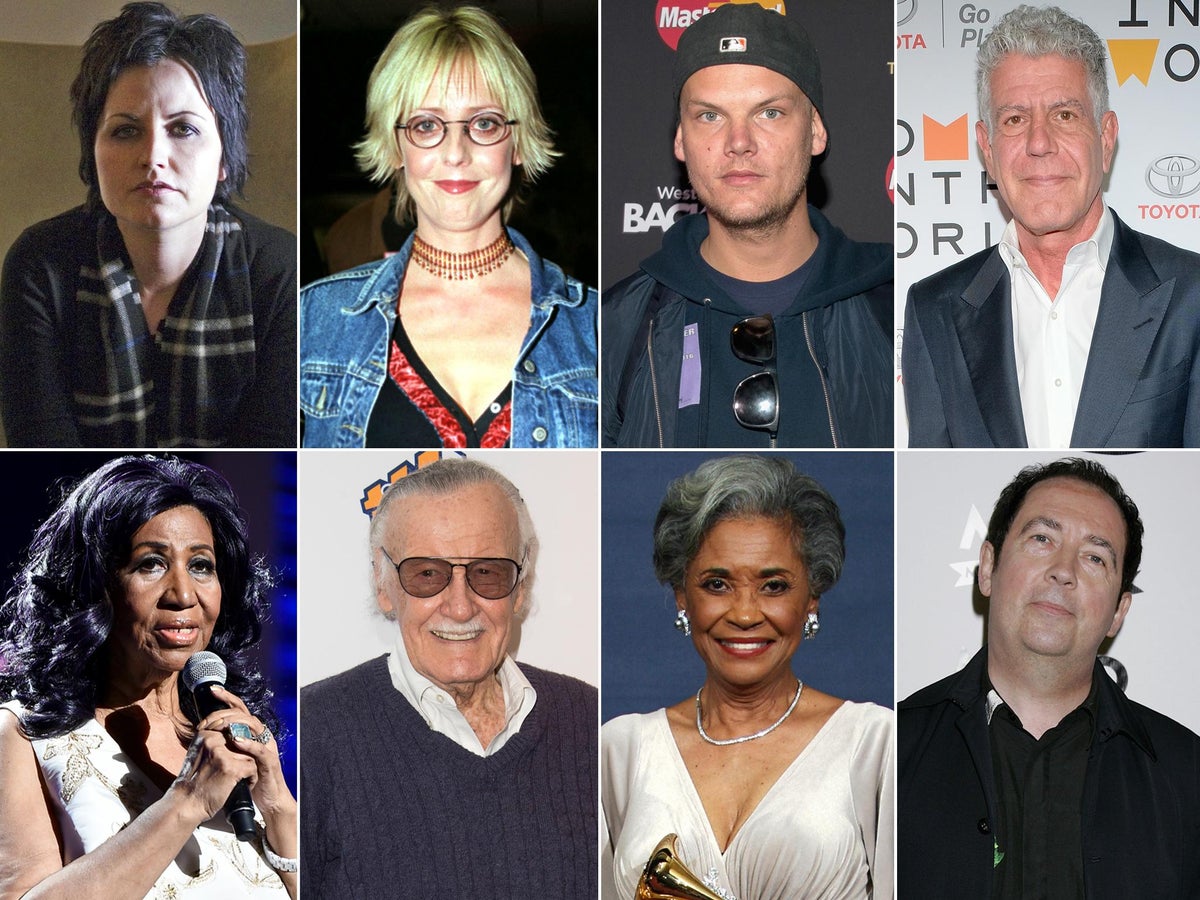
The year 2018 marked the passing of several transformative figures across science, politics, music, and the arts. From the intellectual brilliance of Stephen Hawking to the cultural dominance of Aretha Franklin and the creative spark of Stan Lee, these losses reshaped their respective fields and left enduring legacies that continue to resonate in 2026.
As we look back from the perspective of 2026, the year 2018 remains a pivotal moment in contemporary history due to the caliber of individuals who passed away. These deaths represented more than just the end of lives; they often signaled the end of eras. The scientific community lost its most recognizable voice, the music world lost its "Queen of Soul," and the political landscape saw the departure of a former U.S. President and a long-serving Senator whose influence spanned decades.
Intellectual and Scientific Pioneers
Perhaps no death in 2018 garnered as much global attention as that of Stephen Hawking. The world-renowned theoretical physicist passed away on March 14, 2018—coincidentally Pi Day and the anniversary of Albert Einstein's birth. Hawking, who lived for decades with amyotrophic lateral sclerosis (ALS), defied medical expectations while revolutionizing our understanding of black holes and the origins of the universe. His 1988 book, A Brief History of Time, remains a cornerstone of popular science, making complex cosmological concepts accessible to the general public.
Later that year, the world also lost Paul Allen on October 15. As the co-founder of Microsoft alongside Bill Gates, Allen was instrumental in the personal computer revolution. Beyond his technical contributions, Allen became one of the world's most significant philanthropists and a "polymath" who invested in everything from professional sports (the Seattle Seahawks and Portland Trail Blazers) to space exploration and brain research. His death from complications of non-Hodgkin’s lymphoma marked the loss of a visionary who bridged the gap between raw technology and human application.
Political Icons and Global Statesmen
The political world saw the departure of several giants in 2018, most notably George H.W. Bush, the 41st President of the United States, who passed away on November 30 at the age of 94. His death came just months after the passing of his wife, former First Lady Barbara Bush, on April 17. The elder Bush was remembered for his steady hand during the end of the Cold War and the reunification of Germany. In the years since 2018, his brand of "kinder, gentler" conservatism has often been cited as a contrast to the shifting tides of American politics.
In August 2018, the United States also lost Senator John McCain. A war hero and two-time presidential candidate, McCain was a fixture in the Senate for over 30 years. Known as the "Maverick," his death from glioblastoma (a form of brain cancer) triggered a nationwide period of mourning that emphasized his commitment to bipartisan cooperation and national service.
On the international stage, the death of Kofi Annan on August 18 was a significant loss for global diplomacy. The former Secretary-General of the United Nations and Nobel Peace Prize laureate was a tireless advocate for human rights and international cooperation. His leadership during the transition into the 21st century helped define the UN's role in a post-Cold War world.
Legends of Music and the Performing Arts
The music industry experienced profound losses in 2018, spanning genres from soul and rock to electronic dance music and hip-hop. Aretha Franklin, the undisputed "Queen of Soul," passed away on August 16. With a career spanning six decades, Franklin was not only a vocal powerhouse but also a symbol of the Civil Rights Movement. Her songs, such as "Respect" and "Natural Woman," remain anthems of empowerment that are still frequently covered and sampled in 2026.
Earlier in the year, the sudden death of Avicii (Tim Bergling) on April 20 shocked the electronic music world. Only 28 at the time of his passing in Oman, Avicii was a pioneer of the EDM genre, blending folk and country elements with house music. His death brought much-needed attention to the mental health struggles and physical exhaustion often faced by high-profile touring artists.
The hip-hop community mourned the loss of Mac Miller on September 7. Known for his evolution from "frat-rap" to deeply introspective and jazz-influenced production, Miller’s death from an accidental overdose was a tragic bookend to a career that was reaching its creative peak. Similarly, the controversial but undeniably influential XXXTentacion was killed in June, highlighting the volatility and tragedy that sometimes surrounds young stardom.
Cultural Shapers and Creative Visionaries
The creative world lost one of its most prolific architects when Stan Lee passed away on November 12, 2018. As the primary creative lead of Marvel Comics, Lee co-created characters like Spider-Man, the X-Men, Iron Man, and the Hulk. By the time of his death at age 95, his creations had become the bedrock of the most successful film franchise in history. Lee’s influence on modern mythology cannot be overstated; he humanized superheroes, giving them flaws and relatable problems that resonated with generations of readers.
Anthony Bourdain, the chef, author, and travel documentarian, passed away on June 8. Bourdain’s work on Parts Unknown transformed travel television from a luxury showcase into a medium for empathy and cultural understanding. His death by suicide sparked a global conversation about the "silent struggle" of mental health, even among those who seem to "have it all."
In the world of fashion, Kate Spade's death on June 5 was a significant blow. She was credited with making luxury handbags accessible to the modern working woman, building a multi-billion dollar brand on a foundation of bright colors and practical elegance.
Hollywood and the Silver Screen
Hollywood lost several of its most enduring stars and directors in 2018. Burt Reynolds, a definitive leading man of the 1970s and 80s, passed away on September 6. Known for his charisma and roles in films like Smokey and the Bandit and Deliverance, Reynolds was a quintessential movie star.
Penny Marshall, who died on December 17, broke barriers as a female director. After rising to fame on the sitcom Laverne & Shirley, she transitioned behind the camera to helm hits like Big (becoming the first woman to direct a film that grossed over $100 million) and A League of Their Own. Her work paved the way for the increased visibility of female directors seen in the current 2026 landscape.
| Name | Primary Field | Date of Death (2018) | Key Contribution/Legacy |
|---|---|---|---|
| Stephen Hawking | Science/Physics | March 14 | Theoretical work on black holes; A Brief History of Time. |
| Aretha Franklin | Music (Soul) | August 16 | "Queen of Soul"; Civil Rights activist; 18-time Grammy winner. |
| Stan Lee | Comics/Media | November 12 | Co-creator of the Marvel Universe; revolutionized storytelling. |
| George H.W. Bush | Politics | November 30 | 41st U.S. President; oversaw the end of the Cold War. |
| Anthony Bourdain | Culinary/Media | June 8 | Revolutionized travel journalism; author of Kitchen Confidential. |
| John McCain | Politics | August 25 | U.S. Senator; Vietnam War hero; "Maverick" legislator. |
| Avicii | Music (EDM) | April 20 | Pioneer of melodic EDM; global hit "Wake Me Up". |
| Paul Allen | Tech/Business | October 15 | Co-founder of Microsoft; major philanthropist and sports owner. |
| Penny Marshall | Film/TV | December 17 | Director of Big; advocate for women in Hollywood. |
| Mac Miller | Music (Hip-Hop) | September 7 | Influential rapper/producer; Swimming and Circles albums. |
Detailed Analysis of Significant Transitions
The deaths of 2018 often represented more than individual losses; they represented a shift in the cultural and political guard. For instance, the passing of Billy Graham on February 21 marked the end of an era for American evangelicalism. Known as "America's Pastor," Graham had been a confidant to every U.S. president from Harry Truman to Barack Obama. His death signaled a transition in how religion and politics intersect in the United States.
Similarly, the death of Neil Simon on August 26 took away one of the most prolific playwrights in history. Simon’s ability to capture the anxieties and humor of middle-class American life in plays like The Odd Couple and Barefoot in the Park defined Broadway for decades. As we analyze the theater of 2026, Simon’s influence on the "dramedy" genre remains foundational.
Frequently Asked Questions
Who was the most famous person to die in 2018?
While "most famous" is subjective, Stephen Hawking and Aretha Franklin are generally considered the most globally recognized figures who passed away in 2018. Hawking's contribution to science and his public persona as a symbol of human resilience made his death a major international event. Aretha Franklin's status as a cultural icon and the "Queen of Soul" meant her passing was felt deeply across the globe.
How did Anthony Bourdain's death affect travel television?
Anthony Bourdain’s death led to a fundamental shift in travel and food programming. Before Bourdain, many shows focused on "tourist" experiences. Bourdain's approach—focusing on the people, politics, and shared humanity of a region—became the new gold standard. In 2026, we see his influence in documentaries that prioritize cultural immersion and honest storytelling over polished, promotional travelogue styles.
What happened to the leadership of Marvel after Stan Lee died?
Stan Lee had already stepped back from day-to-day operations at Marvel decades before his death, serving primarily as a Chairman Emeritus and the "face" of the brand through his famous film cameos. However, his death in 2018 marked a symbolic end to the "founding era" of Marvel. Since then, Marvel Studios has continued to expand the Marvel Cinematic Universe (MCU), but Lee's absence is still noted by fans during the premiere of new projects.
Why was 2018 considered a significant year for the music industry?
The year was significant because it saw the loss of legends from several generations. You had the loss of a foundational icon in Aretha Franklin, a classic rock voice in Dolores O'Riordan (of The Cranberries), and modern trailblazers like Avicii and Mac Miller. This combination of "old guard" and "new guard" losses forced the industry to grapple with both the preservation of musical history and the urgent need for better mental health and substance abuse support for current artists.
How is George H.W. Bush remembered in 2026?
By 2026, George H.W. Bush is often remembered as one of the last "institutionalist" presidents. Historians frequently point to his foreign policy expertise and his ability to navigate the dissolution of the Soviet Union without major military conflict. While his domestic policies were debated during his time, his commitment to public service and decorum is frequently used as a benchmark for political leadership in modern academic discourse.
Conclusion and Final Reflections
The notable deaths of 2018 remind us of the profound impact a single individual can have on the collective human experience. Whether through a scientific discovery that changes our view of the stars, a song that provides comfort during a movement, or a story that captures the imagination of millions, the figures we lost in 2018 continue to shape our world in 2026. For those looking to honor these legacies, the best next step is to engage with their work—read a Hawking essay, listen to a Franklin record, or watch a film directed by Penny Marshall—to understand the foundations of our current cultural landscape.