The 2018 Tour de France, the 105th edition of cycling’s most prestigious Grand Tour, was won by Welshman Geraint Thomas of Team Sky. Running from July 7 to July 29, 2018, the race covered 3,351 kilometers across France and a brief section of Spain, culminating in Thomas’s first career yellow jersey and a historic double-podium for Team Sky with Chris Froome finishing third.
While the "2018 tour" can refer to significant cultural events such as Taylor Swift’s Reputation Stadium Tour or the PGA Tour season, in the context of global sports history and record-keeping, it most prominently identifies the Tour de France. This edition was characterized by its departure from traditional routes, featuring a grueling stage over the cobbles of Roubaix, a unique Formula 1-style grid start, and the emergence of a new leader within the world’s most dominant cycling team.
The 2018 Route: Innovation and Brutality
The 2018 route was designed by Christian Prudhomme and the ASO (Amaury Sport Organisation) to break the "Sky Train" dominance by introducing unpredictable elements early in the race. Starting in the Vendée region at Noirmoutier-en-l'Île, the race spent significant time in the north before heading to the Alps and the Pyrenees.
The Cobbles of Northern France
One of the most anticipated and feared segments of the 2018 tour was Stage 9, which ran from Arras to Roubaix. This stage included 21.7 kilometers of pavé (cobblestones) spread across 15 sectors. This was the highest volume of cobblestones featured in the Tour de France since the 1980s. The stage was designed to favor classics specialists like Peter Sagan and Greg Van Avermaet while posing a massive risk to lightweight General Classification (GC) contenders.
The technical requirements for this stage were immense. Teams had to utilize endurance-focused frames (such as the Specialized Roubaix or Pinarello Dogma K10) equipped with wider tires (28mm to 30mm) and lower tire pressures to dampen the vibrations of the stones. This stage ultimately saw the retirement of Richie Porte due to a crash and forced several GC contenders to fight for their survival before the race even reached the mountains.
The Mountain Clusters
The 2018 tour was divided into distinct mountain blocks. The Alps featured the iconic Alpe d'Huez finish on Stage 12, while the Pyrenees hosted a radical experimental format on Stage 17.
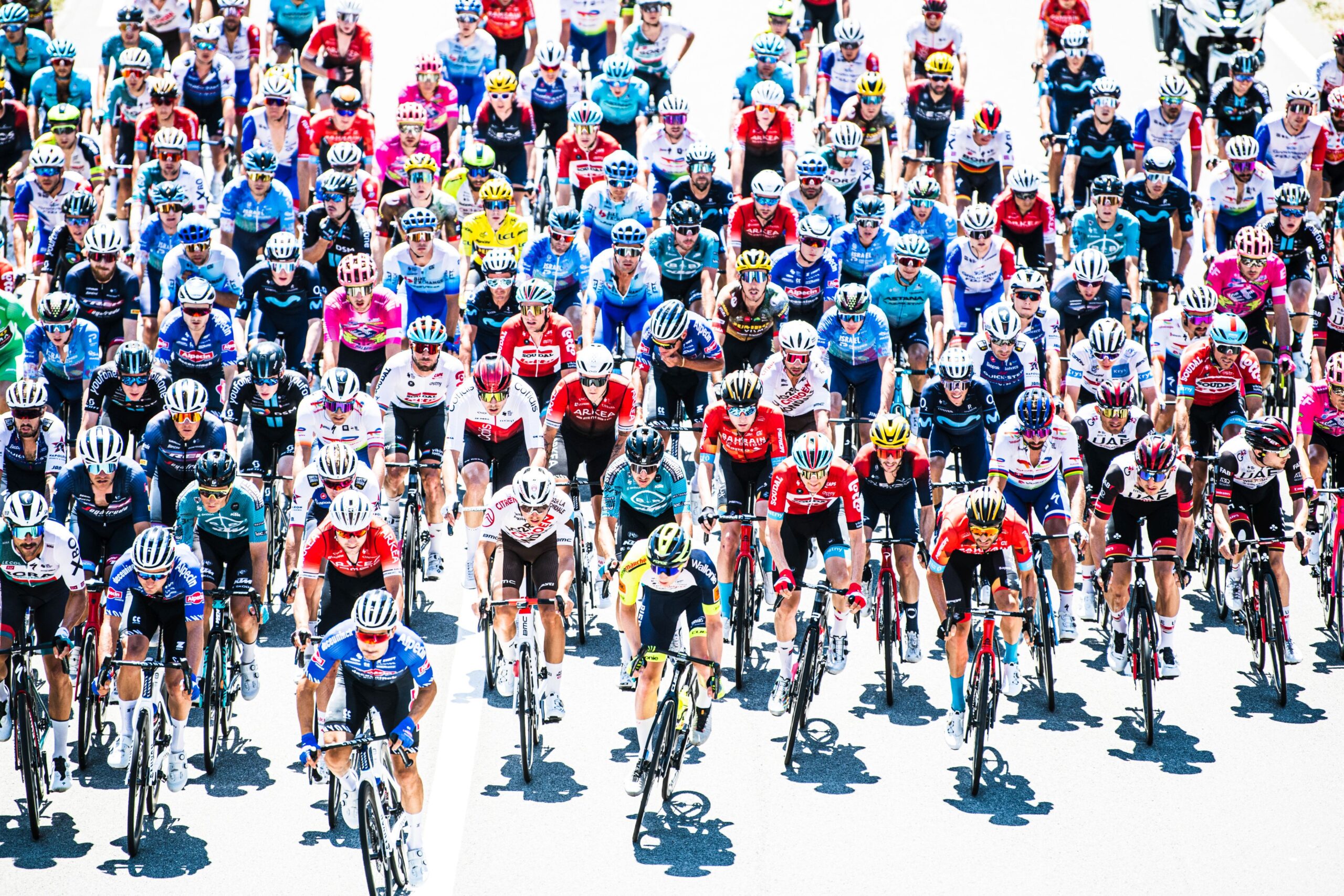
Stage 17 was a mere 65 kilometers long, but it featured a "grid start" where riders were positioned based on their GC standings, similar to a motor racing start. The intent was to spark immediate attacks. While the grid start had a negligible impact on the final result, the stage itself was a brutal climb to the Col de Portet at 2,215 meters, the highest point of the 2018 race (the Souvenir Henri Desgrange).
General Classification Battle: The Rise of Geraint Thomas
Going into the 2018 tour, the narrative centered on Chris Froome’s attempt to win a fifth Tour de France title and a fourth consecutive Grand Tour victory (having won the 2017 Tour, 2017 Vuelta, and 2018 Giro d'Italia). However, his teammate Geraint Thomas, often seen as the ultimate "super-domestique," proved to be in the form of his life.
Team Sky’s Internal Dynamics
The dual-leadership strategy of Team Sky created a fascinating tactical landscape. Thomas took the yellow jersey after winning Stage 11 to La Rosière and consolidated his lead by winning again on Stage 12 at Alpe d'Huez. This back-to-back mountain victory was unprecedented for a British rider.
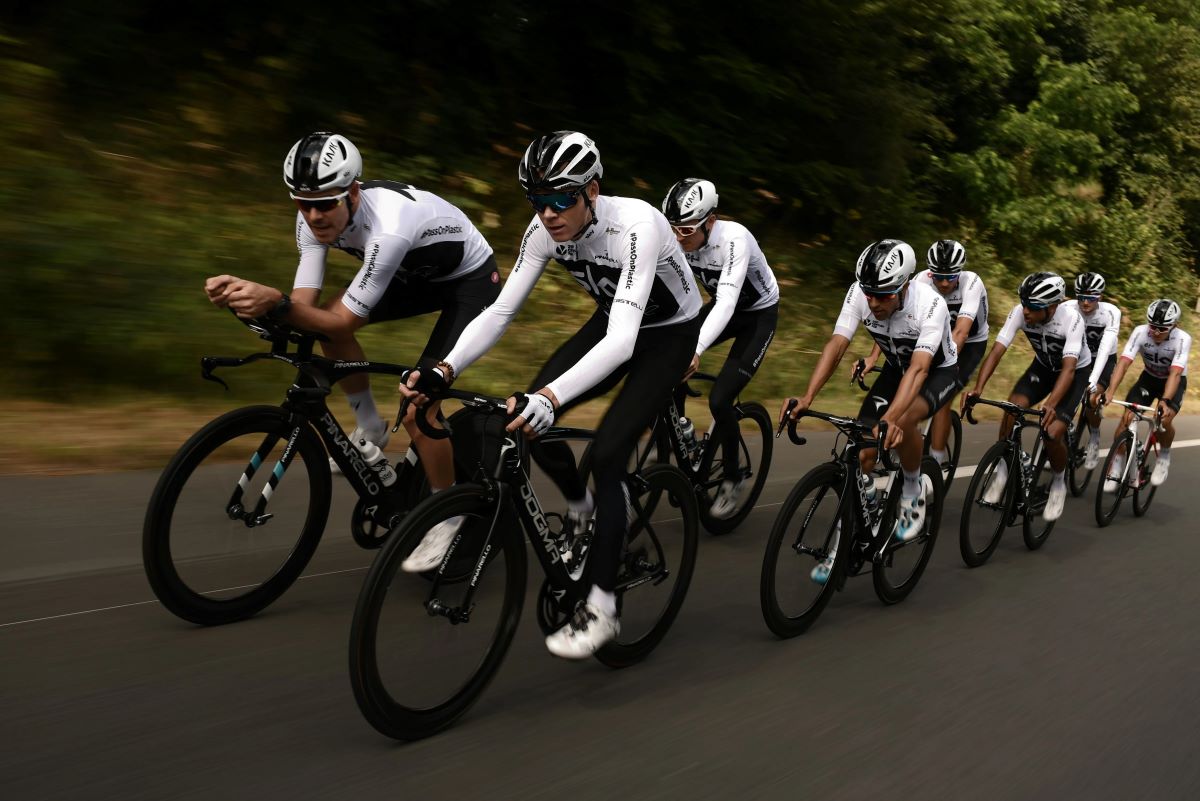
As the race progressed into the third week, the primary question was whether Thomas would be forced to sacrifice his lead for Froome. However, Froome’s struggles on Stage 17, where he was dropped by Thomas and Tom Dumoulin, effectively settled the hierarchy. Thomas maintained a professional yet assertive stance, while Froome eventually transitioned into a supporting role to ensure Team Sky secured the overall victory.
The Challenge from Tom Dumoulin
Tom Dumoulin (Team Sunweb), the 2017 Giro d'Italia winner, emerged as the most significant threat to the Sky duo. Dumoulin’s prowess in time-trialing made him a dangerous opponent, especially with a 31km individual time trial (ITT) scheduled for Stage 20. Dumoulin eventually won the Stage 20 ITT by a narrow margin of one second over Froome, but it wasn't enough to overturn Thomas’s lead. Dumoulin finished the 2018 tour in second place, cementing his status as one of the premier GC riders of that era.
Summary of the 2018 Tour Classifications
The battle for the secondary jerseys was equally intense, featuring some of the most dominant performances in recent cycling history.
| Classification | Winner | Team | Key Achievement |
|---|---|---|---|
| General (Yellow) | Geraint Thomas | Team Sky | First Welshman to win the Tour de France. |
| Points (Green) | Peter Sagan | Bora–Hansgrohe | Tied the record (at the time) with his 6th Green Jersey. |
| Mountains (Polka Dot) | Julian Alaphilippe | Quick-Step Floors | Won two mountain stages and dominated the climbs. |
| Young Rider (White) | Pierre Latour | AG2R La Mondiale | Finished 13th overall to secure the jersey. |
| Team Classification | Movistar Team | N/A | Secured through the collective depth of Landa, Quintana, and Valverde. |
| Combativity | Dan Martin | UAE Team Emirates | Awarded for his aggressive riding and Stage 6 victory. |
Key Stages and Strategic Turning Points
To understand the 2018 tour’s outcome, one must analyze the specific moments where time was gained and lost through tactical maneuvers rather than just physical strength.
Stage 6: Mûr-de-Bretagne Guerlédan
This stage featured a double ascent of the steep Mûr-de-Bretagne. It was a day where several favorites, including Tom Dumoulin and Romain Bardet, lost precious seconds due to mechanical issues and late-stage splits. Dan Martin’s explosive attack for the stage win served as a precursor to the aggressive mountain tactics that would define the second half of the race.
Stage 12: Alpe d'Huez
The 21 hairpins of Alpe d'Huez are where Tour legends are made. In 2018, this stage was the ultimate test of Team Sky’s defensive "mountain train." Despite multiple attacks from Romain Bardet, Vincenzo Nibali, and Tom Dumoulin, Geraint Thomas remained composed. In the final sprint, Thomas overpowered the remaining elite group to become the first rider in history to win on Alpe d'Huez while wearing the yellow jersey.
Stage 19: Laruns
The final day in the Pyrenees involved the Col d’Aspin, Col du Tourmalet, and the Col d’Aubisque. This was the last chance for pure climbers like Primož Roglič to break the podium. Roglič took a daring solo descent into Laruns to win the stage and temporarily move into third place overall, though he would eventually lose that spot back to Froome in the final time trial.
Technical Evolution: Bikes and Gear of 2018
The 2018 tour took place during a transitional period for cycling technology. As of 2026, we look back at 2018 as one of the last years where rim brakes were the standard in the professional peloton, though the shift toward disc brakes was accelerating.
- Braking Systems: The majority of the peloton, including Team Sky, utilized rim brakes to minimize weight for the mountain stages. However, teams like Specialized-sponsored Quick-Step Floors and Bora-Hansgrohe began using disc brakes on flatter stages for improved modulation and stopping power.
- Aerodynamics: 2018 saw the widespread adoption of "all-around" aero bikes. The Pinarello Dogma F10 used by Geraint Thomas featured integrated cabling and aerodynamic tube shaping that didn't sacrifice the stiffness required for climbing.
- Tire Technology: This was the era where the peloton moved decisively from 23mm to 25mm and even 28mm tires. The 2018 tour's inclusion of the Roubaix cobbles forced teams to master tubeless setups and high-volume tubulars to prevent pinch flats.
Historical Significance and Legacy
Looking back from 2026, the 2018 Tour de France represents the end of an era and the beginning of another. It was the final victory for the "Sky/Ineos" dynasty in its most dominant form before the rise of the younger generation led by Tadej Pogačar and Jonas Vingegaard.
Geraint Thomas’s victory was celebrated for its "clean" execution—avoiding crashes, punctures, and tactical blunders that sidelined other favorites. It also vindicated his transition from a track pursuit Olympic champion to a Grand Tour specialist. For Chris Froome, 2018 was his final podium finish in the Tour de France, marking the sunset of his period of absolute dominance.
The race also solidified Julian Alaphilippe’s status as a superstar. His aggressive style and ability to win on varied terrain made him the most popular rider in France, setting the stage for his heroic 2019 campaign.
FAQ
Who won the 2018 Tour de France?
Geraint Thomas of Team Sky won the 2018 Tour de France. He took the lead on Stage 11 and maintained it until the finish in Paris, becoming the third British rider and the first Welshman to win the event.
Why was the 2018 route considered controversial?
The route included several non-traditional elements, most notably Stage 9, which featured over 21km of cobblestones. Many GC riders felt this introduced too much "luck" into a race that should be decided by fitness. Additionally, the 65km "grid start" stage (Stage 17) was criticized by some as a gimmick, though it provided an intense day of racing.
What happened to Chris Froome in the 2018 tour?
Chris Froome entered the race as the defending champion and favorite. However, coming off a grueling victory in the Giro d'Italia just weeks prior, he lacked the explosive power needed to drop Thomas or Dumoulin in the mountains. He finished third overall, supporting his teammate Thomas in the final stages.
Did Peter Sagan win a jersey in 2018?
Yes, Peter Sagan won the Green Jersey (Points Classification). Despite a heavy crash on Stage 17 that left him struggling to finish the race, he managed to reach Paris and secure his sixth points title, equaling the record held by Erik Zabel at the time.
How many stages were in the 2018 Tour de France?
There were 21 stages in total. These included eight flat stages, five hilly stages, six mountain stages (including three summit finishes), one individual time trial, and one team time trial.
What were the total prize money amounts for 2018?
The total prize money for the 2018 tour was approximately €2,287,750. The winner, Geraint Thomas, received €500,000, while the second and third-place finishers received €200,000 and €100,000, respectively. Team Sky, as the winning team, earned the largest share of the overall prize pool.
Final Recommendations for Enthusiasts
For those looking to revisit the 2018 tour, the best way to experience the tactical nuance of the race is to re-watch the "queen stages" of the Alps (Stages 11 and 12) and the cobblestone chaos of Stage 9. Understanding the 2018 edition is essential for any cycling fan, as it serves as the bridge between the calculated, defensive racing of the early 2010s and the explosive, multi-terrain attacks that define the modern era of the 2020s.
If you are researching this for historical or analytical purposes, consult the official A.S.O. (Amaury Sport Organisation) archives and UCI (Union Cycliste Internationale) records for verified stage timings and technical infractions.