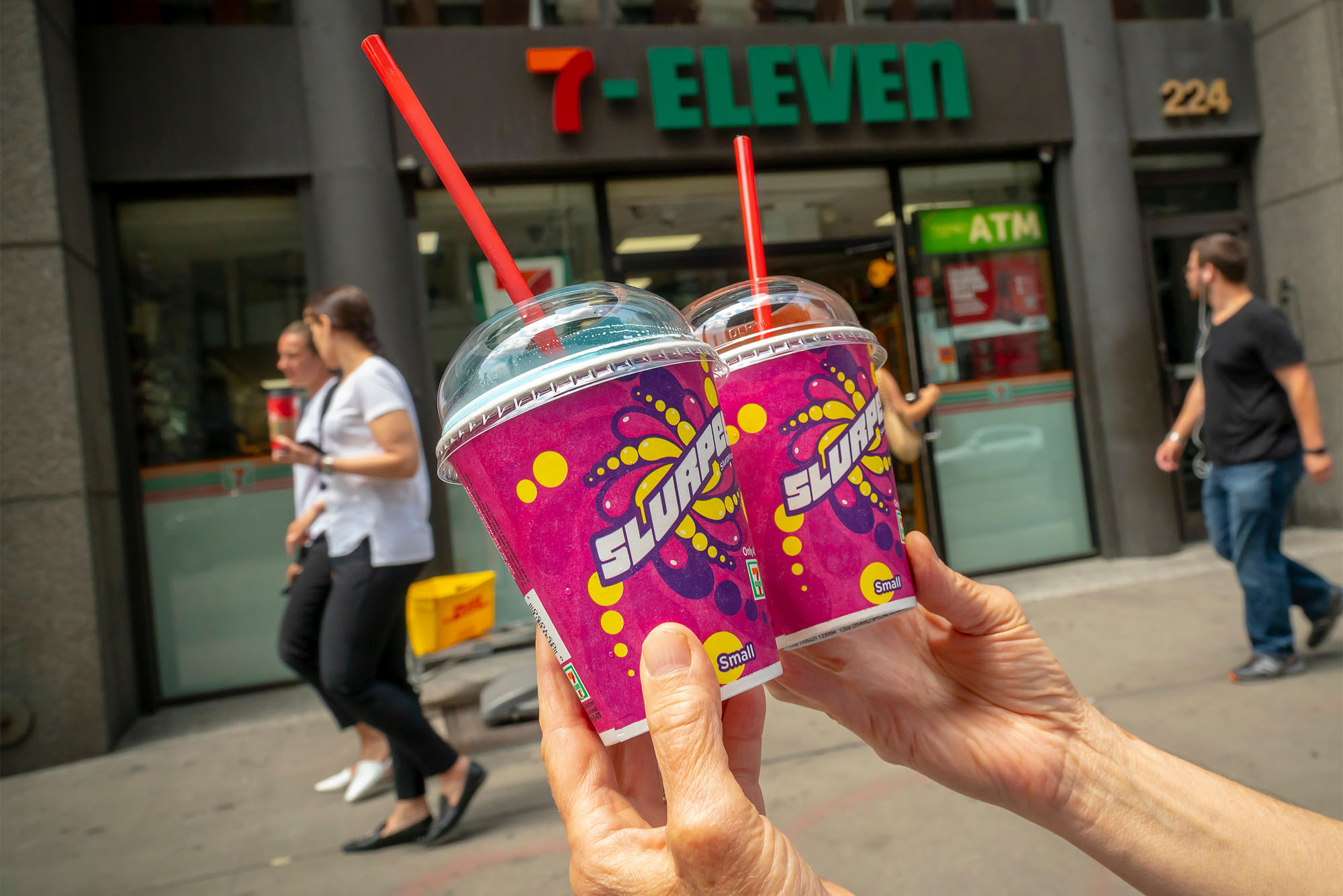
The 7-Eleven Slurpee is a semi-frozen carbonated beverage characterized by its distinct slushy texture, achieved through a continuous-freezing mechanism. Since its acquisition of the concept in 1965, 7-Eleven has standardized the drink as a global retail staple, offering a rotating selection of proprietary flavors, varying cup sizes, and specific consumption protocols that define the modern convenience store experience.
The Origins and Evolution of the Slurpee
The Slurpee was not an invention of 7-Eleven but a fortuitous discovery. In 1958, Omar Knedlik, a Dairy Queen franchise owner in Kansas, invented a machine that dispensed frozen soda after his own soda fountain broke down and he began storing bottles in a freezer to keep them cool. The resulting slushy consistency proved popular with customers.
7-Eleven licensed the machine design in 1965, rebranding the product as the "Slurpee." The name itself is attributed to a 7-Eleven agency director, Bob Stanford, who coined the term based on the sound the liquid makes when passing through a straw. Over the subsequent decades, the product evolved from a simple novelty into a significant brand asset, backed by aggressive marketing campaigns and the introduction of unique flavor profiles that are exclusive to 7-Eleven locations.
Technical Mechanics: How the Slurpee Machine Works
A Slurpee machine is not a simple freezer. It operates as a continuous-production unit designed to maintain a specific viscosity and temperature. The internal mechanics rely on three primary components: the refrigeration system, the barrel, and the auger.
- The Refrigeration System: The barrel is surrounded by a cooling jacket filled with a refrigerant, typically maintained at temperatures significantly below the freezing point of water.
- The Barrel: This is the mixing chamber where the syrup-water mixture resides. It is pressurized to ensure that the carbon dioxide gas remains dissolved in the liquid until it is dispensed.
- The Auger: This is a rotating screw mechanism inside the barrel. Its function is twofold: it scrapes the frozen liquid from the inner walls of the barrel (preventing the formation of large ice blocks) and it agitates the mixture to maintain a uniform, smooth consistency.
The result is a "slush" formed of microscopic ice crystals suspended in a syrup-water solution. If the machine were to stop rotating, the liquid would freeze into a solid block of ice; therefore, consistent operation and maintenance are critical to the consumer experience.
Flavor Profiles and Consumer Choice
7-Eleven utilizes a proprietary system for its flavor offerings, which generally fall into two categories: "Classic" flavors and "Limited-Time" or "Promotional" flavors.
- Classic Flavors: These include staples like Coca-Cola, Cherry, and Blue Raspberry. These are permanent fixtures in most retail locations and are designed to have a consistent taste profile across different regions.
- Promotional Flavors: These are introduced to capitalize on seasonal trends, movie tie-ins, or market testing. These flavors often utilize more complex, layered ingredients.
The sugar-to-water ratio is tightly controlled by the machine’s calibration. Customers often notice that some Slurpees have a more "icy" texture than others; this is typically a result of the machine's calibration or the amount of syrup remaining in the reservoir. A properly maintained machine should yield a texture that is consistent from the first ounce to the last.
Sizing and Nutritional Considerations
As of 2026, the 7-Eleven Slurpee is available in multiple sizes. While local franchise availability may vary, the standard tiers generally include Small, Medium, Large, and sometimes Extra-Large.
From a nutritional perspective, Slurpees are high-glycemic beverages. They primarily consist of carbonated water, high-fructose corn syrup or sucrose, and artificial flavorings and colorings. Because the drink is a suspension of liquid and ice, the calorie count is concentrated in the syrup base. Consumers looking for lower-sugar alternatives may occasionally find "sugar-free" or "zero-sugar" options depending on the specific location's inventory and the availability of diet-syrup cartridges.
Nutritional Reference Table
| Size | Estimated Volume (oz) | Typical Caloric Range |
|---|---|---|
| Small | 12–16 | 120–180 kcal |
| Medium | 20–22 | 200–280 kcal |
| Large | 30–32 | 300–450 kcal |
| Extra Large | 40+ | 450+ kcal |
Note: Caloric content varies significantly based on flavor density and sugar content. Always check the machine or store documentation for the most accurate nutritional information.
Operational Requirements for Consumers
To ensure a high-quality Slurpee experience, consumers should consider several operational factors at the point of sale:
- Machine Check: Observe the dispenser. If the liquid inside appears separated (clear water at the top, syrup at the bottom), the machine may have been recently refilled and has not reached the proper consistency. It is best to select a different machine or ask staff if the batch is ready.
- Dispensing Technique: Use a circular motion when filling the cup to build a base, and stop periodically to allow the slush to settle. Overfilling the cup leads to premature melting and a messy experience.
- The Straw Factor: Slurpee straws feature a small spoon at the end. This is a functional design choice intended to allow the consumer to scoop the slush when the liquid component is consumed faster than the ice.
- Temperature Management: The product is served at a temperature near 28°F (-2°C). Consuming it too quickly can result in sphenopalatine ganglioneuralgia, commonly known as "brain freeze." This occurs when the cold substance causes rapid constriction and dilation of the capillaries in the roof of the mouth.
Maintenance and Food Safety Standards
7-Eleven stores are mandated to follow strict hygiene protocols regarding their fountain and Slurpee equipment. The machine components must be disassembled and sanitized on a rigorous schedule to prevent bacterial growth and the accumulation of sticky syrup residues.
The "sanitary seal" of the machines is a priority for regulatory inspections. Franchise operators are responsible for ensuring that the seals are intact and that the drainage systems are clear. If a machine appears dirty or the dispensing nozzles show signs of dried residue, it is indicative of a lapse in the store’s maintenance cycle, and consumers are advised to avoid using that particular unit.
Common Troubleshooting and Issues
While the Slurpee is a straightforward product, users occasionally encounter operational issues:
- The "Runny" Slurpee: If the drink is more liquid than slush, it is usually a sign that the machine’s cooling system is struggling to keep up with high demand. Avoid purchasing if the machine looks "tired" or has a light indicator suggesting it is "cooling."
- Flavor Cross-Contamination: Because multiple flavors are dispensed in close proximity, it is common to get a small amount of a previous flavor if the nozzle was not wiped or if internal pressures are fluctuating.
- Machine Downtime: Machines require significant "recharge" time after a cleaning or a massive refill. If you find a machine that is not operating, it is almost certainly in a deep-freeze cycle and cannot be forced to operate faster.
Frequently Asked Questions (FAQ)
What is the healthiest way to consume a Slurpee?
The healthiest approach is to opt for smaller portion sizes and select flavors that explicitly label themselves as "Zero Sugar" or "Low Calorie." Because these drinks are essentially frozen sugar-water, moderation is the primary strategy for responsible consumption.
Are all Slurpee machines at 7-Eleven the same?
No. While they share the same branding, different stores may utilize different generations of equipment. Newer machines often feature more advanced temperature controls and interactive touchscreens, while older legacy machines may have a different dispensing speed and ice-crystal texture.
Why do some Slurpees taste different even if the flavor is the same?
Consistency depends on the calibration of the syrup-to-water ratio. If a store has the water pressure set too high or the syrup concentrate set too low, the flavor will taste diluted. Additionally, the age of the syrup bag-in-box can affect flavor quality.
Can I mix flavors in one cup?
Yes, this is a common practice among consumers. To achieve the best results, start with the lightest flavor, dispense about one-third of the cup, and then layer the subsequent flavors. This prevents the heavier, more syrupy flavors from overpowering the entire cup.
Is the Slurpee straw really a spoon?
Yes, it is designed as a dual-purpose tool. The "spoon" end is intended for eating the remaining ice crystals once the liquid syrup has been consumed, ensuring that the consumer can enjoy the entire portion without leaving excess waste.
What should I do if the machine is not working?
If a machine is out of order, notify a 7-Eleven team member. Avoid attempting to tamper with the machine or the dispensing nozzle, as these are high-pressure, electrified units that should only be serviced by trained store staff.
Next Actions for the Consumer
For the best 7-Eleven Slurpee experience, identify a store location with high turnover; high-volume stores are more likely to have fresh syrup supplies and machines that are constantly monitored for optimal freezing consistency. When visiting, check the machine display to ensure it is not in a cleaning or defrost cycle. By practicing the layering technique and using the straw-spoon effectively, you can maximize the enjoyment of your beverage while managing the temperature and consistency to your personal preference.