The 2012 Met Gala, celebrating the Costume Institute exhibition “Schiaparelli and Prada: Impossible Conversations,” explored a conceptual dialogue between two legendary Italian designers—Elsa Schiaparelli and Miuccia Prada—across different eras, examining how fashion shapes identity, art, and cultural evolution through surrealism and modern minimalism.
Introduction to the 2012 Met Gala and Its Premise
Every year, the Metropolitan Museum of Art in New York City hosts the Met Gala, a premier fundraising benefit for the Costume Institute. The event marks the grand opening of the institution's annual spring fashion exhibition. In 2012, the gala took place on May 7, with a theme centered on the groundbreaking exhibition “Schiaparelli and Prada: Impossible Conversations.”
Rather than choosing a single historical period or a broad geographical region, the curators devised an intellectual and aesthetic conceit. The exhibition and its accompanying gala staged a hypothetical dialogue between two of Italy's most influential female designers: Elsa Schiaparelli, the surrealist icon of the 1930s, and Miuccia Prada, the modernist visionary of the late 20th and early 21st centuries.
Understanding the 2012 Met Gala theme requires looking beyond the red carpet glamour to examine the curatorial framework, the historical context of both designers, the architectural layout of the exhibition, and the broader cultural conversation about fashion as a high-art medium. This comprehensive analysis breaks down the details, cultural context, and legacy of one of the most intellectually ambitious nights in fashion history.
The Curatorial Vision: Schiaparelli and Prada
The exhibition was conceived by Harold Koda, the curator in charge of the Costume Institute at the time, alongside Andrew Bolton, who served as curator. Their goal was to draw out striking affinities and profound divergences between two women who revolutionized fashion by infusing it with intellect, wit, and subversion.
Elsa Schiaparelli worked during the interwar period and the post-World War II era. Closely aligned with the Surrealist movement, she collaborated with artists like Salvador Dalí, Jean Cocteau, and Man Ray. Her work was characterized by trompe l'œil effects, unexpected materials, playful iconography (such as shoe hats, skeleton dresses, and lobster prints), and a sharp, irreverent wit that challenged bourgeois conventions.
In contrast, Miuccia Prada emerged in the late 1970s and transformed her family’s traditional leather goods house into a global luxury empire defined by intellectual rigor, historical pastiche, and a deliberate subversion of traditional glamour. Prada often explores the concept of "ugly chic," utilizing synthetic nylon, austere tailoring, and challenging color palettes to question what society deems beautiful or desirable.
Despite operating decades apart, both designers shared a fascination with:
- The intersection of fashion and contemporary art.
- The psychological and sociological roles of clothing.
- The rejection of conventional, passive femininity in favor of complex, intellectually charged statements.
Exhibition Design and the "Impossible Conversations" Format
The core of the “Schiaparelli and Prada: Impossible Conversations” exhibition—and the thematic backdrop of the 2012 gala—was structured around a series of simulated dialogues. The curators organized the galleries into thematic zones that highlighted specific creative parallels.
Short films directed by Baz Luhrmann served as the narrative anchor for the exhibition spaces. In these films, actress Judy Davis played Elsa Schiaparelli, while designer Miuccia Prada played herself, engaging in witty, imaginary conversations about aesthetics, inspiration, and the business of fashion.
Key Thematic Zones of the Exhibition
| Thematic Zone | Core Concept | Design Focus |
|---|---|---|
| Waist Up / Waist Down | How designers frame the body for the gaze, contrasting Schiaparelli’s focus on decorative necklines with Prada’s emphasis on skirts and footwear. | Garment placement, dramatic lighting, and split-screen video installations. |
| Ugliness / Beauty | The subversion of traditional aesthetic harmony. Schiaparelli used surrealist shock; Prada uses ironic minimalism and discordant prints. | Juxtaposition of 1930s surrealist embroidery with 1990s techno-fabrics. |
| Naïve / Classic | The tension between childlike innocence and sophisticated irony in textile patterns and silhouettes. | Display of whimsical prints alongside severe, architectural tailoring. |
| Hard / Soft | The manipulation of rigid structural elements against fluid, draping textiles to challenge gender norms. | Metalwork accessories paired with sheer silk chiffons and heavy wools. |
| Exotic / Everyday | The elevation of mundane materials and global motifs into high fashion statements. | Utility nylon contrasted with embroidered evening capes. |
Red Carpet Interpretation of the Theme
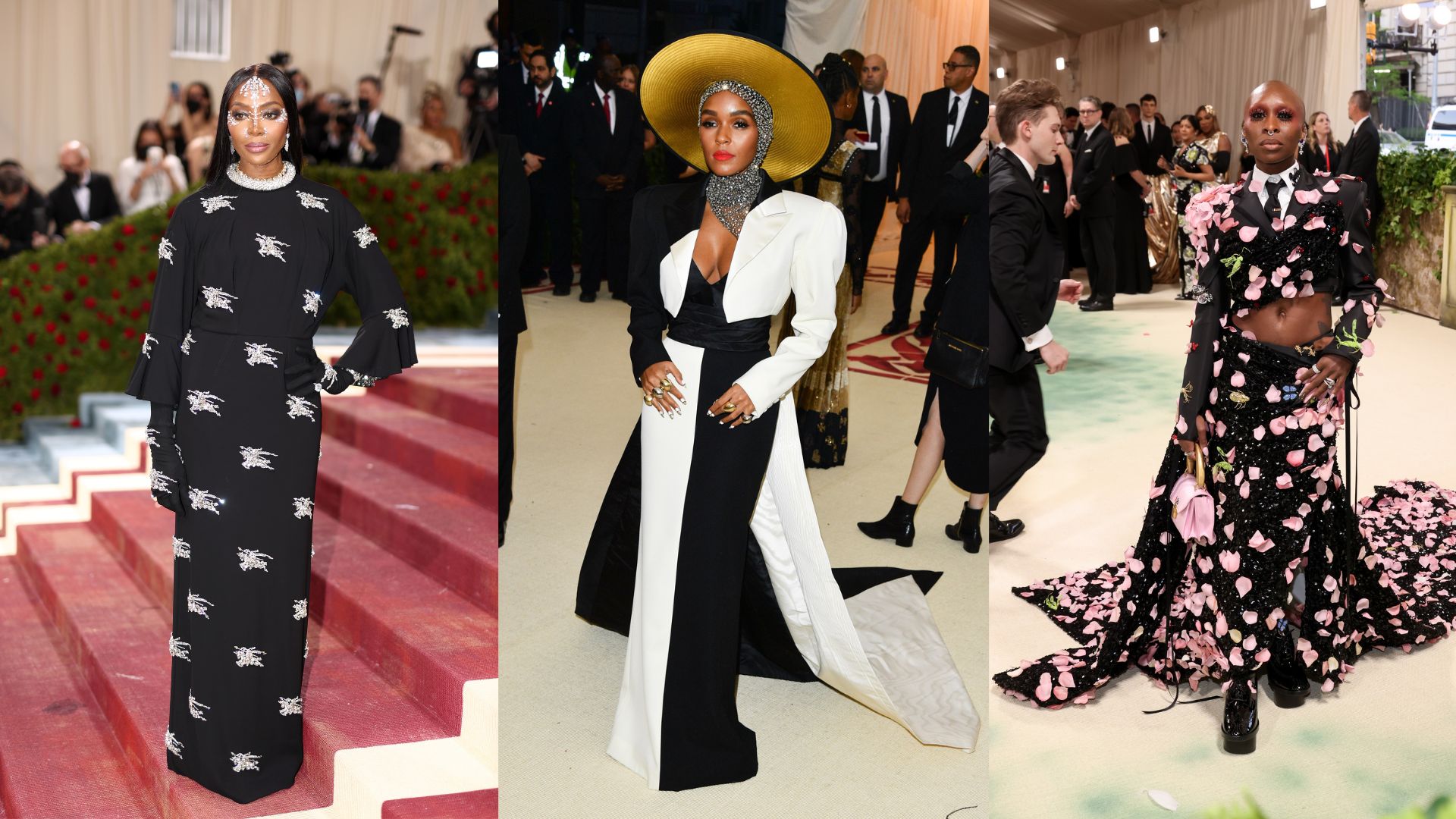
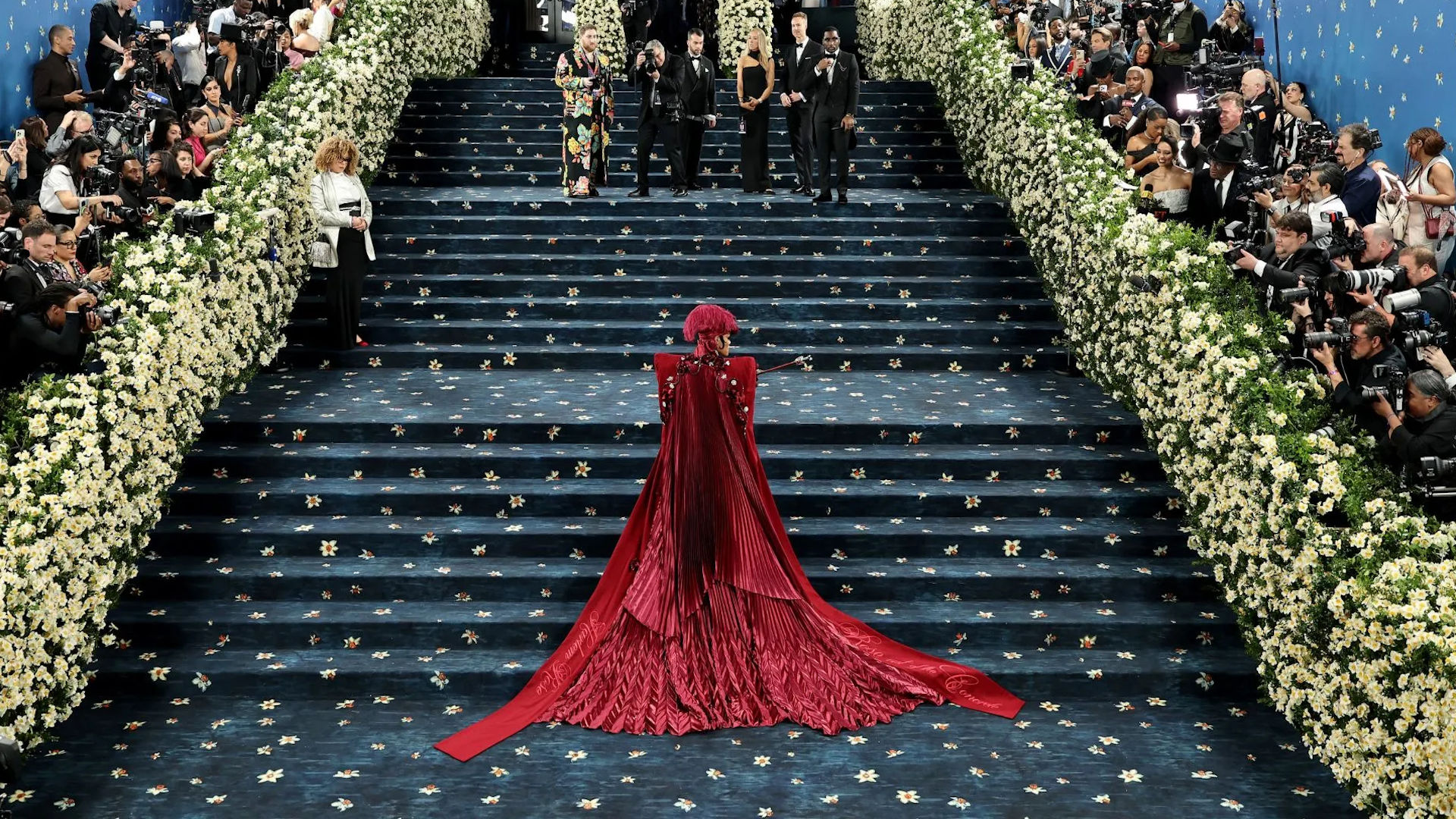
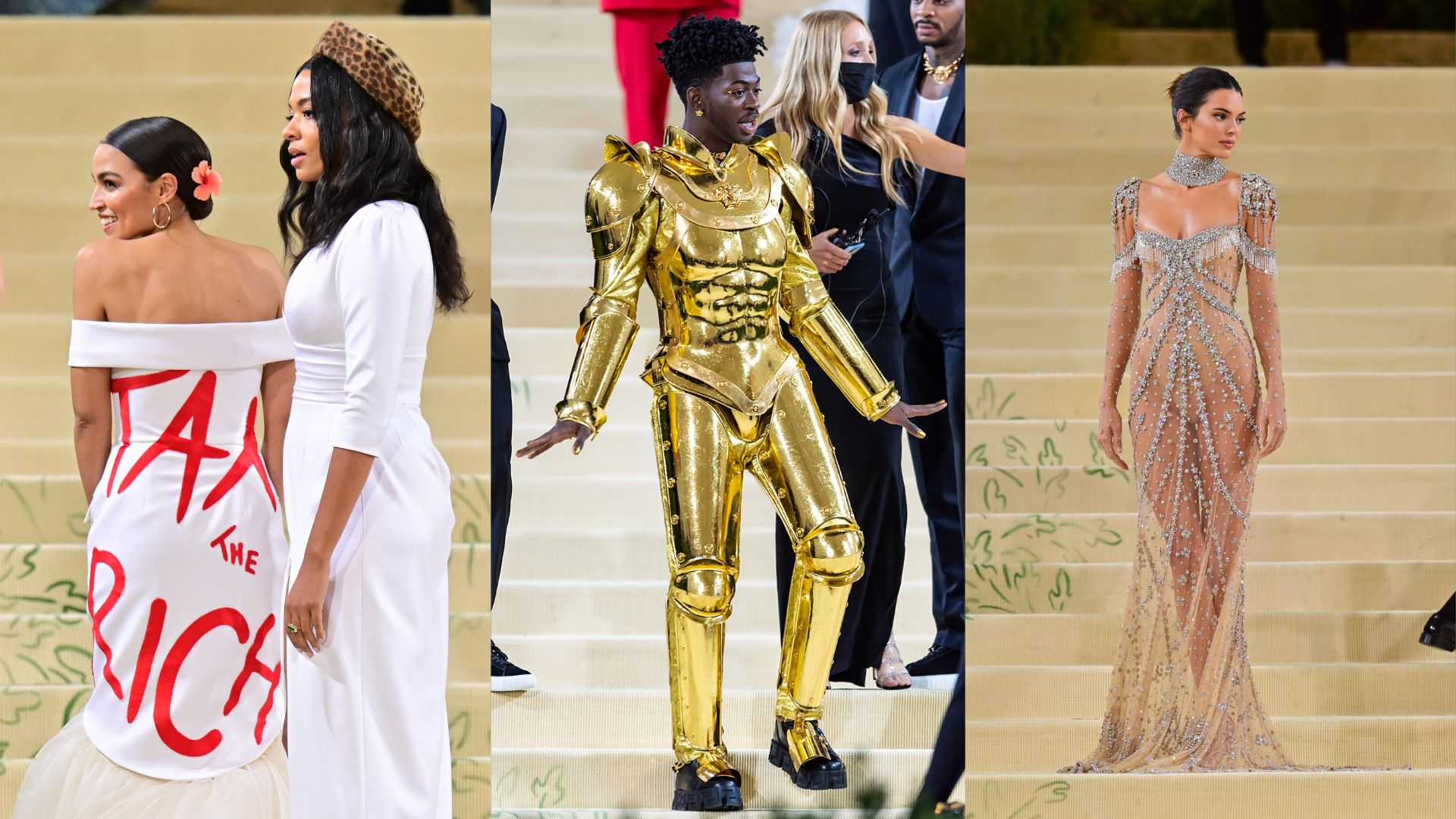
For celebrities, designers, and attendees, translating a conceptual, museum-curated dialogue about surrealism and minimalism into red-carpet attire presented a unique challenge. Unlike themes with straightforward visual codes—such as 2018’s “Heavenly Bodies: Fashion and the Catholic Imagination” or 2019’s “Camp: Notes on Fashion”—the 2012 theme required an understanding of design philosophy.
Many attendees chose to wear archival or custom creations by Prada or Schiaparelli (then under the creative direction of various guest designers before its official relaunch), while others channeled the spirit of surrealism or intellectual modernism.
- Miuccia Prada served as an honorary co-chair alongside actress Carey Mulligan, fashion editor Anna Wintour, and designer Riccardo Tisci. Prada dressed numerous high-profile figures, translating her signature prints and sophisticated silhouettes onto the red carpet.
- Surrealist Motifs: Several guests nodded to Schiaparelli’s ties to Salvador Dalí and the Surrealists, incorporating celestial embroidery, trompe l'œil details, and dramatic headwear.
- Modernist Minimalism: Other attendees leaned toward Prada's sleek, intellectual aesthetic, featuring clean lines, restrained color palettes, and unconventional fabric pairings.
Cultural and Historical Context in 2012
To fully appreciate the significance of the 2012 Met Gala theme, it is necessary to examine the cultural landscape of the fashion industry and global culture in 2012.
The Rise of Fashion as High Art
By 2012, the Costume Institute exhibitions curated by Andrew Bolton and Harold Koda had cemented their reputation as blockbuster cultural events, drawing attendance numbers that rivaled major fine art exhibitions. The juxtaposition of Schiaparelli and Prada reinforced the museum's mission to treat fashion not merely as commercial apparel or decorative arts, but as a serious intellectual discipline capable of profound cultural critique.
Feminist Discourse in Fashion
Both Schiaparelli and Prada built their careers by designing for women who dressed for themselves rather than for the male gaze. In 2012, discussions surrounding female agency, professional autonomy, and intellectual identity in the arts were gaining renewed momentum. Celebrating two pioneering Italian women who maintained total creative control over their eponymous houses served as a powerful statement on female leadership and artistic independence.
The Digital Shift and Red Carpet Culture
The year 2012 marked a pivotal transitional phase for fashion media. While print magazines still held immense authority, digital coverage, early social media platforms, and real-time red-carpet live-streaming were beginning to reshape how the Met Gala was consumed globally. The conceptual nature of the “Impossible Conversations” theme provided rich material for fashion critics, bloggers, and scholars to analyze online, transforming the gala from an exclusive society event into a global digital conversation.
Comparative Analysis of the Two Visionaries
The intellectual architecture of the 2012 theme hinged on the contrasts and unexpected alignments between Schiaparelli and Prada. Examining their methodologies highlights why the curators paired them together.
- Elsa Schiaparelli (1930s–1950s)
- Deeply aligned with Surrealism
- Embraced theatricality & shock
- Utilized playful iconography
- Pioneered shocking pink
- Focused on intuitive whimsy
- Miuccia Prada (1970s–Present)
- Rooted in Minimalism & Modernism
- Explores irony, restraint, & wit
- Subverts bourgeois taste
- Pioneered industrial nylon
- Focused on intellectual theory
Schiaparelli viewed fashion as an extension of the subconscious mind. Her creations were designed to startle, amuse, and provoke. When she placed a shoe upside-down on a model's head or embroidered a spine down the back of a silk evening dress, she was dismantling the solemnity of high fashion.
Prada, on the other hand, approaches design through a sociological and political lens. Her collections often reflect her background in political science and her feminist convictions. When Prada introduces "ugly" prints or utilitarian nylon into luxury spaces, she is interrogating the mechanics of desire, class anxiety, and institutional power.
By placing these two titans in conversation, the 2012 Met Gala demonstrated how fashion evolves not through linear progression, but through recurring cycles of intellectual subversion.
Common Misconceptions About the 2012 Theme
Because the 2012 theme was more cerebral than historical or decorative, several misunderstandings often surround the event:
- Misconception 1: It was solely a retrospective of Schiaparelli's career.
- Reality: While Schiaparelli was a historical figure whose work required museum preservation, the exhibition gave equal weight to Miuccia Prada, examining living design practice alongside historical archives.
- Misconception 2: The theme required attendees to dress in 1930s surrealist costume.
- Reality: The dress code was interpreted broadly, encouraging guests to explore the broader intellectual tension between past and present, humor and severity, rather than enforcing literal historical reenactment.
- Misconception 3: The "conversations" were real historical interviews.
- Reality: The conversations were entirely hypothetical constructs staged by filmmaker Baz Luhrmann to bridge the generational divide between the two designers.
Frequently Asked Questions
What was the official theme of the 2012 Met Gala?
The official theme was “Schiaparelli and Prada: Impossible Conversations.” It explored the creative affinities and striking divergences between 1930s surrealist designer Elsa Schiaparelli and contemporary modernist designer Miuccia Prada.
Who curated the 2012 Met Gala exhibition?
The exhibition was curated by Harold Koda, then-curator in charge of the Costume Institute, and Andrew Bolton, curator, in collaboration with production designer Nathan Crowley and filmmaker Baz Luhrmann.
Who served as the co-chairs for the 2012 Met Gala?
The honorary co-chairs for the event were designer Miuccia Prada and actress Carey Mulligan, alongside Vogue editor-in-chief Anna Wintour and designer Riccardo Tisci.
Why were Elsa Schiaparelli and Miuccia Prada paired together?
Despite working in different centuries, both designers shared a revolutionary approach to fashion that challenged conventional definitions of beauty, integrated contemporary art and culture, and interrogated the psychological role of clothing worn by women.
How did celebrities interpret the theme on the red carpet?
Attendees interpreted the theme by wearing archival or custom designs by Prada or Schiaparelli, incorporating surrealist accessories, or opting for intellectual minimalism that mirrored Prada's modernist design philosophy.
Practical Takeaways and Legacy
The 2012 Met Gala and its accompanying exhibition left a lasting mark on how fashion exhibitions are conceptualized and presented to the public. By treating two female designers as intellectual equals across a historical divide, the Costume Institute elevated fashion curation to the level of high art criticism.
For fashion historians, curators, and modern designers, the “Impossible Conversations” framework remains a benchmark for how to stage thematic exhibitions that go beyond simple chronological retrospectives. It proved that clothing is a language capable of bridging generations, interrogating cultural norms, and maintaining a continuous, evolving dialogue across time.
CATEGORY_SLUG: entertainment-biography
TAGS_JSON: ["Met Gala", "Fashion History", "Schiaparelli and Prada", "Costume Institute"]