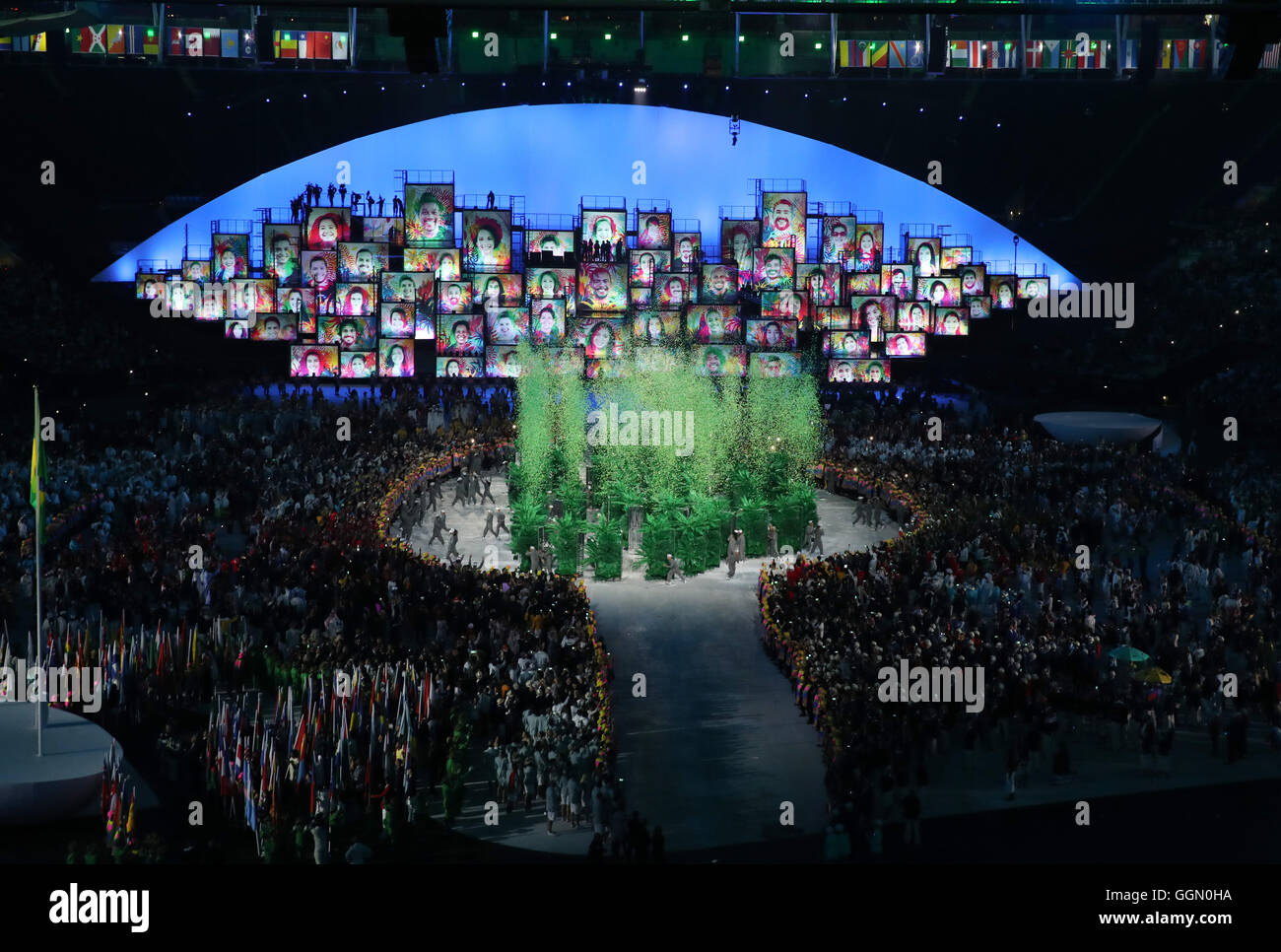
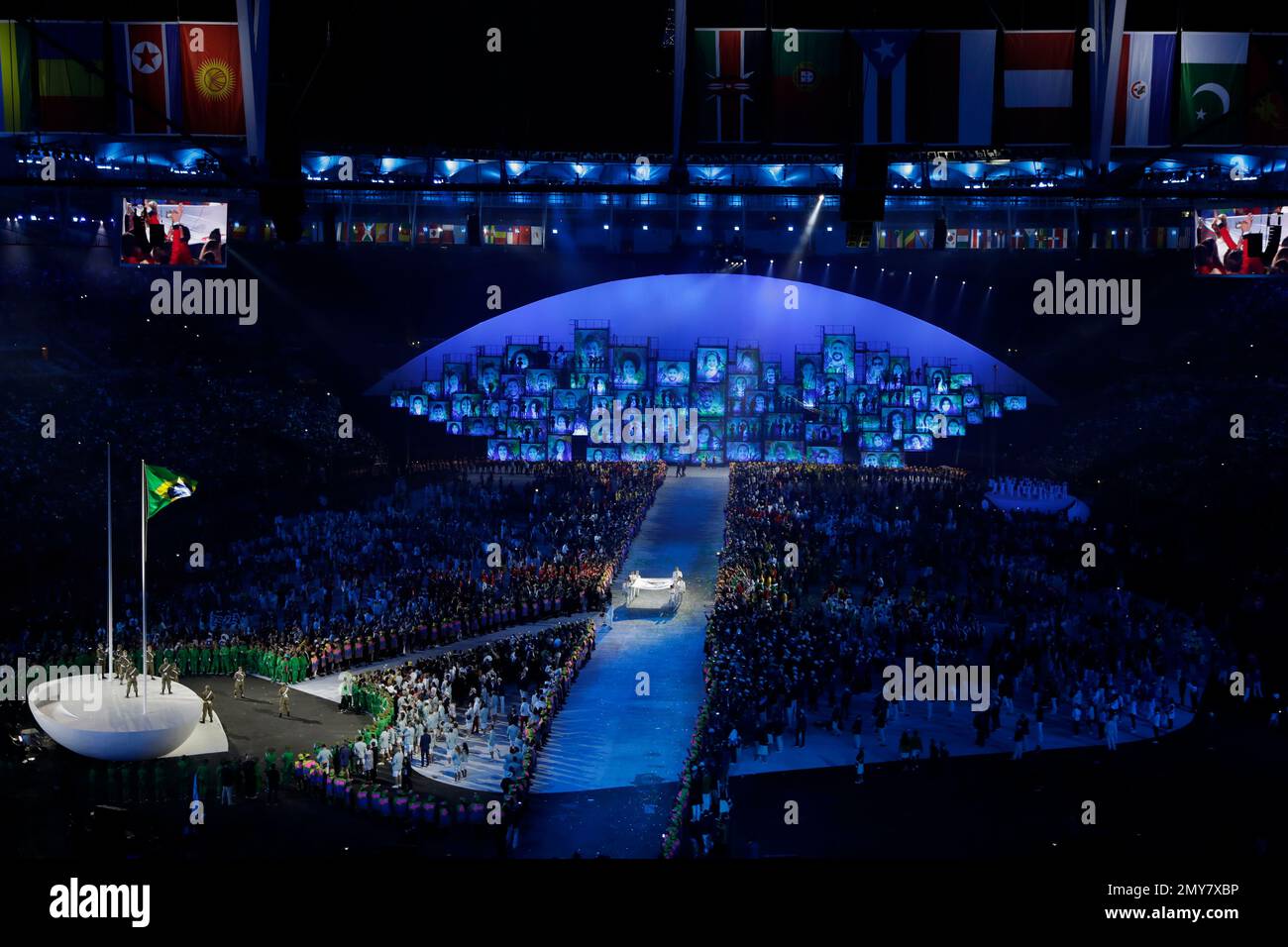
The 2016 Rio Olympics Opening Ceremony was a vibrant celebration of Brazilian culture, history, and environmental consciousness, held at the Maracanã Stadium. Directed by Fernando Meirelles, Daniela Thomas, and Andrucha Waddington, the event captivated a global audience with its low-budget creativity, breathtaking artistic performances, the iconic supermodel walk of Gisele Bündchen, and a powerful message about climate change.
Introduction to the 2016 Rio Olympics Opening Ceremony
The Opening Ceremony of the Games of the XXXI Olympiad, commonly known as the 2016 Rio Olympics, took place on August 5, 2016, at the legendary Maracanã Stadium in Rio de Janeiro, Brazil. Stepping away from the multi-million-dollar, technology-heavy spectacles seen in Beijing in 2008 and London in 2012, the Rio creative team relied on "gambiarra"—the Brazilian art of improvisation using simple materials—and a profound cultural narrative.
With a reported budget a fraction of its predecessors, the ceremony proved that creative vision, rhythm, and storytelling could outweigh sheer financial excess. It transformed the stadium into a canvas depicting the creation of the universe, the arrival of diverse peoples, the construction of Brazil's urban centers, and a solemn warning about the fragility of the natural world. For anyone looking to relive the magic highlights of this historic evening, understanding the meticulous choreography, cultural significance, and logistical triumphs of the production reveals why it remains etched in Olympic history.
Artistic Vision and the Creative Philosophy of "Gambiarra"
When planning began, the organizing committee faced significant economic constraints and a shifting political landscape in Brazil. Rather than attempting to match the mechanical grandeur of prior Games, the directors embraced an aesthetic rooted in resourcefulness, street culture, and human energy.
The concept of gambiarra—making do with what is available to create clever solutions—defined the visual and structural design of the evening. Cardboard, projection mapping, handheld lights, and thousands of volunteer dancers replaced heavy machinery and expensive props. This approach not only kept costs manageable amid Brazil's economic downturn but also lent an organic, grassroots warmth to the presentation.
Furthermore, the ceremony served as a mirror for Brazil's complex identity, blending indigenous heritage, European colonization, African influences, and modern urban dynamics. The artistic choices emphasized inclusivity, positioning the favelas and the streets of Rio not as peripheral spaces, but as the pulsating heart of Brazilian culture.
The Genesis of Brazil: Indigenous Roots and African Heritage
The narrative arc of the opening artistic segment began with the primordial sounds of the Brazilian rainforest and the rich heritage of its indigenous peoples. Projections transformed the floor of the Maracanã Stadium into a swirling expanse of green, symbolizing the Amazon basin and the deep history of native tribes.
As the performance evolved, the ceremony highlighted the forced migration of enslaved Africans and the subsequent waves of European and Asian immigration that shaped modern Brazilian demographics. This section paid homage to the resilience and cultural contributions of Afro-Brazilians, showcasing traditional dances, capoeira, and the rhythms of samba.
Rather than sanitizing history, the performance confronted the complexities of colonization and migration, celebrating the fusion of cultures that birthed distinctive Brazilian art forms. The percussion ensemble, featuring hundreds of volunteer drummers, filled the stadium with an infectious beat that signaled the unbreakable spirit of the nation's working class and artistic communities.
Iconic Moments and Cultural Highlights
Several specific segments from the 2016 Rio opening ceremony achieved instant legendary status, capturing the imagination of billions of television viewers worldwide.
- Gisele Bündchen’s Catwalk to "Garota de Ipanema": Supermodel Gisele Bündchen walked the length of the Maracanã floor to the tune of "The Girl from Ipanema" (Garota de Ipanema), played live on piano by Daniel Jobim, grandson of composer Tom Jobim. As she walked, geometric projections designed by artist Oscar Niemeyer shifted and bloomed around her.
- The Favela Parade and Jorge Ben Jor: The celebration of urban Brazilian life brought the energy of Rio's street parties into the stadium. Accompanied by the classic sounds of Jorge Ben Jor and performances of passinho—a rapid-fire street dance originating in Rio's favelas—the segment showcased youthful creativity and modern resilience.
- The Tree-Planting Initiative: In alignment with the ceremony's overarching environmental theme, every competing athlete received a seed and a biodegradable cartridge. As athletes marched during the Parade of Nations, they deposited their seeds into small metallic pedestals, which later sprouted into a "Forest of Athletes" comprising native Brazilian tree species.
The Environmental Warning and Climate Change Focus
Perhaps the most defining departure from traditional Olympic pageantry was the ceremony's stark, unvarnished focus on climate change and global warming. Rather than merely celebrating human achievement, the directors used the global stage to highlight the existential threat facing the planet.
A professionally narrated video sequence illustrated the historical rise in global temperatures, sea level expansion, and the systematic destruction of the world's major forests, including the Amazon. Projections mapped rapidly melting polar ice caps and encroaching urban sprawl across the stadium floor, eliciting a moment of quiet reflection from the packed audience.
To pivot from despair to hope, the ceremony emphasized individual and collective responsibility. The aforementioned tree-planting ritual and the emphasis on reforestation served as a call to action, reminding viewers that hosting the Olympic games carried a duty to promote sustainability and ecological preservation for future generations.
Key Elements of the 2016 Rio Opening Ceremony
| Segment / Element | Primary Cultural or Thematic Significance | Key Performers & Figures |
|---|---|---|
| Genesis & Indigenous Roots | Celebrates Amazonian biodiversity and indigenous heritage. | Volunteer dancers, indigenous performers |
| African & European Migration | Depicts the historical blending of cultures and the roots of samba. | Afro-Brazilian percussionists, capoeiristas |
| The Girl from Ipanema Walk | Honors classic Brazilian bossa nova and architectural design. | Gisele Bündchen, Daniel Jobim |
| Urban Life & Favelas | Highlights street dance, youth culture, and working-class resilience. | Jorge Ben Jor, passinho dancers |
| Climate Change Sequence | Delivers an urgent scientific warning regarding global warming. | Voiceover narration, projection mapping |
| Lighting of the Cauldron | Celebrates environmental sustainability over fossil-fueled grandeur. | Vanderlei Cordeiro de Lima (final torchbearer) |
The Parade of Nations and Refugee Olympic Team
The Parade of Nations featured the traditional entry of competing delegations, ordered alphabetically by the Portuguese names of their countries, given that Rio de Janeiro is located in a Portuguese-speaking nation. Greece entered first to honor the historical origins of the Olympics, while the host nation, Brazil, received the final entry to roaring applause.
A deeply poignant moment occurred with the introduction of the Independent Olympic Athletes, followed by the historic debut of the Refugee Olympic Team. Comprising athletes displaced from their home countries due to conflict and persecution, the refugee team received a standing ovation from the entire stadium. This inclusion underscored the Olympic values of human dignity and solidarity, transcending geopolitical borders and nationalist divisions.
The Lighting of the Olympic Cauldron
The climax of any opening ceremony is the lighting of the Olympic flame, and Rio 2016 offered a deliberate subversion of traditional expectations. Organizers opted out of massive, gas-guzzling industrial cauldrons in favor of a kinetic sculpture designed by American artist Anthony Howe.
The sculpture, resembling a radiant sun surrounded by metallic spheres and kinetic arms, spun hypnotically, reflecting light across the entire venue. The decision to use a smaller, highly efficient flame was directly tied to the ceremony's environmental motif: demonstrating that beauty and impact do not require excessive carbon emissions.
The final torchbearer was Vanderlei Cordeiro de Lima, the Brazilian marathon runner who famously won the bronze medal at the 2004 Athens Olympics after a spectator disrupted his race while he was leading. Choosing Cordeiro de Lima resonated deeply with the Brazilian public, celebrating perseverance, sportsmanship, and grace under pressure.
Legacy and Impact of the 2016 Ceremony
Years after the event concluded, the 2016 Rio Olympics Opening Ceremony continues to be studied by event producers, cultural analysts, and sports historians. It established a new benchmark for how major international events can address serious global crises, such as climate change, without losing cultural authenticity or emotional resonance.
By relying on human performance and indigenous artistry rather than expensive digital automation, the production proved that emotional connection matters more to audiences than lavish budgets. For sports fans seeking to relive the magic highlights, revisiting the ceremony offers a masterclass in storytelling, rhythmic brilliance, and artistic integrity that remains unmatched in modern Olympic history.
Frequently Asked Questions
Who directed the 2016 Rio Olympics Opening Ceremony?
The ceremony was co-directed by Brazilian filmmakers Fernando Meirelles (renowned for City of God), designer Daniela Thomas, and producer Andrucha Waddington. Their combined expertise in cinema, theater, and visual arts shaped the distinctive narrative and aesthetic flow of the evening.
Why was the budget for the Rio opening ceremony so low?
The organizing committee operated under strict economic constraints due to Brazil's ongoing economic recession at the time. The directors consciously chose to reject massive technological displays in favor of creative improvisation, local volunteer talent, and cultural storytelling, which successfully reduced expenditures while elevating artistic depth.
What was the significance of the tree-planting segment?
Every competing athlete received seeds and biodegradable cartridges during the Parade of Nations, which were planted to create a "Forest of Athletes." This initiative directly reinforced the ceremony's core environmental theme, emphasizing reforestation, sustainability, and combating global climate change.
Who lit the Olympic cauldron at the Rio 2016 Opening Ceremony?
Vanderlei Cordeiro de Lima, a Brazilian long-distance runner and Olympic medalist, lit the cauldron. He was selected to honor his sportsmanship and resilience following an infamous track incident during the 2004 Athens Olympic marathon.
Where can viewers watch highlights of the 2016 Rio Opening Ceremony today?
Official archival footage and highlight reels are hosted on the International Olympic Committee's official digital platforms, including the Olympics website and their verified YouTube channel, allowing global audiences to revisit the broadcast.