The defining figures of 1980s television transcended simple episodic entertainment to become enduring pop culture archetypes, shaping fashion, colloquialisms, and media narratives for decades to follow. From sharp-witted sitcom protagonists and gritty drama antiheroes to groundbreaking animated personalities and sci-fi pioneers, these characters reflected the shifting political, social, and economic anxieties of the Reagan era while establishing modern television's golden age of character development.
The Evolution of 1980s Television Character Archetypes
The landscape of 1980s television underwent a seismic shift from the comforting, domestic ensemble formats of the 1970s toward more complex, serialized, and hyper-stylized characterizations. Network television, cable expansion, and the rise of independent syndication created a diverse ecosystem where multiple distinct character archetypes could flourish. Writers moved beyond flat caricatures to explore emotional vulnerability, corporate ambition, suburban domesticity, and teenage angst with unprecedented nuance.
During this decade, the traditional nuclear family dynamic was continually re-imagined. Series like The Cosby Show presented an affluent, highly educated African-American family that redefined domestic sitcoms, while Family Ties explored ideological friction between former 1960s radicals and their conservative, Reagan-supporting teenage son, Alex P. Keaton. Concurrently, gritty police procedurals and serialized dramas introduced brooding professionals who prioritized personal moral codes over institutional bureaucracy, paving the way for the prestige television antiheroes of the twenty-first century.
Sitcom Icons: Domestic Life, Corporate Ambition, and Youth Culture
Sitcoms during the 1980s served as a cultural mirror, capturing the tensions between traditional family values and the rising corporate materialism of the decade. Characters from this era balanced humor with genuine social commentary, creating figures that audiences welcomed into their living rooms on a weekly basis.
Alex P. Keaton (Family Ties)
Portrayed by Michael J. Fox, Alex P. Keaton turned the traditional television youth paradigm on its head. Instead of a rebellious counterculture teen, Alex was an ambitious, Wall Street-obsessed conservative who read The Wall Street Journal and idolized Milton Friedman, while his parents were former 1960s hippies. This dynamic created sophisticated comedic tension that highlighted generational divides without resorting to cheap mockery.
Sam Malone (Cheers)
As the owner and bartender of the subterranean Boston bar where everybody knows your name, Ted Danson’s Sam Malone combined effortless charm with underlying vulnerability. A former relief pitcher for the Boston Red Sox, Sam represented an archetype of faded athletic glory transitioning into working-class entrepreneurship. His tumultuous on-again, off-again romance with graduate student Diane Chambers provided a masterclass in screwball-comedy pacing adapted for the modern television era.
Cliff and Claire Huxtable (The Cosby Show)
Dr. Heathcliff Huxtable and attorney Claire Huxtable represented a new standard for parental figures on television. As working professionals raising four children in Brooklyn, they balanced professional rigor with warmth, wisdom, and playful domestic humor. Their characterizations emphasized intellectual achievement, cultural heritage, and mutual respect, fundamentally altering how African-American families were represented in network television.
Drama and Action Heroes: Morality, Grit, and Style
The dramatic landscape of the 1980s was dominated by high-concept action series, glossy prime-time soap operas, and morally ambiguous crime dramas that prioritized cinematic aesthetics and complex character motivations.
Miami Vice Detectives: James "Sonny" Crockett and Ricardo Tubbs
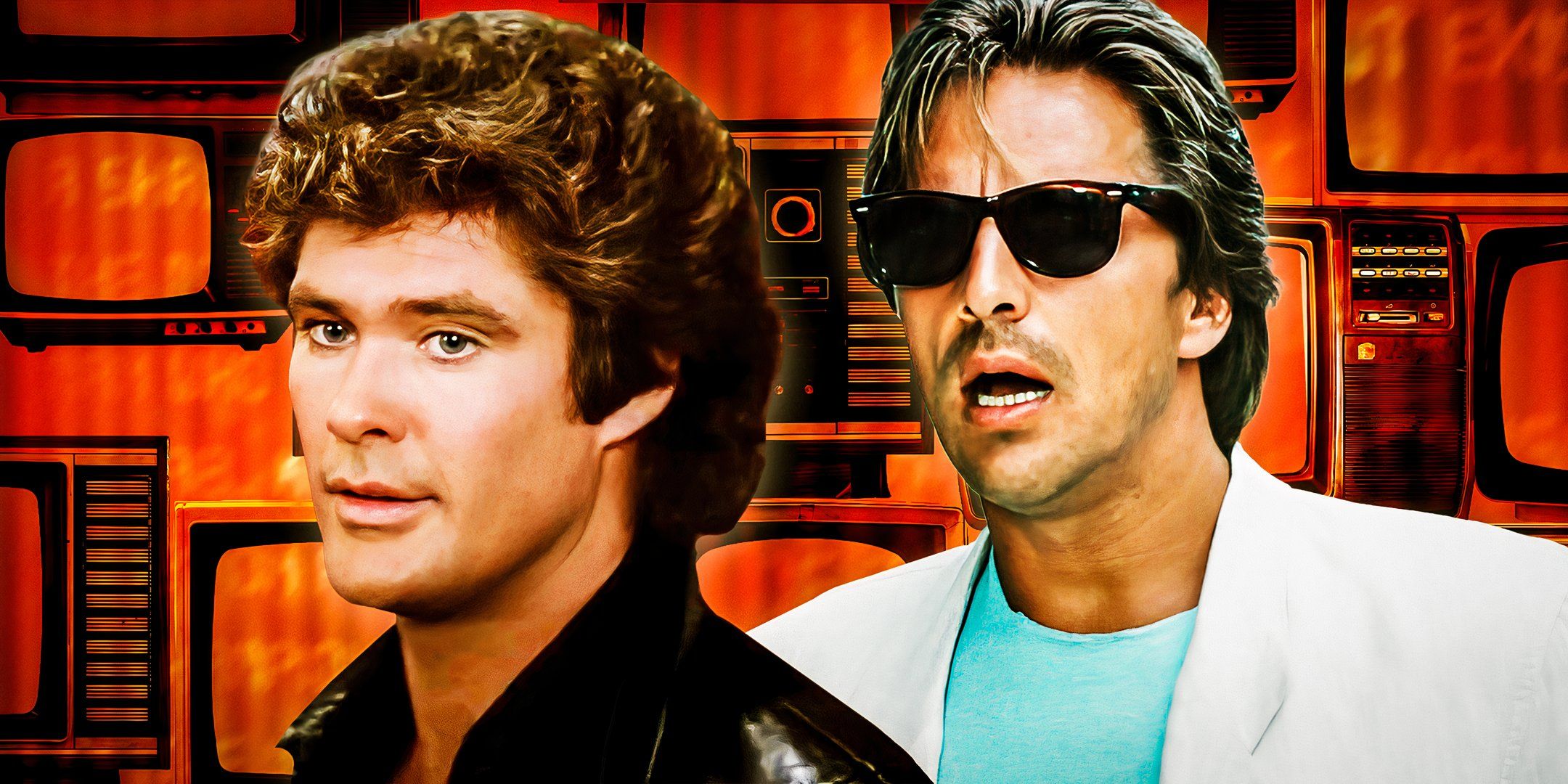
Portrayed respectively by Don Johnson and Philip Michael Thomas, Crockett and Tubbs revolutionized television aesthetics. Operating in pastel suits, driving high-end sports cars, and working against a backdrop of synthesizer-heavy scores, these undercover vice detectives introduced feature-film production values to the small screen. Beyond the style, Crockett’s internal weariness and Tubbs’s urban sophistication added psychological depth to the traditional cop duo formula.
J.R. Ewing (Dallas)
As the ultimate television villain, Larry Hagman’s J.R. Ewing proved that audiences could thoroughly enjoy rooting for a thoroughly corrupt oil baron. Operating out of Southfork Ranch, J.R. combined ruthless corporate manipulation with undeniable southern charm. His scheming redefined the prime-time soap opera and sparked global cultural phenomena, most notably captured in the famous "Who shot J.R.?" cultural watershed moment of 1980.
Magnum, P.I. (Magnum, P.I.)
Thomas Sullivan Magnum IV, played by Tom Selleck, combined the rugged independence of a private investigator with the emotional scars of a Vietnam War veteran. Stationed in Hawaii, Magnum's Hawaiian shirts, Detroit Tigers baseball cap, and Ferrari 308 GTS became instantly recognizable symbols of 1980s pop culture, while his character grounded the escapist adventure format in genuine camaraderie and post-war reflection.
| Character | Portrayed By | Series | Primary Archetype | Cultural Legacy |
|---|---|---|---|---|
| Alex P. Keaton | Michael J. Fox | Family Ties | Corporate-minded Teen | Defined the generational satire of Reagan-era politics. |
| Sam Malone | Ted Danson | Cheers | Charming Bartender / Former Athlete | Set the standard for long-running romantic tension in sitcoms. |
| J.R. Ewing | Larry Hagman | Dallas | Ruthless Corporate Villain | Popularized the serialized prime-time soap opera antagonist. |
| Sonny Crockett | Don Johnson | Miami Vice | Stylized Undercover Detective | Revolutionized television fashion, music integration, and cinematography. |
| Murphy Brown | Candice Bergen | Murphy Brown | Investigative Journalist | Sparked real-world political debates regarding single motherhood. |
Sci-Fi, Fantasy, and Animated Pioneers
Beyond live-action domestic and professional settings, the 1980s fostered groundbreaking developments in speculative fiction and animation, introducing characters that expanded the imaginative boundaries of television storytelling.
Commander Spock and the Star Trek Generation
While Star Trek: The Original Series debuted in the late 1960s, Leonard Nimoy’s Spock reached peak cultural ubiquity in the 1980s through a string of blockbuster feature films and enduring syndication. The decade also paved the way for Star Trek: The Next Generation (premiering in 1987), which introduced complex new figures like Captain Jean-Luc Picard (Patrick Stewart) and the android Data (Brent Spiner). These characters utilized science fiction as a philosophical framework to examine humanity, ethics, and logic.
Animated Icons and Action Figure Pioneers
The deregulation of children's television advertising via the Federal Communications Commission in the early 1980s led to an explosion of character-driven animated series tied directly to toy merchandising. Figures such as He-Man (Masters of the Universe), Optimus Prime (Transformers), and Lion-O (Thundercats) dominated Saturday mornings. These characters established elaborate mythologies of good versus evil, featuring clear moral frameworks that resonated deeply with young audiences and created multi-billion-dollar global franchises.
Social Impact and Cultural Reflection
The characters of 1980s television did more than entertain; they actively participated in the social and political discourse of their time. Creators utilized prime-time platforms to address emerging social realities, from changing family structures and women in the workforce to the AIDS epidemic and corporate ethics.
Female characters in particular underwent significant evolution. Figures like Murphy Brown (Candice Bergen) and Rose Nylund, Dorothy Zbornak, Blanche Devereaux, and Sophia Petrillo (The Golden Girls) demonstrated that women over forty could anchor successful, critically acclaimed comedies and dramas without relying on traditional damsel-in-distress tropes. The Golden Girls, in particular, shattered television taboos by centering a sitcom on the vibrant, independent lives of four older women sharing a home in Miami, proving that sharp wit and emotional depth remained ageless.
Furthermore, television characters began reflecting the economic anxiety of the decade, balancing the overt consumerism represented by characters like Alexis Colby (Dynasty) with the working-class struggles depicted in shows like Roseanne (which premiered at the very end of the decade in 1988, introducing a starkly realistic, blue-collar matriarch).
Frequently Asked Questions
What made 1980s TV characters different from previous decades?
Characters in the 1980s benefited from serialized storytelling, shifting network demographics, and more sophisticated writing. Writers embraced moral ambiguity, political satire, and complex personal flaws, moving away from the simplistic moralizing of earlier television eras.
How did Reagan-era politics influence 1980s television characters?
The economic prosperity, individualism, and conservative political shifts of the 1980s directly inspired characters focused on wealth accumulation, corporate ambition, and traditional family values, while simultaneously provoking satirical counter-responses from progressive creators.
Which 1980s TV characters had the biggest impact on fashion?
Characters from Miami Vice (especially Sonny Crockett) popularized wearing unconstructed suit jackets over t-shirts and pastel color palettes. Similarly, characters from prime-time soaps like Dynasty popularized power dressing, shoulder pads, and bold statement jewelry.
Are 1980s television series still influential in modern streaming culture?
Yes. The character archetypes, serialized narrative structures, and high production values established during the 1980s laid the structural foundation for modern prestige television, streaming dramas, and pop culture nostalgia revivals.
Conclusion and Next Actions
The television characters of the 1980s remain foundational pillars of modern media history, blending stylistic innovation with complex psychological traits that continue to captivate audiences. To explore this era further, consider revisiting foundational episodes of groundbreaking series such as Cheers, Miami Vice, and Family Ties on verified streaming platforms, or examining retrospective analyses of network television history to understand how these iconic figures transformed the cultural landscape.