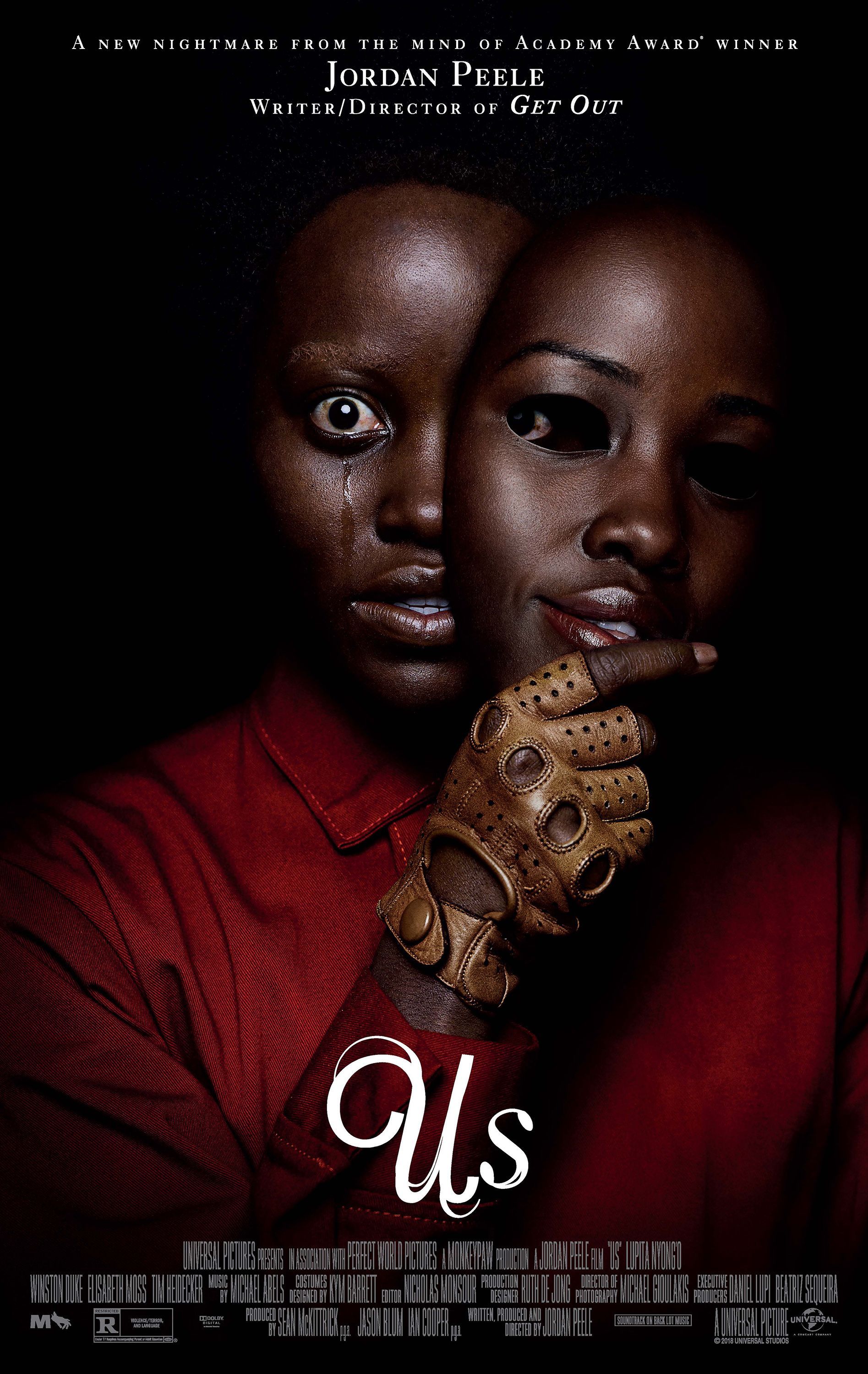
Jordan Peele’s 2019 sophomore psychological horror feature, Us, delivers a complex, metaphor-rich conclusion that recontextualizes the entire narrative, shifting the film from a straightforward home-invasion thriller into a sprawling allegorical tale about class, privilege, and systemic neglect. The final sequence reveals that Adelaide Wilson (Lupita Nyong'o) is actually Red—the tethered doppelgänger who switched places with the real Adelaide in an underground mirror maze as a child—and that the tethered uprising was a coordinated reclamation of surface life driven by decades of suppressed suffering.
Introduction to the Shadowland: Understanding the Premise
To fully comprehend the ending of Us, one must first examine the foundational rules of the film's universe. The story introduces the Tethered: a subterranean population of exact physical copies created by a failed government experiment meant to control the population above through a form of psychic linkage. While the surface dwellers live lives of comfort, autonomy, and relative safety, their underground counterparts are bound to mimic every movement, feeling, and action in a state of agonizing puppet-like synchronization, surviving on raw meat and underground tunnels.
The film follows Adelaide Wilson, her husband Gabe, and their children Zora and Jason as they vacation in Santa Cruz, California. Their trip is disrupted when a family of four eerie, red-suited doppelgängers breaks into their vacation home. Led by Adelaide’s tethered counterpart, Red, this group initiates a nationwide uprising. Red’s ultimate goal is not merely to terrorize one family, but to lead the Tethered in "Hands Across America"—holding hands in an unbroken human chain stretching across the United States to claim their rightful place in the sun.
The Core Revelation: The Great Switch
The narrative hinge of the entire film occurs during the final confrontation between Adelaide and Red in the subterranean depths beneath the amusement park. As they engage in a brutal, balletic fight to the death, Red explains the origin of the Tethered and her childhood trauma. However, a series of flashbacks and subtle behavioral cues earlier in the film—combined with the final visual confirmation—reveal a shocking twist: the protagonist we have followed for the entire movie is not the real Adelaide, but Red.
The Childhood Encounter in 1986
In a prologue set in 1986 on the Santa Cruz boardwalk, a young Adelaide wanders into a funhouse hall of mirrors. There, she encounters her tethered doppelgänger. Instead of simply mirroring her, the tethered child chokes Adelaide, drags her down into the subterranean facility, puts her in handcuffs, and takes her place on the surface.
The tethered child who learned to speak, assimilate, and live a normal life grew up to be the film's protagonist, Adelaide. Meanwhile, the real Adelaide was forced to grow up underground, harboring a deep, burning resentment and a meticulously planned desire for revenge.
Clues Hidden in Plain Sight
Director Jordan Peele peppers the film with subtle foreshadowing that rewards repeat viewings.
- Speech and Mobility: While the other Tethered are mute, feral, and communicate only in guttural groans, "surface Adelaide" speaks with halting difficulty early on, having had to relearn language after the trauma of the switch. Conversely, Red speaks with a rasping, damaged voice, having spent a lifetime communicating underground without proper vocal training.
- Empathy for the Tethered: Unlike Gabe or the children, who view the intruders purely as monsters to be destroyed, Adelaide shows a chillingly pragmatic understanding of their psychology, hinting at her deep-seated familiarity with their plight.
- The Dance: Adelaide’s background in ballet mirrors Red’s fascination with rhythmic movement. The final battle is framed as a brutal dance, symbolizing two halves of the same whole fighting for dominance.
Hands Across America and the Sociological Metaphor
The climax of the film features thousands of Tethered individuals wearing red jumpsuits and holding hands in a massive line that spans across American highways and landscapes. This imagery directly references the real-world 1986 charity campaign "Hands Across America," which aimed to raise money to combat hunger and homelessness in the United States.
| Surface Reality | Subterranean Counterpart |
|---|---|
| Privilege, safety, abundance | Neglect, oppression, survival |
| Mainstream cultural validation | Erasure from societal awareness |
| Controlled comfort | Forced physiological mimicry |
Peele uses this historical reference to expose the hypocrisy of performative charity. The real campaign allowed comfortable, affluent Americans to feel good about themselves by holding hands for fifteen minutes without dismantling the systemic inequalities causing poverty. In Us, the Tethered literalize this concept: they use the gesture not to raise awareness, but to form a physical barrier, an undeniable line of bodies demanding that the privileged class acknowledge their existence and shared humanity.
Character Breakdown and Thematic Significance
| Character | Surface Identity | True Nature / Allegory |
|---|---|---|
| Adelaide Wilson | Loving mother, former ballet dancer | Actually Red; a traumatized victim who infiltrated the upper world to reclaim her life. |
| Red | Leader of the Tethered uprising | Actually the original surface Adelaide; driven mad by underground captivity and loss of identity. |
| Jason Wilson | Observant young son | Discovers the truth; his final knowing glance suggests a complex complicity or understanding. |
The Ambiguity of Jason’s Final Look
In the final scenes, the surviving Wilson family escapes in an ambulance, heading toward safety. Young Jason sits in the back, wearing his mask and staring intently at his mother. Adelaide looks back at him with a strained, ambiguous smile.
Jason lowers his mask, revealing a knowing look. He has figured out the truth—that his mother is not who she says she is, or perhaps he recognizes the dark, feral nature within her that allowed her to survive and win the final fight. This moment underscores Peele's central thesis: the lines between monster and victim, privileged and oppressed, are entirely constructed and easily blurred.
Common Misconceptions and Troubleshooting the Plot
Many viewers struggle with the internal logic of the Tethered population. How could an entire subterranean society exist without detection, and how did they coordinate such a vast uprising?
- Logistical Scale: The film operates on a magical realism/horror logic rather than strict sci-fi realism. The underground tunnels, escalators, and holding cells serve as an architectural metaphor for the unseen underbelly of modern civilization rather than a meticulously engineered civil engineering project.
- The Shared Soul: A crucial piece of dialogue establishes that the Tethered share a single soul with their surface counterparts. When one feels pain, the other feels it; when one lives a full life, the other is trapped in shadow. This metaphysical link explains why Red’s uprising is driven by a primal need for ontological parity.
Summary of Key Takeaways
- The Twist: The protagonist Adelaide is revealed to be Red, the tethered child who stole her life in 1986.
- The Allegory: The Tethered represent the marginalized, exploited populations whose labor and suffering sustain upper-class comfort.
- The Ending: The final look between Adelaide and Jason confirms that the trauma and the secret cannot be neatly buried; the shadow always remains part of the whole.