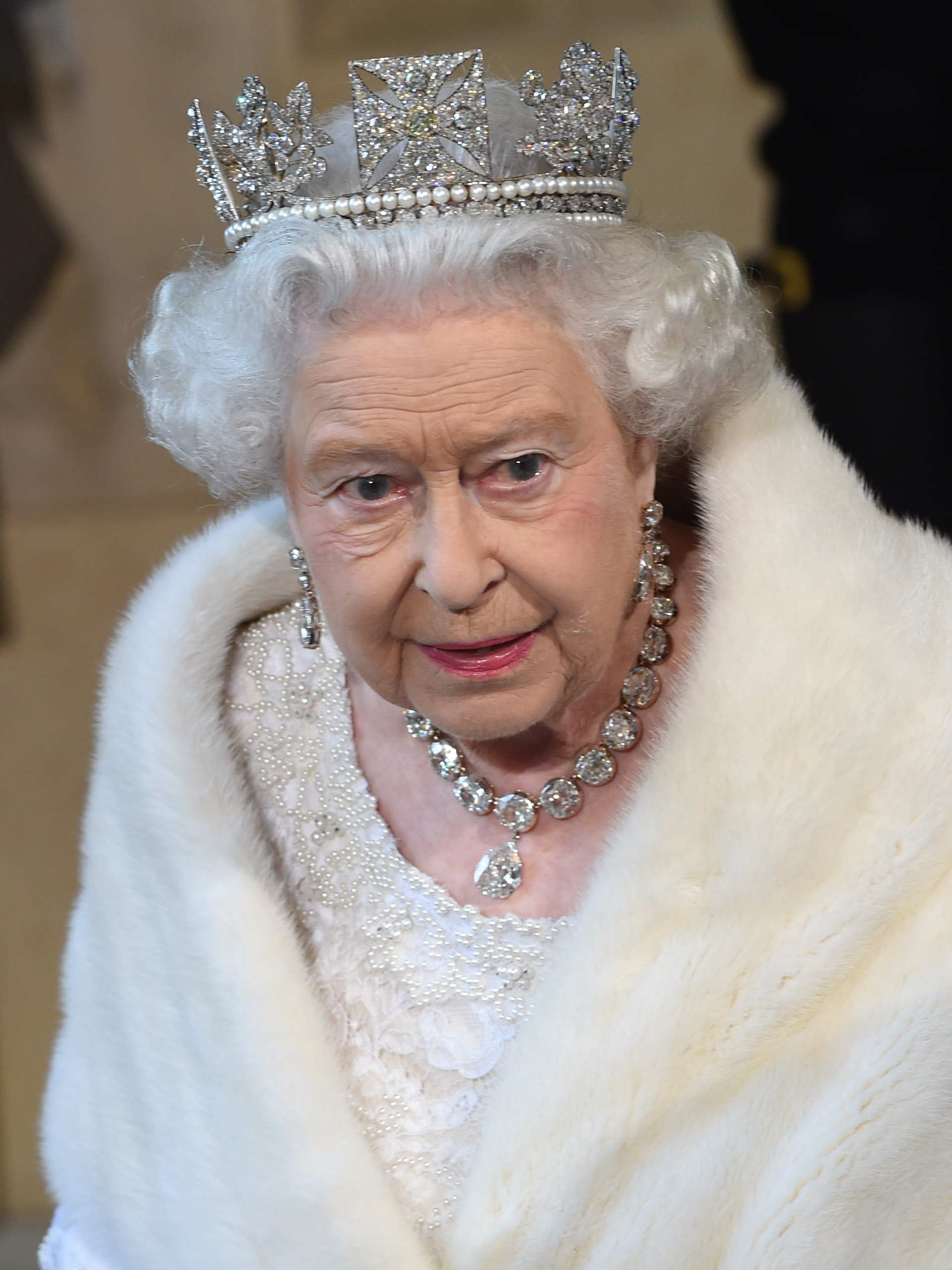
Queen Elizabeth I ruled England and Ireland from November 1558 until her death in March 1603, presiding over a transformative period known as the Elizabethan Era, characterized by flourishing drama, maritime expansion, and the consolidation of the English Protestant Church. Her forty-five-year reign provided vital political stability after decades of religious turmoil, allowing arts, commerce, and national identity to thrive.
Introduction to the Elizabethan Era
The accession of Queen Elizabeth I in 1558 marked the end of a turbulent period of religious fluctuation and political instability under her predecessors. Daughter of King Henry VIII and Anne Boleyn, Elizabeth inherited a nation deeply divided by the English Reformation, threatened by foreign powers, and financially strained. Through astute political maneuvering, a carefully cultivated public image, and a remarkably capable council of advisers, she navigated these threats to establish England as a major European power.
Her reign is frequently remembered as a "Golden Age," an epithet earned through the explosion of English literary and theatrical achievement—epitomized by William Shakespeare and Christopher Marlowe—and the daring maritime exploits of explorers like Sir Francis Drake and Sir Walter Raleigh. Understanding Elizabeth's enduring historical significance requires examining the foundational challenges she faced, the mechanisms of her governance, the religious settlement she engineered, and the cultural milestones that defined her era.
Early Life and Accession to the Throne
Elizabeth’s early life was fraught with danger, illegitimacy, and the constant threat of execution. Born on September 7, 1533, her fortunes plummeted following the execution of her mother, Anne Boleyn, after which Henry VIII declared Elizabeth illegitimate. Despite this setback, she received a rigorous humanist education, becoming fluent in several languages, including Latin, Greek, French, and Italian, and studying classical history, rhetoric, and theology.
During the reigns of her half-brother, Edward VI, and her half-sister, Mary I, Elizabeth’s position remained precarious. Her suspected involvement in Protestant rebellions, notably Wyatt's Rebellion in 1554, led Mary to imprison her in the Tower of London. Elizabeth survived by maintaining strict silence, demonstrating absolute loyalty, and navigating the religious fanaticism of the period with calculated caution.
When Mary I died childless on November 17, 1558, Elizabeth ascended the throne at the age of twenty-five. Her accession was greeted with widespread public relief and celebration. She immediately surrounded herself with trusted advisers, most notably William Cecil, whom she appointed as principal secretary. This partnership formed the administrative backbone of her government for decades, establishing a pragmatic and cautious approach to domestic and foreign policy.
The Elizabethan Religious Settlement
One of Elizabeth’s most urgent priorities upon taking the crown was resolving the religious divisions that had torn England apart during the reigns of Henry VIII, Edward VI, and Mary I. The resulting Elizabethan Religious Settlement of 1559 aimed for a middle way (via media) that could accommodate as many of her subjects as possible without plunging the country back into civil or international conflict.
The settlement was enacted through two primary parliamentary statutes:
- The Act of Supremacy (1559): Re-established the monarch as the Supreme Governor of the Church of England, avoiding the more controversial title of "Supreme Head" previously claimed by her father and brother, which placated both Catholic sensitivities and Protestant concerns about female leadership in spiritual matters.
- The Act of Uniformity (1559): Mandated a single form of worship across the kingdom by reviving the 1552 Book of Common Prayer, with subtle modifications designed to make it acceptable to traditionalists while retaining its Protestant theology.
| Act / Measure | Primary Purpose | Key Consequence |
|---|---|---|
| Act of Supremacy (1559) | Re-established royal authority over the English Church. | Positioned the monarch as Supreme Governor, minimizing overt papal influence. |
| Act of Uniformity (1559) | Standardized religious services through a revised liturgy. | Mandated church attendance and enforced the use of the Book of Common Prayer. |
| Thirty-Nine Articles (1563/1571) | Defined the official doctrine of the Church of England. | Struck a balance between Calvinist theology and traditional episcopal governance. |
While the settlement successfully established a Protestant national church, it faced persistent threats. Radical Puritans desired a more thorough reformation that stripped away all remaining Catholic rituals, while devout Roman Catholics faced increasing suspicion, recusancy fines, and, in later decades, severe persecution, especially after Pope Pius V issued the papal bull Regnans in Excelsis in 1570, which absolved English Catholics from their allegiance to Elizabeth.
Governance, Court Culture, and the Virgin Queen
Elizabethan governance relied heavily on the personal relationship between the monarch and her court. Operating within a patriarchal society, Elizabeth deliberately cultivated the persona of the "Virgin Queen"—or Gloriana—transforming her unmarried status into a powerful political asset. By refusing to marry, she avoided subordinating English foreign policy to a foreign husband and retained total control over the patronage network that bound the nobility to the crown.
The Queen's Privy Council served as the engine of daily administration. Composed of a small group of trusted ministers, including William Cecil (later Lord Burghley), Francis Walsingham, and later Robert Cecil, the council debated policy, managed finance, and orchestrated national security. Elizabeth proved a master of political balance, playing factions within her court against one another to ensure that no single nobleman or family grew powerful enough to challenge the throne.
Court culture under Elizabeth was lavish and performative. Progresses—annual summer tours where the Queen and her entourage traveled through the homes of wealthy nobility—served as both political communication and financial relief, as hosting the royal court was notoriously expensive. Poets, painters, and musicians contributed to an elaborate cult of love and loyalty around the monarch, immortalizing her in miniature portraits, verse, and epic poetry such as Edmund Spenser’s The Faerie Queene.
Foreign Policy and Conflicts
Elizabethan foreign policy was fundamentally defensive, shaped by England's relative military and financial weakness compared to continental superpowers like Spain and France. For much of her reign, Elizabeth utilized marriage negotiations as a diplomatic tool, keeping potential European allies—such as the Valois princes of France or the Habsburg archdukes—engaged without ever committing to a match.
The Spanish Armada (1588)
The most defining military crisis of Elizabeth's reign was the confrontation with the Spanish Empire, ruled by her former brother-in-law, King Philip II. Tensions had escalated due to English privateering raids on Spanish treasure fleets in the Americas, English financial and military support for the Protestant Dutch revolt against Spanish rule, and the execution of the Catholic Mary, Queen of Scots, in 1587.
In response, Philip II dispatched the Spanish Armada—a massive fleet of over 130 ships—with the objective of invading England, deposing Elizabeth, and restoring Catholicism. Through superior naval tactics, faster-firing English artillery, and devastating fireships during the Battle of Gravelines, combined with fierce storms (the "Protestant Wind") that battered the retreating Spanish fleet around the coasts of Scotland and Ireland, the English navy decisively repelled the invasion. The victory became a cornerstone of English national mythos and firmly established England's naval ambitions.
Cultural Flowering: The Elizabethan Renaissance
Beyond politics and warfare, the reign of Elizabeth I witnessed an unprecedented flowering of arts, literature, and intellectual inquiry. While Italy had experienced its Renaissance a century earlier, England's cultural peak arrived during the late sixteenth century, fueled by peace in the southern shires, rising literacy rates, and the patronage of the court and wealthy merchants.
Drama emerged as the dominant artistic medium. Public playhouses such as the Globe, the Rose, and the Swan drew diverse audiences from all strata of society. Playwrights like William Shakespeare, Christopher Marlowe, and Ben Jonson revolutionized English verse, exploring complex themes of human nature, power, ambition, and mortality. Simultaneously, intellectual pursuits in science, geography, and philosophy laid the groundwork for the scientific revolution of the following century.
Later Years, Succession, and Death
The final decade of Elizabeth's reign was marked by mounting difficulties. The protracted war with Spain drained the royal treasury, a series of poor harvests caused widespread economic hardship and food riots, and an aging queen watched as many of her closest, most trusted advisers—including Lord Burghley—passed away, leaving a younger, more ambitious generation of courtiers vying for influence, most notably the Earl of Essex, whose rebellion in 1601 ended in his execution.
Despite these challenges, Elizabeth maintained her grip on power until her final days. Because she steadfastly refused to name a successor during her lifetime, the question of who would inherit the English crown caused intense anxiety among politicians and foreign observers alike.
Elizabeth I died peacefully on March 24, 1603, at Richmond Palace, in her seventieth year. With her passing, the Tudor dynasty came to an end. To ensure a peaceful transition, her chief minister, Robert Cecil, secretly negotiated with King James VI of Scotland—the son of her executed cousin, Mary, Queen of Scots—who ascended the English throne as James I, successfully uniting the crowns of England and Scotland.
Frequently Asked Questions About Queen Elizabeth I
Why was Queen Elizabeth I called the "Virgin Queen"?
Elizabeth earned the moniker "Virgin Queen" primarily because she chose never to marry throughout her forty-five-year reign. This status allowed her to remain politically independent from foreign influence, retain ultimate authority over state decisions, and cultivate a mystical public persona that merged royal sovereignty with religious purity.
How did Elizabeth I survive the reign of her sister, Mary I?
Elizabeth survived Mary I's reign by exercising extreme caution, publicly conforming to Catholicism, and maintaining absolute discretion when implicated in Protestant plots. Despite being imprisoned in the Tower of London, no conclusive proof of treason could be found against her, forcing Mary to spare her life.
What was the Elizabethan Settlement?
The Elizabethan Settlement of 1559 was a legislative and religious compromise designed to end the violent religious shifts of previous monarchs. It established the Church of England as a moderate Protestant institution with the monarch as its Supreme Governor, blending traditional liturgy with reformed theology.
Who was Elizabeth I's greatest rival?
Elizabeth faced several major rivals, but her most dangerous geopolitical and religious adversary was King Philip II of Spain. Domestically and dynastically, her cousin Mary, Queen of Scots, posed a continuous threat as a Catholic alternative claimant to the English throne until Mary's execution in 1587.
What impact did the defeat of the Spanish Armada have on England?
The defeat of the Spanish Armada in 1588 prevented a Catholic invasion, secured the survival of the English Reformation, boosted national morale, and signaled England's emergence as a formidable naval power capable of challenging continental empires.
Next Actions and Further Exploration
To deepen your understanding of the Elizabethan era, consider visiting primary source collections such as the records preserved at The National Archives (UK) or exploring contemporary documents housed by the British Library. Academic studies by historians like Diarmaid MacCulloch, Patrick Collinson, and Alison Weir offer comprehensive examinations of her court, religious policies, and personal life.