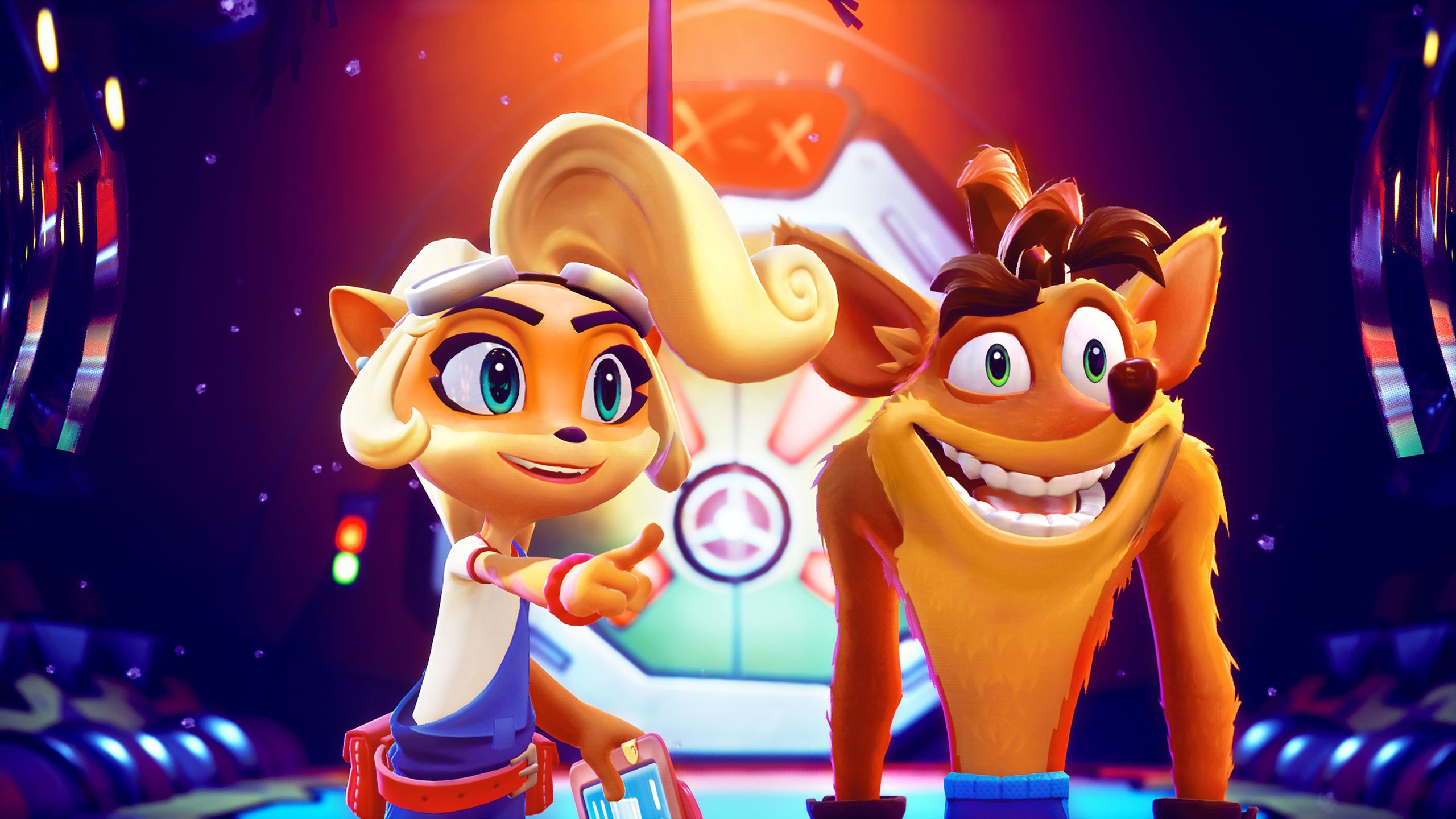
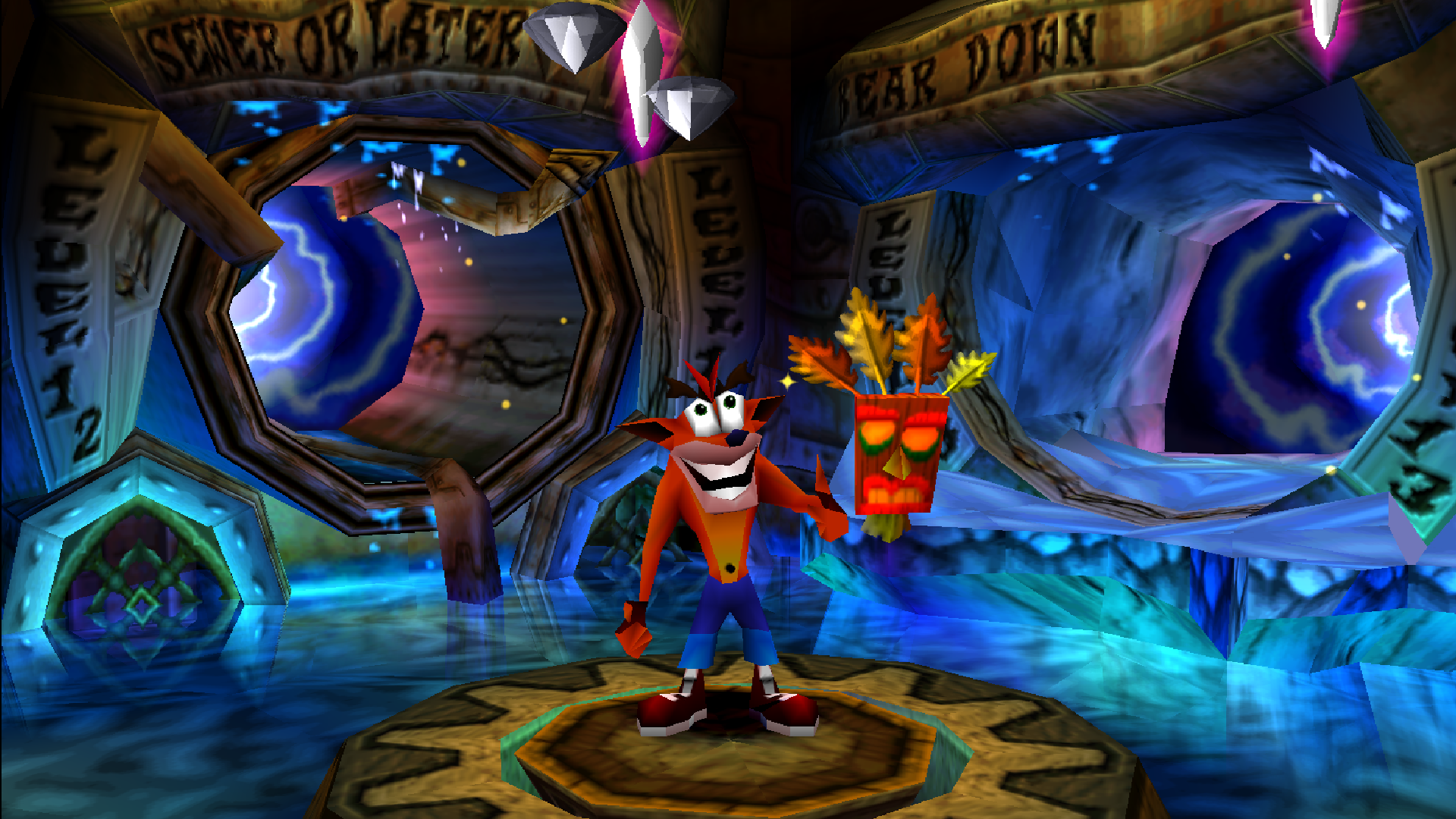
Crash Bandicoot is a genetically enhanced Eastern Barred Bandicoot (Perameles gunnii), a small marsupial native to Australia and Tasmania. Created by Naughty Dog in 1996, he matters because he pioneered linear 3D platforming on the original PlayStation, serving as Sony’s unofficial mascot and proving that complex character-driven narratives could thrive in the third dimension.
The Biological Identity of Crash Bandicoot
To understand why Naughty Dog chose a bandicoot, one must first look at the real-world animal. The Eastern Barred Bandicoot is a small, nocturnal marsupial characterized by its elongated snout, large ears, and distinctive pale stripes across its rump. In the mid-1990s, developers Andy Gavin and Jason Rubin wanted a character that was "cute, but had an edge." They sifted through Australian wildlife guides, looking for an animal that hadn't been overexposed in media, like the kangaroo or koala.
While the real Eastern Barred Bandicoot is typically brownish-grey and reclusive, the character of Crash was rendered in a vibrant "Safety Orange." This was not just an aesthetic choice; it was a technical necessity. On the CRT televisions of 1996, orange stood out most clearly against the lush green and deep blue backgrounds of the Wumpa Islands. Despite his stylized appearance—standing on two legs, wearing blue jeans, and sporting a mohawk—Crash retains several bandicoot traits, such as his pointed nose and the frantic, energetic movements typical of small marsupials.
In the lore of the game, Crash is not a natural occurrence. He is the result of an "Evolvo-Ray" experiment conducted by the series' antagonist, Dr. Neo Cortex. This narrative device allowed the creators to bridge the gap between a wild animal and a sentient hero, providing a logical explanation for his bipedalism and human-like expressions while maintaining his wild, unpredictable nature.
Why Crash Bandicoot Matters in the History of Gaming
Crash Bandicoot’s significance extends far beyond his species. He arrived at a pivotal moment in gaming history when the industry was transitioning from 2D sprites to 3D polygons. His impact can be categorized into three major areas: technical innovation, brand warfare, and genre definition.
The "Sonic's Ass" Problem and 3D Innovation
Before Crash Bandicoot, most platformers were side-scrollers. When Naughty Dog began developing "Project Willie" (the internal codename for Crash), they faced a significant challenge: how to make a 3D platformer that was actually playable. They famously referred to the concept as "Sonic's Ass Game" because the camera followed the character from behind, meaning the player spent much of the game looking at the protagonist's backside.
To make this work on the limited hardware of the PlayStation 1, Naughty Dog developed a highly sophisticated rendering engine. They bypassed the standard PlayStation libraries to talk directly to the hardware, allowing them to push more polygons than almost any other game of the era. By creating a "corridor" style of 3D—where the player moves forward into the screen rather than in a fully open world—they were able to maintain incredibly high graphical detail for the time. This technical wizardry set a new bar for what was possible on home consoles.
The Face of the PlayStation Brand
In the 1990s, the "Mascot Wars" were at their peak. Nintendo had Mario, and Sega had Sonic. Sony, a newcomer to the console market, lacked a singular face to represent the PlayStation brand. While Sony never officially designated him as such, Crash Bandicoot became the de facto mascot.
The marketing campaign for Crash was legendary for its "edginess." Commercials featured a man in a Crash Bandicoot suit standing in the parking lot of Nintendo’s headquarters with a megaphone, taunting "plumber boy." This repositioned the PlayStation as the "cooler," more mature alternative to the family-friendly Nintendo 64. Crash mattered because he helped Sony capture the teenage and young-adult demographic, which was instrumental in the PlayStation 1's dominant market share.
The Evolution of the Franchise Through 2026
As of 2026, the Crash Bandicoot franchise has undergone a massive resurgence, proving the character's enduring appeal. After a period of dormancy in the 2010s, the "N. Sane Trilogy" (2017) and "Crash Bandicoot 4: It’s About Time" (2020) revitalized interest in high-difficulty, linear platforming.
The acquisition of Activision Blizzard by Microsoft (finalized in late 2023) has shifted the landscape once again. While Crash began as a PlayStation icon, he is now a core part of the Xbox Game Studios portfolio. This transition highlights a broader trend in the industry: the movement of legacy mascots from hardware-exclusivity to multi-platform ecosystems. Even in 2026, the demand for "Crash Bandicoot 5" and legacy collections remains high, fueled by a fanbase that spans three generations.
Comparison of Iconic 90s Gaming Mascots
The following table contextualizes Crash Bandicoot among his contemporaries, highlighting the specific niches each character filled during the "Mascot Era."
| Character | Species | Debut Year | Primary Innovation | Current Status (2026) |
|---|---|---|---|---|
| Crash Bandicoot | Eastern Barred Bandicoot | 1996 | Linear 3D "Corridor" Platforming | Multi-platform (Xbox/PS/PC) |
| Mario | Human (Plumber) | 1981 | 3D Open-Exploration (Mario 64) | Nintendo Exclusive |
| Sonic the Hedgehog | Hedgehog | 1991 | High-speed 2D/3D Momentum | Multi-platform |
| Spyro the Dragon | Dragon | 1998 | Large-scale 3D Level Streaming | Multi-platform (Xbox/PS/PC) |
Technical Depth: How Naughty Dog Pushed the PS1
To understand why Crash felt "different" from other 1996 games, we have to look at the programming. The PlayStation 1 had no Z-buffer, meaning the hardware didn't naturally know which objects were in front of others. This often led to "polygon jitter."
Naughty Dog solved this through a custom language called GOAL (Game Oriented Assembly Lisp). They used a technique where the level geometry was pre-calculated and "hidden" when not in the camera's view. This allowed them to use nearly 1,000 polygons for Crash himself—an astronomical number at the time. Most PS1 characters were lucky to have 200 polygons. This high fidelity gave Crash his expressive face and fluid animations, making him feel like a "playable cartoon," a goal that many developers had chased but few had achieved.
Impact on the Platformer Genre
Crash Bandicoot’s success validated the "linear 3D" philosophy. While Super Mario 64 focused on exploration and sandbox environments, Crash focused on precision, timing, and obstacle courses. This split the platformer genre into two distinct paths:
- The Collect-a-thon: Open worlds with multiple objectives (e.g., Banjo-Kazooie).
- The Gauntlet: Linear, high-challenge paths (e.g., Crash Bandicoot).
The "Gauntlet" style paved the way for modern "masocore" platformers like Celeste or Super Meat Boy, where the joy comes from mastering a difficult sequence of moves to reach the end of a level. Crash’s "Spin, Jump, Slide" mechanics were simple but deep, offering a level of control that few 3D games of the mid-90s could match.
Frequently Asked Questions
Is Crash Bandicoot a fox or a dog?
Crash is neither a fox nor a dog; he is an Eastern Barred Bandicoot. While his orange fur often leads players to mistake him for a fox, his biological inspiration is a specific marsupial native to Australia. His design was intentionally stylized to look like a cartoon character, which contributes to the common confusion regarding his species.
Why does Crash Bandicoot spin?
The spin attack was developed by Naughty Dog as a way to allow the player to clear obstacles and enemies without needing the pixel-perfect precision of jumping on heads (like Mario). From a technical standpoint, the spin was easier to program in a 3D space than a complex melee system, and it became the character's signature move.
Who owns the rights to Crash Bandicoot in 2026?
As of 2026, the rights to the Crash Bandicoot franchise belong to Microsoft, following their acquisition of Activision Blizzard. While the character was synonymous with the Sony PlayStation for decades, the intellectual property is now managed under the Xbox Game Studios umbrella, though games continue to be released on multiple platforms.
What happened to the real Eastern Barred Bandicoot?
In the real world, the Eastern Barred Bandicoot is an endangered species. For a time, they were considered extinct in the wild on the Australian mainland. Thanks to intensive conservation efforts and "predator-proof" fenced enclosures, their status was downgraded from "Extinct in the Wild" to "Endangered" in 2021. The popularity of the game character has often been used by conservation groups to raise awareness for the real-world animal.
Was Crash Bandicoot the first 3D platformer?
No, Crash Bandicoot was not the first. Jumping Flash! and Alpha Waves preceded it. However, Crash Bandicoot (alongside Super Mario 64) was one of the first games to demonstrate how 3D platforming could be polished, commercially successful, and technically stable on home consoles.
Final Recommendation for Fans and New Players
If you are looking to experience why Crash Bandicoot matters, the best entry point in 2026 remains the N. Sane Trilogy. It faithfully recreates the original three games with modern graphics, allowing you to see the evolution of the "corridor platformer" firsthand. For those who want a modern challenge, Crash Bandicoot 4: It’s About Time offers the most refined version of his mechanics, proving that the "bandicoot" identity is just as relevant today as it was in 1996. Whether you are interested in the history of the "Mascot Wars" or simply want a high-precision platformer, Crash remains a cornerstone of the gaming medium.