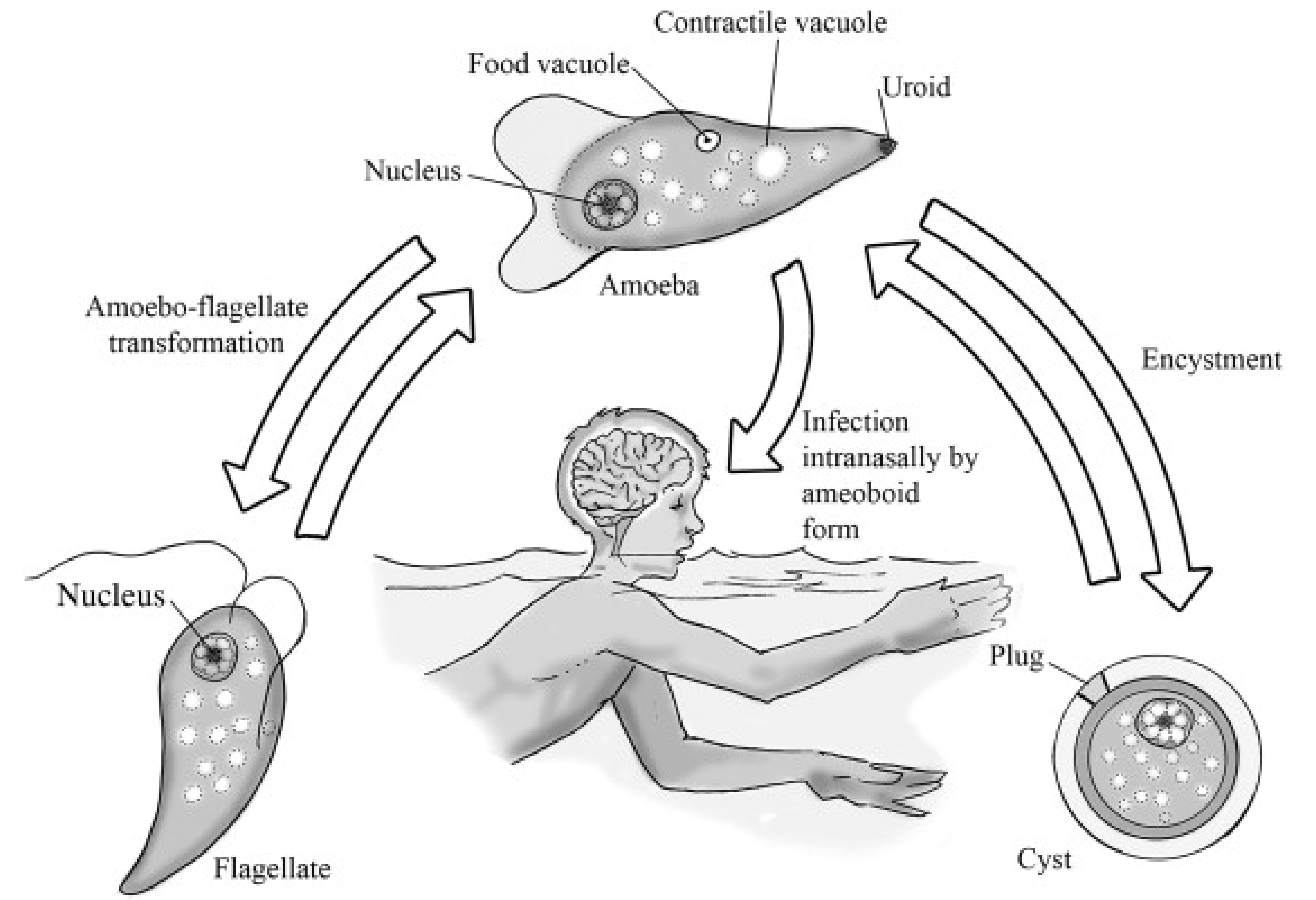
While Lake Michigan is a vast and generally cold freshwater body where Naegleria fowleri infections are exceedingly rare, the organism can theoretically exist in warm, shallow, stagnant pockets of water during peak summer months. However, confirmed cases linked directly to Lake Michigan are virtually non-existent, as the lake's overall water temperature rarely reaches the sustained high thresholds required for this amoeba to thrive and proliferate.
Understanding Naegleria Fowleri and Its Natural Environment
To understand the safety of Lake Michigan, it is essential to understand what Naegleria fowleri is and the specific environmental conditions it requires to survive. Often colloquially termed the "brain-eating amoeba," Naegleria fowleri is a free-living microscopic unicellular organism categorized scientifically as a thermophilic (heat-loving) eukaryote. It lives naturally in soil and warm freshwater environments around the globe, including hot springs, geothermal water, warm rivers, mud puddles, and poorly maintained or unchlorinated swimming pools.
Unlike bacteria or viruses that circulate evenly throughout a body of water, Naegleria fowleri is primarily a sediment-dwelling organism. It feeds on bacteria found in the organic matter and mud at the bottom of lakes, ponds, and rivers. When water temperatures rise—typically exceeding 80 degrees Fahrenheit (27 degrees Celsius) and often peaking in the 90s—the amoeba reproduces rapidly.
The primary vector for human infection occurs when water containing the amoeba enters forcefully through the nose, usually during swimming, diving, or water-skiing in shallow, warm areas. Once inside the nasal passages, the amoeba travels along the olfactory nerve straight to the brain, where it causes a devastating and almost universally fatal infection known as primary amebic meningoencephalitis (PAM). Despite the terrifying nature of the disease, it cannot be contracted by swallowing water, and it does not spread from person to person.
The Specific Environmental Profile of Lake Michigan
Lake Michigan is one of the five Great Lakes of North America, holding a massive volume of deep, cold water. Its ecological and physical characteristics create a stark contrast to the small, shallow southern ponds and slow-moving rivers where Naegleria fowleri is routinely found.
Water Temperatures and Depth
The defining characteristic of Lake Michigan that deters Naegleria fowleri is its temperature profile. The average depth of Lake Michigan is approximately 279 feet (85 meters), with a maximum depth reaching 923 feet (281 meters). Deep water masses possess an enormous thermal capacity, meaning they require a tremendous amount of energy to heat up and retain cold temperatures for much of the year.
While surface temperatures along the shorelines can occasionally climb into the low-to-mid 70s Fahrenheit during peak July and August heatwaves, the vast majority of the lake remains quite cold. Sustained water temperatures above 80 degrees Fahrenheit are exceptionally rare in the open lake and occur only in very localized, shallow, protected backwaters, lagoons, or industrial discharge areas during extreme heat domes.
Geographic and Latitudinal Factors
Historically, Naegleria fowleri infections were documented primarily in southern tier U.S. states such as Florida, Texas, and Georgia, where high ambient air temperatures keep shallow bodies of water warm for many months of the year. However, changing climatic patterns have led to documented cases further north, including infections in Minnesota, Indiana, and Nebraska.
Even with northward shifts in temperature ranges, Lake Michigan's sheer volume and northern latitude act as natural thermal buffers. The water simply does not stay warm enough for long enough to support the dense colonies of amoebas required to pose a widespread public health threat to recreational swimmers.
Risk Assessment: Separating Fact from Fear
When evaluating the safety of recreational water use, swimmers often struggle to balance the severity of a disease against its actual statistical probability. While primary amebic meningoencephalitis has a fatality rate of over 97 percent according to the Centers for Disease Control and Prevention (CDC), the sheer rarity of encountering the amoeba in northern freshwater bodies means the risk is extremely low.
To put the risk into perspective, millions of people swim, boat, and recreate in the Great Lakes every year without incident. Public health departments across states bordering Lake Michigan—such as Illinois, Wisconsin, Michigan, and Indiana—monitor water quality extensively for bacterial contaminants like E. coli and chemical pollutants, but routine surveillance specifically targeting Naegleria fowleri in large, deep lakes is uncommon because the habitat is fundamentally ill-suited for the organism.
| Water Body Type | Typical Summer Temperature | Depth Profile | Relative Risk of Naegleria fowleri |
|---|---|---|---|
| Deep Northern Lakes (e.g., Lake Michigan) | Cool to Moderate (55°F–72°F avg surface) | Very Deep (Average ~279 ft) | Extremely Low / Negligible |
| Shallow Southern Ponds & Lakes | Warm to Hot (80°F–95°F+) | Shallow (Average 2–10 ft) | Moderate to High |
| Geothermal Springs & Hot Pools | Constantly Hot (90°F–105°F+) | Variable | High |
| Treated Municipal Swimming Pools | Regulated (78°F–82°F) | Controlled Depth | None (when properly chlorinated) |
Recognizing Contextual Vulnerabilities: Where Caution is Warranted
While open-water swimming in the main basin of Lake Michigan carries a virtually non-existent risk of contracting brain-eating amoebas, localized and artificial environments connected to the ecosystem require a nuanced understanding.
Shallow Inland Lakes vs. The Great Lake
Swimmers frequently confuse Lake Michigan with smaller, shallow inland lakes located throughout Michigan, Wisconsin, and the surrounding states. Small, landlocked bodies of water with mucky bottoms and high organic content absorb solar radiation rapidly. During prolonged summer heatwaves, these smaller bodies can reach temperatures conducive to amoebic proliferation. It is vital for recreationists to verify whether they are swimming in Lake Michigan proper or a shallow inland body of water when assessing health risks.
Industrial Thermal Plumes and Protected Marinas
Localized anomalies exist within large urban water systems. Industrial plants, power generation facilities, and wastewater treatment sites sometimes discharge warmer water into localized bays, harbors, or canal systems connected to Lake Michigan. In these specific, stagnant, or slow-moving thermal plumes, water temperatures can elevate significantly above ambient lake temperatures. While public health advisories are typically issued if risks are identified, swimmers should exercise common-sense caution in stagnant, man-made slips or artificially warmed industrial channels during peak summer heat.
Best Practices for Safe Swimming in Natural Waters
Although the threat of Naegleria fowleri in Lake Michigan is negligible, practicing safe water habits is always prudent when enjoying natural freshwater environments. Public health agencies recommend several preventative measures to minimize all forms of waterborne illness and infection:
- Prevent Water from Entering the Nose: Because the amoeba enters exclusively through the nasal passages, use nose clips or keep your head above water when swimming, diving, or jumping into shallow, warm freshwater bodies.
- Avoid Stirring Up Sediment: In shallow areas, avoid digging into or kicking up bottom sediment and mud where thermophilic amoebas and harmful bacteria tend to feed and congregate.
- Refrain from Swimming During Heatwaves: If water temperatures in shallow, enclosed backwaters or connected canals feel unusually warm during prolonged heatwaves, limit head-submersion activities.
- Use Filtered Water for Nasal Rinses: If utilizing neti pots or performing nasal irrigation for sinus symptoms, never use untreated tap or lake water; always use distilled, sterile, or previously boiled and cooled water.
Frequently Asked Questions
Has anyone ever contracted brain-eating amoeba in Lake Michigan?
There are no documented, confirmed cases of anyone contracting Naegleria fowleri from swimming in the open waters of Lake Michigan. The cold temperatures and massive volume of the lake prevent the amoeba from establishing viable, active populations.
Can boiling Lake Michigan water kill the amoeba?
Yes. Naegleria fowleri is extremely sensitive to heat and cannot survive boiling temperatures. Bringing water to a rolling boil for at least one minute (or three minutes at higher elevations) effectively kills the organism alongside other waterborne pathogens.
Does cold water kill Naegleria fowleri?
Cold water does not necessarily kill the amoeba instantly, but it forces the organism into a dormant cyst state where it cannot reproduce or infect hosts. As water temperatures drop below 60 degrees Fahrenheit, the amoebas become inactive and eventually perish or settle harmlessly into the deep sediment.
Are children more susceptible to brain-eating amoeba?
Children and young adults are statistically represented more frequently in documented Naegleria fowleri cases, not due to an inherent biological vulnerability of their immune systems, but because they tend to spend more time playing vigorously underwater in shallow areas, increasing the likelihood of forceful water entry into the nasal cavity.
Is it safe to swallow Lake Michigan water?
Swallowing Lake Michigan water does not pose a risk for Naegleria fowleri, because the amoeba cannot infect humans through the digestive tract; stomach acid destroys it. However, swallowing untreated natural surface water can still expose individuals to common gastrointestinal pathogens like Giardia, Cryptosporidium, and E. coli.
Conclusion and Next Actions
Lake Michigan remains a safe recreational resource free from the threat of Naegleria fowleri under normal environmental conditions. Swimmers and boaters can enjoy the lake without fear of brain-eating amoebas, provided they exercise standard water safety practices. For those exploring smaller, shallow inland lakes or slow-moving rivers during peak summer heat, remaining mindful of water temperature and utilizing nose clips provides an effective layer of personal protection. Always check local public health department advisories before swimming in unfamiliar local water bodies.