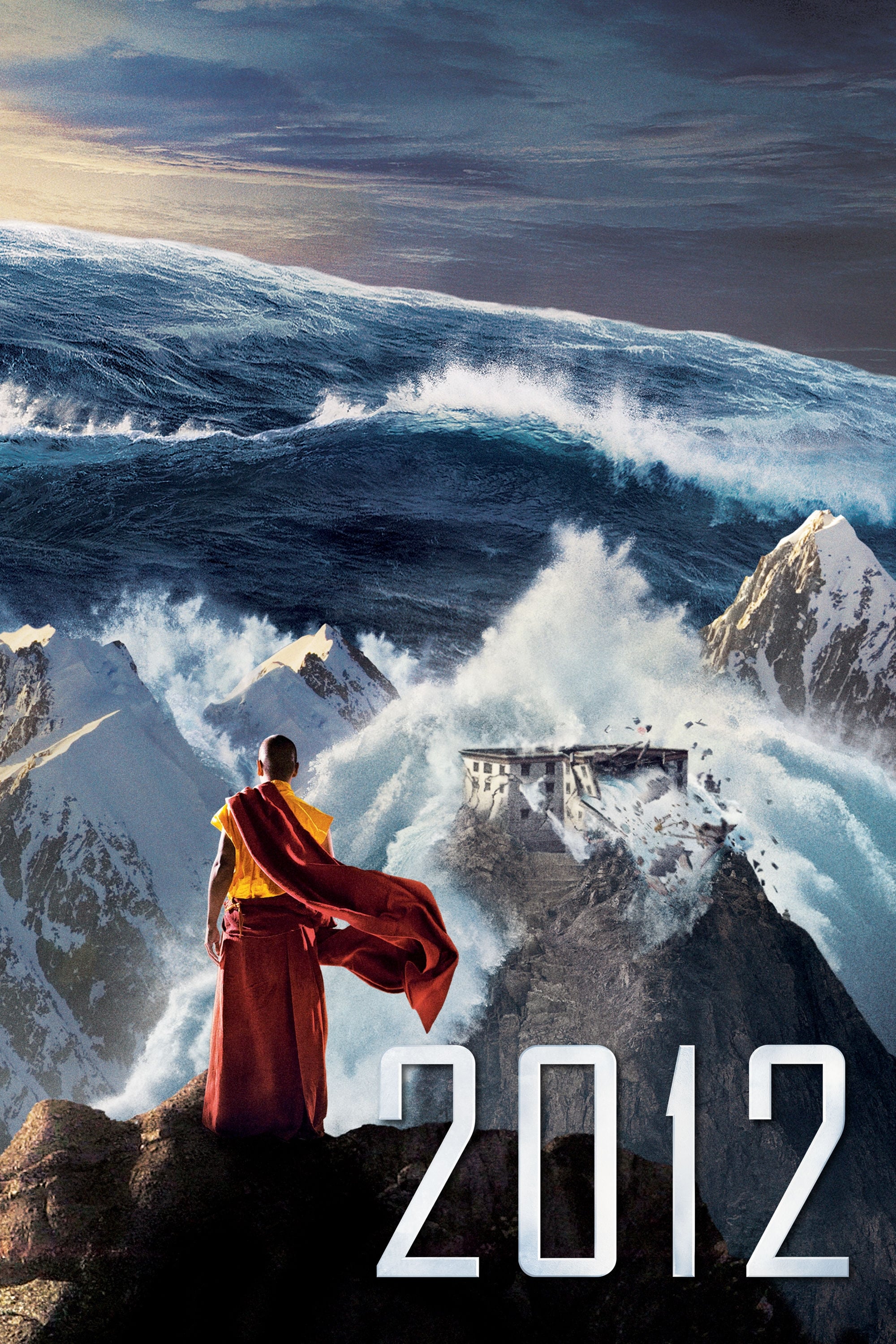
Released in November 2009, Roland Emmerich’s disaster blockbuster 2012 capitalized on widespread cultural anxieties surrounding the Mayan Long Count calendar and millennial apocalyptic lore, grossing over $790 million worldwide through its relentless depiction of global cataclysms.
Introduction and Cultural Context
The 2012 film, directed by Roland Emmerich and co-written by Emmerich and Harald Kloser, arrived at a unique intersection of pop culture and millennial anxiety. Throughout the mid-2000s, the impending culmination of the Mayan Long Count calendar on December 21, 2012, sparked a wave of pseudo-scientific speculation, internet conspiracy theories, and mainstream media fascination. While scientists and historians repeatedly emphasized that the Mayan calendar marked a cyclical reset rather than a literal end of the world, Hollywood recognized a lucrative narrative framework.
Emmerich, a filmmaker already established in the disaster genre through works like Independence Day (1996) and The Day After Tomorrow (2004), leveraged this collective unease to craft a multi-million-dollar visual spectacle. The film follows a struggling writer, Jackson Curtis (played by John Cusack), as he attempts to navigate a crumbling planet and secure passage onto massive survival arks constructed in the Himalayas. Beyond its box office success, the production serves as a technological milestone, pushing the boundaries of digital destruction rendering and computer-generated imagery (CGI) at the close of the 2000s cinematic era.
Premise, Plot Structure, and Narrative Themes
The narrative framework of 2012 follows classic disaster-movie tropes while scaling the stakes up to a planetary level. The catalyst for the apocalypse is not a supernatural phenomenon or an alien invasion, but a sudden spike in solar radiation that superheats the Earth's core. This scientific anomaly, first detected by geologist Adrian Helmsley (Chiwetel Ejiofor) in India in 2009, causes the mantle to destabilize, leading to rapidly accelerating crustal displacement.
- Solar Neutrino Surge
- Earth Core Superheating
- Crustal Displacement & Tectonic Collapse
- Global Mega-Tsunamis & Volcanic Eruptions
- Humanity Seeks Refuge in Himalayan Arks
As the geophysical systems collapse, the narrative splits into three primary plot threads:
- The Family Survival Arc: Jackson Curtis, a divorced chauffeur and aspiring novelist, must protect his ex-wife and children through a series of increasingly narrow escapes from crumbling infrastructure in Los Angeles and Yellowstone National Park.
- The Scientific and Political Dilemma: Adrian Helmsley and White House Chief of Staff Carl Anheuser (Oliver Platt) manage the classified global response, grappling with the moral weight of orchestrating an elite evacuation while leaving billions behind.
- The Global Odyssey: The characters utilize stolen and chartered aircraft to outrun continental shifts, ultimately converging on secret manufacturing facilities hidden within the mountains of Tibet.
This multi-tiered structure allows the film to alternate between intimate human drama and vast, impersonal destruction. The primary theme centers on human resilience contrasted against bureaucratic utilitarianism. The construction of the arks—funded by wealthy elites who purchase tickets for one billion euros per seat—raises ethical questions about who gets to inherit the Earth, a theme that grounds the high-concept visual effects in emotional conflict.
Production, Scale, and Visual Effects Engineering
The realization of the 2012 film required a massive technical undertaking by Sony Pictures Imageworks, Digital Domain, and Uncharted Territory, among other visual effects houses. With a production budget estimated at $200 million, the project demanded innovative workflows to handle unprecedented quantities of digital debris, fluid simulations, and environmental destruction.
Digital Destruction and Pipeline Innovations
Prior to the late 2000s, rendering massive urban collapses required laborious manual animation or simplified particle systems. For 2012, effects supervisors developed advanced procedural destruction pipelines. When Los Angeles slides into the Pacific Ocean, every building, highway overpass, and residential structure is rendered as a complex physical mesh that fractures in real-time accordance with simulated seismic physics.
- Fluid Dynamics: Recreating tsunamis that swallow Mount Everest required high-resolution fluid simulation software capable of handling immense water volumes interacting with complex geometry.
- Volumetric Atmospheres: Scenes set during the ash-choked eruptions of Yellowstone and the Himalayas utilized layered volumetric rendering to simulate smoke, dust, and pyrotechnic debris without losing the actors on soundstages.
- Virtual Sets: Emmerich heavily integrated green-screen soundstages with physical shaker rigs, which mechanically tossed actors and set pieces around to simulate tectonic tremors while digital environments were mapped in post-production.
Critical Reception and Audience Impact
Upon its release, the 2012 film received polarized reviews from professional critics, a common fate for high-concept disaster blockbusters. Review aggregators noted that while critics praised the technical execution and sheer scale of the set pieces, many took issue with the formulaic screenplay, predictable character arcs, and bloated 158-minute runtime.
| Metric / Aspect | Critical Consensus | Audience Reception |
|---|---|---|
| Visual Effects | Universally praised for groundbreaking digital destruction and fluid scale. | Highly appreciated for cinematic spectacle and theater experiences. |
| Screenplay & Plot | Criticized for relying on clichés, scientific inaccuracies, and thin characterizations. | Generally accepted as standard, entertaining genre conventions. |
| Pacing & Runtime | Considered overly long at 158 minutes with repetitive narrow escapes. | Enjoyed for consistent action sequences and high entertainment value. |
| Box Office | Noted as a commercial success despite high production and marketing costs. | Generated strong international ticket sales, particularly in overseas markets. |
Despite mixed critical notices, general audiences embraced the film. It resonated globally, performing exceptionally well in international markets where dialogue-heavy exposition mattered less than universal visual storytelling. The film also inadvertently created a public relations challenge for NASA; so many panicked individuals contacted the space agency asking about impending doom that NASA launched a dedicated outreach website to debunk 2012 apocalyptic claims.
Legacy and Influence on the Disaster Genre
The release of 2012 marked an important inflection point for the Hollywood disaster film. In many ways, it represented the culmination of the destruction-porn subgenre popularized in the 1990s and 2000s, pushing the limits of what digital artists could destroy on screen. Following 2012, the sheer scale of urban annihilation reached a saturation point, prompting filmmakers in the subsequent decade to pivot toward superhero spectacles and intimate sci-fi thrillers rather than purely terrestrial cataclysms.
Furthermore, the film established a template for marketing high-concept blockbusters through viral alternate reality campaigns. Sony Pictures launched promotional websites for the fictional "Institute for Human Continuity," which invited viewers to register for a fictional lottery to secure a spot on the arks. This marketing strategy successfully blurred the line between marketing and the real-world anxieties surrounding the actual year 2012.
Retrospectively, the film endures as a quintessential artifact of late-2000s studio filmmaking. It combined practical stunt work with cutting-edge digital compositing just before the industry fully transitioned to digital acquisition and fully virtual production stages. For film historians and visual effects enthusiasts, it remains a textbook study in large-scale environment generation and the logistical challenges of sustaining narrative tension through two and a half hours of continuous global collapse.