The year 1999 stands as one of the most transformative, disruptive, and culturally significant turning points in the history of horror cinema. Bridging the gap between the practical-effect slasher traditions of the late 20th century and the high-concept, digital-saturated landscapes of the 2000s, 1999 horror films permanently changed how stories were told, marketed, and consumed.
The Historical and Cultural Landscape of 1999
As the twentieth century drew to a close, global culture was gripped by a distinct brand of technological anxiety. The approaching turn of the millennium brought widespread fears regarding the Y2K bug—the persistent rumor that computer systems would fail universally on January 1, 2000, causing mass infrastructure collapse. This ambient cultural paranoia provided fertile ground for filmmakers.
At the same time, the film industry itself was undergoing a quiet revolution. Independent distribution models were evolving, and emerging internet technologies were transforming grassroots marketing. Horror, historically a genre reliant on low budgets and high box-office returns, proved to be the ideal testing ground for these structural changes. Directors and studios capitalized on shifting audience psychology, moving away from the ironic, self-referential meta-commentary that had dominated the mid-to-late 1990s—largely spearheaded by franchises like Scream—and pivoted toward raw, immersive dread and supernatural mystery.
The Paradigm Shift: Found Footage and The Blair Witch Project
No discussion of 1999 horror is complete without examining the cultural phenomenon that was The Blair Witch Project. Written and directed by Daniel Myrick and Eduardo Sánchez, the film redefined independent filmmaking and mainstream distribution.
The Marketing Strategy of The Blair Witch Project
Long before viral marketing became a standardized studio playbook, The Blair Witch Project used the nascent World Wide Web to build a dense, convincing mythology. The filmmakers created police-style missing persons reports, fictional journal entries, and mock documentary television transcripts suggesting that three student filmmakers had genuinely vanished in the Black Hills of Maryland.
When the film debuted in theaters, many viewers genuinely believed they were watching real recovered footage. This blurring of the boundary between fiction and reality generated unprecedented word-of-mouth momentum.
Technical and Aesthetic Impact
From a technical standpoint, the film proved that millions of dollars in visual effects were unnecessary to terrify an audience. Shot primarily on a 16mm film camera and a Hi8 video camera, the shaky, naturalistic camerawork induced physical sensations of vertigo, claustrophobia, and panic.
The aesthetic choices forced the audience to fill in the gaps with their own imaginations, proving the timeless horror rule that what is unseen is far scarier than what is explicitly shown. This single release spawned an entire subgenre of found-footage horror that would dominate the box office for the next two decades.
Supernatural Dread and Psychological Horror
While The Blair Witch Project rewrote the rules of realism, other 1999 horror releases explored the depths of the supernatural, grief, and psychological decay. Filmmakers leaned heavily into atmospheric storytelling and complex emotional underpinnings.
Sleepy Hollow and Gothic Visuals
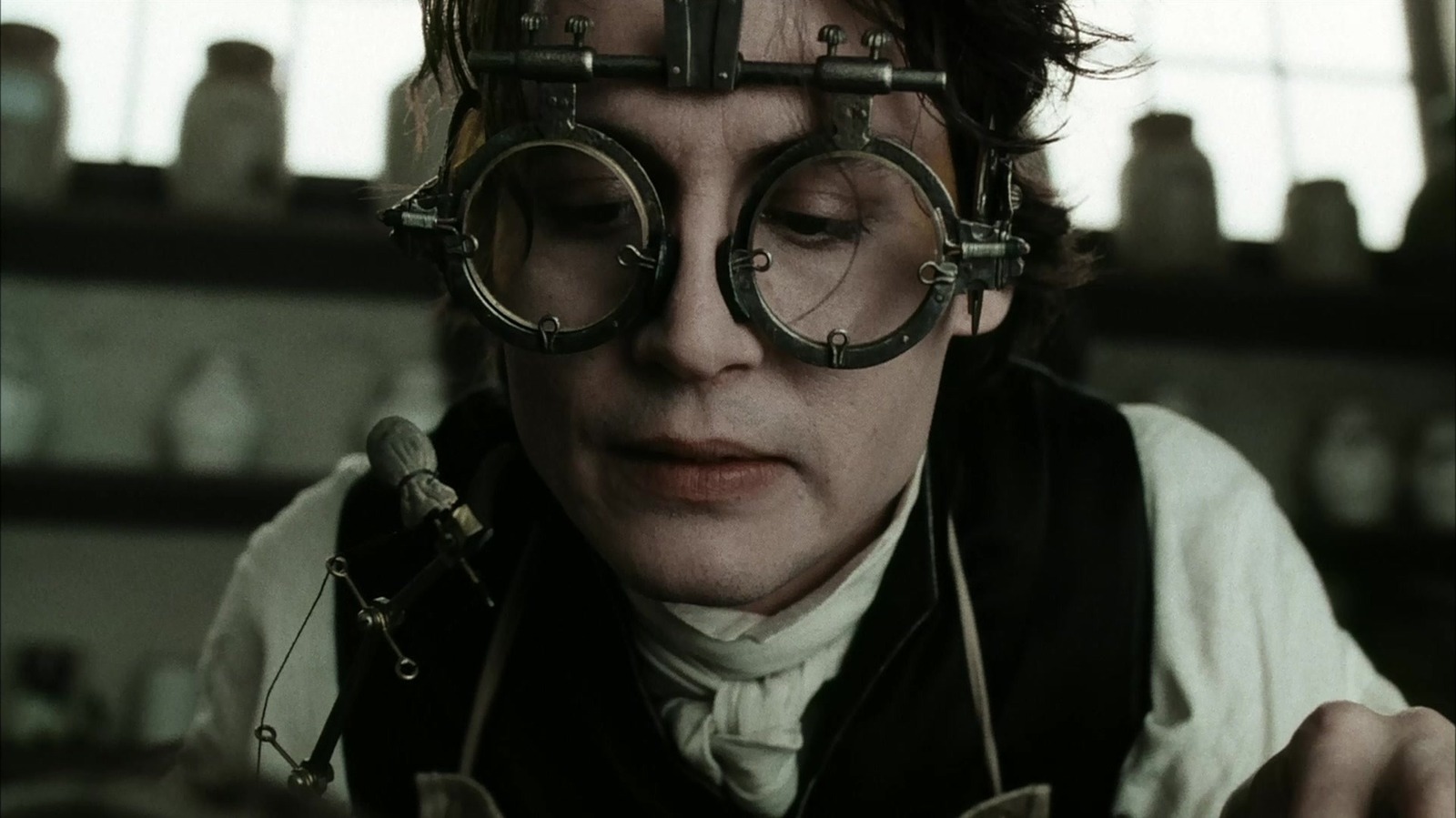
Directed by Tim Burton, Sleepy Hollow showcased a masterclass in heightened cinematic style. Drawing inspiration from Washington Irving’s classic short story, the film utilized hyper-stylized artificial fog, rich autumn color grading, and immaculate practical gore to construct a dark fairytale world.
It demonstrated that big-budget studio horror could maintain a distinct auteur vision while delivering traditional creature-feature thrills, anchored by atmospheric sound design and striking art direction.
International Horizons: Audition and the J-Horror Wave
Across the Pacific, Japanese horror—frequently referred to as J-Horror—was quietly building toward an international explosion. While Hideo Nakata’s Ring had premiered in Japan in 1998, its global cultural footprint began cresting around this period, paving the way for Takashi Miike’s profoundly disturbing Audition (released internationally in late 1999/2000).
Audition subverted romantic drama conventions before descending into an unyielding, methodical nightmare of psychological torture and body horror. It challenged Western sensibilities and signaled a shift toward transnational horror distribution.
Sci-Fi Horror, Body Modification, and Technological Fears
The intersection of science, technology, and flesh became a prominent motif in 1999 horror. As biotechnology advanced and the Human Genome Project neared completion, filmmakers explored the terrifying implications of science unchecked.
- Deep Blue Sea: Merging classic monster-movie tropes with late-90s blockbuster pacing, this film explored genetically engineered super-sharks. It highlighted the era's fascination with bio-engineering and hubristic scientific intervention.
- Existenz: David Cronenberg returned to the body-horror genre with a surreal exploration of virtual reality gaming, organic bio-ports, and shifting realities. The film anticipated modern debates surrounding simulation theory and digital addiction, utilizing Cronenberg’s signature tactile, grotesque practical effects.
- The Ninth Gate: Directed by Roman Polanski, this neo-noir supernatural mystery delved into rare book acquisition, esoteric demonology, and occult obsession, reinforcing the era's appetite for slow-burn intellectual terror.
Comparative Overview of Landmark 1999 Horror Releases
To understand the sheer diversity of the cinematic landscape in 1999, it helps to examine how different subgenres approached style, narrative, and audience reception.
| Film Title | Primary Subgenre | Defining Technical Feature | Core Cultural Theme |
|---|---|---|---|
| The Blair Witch Project | Found Footage / Supernatural | 16mm/Hi8 handheld cameras | Digital-era mythmaking and unverified panic |
| Sleepy Hollow | Gothic Horror / Fantasy | High-contrast color grading and practical sets | Romanticized folklore and period dread |
| Audition | Psychological / Torture | Methodical pacing shifting to extreme body horror | Loneliness, deceit, and patriarchal anxiety |
| Deep Blue Sea | Sci-Fi / Creature Feature | Early CGI integration with animatronics | Biotechnological hubris and corporate science |
| Existenz | Body Horror / Sci-Fi | Organic, fleshy hardware design | Virtual reality immersion and loss of reality |
Technical Evolution: Practical Effects Versus Emerging CGI
The year 1999 occupies a fascinating technical crossroads in horror makeup and visual effects. For decades, horror relied entirely on physical craftsmanship: latex prosthetics, corn-syrup blood, animatronic puppets, and in-camera trickery.
By 1999, computer-generated imagery (CGI) was becoming increasingly accessible to major studios. Films like Deep Blue Sea relied heavily on digital sharks to execute complex underwater attack sequences that would have been impossible or prohibitively dangerous with animatronics alone.
However, the critical and cultural triumph of The Blair Witch Project proved that lo-fi aesthetics possessed immense commercial power. This dichotomy created a healthy tension in the industry. Rather than completely abandoning practical techniques, filmmakers began experimenting with hybrid approaches—using digital tools to enhance or clean up practical stunts while keeping physical effects front and center to maintain tactile authenticity.
Frequently Asked Questions About 1999 Horror
Why is 1999 considered such an important year for horror?
1999 is viewed as a pivotal year because it marked the transition between traditional late-century slasher/monster tropes and modern independent distribution models. The breakout success of The Blair Witch Project proved that low-budget films could bypass traditional studio systems via internet marketing, while international releases helped introduce distinct global sensibilities to Western audiences.
Did The Blair Witch Project invent the found-footage genre?
While The Blair Witch Project did not invent the concept—earlier films like Cannibal Holocaust (1980) utilized similar framing devices—it popularized and modernized the format for the digital age. It established the modern tropes of the subgenre, including documentary-style framing, missing persons preambles, and raw, unedited camera perspectives.
How did Y2K anxiety influence 1999 horror films?
Ambient cultural anxiety regarding the turn of the millennium manifested as a preoccupation with institutional failure, the loss of control over technology, and ancient curses resurfacing. Even historical or supernatural stories captured a prevailing mood of uncertainty about what lay beyond the year 2000.
What role did international cinema play in 1999 horror?
International horror gained unprecedented traction during this period. Asian horror cinema, in particular, began breaking into Western consciousness through festival circuits and import distribution, laying the groundwork for the massive J-Horror remake boom of the early 2000s.
Practical Legacy and Modern Relevance
Examining 1999 horror today reveals the blueprint for contemporary independent filmmaking. Modern micro-budget horror studios, streaming platforms, and viral marketing campaigns owe a direct debt to the risks taken by filmmakers at the close of the twentieth century. By stripping away bloated studio requirements and focusing on raw atmosphere, psychological tension, and innovative distribution, the creators of 1999 demonstrated that horror remains the most flexible, resilient, and culturally reactive genre in cinema.