Effective communication in clinical settings serves as the cornerstone of patient safety, diagnostic accuracy, and treatment adherence. By mastering diverse modes of exchange—ranging from structured handovers and patient-centered interviewing to digital information systems—healthcare teams can bridge the gap between complex clinical data and meaningful patient outcomes, ultimately reducing medical errors and fostering trust within the provider-patient relationship.
The Foundation of Clinical Exchange
Communication in healthcare is not merely the transmission of data; it is a multifaceted process that determines the quality of life for patients and the efficiency of medical systems. In 2026, the complexity of care delivery requires providers to navigate various modalities, each serving a specific purpose in the clinical workflow. Understanding these 10 distinct types of communication allows medical professionals to select the most appropriate channel for every clinical interaction, ensuring that critical information is never lost in translation.
1. Patient-Centered Interviewing
Patient-centered communication prioritizes the patient’s perspective, values, and goals. Unlike traditional physician-directed inquiries, this method utilizes open-ended questions to elicit the patient’s narrative. By actively listening, practitioners can uncover psychosocial factors that influence health outcomes, such as financial barriers or home environment constraints. Research indicates that patients who feel heard are significantly more likely to disclose adherence issues, leading to more accurate treatment adjustments.
2. Structured Interprofessional Handovers
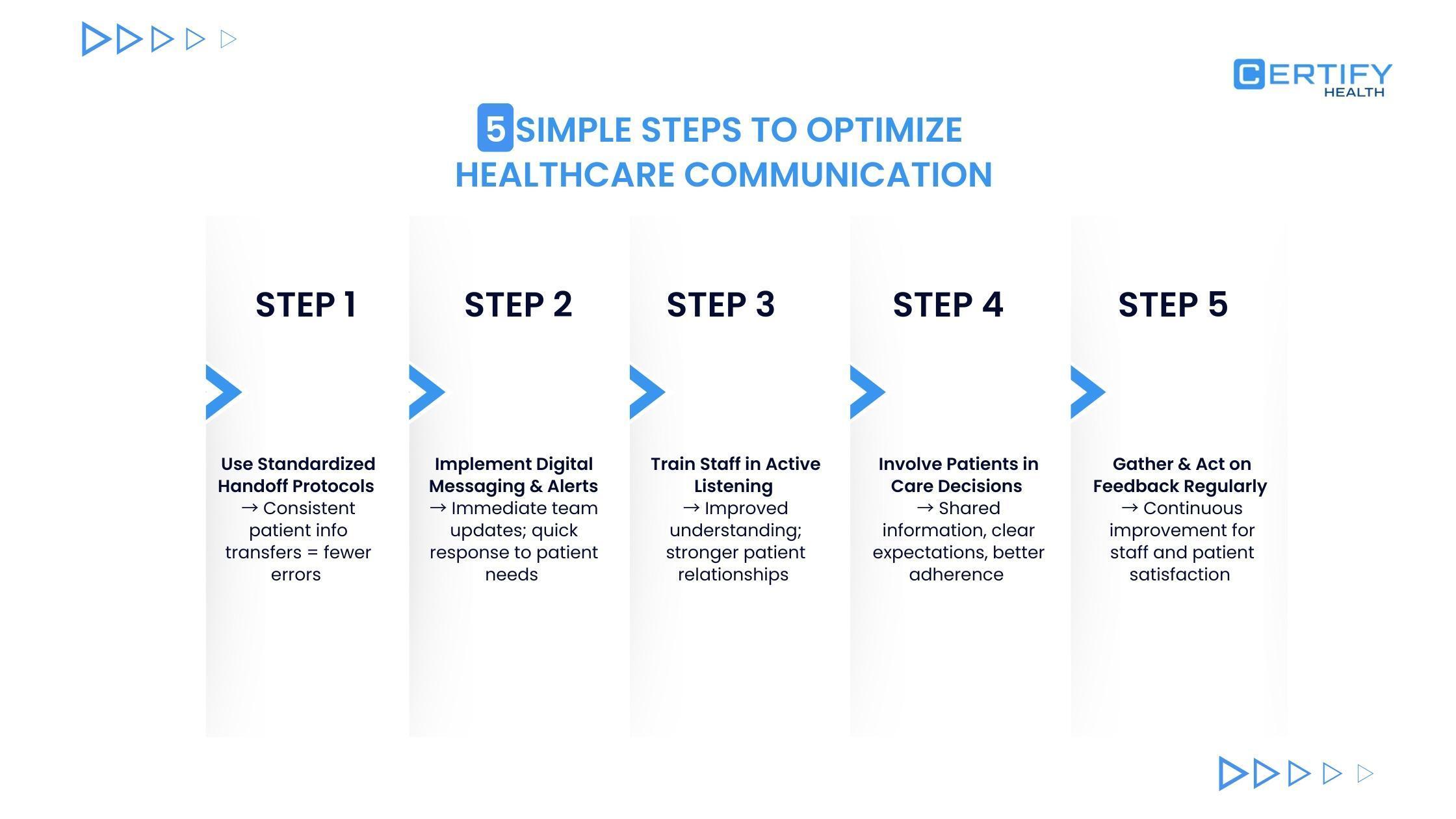
The transition of patient care between clinicians—often called a "handover" or "handoff"—is a period of high vulnerability for patient safety. Structured frameworks, such as the SBAR (Situation, Background, Assessment, Recommendation) technique, provide a standardized syntax for these exchanges. By utilizing a rigid, verified format, departments minimize the ambiguity that often leads to medication errors or delayed procedures during shift changes.
3. Electronic Health Record (EHR) Documentation
Digital communication via the Electronic Health Record is the primary vessel for longitudinal clinical data. In 2026, the focus has shifted from mere data entry to "interoperable documentation." High-quality documentation ensures that the patient’s clinical history remains accessible across different specialties. Proper use of EHRs reduces redundant testing and prevents allergic reactions by ensuring that updated patient profiles are immediately visible to all authorized members of the care team.
4. Shared Decision-Making (SDM)
Shared decision-making is a collaborative process where the clinician and the patient work together to reach a consensus on a healthcare path. This requires the clinician to present evidence-based options alongside the risks and benefits of each, while the patient contributes their personal preferences and quality-of-life goals. This type of communication transforms the patient from a passive recipient of orders into an active participant, which increases long-term compliance with therapeutic regimens.
5. Telehealth and Synchronous Virtual Communication
Telehealth has moved beyond its origins as an emergency alternative to become a staple of modern medical delivery. Synchronous communication, occurring via real-time video or audio consultations, allows for efficient triaging and chronic disease management. To be effective, this medium requires the provider to maintain "digital bedside manner," ensuring that they project empathy through the camera lens and verify that the patient fully understands the instructions provided remotely.
6. Non-Verbal Communication and Observational Cues
Research consistently shows that a significant portion of human communication is non-verbal. In a medical context, body language, facial expressions, and physical proximity can communicate reassurance or indifference before a single word is spoken. Providers who are conscious of their posture and eye contact during examinations can de-escalate patient anxiety, which in turn leads to more reliable physical assessments and better patient cooperation during procedures.
7. Crisis and Urgent Communication
In high-acuity environments like the Emergency Department or Intensive Care Unit, communication must be brief, directive, and high-frequency. This often manifests as "closed-loop communication," where the sender provides an instruction, the receiver repeats it back, and the sender confirms the accuracy. This specific, high-stakes communication style is essential for preventing the cascading errors that can occur when team members operate under extreme time pressure.
8. Health Literacy and Plain-Language Exchange
A major barrier to patient care is the use of medical jargon. Translating complex pathological processes into plain language is a specialized communication skill. Effective providers assess a patient’s health literacy early in the interaction and adapt their vocabulary accordingly. By using tools like the "teach-back" method—where the patient explains the instruction back to the provider in their own words—the healthcare team ensures that the patient leaves the facility with a clear understanding of their care plan.
9. Asynchronous Secure Messaging
With the prevalence of patient portals, asynchronous communication has become a daily requirement. This involves messaging through secure, HIPAA-compliant platforms where the interaction does not happen in real time. Because these messages serve as a permanent record, they must be concise and actionable. They are particularly useful for medication clarifications, lab result follow-ups, and pre-operative instructions, allowing patients to review information at their own pace.
10. Family-Centered Communication
In pediatric, geriatric, and end-of-life care, the patient is rarely the only stakeholder. Family-centered communication involves the delicate task of navigating familial dynamics while maintaining patient confidentiality. Establishing clear boundaries, identifying the designated decision-maker, and ensuring that all family members receive consistent information is vital to prevent conflicting care expectations that can stall clinical progress.
| Communication Type | Primary Objective | Best Use Case |
|---|---|---|
| SBAR Handovers | Information Continuity | Shift changes and transfers |
| Shared Decision-Making | Informed Consent | Chronic disease management |
| Closed-Loop | Immediate Accuracy | Resuscitation and trauma |
| Teach-Back Method | Patient Comprehension | Medication education |
| Portal Messaging | Asynchronous Support | Routine follow-up queries |
Managing Challenges in Healthcare Communication
Even with a clear strategy, providers face inherent obstacles. Burnout, high patient volumes, and technical limitations within EHR systems can degrade communication quality. To mitigate these, healthcare organizations should emphasize training in cultural competency and conflict resolution. When team members feel supported by an environment that values transparent communication, they are more likely to report near-misses and collaborate effectively, creating a culture of safety.
Frequently Asked Questions
How does "closed-loop communication" prevent medical errors? It prevents errors by ensuring the intended message was received exactly as sent. By forcing the listener to repeat the instruction, it confirms that the clinician heard the dosage, timing, or procedure correctly, creating an immediate safety verification that bypasses potential cognitive lapses.
What is the "teach-back" method, and why is it effective? It is a health-literacy technique where the provider asks the patient to explain the instructions in their own words. It is effective because it shifts the responsibility of clarity onto the provider; if the patient cannot explain the plan correctly, the provider knows they must re-explain the information differently.
How can I maintain empathy during virtual consultations? Maintain empathy by focusing on eye contact with the camera, minimizing distractions, and using supportive verbal cues (e.g., "I hear your concern about that side effect"). Acknowledging the distance created by the screen can also help humanize the interaction.
What should be included in an effective SBAR handover? The SBAR format requires a clear Situation (the current issue), Background (relevant history), Assessment (what you think is happening), and Recommendation (what needs to happen next). Keeping this sequence prevents missing critical details during the chaotic handover process.
Why is shared decision-making essential for chronic disease? Chronic diseases often require lifestyle changes that the patient must manage independently. When a patient chooses their own treatment path based on their values, they are psychologically invested in the outcome, leading to higher rates of long-term adherence compared to top-down directives.
Next Steps for Implementation
To improve patient care in your practice, begin by auditing your team’s current handoff protocols. Determine if you are using a standardized framework like SBAR or if information is being passed sporadically. Simultaneously, assess your patient education materials: are they written at a sixth-grade reading level, or do they rely on complex terminology that obscures the main message? By selecting one of the ten communication types to refine each month, you can systematically elevate the standard of care provided to every patient.