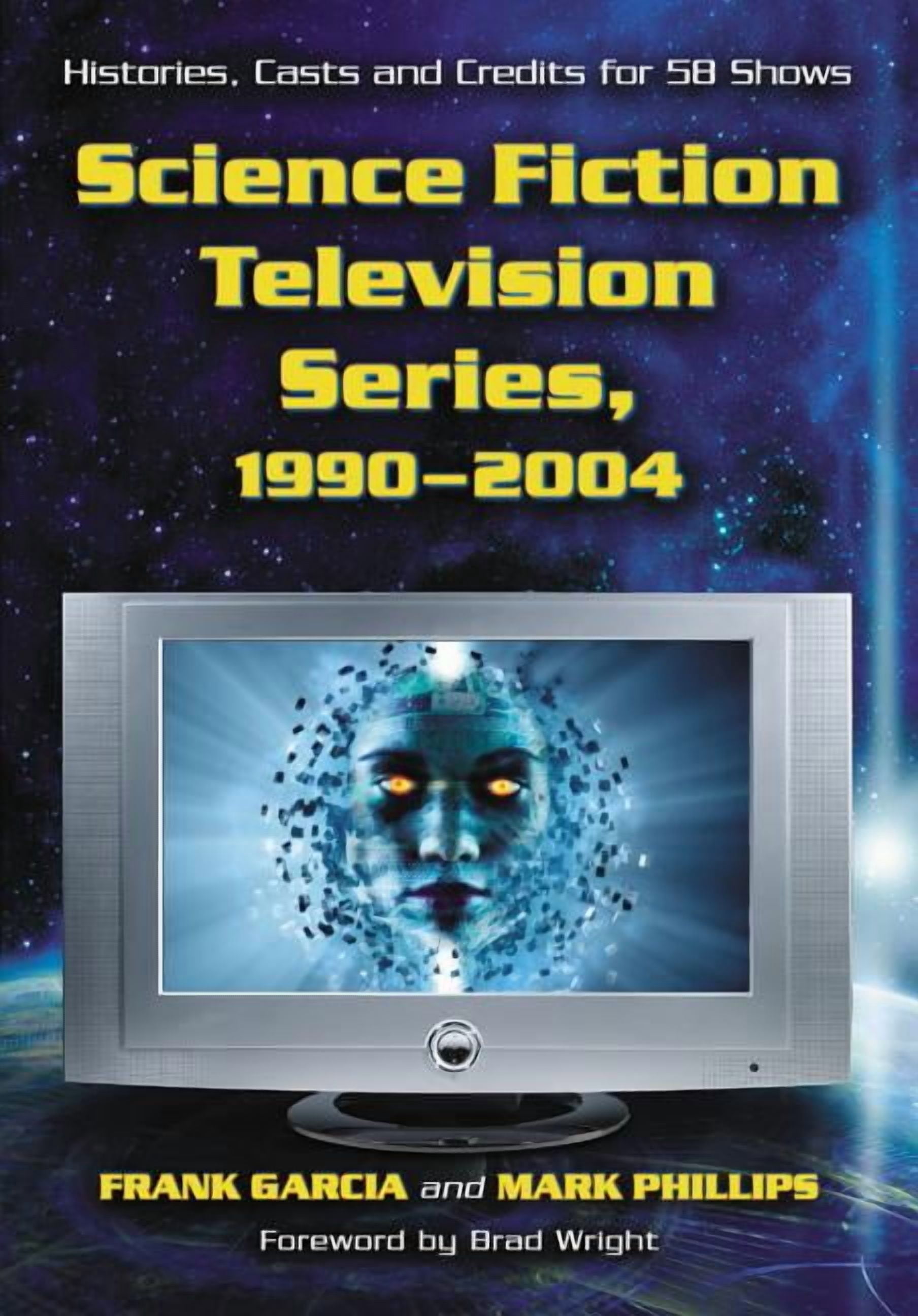
The landscape of 1990s sci-fi television represents a transitional era where serialized storytelling, advancing computer-generated imagery, and syndicated broadcasting converged to create a golden age of speculative fiction that continues to influence modern streaming culture.
The 1990s was a watershed decade for speculative fiction on the small screen, shifting from episodic, monster-of-the-week formats toward complex, multi-season narrative arcs and deep philosophical world-building. For contemporary viewers, retro enthusiasts, and researchers, accessing, understanding, and preserving these seminal properties requires navigating a landscape defined by shifting physical media formats, streaming licensing agreements, and evolving broadcast standards. This guide examines how 1990s sci-fi television shaped the medium, how to access and evaluate these series today, and the technical and structural shifts that defined the era.
The Evolution and Paradigm Shift of 1990s Science Fiction
Before the 1990s, television science fiction was largely dominated by standalone episodes, anthologies, or episodic space westerns where status quos reset by the end of each hour. Shows like Star Trek: The Original Series or The Twilight Zone relied heavily on self-contained narratives. The 1990s broke this mold by demonstrating that television audiences would embrace serialized storytelling, intricate character continuity, and sprawling mythological arcs that spanned multiple years.
This shift was driven by several concurrent factors:
- The Rise of Syndication: Independent television stations and new networks like the Fox Broadcasting Company, UPN, and The WB created alternative distribution pipelines outside the traditional "Big Three" broadcast networks. This allowed niche genres to find dedicated audiences without needing immediate blockbuster ratings.
- Technological Integration: Practical effects began sharing screen time with early computer-generated imagery (CGI) and digital non-linear editing, allowing for more ambitious space battles and alien designs on television budgets.
- The Mythological Arc: Inspired by comic books and serialized soap operas, showrunners realized that planting narrative seeds across seasons built intense viewer loyalty and spawned early internet fandoms on Usenet and message boards.
Landmark Series and Their Structural Innovations
To understand 1990s sci-fi television, one must examine the specific pillars that defined the decade. These programs did not merely entertain; they established narrative blueprints that modern prestige television still utilizes.
The Star Trek Renaissance
Gene Roddenberry’s universe expanded aggressively in the 1990s, anchoring syndicated television. Star Trek: The Next Generation (which ran until 1994) perfected the episodic philosophical puzzle box, while Star Trek: Deep Space Nine (1993–1999) took a radical risk by setting its stories on a stationary space station during a sprawling interplanetary war, pioneering serialized conflict and moral ambiguity within the franchise. Star Trek: Voyager (1995–2001) further explored survivalist science fiction by stranding a crew seventy thousand light-years from home.
The Mythological Conspiracy Thriller
The X-Files (premiered in 1993) fused procedural detective work with government conspiracies, alien mythologies, and cryptozoology. Creator Chris Carter balanced standalone "Monster-of-the-Week" episodes with a dense, multi-year alien colonization mythos. Its visual style—characterized by deep shadows, cold color grading, and atmospheric sound design—redefined the aesthetic expectations of network television.
The Space Opera Epic
Babylon 5 (1993–1998), created by J. Michael Straczynski, introduced a revolutionary approach: a five-year novel for television mapped out in advance. While other shows improvised their long-term plots, Babylon 5 had a predetermined beginning, middle, and end. It also embraced early digital rendering for its space combat sequences, abandoning traditional physical miniatures for Lightwave 3D software.
| Series Title | Original Run | Primary Format & Structure | Key Technical/Narrative Innovation |
|---|---|---|---|
| Star Trek: The Next Generation | 1987–1994 (Primarily 90s) | Syndicated, episodic with light continuity | Established high-budget syndication standards for genre TV. |
| The X-Files | 1993–2002 | Network (Fox), episodic/mythology hybrid | Maintained dual storytelling tracks across a decade. |
| Babylon 5 | 1993–1998 | Syndicated, strict 5-year novelistic arc | Pre-planned multi-season narrative and early CGI adoption. |
| Star Trek: Deep Space Nine | 1993–1999 | Syndicated, serialized station-based drama | Introduced serialized war arcs and morally gray protagonists. |
| Stargate SG-1 | 1997–2007 | Cable/Syndicated, episodic/mythology | Expanded cinematic lore into a long-running television continuity. |
Accessing and Evaluating 1990s Sci-Fi Television Today
For modern viewers seeking to watch or collect 1990s science fiction, the medium presents a mix of high-definition remasters and legacy standard-definition transfers. Evaluating how these shows are distributed helps viewers choose the best format for their viewing experience.
Streaming Platforms vs. Physical Media
Most major 1990s titles are distributed across various subscription video-on-demand (SVOD) services, but availability fluctuates due to licensing agreements. Furthermore, streaming versions often present distinct technical challenges:
- Aspect Ratio Compression: Many shows from this era were produced during the transition from 4:3 standard definition to 16:9 widescreen. Some streaming platforms offer improperly cropped widescreen versions that cut off visual information at the top and bottom, while others preserve the original 4:3 pillarboxed format.
- Music Licensing Replacements: Due to copyright clearance issues for home video and streaming, certain episodes of 90s shows feature altered background music or replacement tracks compared to their original broadcast versions.
The Physical Media Advantage
Physical media—specifically standard DVDs and select Blu-ray remasters—remains the gold standard for preservation and fidelity.
- Star Trek: The Next Generation underwent an expensive, painstaking project where original 35mm film negatives were scanned, edited, and re-composited in true 1080p high definition with newly rendered CGI effects matching the original layouts.
- Conversely, shows like Deep Space Nine and Voyager were finished on standard-definition videotape after being shot on film, making a high-definition remaster prohibitively expensive, meaning fans must rely on standard-definition DVD sets or scaled digital files.
Common Technical and Production Constraints of the Era
Appreciating 1990s sci-fi television requires understanding the technical boundaries within which creators operated. Unlike modern streaming series with short, highly condensed 8-to-10 episode orders, 1990s television operated on grueling broadcast schedules.
The 22-Episode Season Model
Shows routinely produced 20 to 26 episodes per production year. This high volume forced writers' rooms to rely on "bottle episodes" (set entirely on existing standing sets with minimal guest actors to save budget), standalone monster stories, and character-lite breathing room episodes. While this model occasionally resulted in "filler," it also allowed writers deep character exploration that modern condensed seasons rarely permit.
Practical Effects vs. Early Digital Transition
The 1990s was a bridge era. Shows like Farscape (premiered in 1999) relied heavily on Jim Henson's Creature Shop for stunning, tactile practical alien puppetry integrated with live actors. At the same time, computer-generated visual effects were moving out of expensive supercomputer labs and onto workstations running software like NewTek Lightwave 3D and Alias PowerAnimator. This resulted in a distinct visual aesthetic: clean, untextured polygonal models and particle effects that look quaint by modern standards but represented bleeding-edge technology at the time.
Frequently Asked Questions
Where can I watch uncompressed or original versions of 1990s sci-fi shows?
Original broadcast versions are best preserved on physical DVD sets. Many streaming platforms apply digital noise reduction (DNR), motion smoothing, or incorrect aspect ratio cropping that alters the original cinematic presentation.
Why do some 1990s sci-fi shows look like high-definition film while others look like standard-definition video?
Shows shot directly on 35mm film (such as The X-Files and Star Trek: The Next Generation) can be scanned and remastered in high definition. Shows that were edited on standard-definition videotape—even if portions were shot on film—cannot be easily upscaled without re-editing the entire series from raw source elements.
How did the rise of the internet impact 1990s sci-fi television production?
The 1990s marked the birth of online fan culture via Usenet newsgroups (such as rec.arts.startrek.current) and dedicated fansites. Showrunners and writers like J. Michael Straczynski and Brannon Braga actively monitored these forums, occasionally engaging directly with fans, which permanently changed how creators received audience feedback during a season's run.
Are all 1990s sci-fi shows serialized?
No. While the decade popularized serialization, many shows maintained a strictly episodic structure. Programs like The Outer Limits revival (1995–2002) were pure anthologies, while others used episodic formats with only minimal background continuity.
Practical Next Steps for Enthusiasts and Researchers
If you are looking to dive deep into 1990s sci-fi television, start by auditing your preferred viewing platform for aspect ratio settings to ensure 4:3 shows are not artificially cropped. For collectors, prioritize box sets that explicitly state they utilize original film transfers or uncompressed audio tracks. Finally, explore archival companion books and documentary features included in physical releases to understand the real-world budgetary and scheduling constraints that forged these classic television milestones.