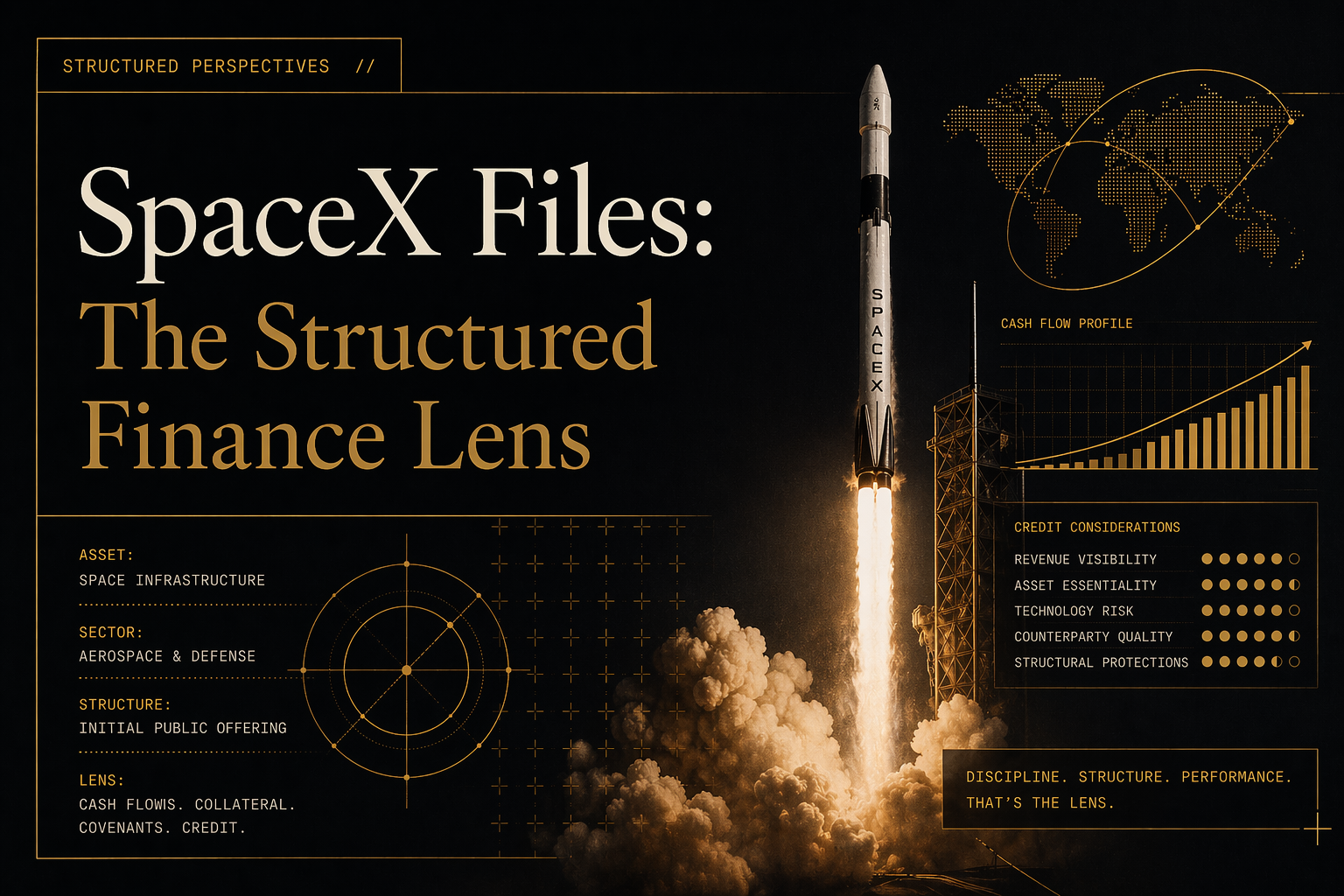
Space finance is the specialized field of capital allocation, risk management, and investment strategies dedicated to the commercialization and exploration of outer space. In 2026, it encompasses a diverse ecosystem of venture capital, public equity, government-backed public-private partnerships, and emerging debt instruments designed to fund high-risk, long-duration aerospace projects.
The financial landscape of the space industry has undergone a radical transformation over the last decade. Moving away from the "Old Space" model—characterized by government-led initiatives and cost-plus contracts—the "New Space" economy is driven by private enterprise and commercial viability. As of 2026, the global space economy is tracking toward a $1 trillion valuation, fueled by advancements in reusable launch systems, satellite constellations, and the nascent lunar economy.
The Pillars of Space Finance
To navigate the complexities of space finance, one must understand the three primary pillars that support the industry: equity investment, public-private partnerships (PPPs), and the evolving insurance market. Each pillar serves a distinct purpose in the capital structure of an aerospace firm.
Equity Investment and Venture Capital
Venture capital (VC) remains the lifeblood of early-stage space startups. In the 2020s, specialized VC firms like Space Capital and Founders Fund pioneered the "hardware-as-a-service" and "data-as-a-service" models in orbit. By 2026, the investment focus has shifted from "launch at any cost" to sustainable unit economics.
Investors now scrutinize the Technology Readiness Level (TRL) and the path to profitability more than ever. Early-stage funding is typically used for Research and Development (R&D) and prototype testing, while later-stage growth equity (Series C and beyond) is directed toward scaling manufacturing and global operations.
Public Markets and the Legacy of SPACs
The space sector saw a surge of Special Purpose Acquisition Companies (SPACs) between 2020 and 2022. While some firms struggled with the transition to public reporting, the survivors—such as Rocket Lab and Spire Global—have matured into stable, high-growth entities. In 2026, the public markets offer liquidity for early investors and a platform for large-scale debt issuance. Public space companies are now judged on traditional metrics: EBITDA, free cash flow, and backlog strength.
Public-Private Partnerships (PPPs)
Government agencies like NASA and the European Space Agency (ESA) act as "anchor tenants" for the private sector. Through programs like the Commercial Lunar Payload Services (CLPS) and the Artemis Accords, governments de-risk private ventures by guaranteeing future revenue. This allows companies to secure private financing that would otherwise be unavailable for high-risk lunar or deep-space missions.
The Space Value Chain: Upstream vs. Downstream
Financial analysts typically divide the space sector into two segments: upstream and downstream. Understanding this division is critical for assessing investment risk and return profiles.
- Upstream (The Infrastructure): This includes the manufacturing of launch vehicles, satellites, and ground stations. Upstream finance is capital-intensive, with long lead times and high barriers to entry. Profitability depends on launch cadence and manufacturing efficiency.
- Downstream (The Services): This involves the utilization of space assets to provide services on Earth, such as telecommunications (Starlink, Kuiper), Earth observation (Planet, BlackSky), and GPS-dependent logistics. Downstream finance often mirrors the SaaS (Software as a Service) model, offering more predictable recurring revenue and higher margins.
Financial Risk and the Space Insurance Market
Risk is the defining characteristic of space finance. A single launch failure can result in the total loss of an asset worth hundreds of millions of dollars. Consequently, the space insurance market is a sophisticated component of the financial ecosystem.
Launch and In-Orbit Insurance
Insurance policies are generally divided into pre-launch, launch, and in-orbit phases.
- Launch Insurance: Covers the period from ignition until the satellite is successfully deployed in its intended orbit.
- In-Orbit Insurance: Provides coverage for the functional life of the satellite, protecting against mechanical failure or collisions.
By 2026, the rise of "Kessler Syndrome" concerns—the theory that a high density of objects in LEO could lead to a cascade of collisions—has significantly impacted insurance premiums. Companies with robust debris-mitigation strategies and active de-orbiting capabilities now receive more favorable financial terms.
Third-Party Liability
International space law, primarily the Outer Space Treaty of 1967 and the Liability Convention, dictates that the "launching state" is ultimately liable for damage caused by its space objects. This creates a unique financial relationship between private companies and their host governments, often requiring companies to carry substantial third-party liability insurance.
Funding Stages and Capital Requirements
The capital requirements for a space venture vary significantly depending on the mission profile. The following table illustrates the typical funding stages for a modern aerospace firm in 2026.
| Funding Stage | Typical Amount | Primary Goal | Risk Profile |
|---|---|---|---|
| Seed / Pre-Seed | $1M - $10M | Feasibility studies, CAD designs, and small-scale component testing. | Extremely High (Technology Risk) |
| Series A / B | $20M - $100M | Building flight hardware, hiring engineering teams, and initial launch attempts. | High (Execution Risk) |
| Series C / Growth | $100M - $500M+ | Mass production, global ground station networks, and constellation deployment. | Moderate (Market Risk) |
| Public / Debt | $1B+ | Infrastructure expansion, M&A activity, and long-term sustainability. | Lower (Financial Risk) |
The Role of Sovereign Wealth Funds
In 2026, Sovereign Wealth Funds (SWFs) from nations such as Saudi Arabia, the UAE, and Singapore have become dominant players in space finance. These funds provide "patient capital"—investment with a long-term horizon that doesn't demand the 5-to-7-year exit strategy common in traditional VC. Their involvement is often strategic, aimed at diversifying national economies and building domestic high-tech workforces.
Emerging Trends: Lunar Economics and Orbital Manufacturing
As we move deeper into 2026, two new frontiers are attracting significant financial interest: the lunar economy and in-space manufacturing.
The Lunar Economy
With the Artemis program's continued success, the Moon is no longer just a scientific destination; it is an economic zone. Finance is flowing into companies developing lunar power grids, communication relays, and "In-Situ Resource Utilization" (ISRU) technologies. The primary challenge remains the "lunar night"—the 14-day period of darkness that requires advanced energy storage solutions, creating a niche market for specialized energy finance.
Orbital Manufacturing and Pharmaceuticals
Microgravity offers a unique environment for crystal growth and protein synthesis. Companies like Varda Space Industries have pioneered automated factories that return high-value products to Earth. From a financial perspective, these ventures are attractive because they provide a tangible physical product (e.g., more effective drugs or superior fiber optics) rather than just data, creating a more traditional supply-chain finance model in an extraterrestrial setting.
Regulatory and Legal Constraints
Finance cannot exist without a stable legal framework. Space finance is heavily influenced by:
- ITAR and EAR: U.S. export control regulations (International Traffic in Arms Regulations) restrict the movement of sensitive technology and, by extension, the types of foreign investment a U.S. space company can accept.
- FCC Licensing: In the U.S., the Federal Communications Commission controls the spectrum required for satellite communications. A company’s valuation is often tied directly to its spectrum rights.
- Space Traffic Management: As orbits become crowded, new regulations regarding orbital slots are being treated by financiers as "virtual real estate," with significant value attached to prime orbital positions.
Challenges and Future Outlook
Despite the growth, space finance faces significant headwinds in 2026. High interest rates have increased the cost of capital for capital-intensive hardware startups. Additionally, the industry must grapple with the "exit" problem; while SpaceX and Rocket Lab have proven successful, many smaller companies are still searching for a clear path to liquidity.
However, the decrease in launch costs—driven primarily by SpaceX's Starship and other next-generation heavy-lift vehicles—has lowered the "cost to entry." This reduction in CAPEX (Capital Expenditure) allows for more experimentation and a broader range of viable business models, from orbital debris removal to space tourism.
Frequently Asked Questions
What is the difference between "Old Space" and "New Space" finance?
Old Space finance relied almost exclusively on government funding through "cost-plus" contracts, where the government covered all costs plus a guaranteed profit margin. This shifted the risk to the taxpayer. New Space finance is driven by private capital and "fixed-price" contracts, where the company assumes the financial risk of development but retains more control over the commercial upside.
Is space investment considered "ESG" compliant?
In 2026, the debate over space and Environmental, Social, and Governance (ESG) criteria is intense. While satellite data is essential for monitoring climate change (the "E"), concerns about light pollution and orbital debris are significant. Many funds now require "Space Sustainability Ratings" to ensure their investments align with long-term environmental goals.
How do I invest in space as an individual?
Retail investors can access the space economy through publicly traded stocks of aerospace companies or through Space ETFs (Exchange Traded Funds). These ETFs provide a diversified basket of companies involved in launch, satellite technology, and terrestrial components. However, direct investment in early-stage startups is generally reserved for accredited investors due to the high risk.
Why is the "cost per kilogram" so important in space finance?
Cost per kilogram to orbit is the primary metric for measuring the efficiency of the space industry. As this cost drops, business models that were previously impossible (like orbital manufacturing or asteroid mining) become financially viable. In 2026, the goal is to drive this cost below $100/kg to enable mass-market commercialization.
What are the biggest risks for a space financier?
The primary risks are technical failure (launch explosion), regulatory hurdles (denial of spectrum or export licenses), and market competition. Unlike terrestrial tech, a "software bug" in a satellite cannot always be fixed after deployment, potentially rendering a multi-million dollar asset useless instantly.
Strategic Recommendation
For investors and organizations looking to enter the space finance arena in 2026, the focus should be on vertical integration and sustainability. Prioritize companies that control their supply chains to mitigate global logistics risks and those that have a clear plan for orbital debris mitigation. The most resilient business models are those that bridge the gap between space and Earth-bound needs, such as secure telecommunications and climate monitoring.
For further reading on current space economic trends and data, refer to official reports from the Office of Space Commerce and NASA's Office of Technology, Policy, and Strategy. Detailed market analysis can also be found through reputable organizations like BryceTech and Space Capital.