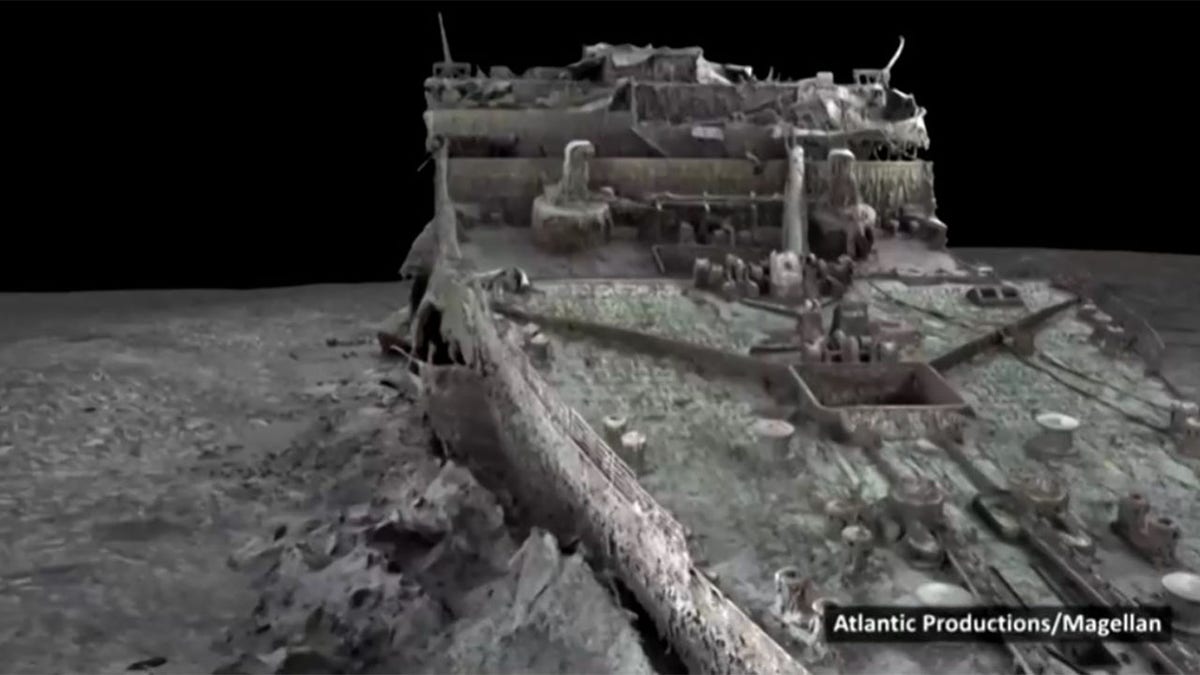
High-resolution imagery released throughout 2025 confirms the accelerating structural collapse of the RMS Titanic. Most notably, a 15-foot section of the bow’s iconic port-side railing has fallen to the seafloor, while the rediscovery of the "Diana of Versailles" statue provides a poignant contrast to the pervasive microbial "rusticles" currently consuming the ship's remains.
The 2024-2025 Expedition: A New Era of Digital Documentation
The state of the RMS Titanic has long been a subject of fascination and mourning, but the data released in 2025 offers the most comprehensive look at the site since the 2010 mapping expedition. Conducted by RMS Titanic Inc. (RMST) in the summer of 2024, the mission utilized advanced Remotely Operated Vehicles (ROVs) to capture over two million high-resolution images and 24 hours of 4K video. As we move through 2026, the analysis of this data has revealed that the wreck is entering a terminal phase of structural integrity.
The primary goal of the most recent surveys was not merely to observe, but to create a "digital twin" of the site. By using photogrammetry and LiDAR, researchers have been able to document the current state of the debris field and the hull with millimeter precision. This is critical because the wreck, resting 3,800 meters (12,500 feet) below the North Atlantic surface, is no longer a static monument. It is a dynamic, biological environment where the forces of nature are reclaiming man-made steel at an exponential rate.
The 2025 findings underscore a harsh reality: the Titanic is being consumed. The combination of deep-sea currents, salt corrosion, and metal-eating bacteria is systematically dismantling the ship's silhouette. For the first time, the 2025 reports allow us to quantify exactly how much of the upper decks have pancaked into the lower levels, providing a grim timeline for the eventual disappearance of the hull.
The Collapse of the Iconic Bow Railing
Perhaps the most striking revelation from the 2025 photo release was the dramatic change to the ship’s bow. For decades, the bow remained the most recognizable part of the wreck, largely preserved and standing as a symbol of the tragedy. However, the new images show that a significant section of the port-side railing—the very area immortalized in modern cinema and historical photography—has finally succumbed to gravity and corrosion.
The railing section, roughly 15 feet long, now lies on the ocean floor directly below where it once stood. This collapse was not unexpected, but its occurrence marks a psychological shift in our relationship with the wreck. The bow was considered one of the "strongest" parts of the structure. Its failure suggests that the internal support beams, which held the deck plating and railings in place, have thinned to the point of structural failure.
Marine archaeologists noted that the railing did not simply break; it detached as the underlying metal turned to "mush" under the weight of decades of rusticle growth. This specific area of the ship is subject to high-pressure currents that wrap around the bow, creating a constant physical stressor on the fragile, oxidized iron. The loss of the railing is a harbinger of things to come for the remaining superstructure, including the bridge area and the officers' quarters.
The Rediscovery of the "Diana of Versailles"
Amidst the documentation of decay, the 2025 photo sets revealed a rare "win" for maritime history: the rediscovery of the "Diana of Versailles" statue. This 2-foot-tall bronze statuette once sat on the fireplace mantle in the First Class Lounge. It was first photographed in 1986 by Robert Ballard, but in the decades of subsequent expeditions, its location was lost as the lounge collapsed and debris shifted.
The 2025 images show the statue standing upright in the sand of the debris field, remarkably clear of the heavy sediment that covers much of the surrounding area. The bronze material has resisted the "rusticle" growth that consumes the iron hull, leaving the goddess's features largely intact.
The significance of this find cannot be overstated. It represents the elegance of the Titanic's interiors—the "floating palace" aspect that defined the Gilded Age. Its reappearance offers a moment of reflection on the human element of the disaster. While the ship's steel is being recycled by the ocean, these smaller, more resilient artifacts remain as silent witnesses to the 1,500 lives lost in 1912.
The Science of Deep Ocean Decay: Halomonas titanicae
The primary architect of the Titanic’s demise is a bacterium named Halomonas titanicae. Discovered in samples taken from the wreck, this unique microbe thrives in the high-pressure, low-temperature, and pitch-black environment of the abyss. It specifically targets iron, converting the ship's hull into delicate, icicle-like structures known as rusticles.
The Lifecycle of a Rusticle
Rusticles are not just rust; they are complex biological communities. They consist of various species of bacteria and fungi working in symbiosis. The Halomonas bacteria oxidize the iron, while other microbes provide a protective structure.
- Attachment: Microbes settle on the exposed steel surfaces where the protective paint has long since peeled away.
- Consolidation: The bacteria begin to eat the iron, creating a porous, mineral-rich "skin."
- Growth: As the bacteria multiply, they create long, pendulous "icicles" that can grow several inches a year.
- Structural Failure: Eventually, the rusticle becomes too heavy or the underlying metal becomes too thin, causing the structure to crumble into a fine orange dust.
In 2025, scientists calculated that these microbes are consuming hundreds of pounds of iron every day. This biological activity is why the upper decks are collapsing. As the internal walls are eaten away, the weight of the decks above becomes unsupported, leading to the "pancaking" effect seen in the mid-ship and stern sections.
Comparison of Wreck Conditions: 2010 vs. 2025
To understand the rate of decay, it is helpful to compare the observations made during the 2010 "mapping mission" with the findings released in 2025.
| Feature | 2010 Status | 2025 Status | Observation |
|---|---|---|---|
| Bow Railing | Fully intact on both sides. | 15-foot port-side section collapsed. | Significant loss of the ship's most iconic silhouette. |
| Captain Smith's Bathtub | Visible through the collapsed roof of the officers' quarters. | Largely obscured or destroyed by further roof collapse. | This was a favorite "landmark" that is now mostly gone. |
| Crow's Nest | Had already fallen into the hold years prior. | Completely disintegrated or buried in debris. | Almost no recognizable trace remains of the mast platform. |
| "Diana" Statue | Lost/Unlocated since 1986. | Rediscovered and photographed in the debris field. | A rare instance of a major artifact being found after decades. |
| Gymnasium Roof | Partially collapsed. | Entirely collapsed into the deck below. | The structural integrity of the boat deck is failing rapidly. |
| Mast and Rigging | Heavy rusticle growth; mast partially standing. | Mast has slumped further; rigging wires increasingly brittle. | Gravity is pulling the remaining vertical structures down. |
Technical Challenges of the 2025 Data Release
The imagery released in 2025 was not simply a matter of "pointing and shooting." The depth of 12,500 feet presents extreme technical hurdles. At this depth, the pressure is approximately 380 atmospheres (roughly 6,000 psi). Any equipment used must be specifically engineered to withstand these forces without imploding.
The 2024-2025 project used ROVs equipped with specialized lighting arrays. Because light does not travel far in the dense, particle-heavy water of the North Atlantic, thousands of individual photos must be "stitched" together using software to create a single, clear image of a large area like the bow. This process, known as photogrammetry, allows researchers to see the wreck as if the water were drained away.
Furthermore, the data storage requirements were immense. The expedition collected over 65 terabytes of raw data. Analyzing this for "new details on deep ocean decay" required months of processing by supercomputers to identify subtle changes in the hull's thickness and the movement of debris since the last major survey.
The Ethical Debate: Preservation vs. Natural Decay
The 2025 photos have reignited a long-standing debate within the maritime community: should we attempt to recover artifacts like the "Diana" statue, or should the wreck be left to disappear naturally?
RMS Titanic Inc., as the court-recognized "salvor-in-possession," has a mandate to recover and preserve artifacts for public display. They argue that as the ship decays, these items will eventually be buried or crushed by falling debris, making recovery impossible. Proponents of this view see the 2025 photos as a "ticking clock" that justifies urgent intervention to save what remains of the ship's cultural heritage.
Conversely, many historians and descendants of the victims view the Titanic as a grave site that should be left undisturbed. They argue that the "beauty of decay" is part of the ship's story and that removing items from the site diminishes its sanctity. The 2025 findings, while scientifically valuable, add pressure to this debate as the window for safe recovery closes alongside the ship's structural integrity.
FAQs: Understanding the Titanic's Current State
Is the Titanic wreck disappearing?
Yes, the wreck is in a state of irreversible decay. Scientific estimates suggest that within the next 20 to 50 years, the main structural elements of the Titanic will collapse entirely, leaving behind only a "rust stain" on the ocean floor and more resilient materials like bronze, tile, and lead.
What caused the bow railing to fall?
The fall was caused by a combination of metal fatigue, corrosion from Halomonas bacteria, and the force of deep-sea currents. The iron became too thin to support the weight of the railing and the heavy rusticles attached to it.
Can humans still visit the wreck in 2026?
Following the 2023 Titan submersible tragedy, manned missions to the wreck have been heavily scrutinized and restricted. While RMST and other scientific organizations continue to use unmanned ROVs, commercial "tourism" to the site has largely ceased due to safety regulations and the extreme risks involved in deep-submergence travel.
Why did the "Diana" statue survive while the ship is rotting?
The statue is made of bronze, which is an alloy primarily of copper and tin. Unlike the ship's iron and steel, bronze does not "rust" in the same way and is not consumed by the Halomonas bacteria. While it may develop a patina or slight surface corrosion, it remains structurally sound for centuries.
Where can I see the 2025 Titanic photos?
The high-resolution images and 3D models are typically released through official RMST exhibitions and authorized media partners. Digital archives are also being developed to allow the public to explore the "digital twin" of the wreck online.
Recommendation for Future Interest
For those following the Titanic's story in 2026, the best course of action is to focus on digital preservation efforts. As physical access to the wreck becomes more difficult and the structure itself disappears, the high-resolution 3D maps and photogrammetry models being created today will be the only way future generations can "visit" the ship. Support for museums and organizations that maintain these digital records ensures that the historical lessons of the Titanic remain accessible long after the North Atlantic has claimed the final piece of its steel hull.