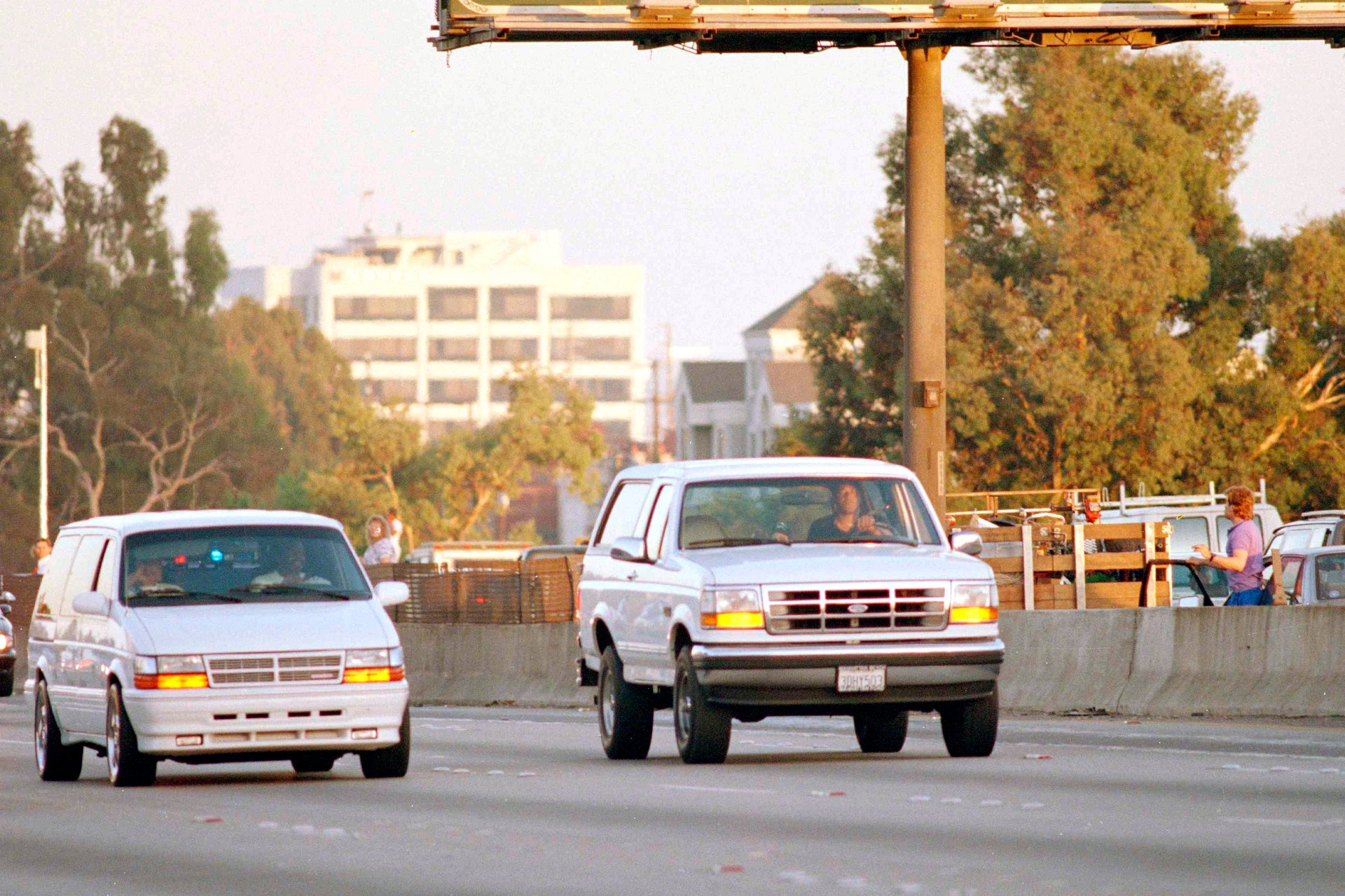
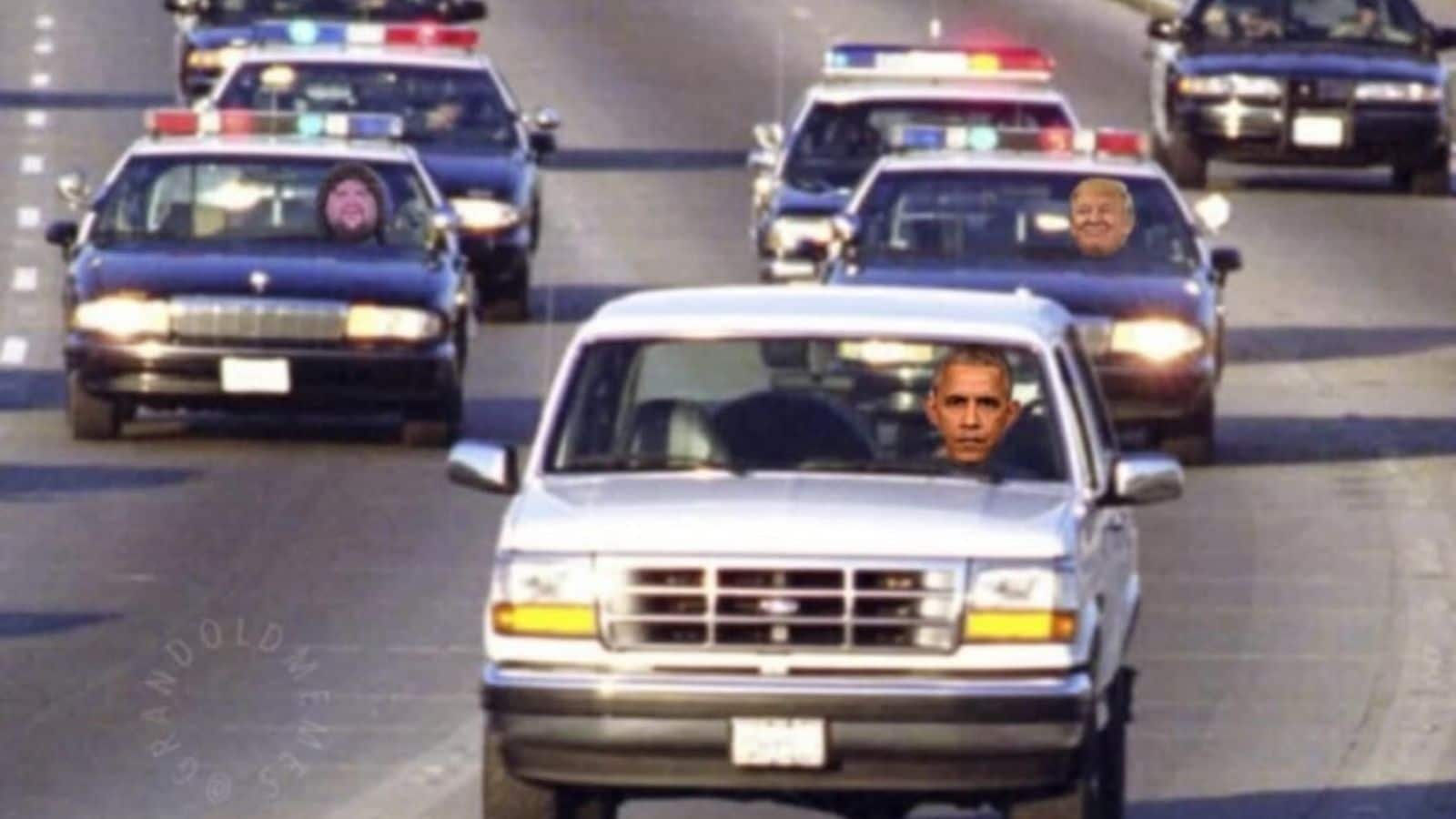
The 1993 Ford Bronco driven during the June 17, 1994, low-speed police pursuit of O.J. Simpson is an iconic artifact of 20th-century American culture and media history. This white sport utility vehicle captured the attention of roughly 95 million television viewers worldwide, permanently transforming the vehicle model into a symbol of a watershed moment in modern broadcasting, legal history, and popular culture.
Contextual Origins: The 1993 Ford Bronco and Its Automotive Lineage
Before the vehicle became a permanent fixture in American pop culture history, the Ford Bronco was a well-established nameplate in the American automotive landscape. Introduced originally in 1966 as a compact competitor to vehicles like the Jeep CJ-5 and International Harvester Scout, the Bronco evolved significantly over five generations. By 1993, the Bronco was in its fifth generation, utilizing a shortened F-150 pickup truck platform.
The 1993 model featured body-on-frame construction, a standard removable fiberglass hardtop rear section, and robust four-wheel-drive capabilities. Engine options included a 4.9-liter inline-six, a 5.0-liter Windsor V8, and the larger 5.8-liter Windsor V8. Known for its utility, towing capacity, and rugged styling, the Bronco was a popular choice for families and outdoor enthusiasts alike. However, its mechanical specifications and standard styling were entirely overshadowed by the events of the summer of 1994, which transformed a mass-produced consumer vehicle into an instantly recognizable historical object.
The Events of June 17, 1994: The Pursuit and Its Broadcast Legacy
The cultural trajectory of the 1993 Ford Bronco shifted definitively on June 17, 1994. Following the murders of Nicole Brown Simpson and Ronald Goldman, O.J. Simpson, a former NFL star and actor who had been asked to surrender to the Los Angeles Police Department, failed to turn himself in by the agreed-upon deadline. Law enforcement tracked him via cellular phone signals, locating him in a white 1993 Ford Bronco belonging to and driven by his longtime friend and former teammate, Al Cowlings.
What followed was an unprecedented media event. Rather than a high-speed car chase, the vehicle traveled at relatively low speeds—averaging around 35 miles per hour—along Southern California freeways, primarily the Artesia Freeway (State Route 91) and the San Diego Freeway (Interstate 405).
| Detail Category | Historical Fact |
|---|---|
| Date of Event | June 17, 1994 |
| Vehicle Make and Model | 1993 Ford Bronco (Fifth Generation) |
| Exterior Color | Oxford White |
| Driver | Al Cowlings |
| Passenger | O.J. Simpson |
| Estimated Viewership | Approximately 95 million people |
As the Bronco moved slowly across Los Angeles, motorists pulled over to the shoulders of the highway, waving and holding signs. Major television networks interrupted their scheduled programming, including the broadcast of the 1994 NBA Finals game between the Houston Rockets and the New York Knicks, splitting the screen to show live aerial and ground footage of the white SUV. This continuous, real-time coverage established a new paradigm in 24-hour cable news and live broadcasting, setting the stage for the modern era of wall-to-wall media spectacles.
Ownership Provenance and Physical Custody of the Vehicle
The specific vehicle involved in the pursuit is frequently misidentified as belonging directly to O.J. Simpson. In reality, the white 1993 Ford Bronco was owned by Al Cowlings. Cowlings had purchased the vehicle from a Galpin Ford dealership in the San Fernando Valley.
Following the conclusion of the pursuit at Simpson’s Brentwood estate—where Simpson surrendered after a prolonged standoff in the driveway—the vehicle was impounded by the Los Angeles Police Department as evidence. Once legal proceedings permitted its release, the Bronco became the subject of intense public curiosity and commercial interest.
Unlike standard used vehicles, the Bronco carried a complex provenance. It eventually came into the joint possession of Al Cowlings and a group of associates, including sports memorabilia dealer Mike Gilbert. For years, the vehicle was kept hidden in a secure, undisclosed location, shielded from public view while various acquisition offers were considered. In subsequent years, the vehicle was placed on display at the Alcatraz East Crime Museum in Pigeon Forge, Tennessee, where it remains part of an exhibit examining the intersection of crime, media, and American culture.
Cultural Aftermath and the Impact on Ford Motor Company
The widespread broadcast of the pursuit had an immediate and complex impact on the Ford Bronco brand. Overnight, the white fifth-generation Bronco became a ubiquitous cultural symbol, referenced in television shows, films, music, and comedy routines. For millions, the visual of a white Bronco on a Los Angeles freeway became an indelible snapshot of 1990s media culture.
For Ford Motor Company, the association was initially an acute marketing challenge. The company was in the process of marketing its truck and SUV lineup, and having its full-sized two-door utility vehicle constantly linked to a murder investigation and police pursuit was an unprecedented corporate communications hurdle. However, automotive historians note that the incident did not permanently damage consumer demand for large SUVs at the time; rather, consumer trends in the late 1990s began shifting toward four-door utility vehicles and luxury family haulers anyway.
Ford discontinued the Bronco line after the 1996 model year, replacing it with the larger, four-door Ford Expedition to better compete with vehicles like the Chevrolet Tahoe and GMC Yukon. While company executives cited changing market preferences for four-door vehicles as the primary driver for the discontinuation, the shadow of the 1994 event remained a footnote in the model's history for decades.
Evolution of the Bronco Brand and the Return of the Nameplate
Decades after the 1994 pursuit, the cultural perception of the Ford Bronco underwent a significant rehabilitation. As generations who lived through the 1990s grew older, and as automotive nostalgia for rugged, body-on-frame SUVs reached a peak, the historical stigma faded, allowing the vehicle to be appreciated purely for its automotive heritage.
In 2020, Ford Motor Company officially reintroduced the Bronco nameplate with an entirely new sixth-generation lineup. Designed as a direct competitor to the Jeep Wrangler, the modern Bronco embraced retro styling cues inspired by the original 1966 model while incorporating modern safety, engineering, and infotainment technology.
When the modern Bronco was launched, automotive journalists and social media users inevitably drew historical comparisons to the infamous 1993 model. However, Ford's marketing strategy focused successfully on off-road capability, customization, and outdoor adventure, distancing the contemporary vehicle from its grim historical associations and re-establishing the Bronco as a premier nameplate in the American automotive market.
Frequently Asked Questions
Did O.J. Simpson own the white Bronco used in the pursuit?
No. The white 1993 Ford Bronco was owned and driven by Al Cowlings, O.J. Simpson's close friend and former teammate. Cowlings had purchased the vehicle new from a Southern California dealership. Simpson did own a similar white Bronco of the same model year, but the vehicle involved in the June 17, 1994, pursuit belonged exclusively to Cowlings.
Where is the O.J. Simpson Bronco located today?
The vehicle is currently on public display at the Alcatraz East Crime Museum in Pigeon Forge, Tennessee. It was acquired by a group that included Al Cowlings and sports memorabilia dealer Mike Gilbert before eventually finding a permanent home in the museum's collection following years of secure storage.
Why did Ford discontinue the Bronco after 1996?
Ford discontinued the full-size Bronco after the 1996 model year due to shifting consumer preferences toward four-door sport utility vehicles. The two-door configuration of the Bronco could not compete with the surging popularity of four-door alternatives like the Ford Explorer and the newly introduced Ford Expedition, prompting Ford to replace the line rather than any direct fallout from the 1994 police pursuit.
How fast did the white Bronco travel during the 1994 pursuit?
Contrary to popular misconceptions, the vehicle did not participate in a high-speed chase. It traveled at relatively low speeds, averaging around 35 miles per hour along Southern California freeways, as law enforcement agencies escorted the vehicle toward Simpson's residence.