Carey Hart is a retired professional freestyle motocross (FMX) athlete, a pioneering figure in extreme sports, and a successful entrepreneur who revolutionized the branding of tattoo culture. Known for being the first rider to attempt a backflip on a 250cc motorcycle in competition, Hart has transitioned from a high-risk athletic career into a multifaceted business mogul and a prominent figure in the custom motorcycle industry.
The Foundations of a Motocross Legacy
Carey Hart’s journey into the world of two wheels began long before he became a household name. Born in July 17, 1975, in Seal Beach, California, and raised in Las Vegas, Nevada, Hart was introduced to motorcycles at the age of four by his father, Tom Hart. By the time he was six, he was competing in local motocross races.
His early career was defined by the traditional path of a professional racer. He turned pro at 18 in 1993, competing on the AMA supercross circuit. However, Hart found himself increasingly drawn to the burgeoning "freestyle" movement. During the mid-to-late 1990s, the sport of motocross was undergoing a radical shift. While traditional racing focused on speed and technical precision on a track, a new generation of riders was more interested in the airtime and the aesthetic of the tricks performed off jumps.
Hart was at the forefront of this rebellion. He eventually pivoted away from racing to focus entirely on freestyle motocross, a discipline that, at the time, lacked the formal structure and corporate backing it enjoys in the 2020s. His decision to leave the established racing world was a gamble that ultimately defined his career and the sport itself.
The 2000 Gravity Games: A Turning Point in Action Sports
The year 2000 serves as a pivotal moment in the history of extreme sports, and Carey Hart was the primary protagonist. Before this era, the idea of backflipping a full-sized 250cc motorcycle was considered a physical impossibility by many engineers and veteran riders. The weight of the machine and the gyroscopic forces of the engine were thought to be too great to overcome in a standard jump trajectory.
At the 2000 Gravity Games in Providence, Rhode Island, Hart attempted the first-ever backflip in competition. While he did not land the maneuver cleanly—suffering a significant crash upon impact—the fact that he completed the rotation changed the trajectory of FMX forever. It shattered the psychological barrier for other riders.
Within years, the backflip became a standard requirement for any competitive freestyle rider, eventually evolving into double backflips, frontflips, and body varials. Hart’s willingness to risk his physical safety for a "proof of concept" earned him the reputation of a daredevil, but more importantly, it established him as a visionary who saw what the sport could become.
Technical Achievements and Tricks
Beyond the backflip, Hart was known for several signature moves that pushed the technical boundaries of the sport:
- The Hart Attack: A signature trick where the rider performs a handstand on the seat of the motorcycle while it is mid-air, extending their legs vertically.
- Inverted Styles: He was one of the first riders to experiment with "flat-lining" or bringing the bike completely horizontal during a whip.
- Course Design: Hart was instrumental in advocating for better ramp geometries and landing safety, moving the sport toward the more calculated, professionalized version seen today.
The Business of "Hart & Huntington"
Carey Hart’s influence extends far beyond the dirt track. He was one of the first extreme sports athletes to successfully translate his personal brand into a sustainable business empire. In 2004, he founded the Hart & Huntington Tattoo Company.
At the time, tattoo culture was still largely marginalized and associated with subcultures. Hart made a strategic and controversial move by opening his first shop inside the Palms Casino Resort in Las Vegas. This was the first tattoo parlor to be located within a major casino, effectively "mainstreaming" the art form and making it accessible to a broader, more affluent demographic.
The success of the tattoo shop led to the creation of the Hart & Huntington clothing line, which utilized the aesthetic of motocross, punk rock, and tattoo art. This lifestyle brand resonated with fans who wanted to emulate Hart’s rebellious but professional persona.
Expanding the Brand Horizon
By 2026, the Hart & Huntington brand remains a cornerstone of his portfolio, having expanded into multiple locations and diversifying into merchandise that spans several lifestyle sectors. His business acumen allowed him to survive the physical toll of his athletic career; while many of his peers struggled to find a second act after retirement, Hart was already managing a growing corporate entity.
| Business Entity | Industry | Role/Status |
|---|---|---|
| Hart & Huntington Tattoo | Personal Services/Art | Founder; Multiple locations (Vegas, Orlando, etc.) |
| Hart & Huntington Clothing | Apparel | Founder; Lifestyle and performance wear |
| RCH Racing | Professional Sports | Co-Owner (with Ricky Carmichael); Factory-level race team |
| Hart Luck | Custom Motorcycles | Owner/Lead Builder; Performance-based custom bikes |
| Good Ride | Charity/Event | Founder; Charity motorcycle rides for veterans |
Physical Toll and Resilience: The Reality of FMX
The "cost" of being a pioneer in a high-risk sport like FMX is often measured in broken bones and surgical procedures. Carey Hart’s medical history is a testament to the dangers of his profession. Throughout his career, he has suffered over 70 broken bones and underwent numerous surgeries to repair his spine, shoulders, and limbs.
One of his most severe accidents occurred in 2003 at the Tony Hawk Boom Boom HuckJam tour, where he suffered broken arms and legs after a mid-air collision or equipment failure. These injuries would have ended the careers of most athletes, but Hart’s recovery process became part of his public identity. He often shared the grueling details of his rehabilitation, highlighting the mental toughness required to stay at the top of an extreme sport.
In the 2020s, Hart has been an advocate for modern sports medicine and has undergone several advanced procedures, including disc replacements in his neck and spine, to maintain his quality of life as he entered his 50s. His openness about the long-term effects of professional sports has provided a realistic look at the trade-offs involved in reaching the pinnacle of FMX.
Personal Life and High-Profile Partnership
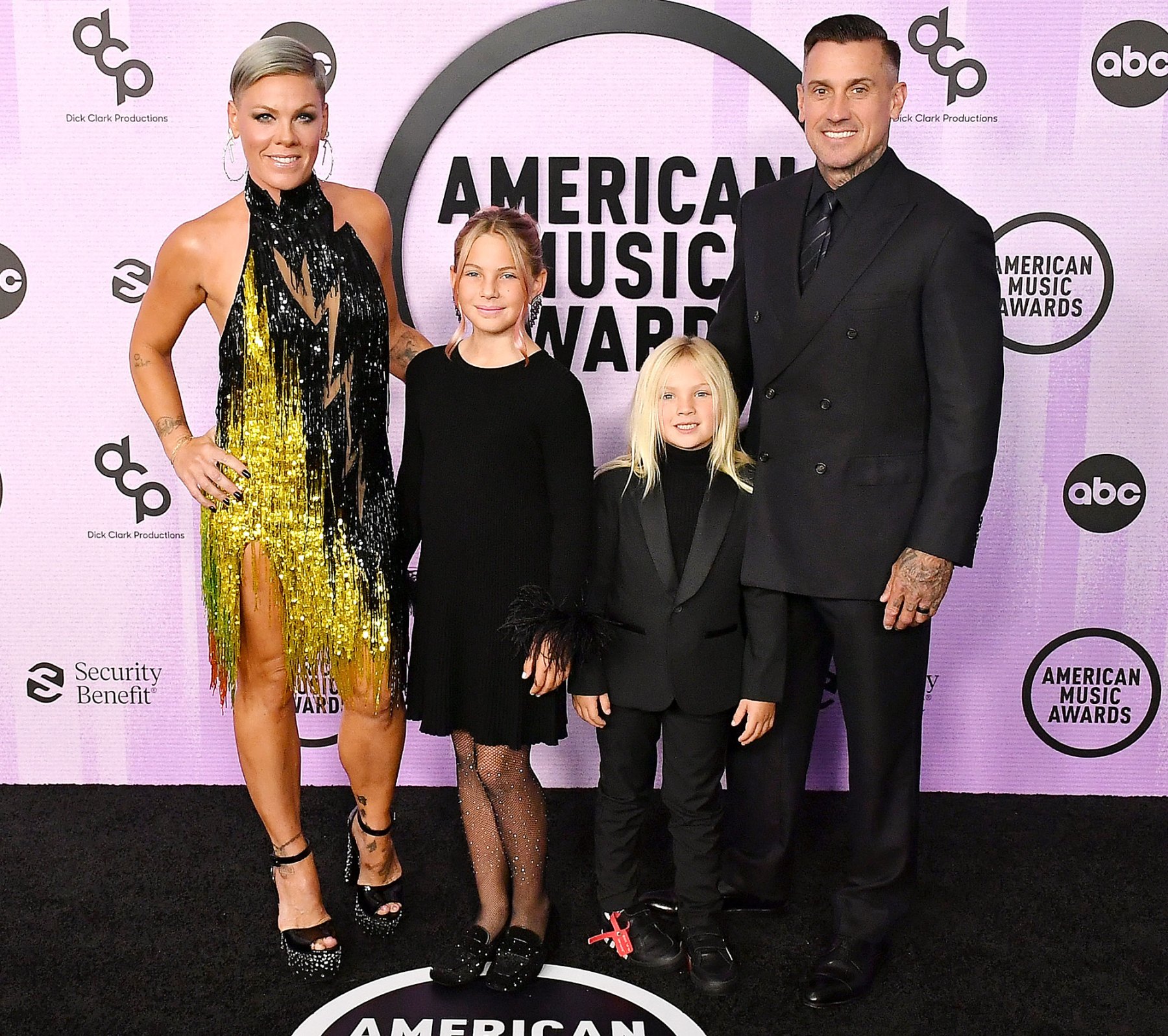
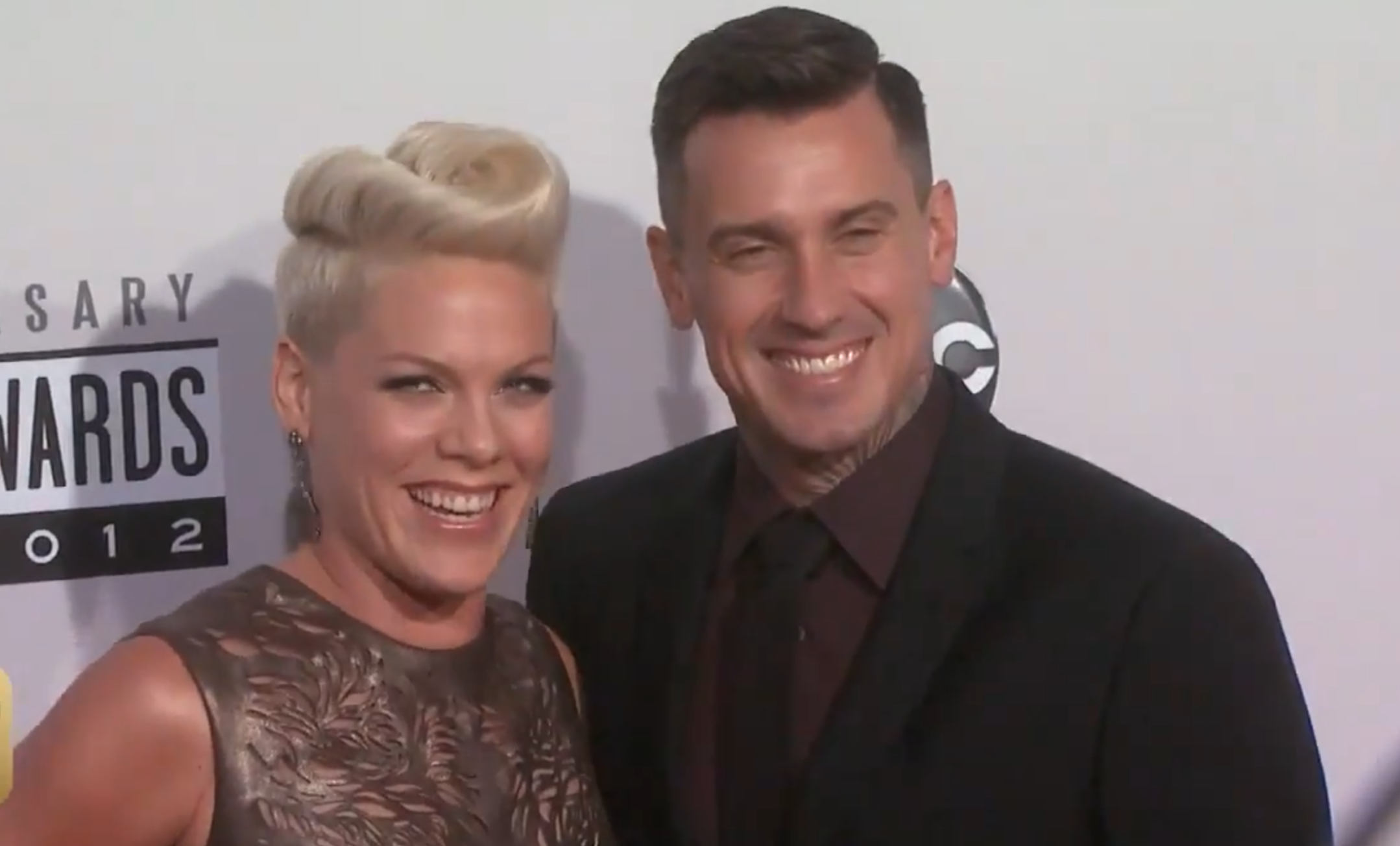
Carey Hart’s personal life has often been in the spotlight due to his marriage to the global pop-rock icon Alecia Moore, better known as Pink. The couple met at the 2001 X Games in Philadelphia and married in 2006.
Their relationship has been characterized by its transparency and resilience. Unlike many celebrity couples who project an image of perfection, Hart and Pink have been open about their separations, therapy, and the hard work required to maintain a marriage under the pressure of two high-intensity careers. They have two children, Willow Sage and Jameson Moon.
Hart has appeared in several of Pink's music videos, most notably for the songs "So What," "Just Give Me a Reason," and "90 Days." These appearances often played on their real-life relationship dynamics, further cementing Hart as a recognizable figure even to those who do not follow motocross.
By 2026, the couple is frequently cited as one of the most enduring partnerships in the entertainment industry. They have transitioned into a lifestyle centered on their ranch in Santa Barbara, California, where they balance their professional obligations with a focus on family and organic farming.
Evolution into Custom Motorcycle Building
As Hart stepped away from competitive jumping, he returned to his roots: the mechanics and aesthetics of the motorcycle itself. He launched Hart Luck, a brand focused on custom bike building and performance parts.
His work in this field has been particularly influential in the American V-twin scene. Hart partnered with Indian Motorcycle as a brand ambassador and custom builder. Unlike many "show bikes" that are built for looks but are difficult to ride, Hart’s builds focus on performance—incorporating high-end suspension, braking systems, and engine tuning typically found on racing bikes.
The "Performance Bagger" Movement
Hart was a significant contributor to the "performance bagger" trend. This involved taking traditional, heavy touring motorcycles and modifying them to handle like sportbikes. By applying his motocross-derived knowledge of suspension and weight distribution to these larger machines, he helped create a new segment of the custom motorcycle market that prioritizes rideability and speed.
Philanthropy and the "Good Ride"
In his later career, Hart has focused heavily on giving back through the Good Ride, a non-profit organization he founded. The Good Ride hosts motorcycle rallies and events that raise money for various charities, with a primary focus on veteran services and children’s hospitals.
These rides are not just fundraisers but are designed to foster a sense of community among motorcycle enthusiasts. Hart often leads these rides himself, leveraging his celebrity status to bring attention to the needs of military veterans, a cause he has supported throughout his adult life.
Frequently Asked Questions
Did Carey Hart ever win a gold medal at the X Games?
While Carey Hart is a legend in the sport, he never won a gold medal in the standard Freestyle Motocross category at the X Games. He did, however, earn a silver medal in the Big Air competition in 2002. His legacy is built more on his status as a pioneer and his historical "firsts" rather than a tally of gold medals.
Is Carey Hart still involved in professional motocross racing?
Yes, but primarily from a team ownership and mentorship perspective. He co-founded RCH Racing with motocross legend Ricky Carmichael. The team competed at the highest levels of AMA Supercross and Motocross, eventually winning a championship with rider Ken Roczen before the team transitioned into other ventures.
What is Carey Hart’s primary business today?
As of 2026, Hart manages a diverse portfolio. His primary focuses are the Hart & Huntington brand (tattoos and apparel), his custom motorcycle partnership with Indian Motorcycle through Hart Luck, and his philanthropic efforts through the Good Ride.
How did Carey Hart meet Pink?
They met in 2001 at the X Games in Philadelphia. Pink was a fan of the sport and was introduced to Hart in the pits. They began dating shortly after and have been together, with some public breaks and reconciliations, for over two decades.
Is Carey Hart still riding motorcycles?
Yes, Hart continues to ride and build motorcycles daily. While he no longer competes in freestyle motocross or performs high-risk stunts like backflips, he is an avid off-road rider and a prominent figure in the street-bike and custom cruiser community.
Navigating the Legacy of Carey Hart
For those looking to understand the impact of Carey Hart, it is essential to view him as more than just an athlete. He represents the bridge between the raw, unrefined era of 1990s extreme sports and the professionalized, multi-billion-dollar industry it has become.
If you are a fan of motocross, his career offers a blueprint for how to evolve with a sport. If you are an entrepreneur, his "Hart & Huntington" venture provides a masterclass in brand expansion and cultural disruption. For the general public, he remains a symbol of resilience—someone who took the hardest hits a sport could offer and used them to build a lasting legacy.
To follow Carey Hart’s current work in 2026, one should look to his custom motorcycle builds and his ongoing collaborations within the V-twin industry. His journey suggests that the true measure of an "extreme" athlete is not just how high they can jump, but where they land once the competition ends.