The 0 to 60 mph acceleration metric measures the time it takes for a vehicle to accelerate from a complete standstill to 60 miles per hour, serving as a foundational benchmark for assessing automotive performance, engine responsiveness, and drivetrain efficiency across consumer cars and high-performance engineering.
Understanding the 0-60 mph Metric
The measurement of zero to sixty miles per hour (0–60 mph) is one of the most widely recognized and universally understood benchmarks in the automotive industry. It quantifies how efficiently a vehicle can convert stationary potential energy into forward kinetic momentum. While modern electric vehicles, supercars, and high-output sports cars achieve this feat in the blink of an eye, the metric applies equally to everyday economy cars, commercial vehicles, and heavy-duty trucks.
Historically popularized by automotive journalism in the United States and the United Kingdom, the metric bridges the gap between raw dynamometer figures and real-world drivability. It provides prospective buyers, engineers, and enthusiasts with a single, digestible number that communicates how quickly a vehicle can merge onto a highway, overtake slower traffic, or launch from a traffic light. However, treating this single figure as the definitive testament to a vehicle's capabilities overlooks the complex interplay of physics, engineering, environmental conditions, and mechanical limits that dictate every single tenth of a second.
Physics and Forces at Play
To understand how a vehicle achieves a specific 0–60 mph time, one must analyze the physical forces governing motion, primarily traction, mass, and power delivery. When a vehicle is stationary, its tires grip the asphalt through static friction. Upon applying throttle, the engine or electric motor generates torque, which is transmitted through the transmission, driveshafts, and differentials to the contact patches of the tires.
- Traction and Weight Transfer: During a hard launch, weight naturally transfers from the front axle to the rear axle (in rear-wheel-drive configurations) or distributes dynamically across all four wheels in all-wheel-drive systems. If the torque applied exceeds the maximum static friction of the tires, wheelspin occurs, wasting precious energy and delaying forward acceleration.
- Power-to-Weight Ratio: This is the primary determinant of acceleration potential. A lightweight chassis paired with a high-output powertrain will naturally accelerate faster than a heavy chassis with identical power.
- Aerodynamic Drag: While aerodynamic drag increases exponentially as speed rises, its impact is relatively minor during the initial phase of a 0–60 mph run compared to rolling resistance and inertia. Nevertheless, vehicle silhouette and frontal area play a subtle role as the vehicle nears the 60 mph threshold.
Historical Context and Technological Evolution
The 0–60 mph benchmark has evolved dramatically since the early days of the internal combustion engine. In the early-to-mid 20th century, achieving a time under 10 seconds was considered respectable reserved for specialized sports cars. By the muscle car era of the late 1960s, American V8 engines pushed factory muscle cars into the 5-to-6-second range, though these figures were often achieved under ideal, factory-prepped conditions using gross horsepower ratings.
As environmental regulations, fuel economy standards, and safety mandates reshaped the automotive landscape through the 1970s and 1980s, performance figures temporarily stagnated. However, the subsequent introduction of computer engine management, multi-valve cylinder heads, turbocharging, and advanced automatic transmissions sparked a renaissance in performance.
In the 21st century, the proliferation of dual-clutch transmissions (DCTs), sophisticated launch control systems, and high-torque electric powertrains has fundamentally shattered previous performance ceilings. Where sub-3-second 0–60 mph times were once the exclusive domain of million-dollar hypercars like the Bugatti Veyron, modern battery-electric vehicles and high-performance sedans routinely achieve these staggering figures while remaining street-legal and accessible to a broader market segment.
Factors Influencing 0 to 60 Times
Achieving repeatable and accurate 0–60 mph times is rarely as simple as mashing the accelerator pedal. Multiple external and internal variables dictate whether a vehicle meets its manufacturer-claimed specifications or achieves its maximum potential.
Environmental and Atmospheric Conditions
Ambient temperature, atmospheric pressure, humidity, and elevation profoundly impact internal combustion engines. Naturally aspirated engines lose approximately three percent of their power for every 1,000 feet of elevation gain due to lower air density. Turbocharged and supercharged engines mitigate this loss via forced induction wastegate adjustments, but extreme heat can still induce heat soak, reducing intercooler efficiency and pulling ignition timing to prevent engine knock. Conversely, cold, dense air provides more oxygen per combustion cycle, generally yielding improved performance.
Surface Preparation and Tire Chemistry
The interface between the tire and the road is the ultimate bottleneck for acceleration. Public asphalt offers varying degrees of grip depending on aggregate composition, ambient temperature, and moisture. Dedicated drag strips utilize chemical traction compounds (such as VHT) and rubber buildup to maximize adhesion. Furthermore, tire compound, tread pattern, tire pressure, and operating temperature dictate how much torque can be deployed without triggering traction control systems.
Launch Control and Drivetrain Technology
Modern performance vehicles rely heavily on electronic aids to optimize acceleration. Launch control systems manage engine revs, clutch engagement rates, and wheel slip algorithms to deliver the perfect launch every time. All-wheel-drive (AWD) systems distribute torque across all four contact patches, neutralizing traction deficits on slippery surfaces and routinely outperforming rear-wheel-drive equivalents in initial launch metrics.
Comparing Acceleration Eras and Powertrains
The automotive landscape features stark differences in how various powertrains deliver acceleration performance. The table below outlines how distinct vehicle categories and eras compare in achieving the 0–60 mph benchmark.
| Vehicle Category / Era | Typical Powertrain | Typical 0–60 mph Time | Primary Performance Limiter |
|---|---|---|---|
| 1960s American Muscle | Large-displacement V8, Carbureted | 5.5 – 7.0 seconds | Tire traction, bias-ply tire limits |
| 1990s Japanese Sports Car | Twin-Turbocharged Inline-6 / V6 | 4.6 – 5.8 seconds | Turbo lag, manual clutch engagement |
| Modern Entry-Level Economy | 3-cylinder / 4-cylinder, CVT | 8.0 – 11.0 seconds | Horsepower limitations, CVT torque limits |
| Modern High-Performance ICE | Twin-Turbo V8, Dual-Clutch, AWD | 3.0 – 3.8 seconds | Weight, drivetrain thermal limits |
| Modern High-Performance EV | Multi-Motor Battery Electric | 1.9 – 2.8 seconds | Battery discharge rates, tire grip thresholds |
Methods of Measurement and Verification
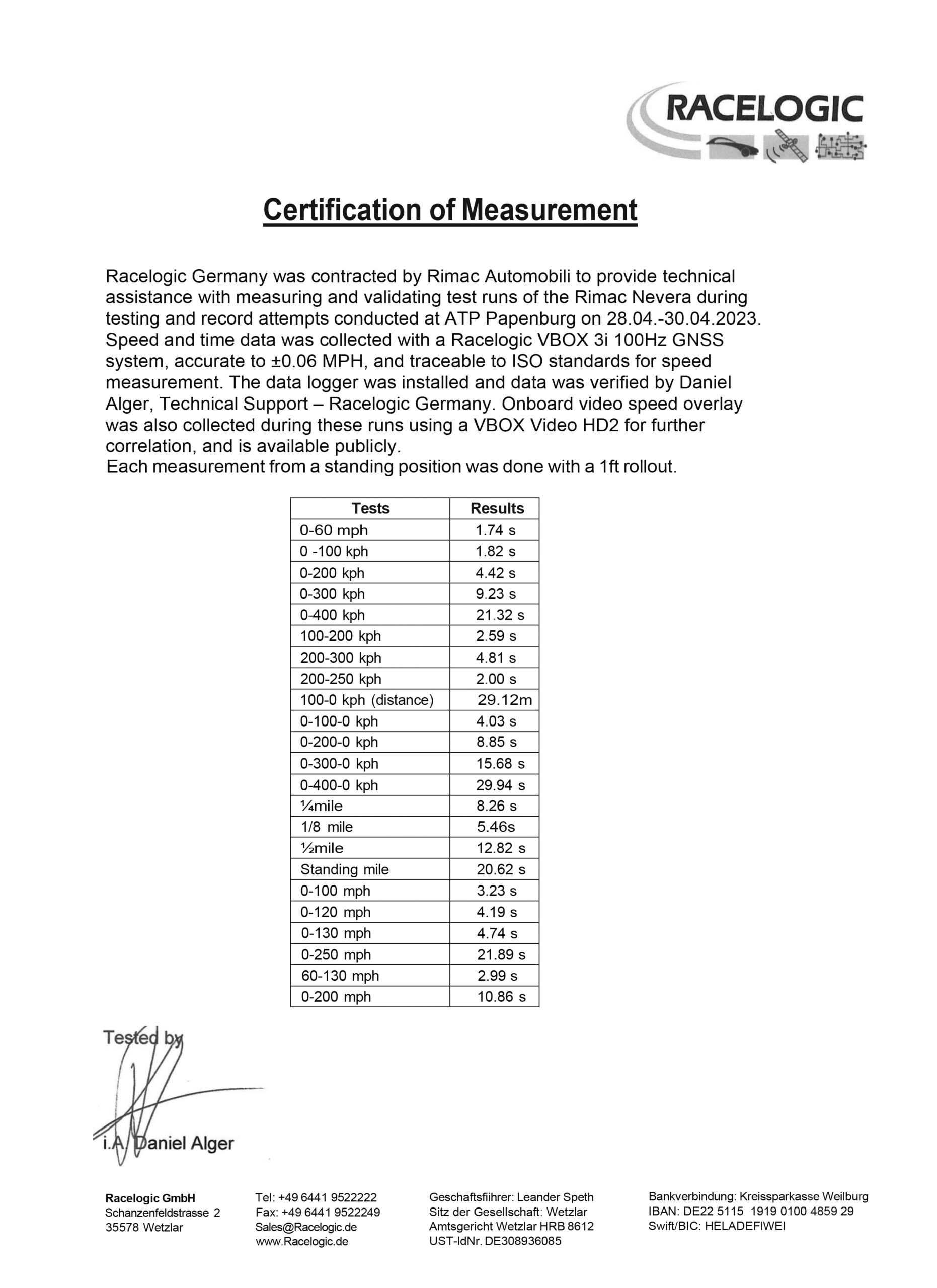
Accurately measuring a vehicle's 0–60 mph time requires specialized equipment to eliminate human error and account for subtle variables like "rollout."
Understanding Rollout
In official performance testing, particularly in North America, testing protocols frequently incorporate a "1-foot rollout." This means the timing does not begin until the vehicle has moved exactly one foot from a stationary position. This mimics the historical use of drag strip staging beams, where a vehicle rolls forward to break a light beam before the clock starts. Including rollout typically reduces the recorded 0–60 mph time by approximately 0.2 to 0.3 seconds compared to a true stationary-to-moving measurement (often referred to as "zero-to-sixty from dead stop").
Testing Equipment
- GPS-Based Data Loggers: Devices utilizing high-refresh-rate GPS receivers (such as 10Hz to 100Hz VBOX units) track positional data down to centimeter-level accuracy, calculating velocity over time without wheel-slip interference.
- OBD-II Scanners: While convenient, diagnostic port data can suffer from sampling latency and reliance on internal wheel speed sensors, making them less precise than dedicated GPS or optical sensors.
- Optical Sensors: Professional testing facilities utilize side-firing light beams and radar equipment to track absolute ground speed with zero latency.
Frequently Asked Questions
What is rollout, and why is it used in 0–60 measurements?
Rollout refers to the first 12 inches of vehicle movement before the timing clock starts. It originated from drag racing timing systems where the front tires roll past a staging beam. It is used because it provides a consistent, repeatable starting point that accounts for the split-second delay of suspension compression and tire sidewall flex during initial launch.
Do electric vehicles accelerate faster to 60 mph than gas cars?
Generally, yes. Electric motors deliver maximum torque instantaneously from 0 RPM, eliminating the need to build engine revs or shift gears. This immediate torque delivery, combined with instant computerized traction management, allows EVs to achieve exceptionally fast 0–60 mph times relative to their weight and horsepower.
How does weather affect a car's 0–60 mph time?
Hot weather reduces air density, starving internal combustion engines of oxygen and causing heat soak in forced-induction systems, which slows down times. Cold, dry weather increases air density and improves tire grip on certain surfaces, frequently resulting in faster acceleration times.
Can modifying my car significantly improve its 0–60 time?
Yes, modifications targeting power output (such as ECU tunes, turbo upgrades, and exhaust systems) and traction (such as sticky summer tires or upgraded suspension) can noticeably reduce acceleration times. However, drivetrain components have physical stress limits that must be respected to prevent catastrophic mechanical failure.
Are manufacturer-claimed 0–60 times accurate?
Manufacturer claims are typically achieved under optimal, closed-track conditions by professional drivers using prepped surfaces and specific fuel grades. Real-world drivers on public roads with variable fuel loads, passenger weights, and less-than-ideal asphalt often record slightly slower times.
Practical Next Steps for Enthusiasts
For drivers and enthusiasts looking to accurately measure their own vehicle's performance safely and legally, adhere to the following guidelines:
- Prioritize Safety: Never attempt performance testing on public highways, residential streets, or in heavy traffic. Utilize sanctioned track days, drag strips, or private closed courses.
- Invest in Proper Equipment: Purchase or rent a dedicated 10Hz+ GPS performance meter rather than relying on stopwatch phone applications or uncalibrated speedometer readings.
- Verify Mechanical Health: Ensure tire pressures match manufacturer recommendations, fluid levels are optimal, and the engine has reached normal operating temperatures before conducting any high-stress acceleration runs.