In 2018, the television industry reached a significant plateau of quality where 4K resolution, High Dynamic Range (HDR), and smart functionality matured into the standard consumer experience. While these sets are now legacy hardware in 2026, many flagship models from that era remain highly functional as secondary displays or budget-friendly options on the used market. Understanding their specific hardware limitations—particularly regarding HDMI standards and peak brightness—is essential for determining their utility in a modern home theater environment.
The Technological Landscape of 2018
The year 2018 is often cited by home theater enthusiasts as the "Year of Refinement." By this time, the transition from 1080p (Full HD) to 4K (Ultra High Definition) was effectively complete for mid-to-high-range models. Manufacturers shifted their focus from merely increasing pixel counts to improving the quality of those pixels through advanced backlighting and sophisticated image processing.
The OLED vs. QLED Rivalry
The competition between LG’s OLED (Organic Light Emitting Diode) technology and Samsung’s QLED (Quantum Dot LED) reached a fever pitch in 2018.
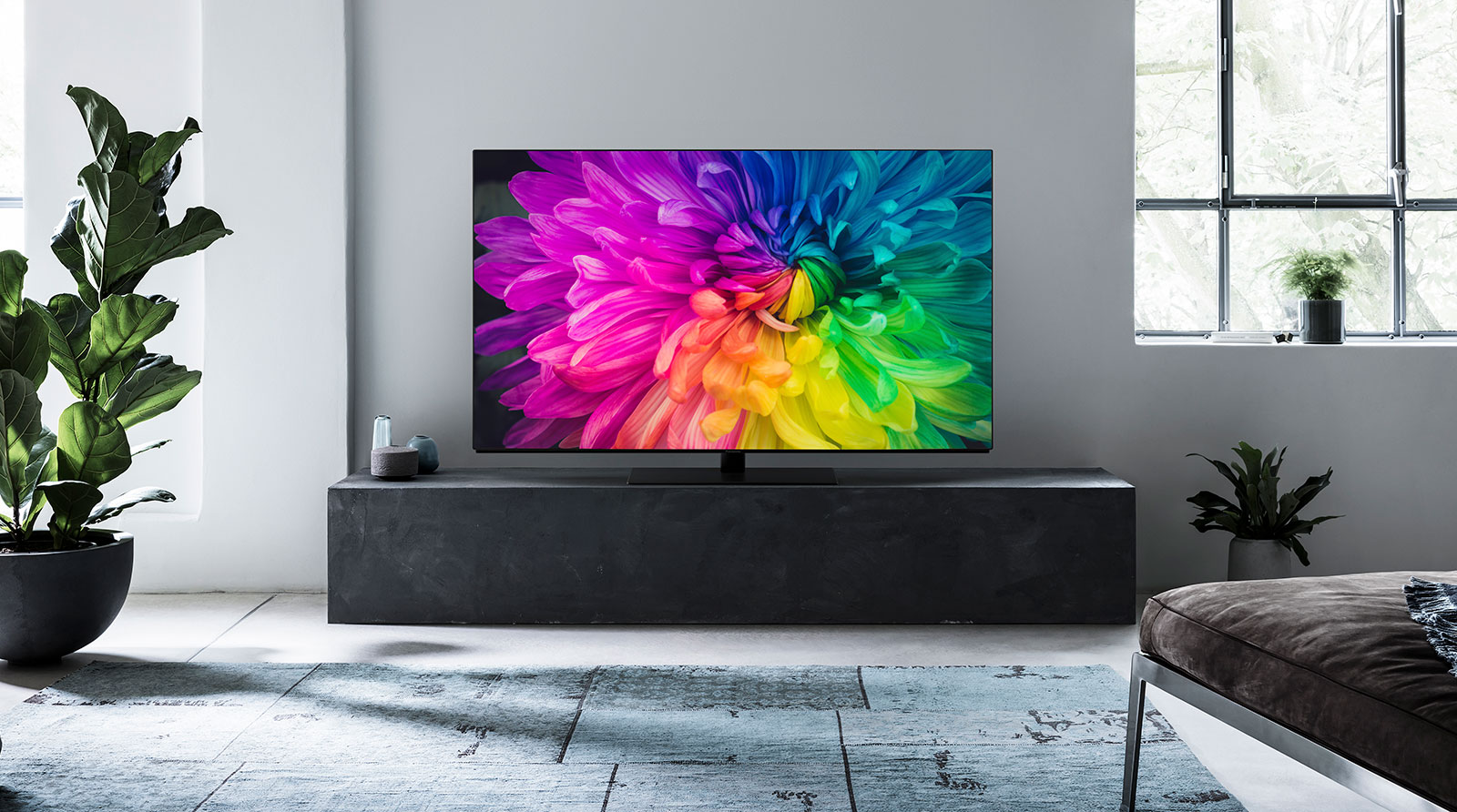
OLED technology, spearheaded by LG Display and utilized by brands like Sony and Panasonic, offered "infinite" contrast ratios because each pixel could be turned off individually. In 2018, LG introduced the Alpha 9 (α9) processor in its C8 and E8 series, which significantly improved noise reduction and motion handling compared to the 2017 models.
QLED technology, Samsung’s response, relied on a Quantum Dot layer over a traditional LED-LCD backlight. In 2018, Samsung made a major breakthrough with the Q9FN, which reintroduced Full Array Local Dimming (FALD). This allowed the TV to compete more effectively with OLED's black levels while offering significantly higher peak brightness, often exceeding 2,000 nits, which OLED panels of that era could not match.
HDR Format Wars: Dolby Vision vs. HDR10+
2018 was also a critical year for the HDR "format war." While basic HDR10 was universal, the industry was split on dynamic metadata standards.
- Dolby Vision: Supported by LG and Sony, this proprietary format was the early leader in high-end streaming and 4K Blu-ray.
- HDR10+: Samsung and Panasonic pushed this royalty-free alternative.
In 2026, we see that both formats have survived, but the lack of cross-compatibility on 2018 sets remains a sticking point for collectors. A 2018 Samsung TV still does not support Dolby Vision, and a 2018 LG TV still does not support HDR10+.
Key Specifications and Performance Benchmarks
When evaluating a 2018 television today, several technical benchmarks define its performance relative to modern 2026 standards.
Peak Brightness and Color Volume
The flagship sets of 2018 were the first to truly capitalize on the Wide Color Gamut (WCG). Most high-end sets covered over 95% of the DCI-P3 color space. However, peak brightness varied wildly. Mid-range sets often struggled to hit 400-600 nits, which is the baseline for a meaningful HDR experience. In contrast, the Samsung Q9FN and the Sony Z9F were "light cannons," capable of maintaining high brightness even in well-lit rooms.
Motion Handling and Refresh Rates
The 2018 model year was the last era before Variable Refresh Rate (VRR) became a standard expectation. While high-end sets featured 120Hz native refresh rates, they lacked the synchronization technology required for tear-free gaming on modern 2026 consoles. Sony’s X1 Extreme and X1 Ultimate processors, found in the X900F and A9F respectively, set the gold standard for motion interpolation and upscaling non-4K content—processing power that still holds up reasonably well for cable TV and standard Blu-rays today.
Standout Flagship Models of 2018
Several models from this year have gained "legendary" status in the secondary market due to their build quality and panel performance.
| Brand | Model | Panel Type | Key Feature |
|---|---|---|---|
| LG | C8 Series | OLED | α9 Processor, perfect blacks, Dolby Vision support. |
| Samsung | Q9FN | QLED (FALD) | High peak brightness (2000+ nits), One Connect Box. |
| Sony | A9F (Master) | OLED | Acoustic Surface Audio+, X1 Ultimate processor. |
| Sony | X900F | LED (FALD) | Exceptional motion handling and price-to-performance. |
| Vizio | P-Series Quantum | QLED (FALD) | First high-performance budget challenger to tier-1 brands. |
| TCL | 6-Series (R617) | LED (FALD) | Revolutionized the "budget flagship" category with Roku TV. |
The Sony A9F Master Series
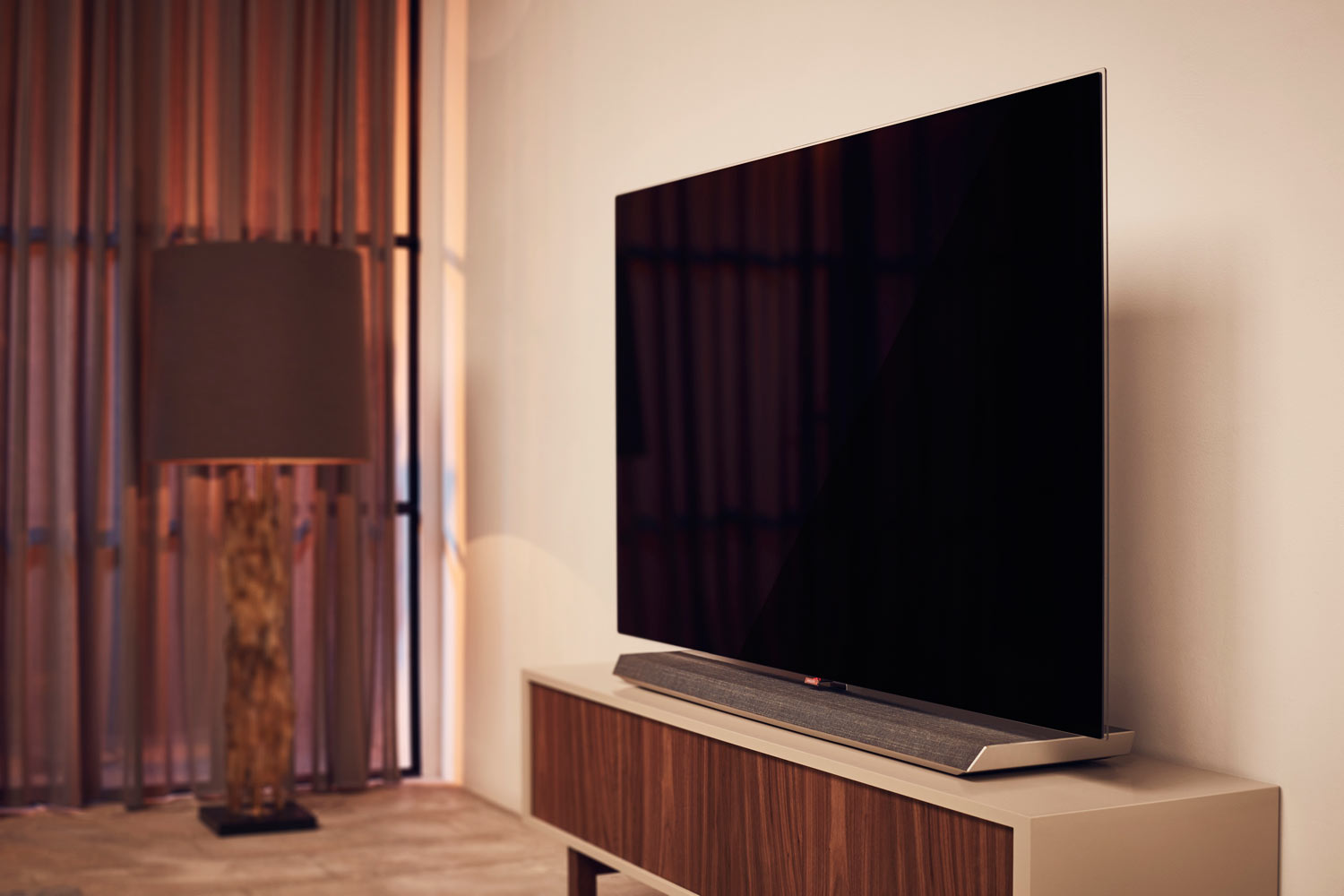
The Sony A9F was a milestone in 2018. It introduced the "Master Series" branding, which aimed to provide "studio quality" calibration out of the box. Its unique feature was the Acoustic Surface Audio+, where actuators behind the panel turned the screen itself into a speaker. For users in 2026 who prefer a minimalist setup without a soundbar, this remains one of the few TVs with acceptable built-in audio.
The Samsung Q9FN
This model was a turning point for Samsung. After a lackluster 2017, the Q9FN used a massive number of local dimming zones to virtually eliminate the "blooming" (light bleed) that plagued previous LED TVs. Its use of the One Connect Box—a separate hub for all HDMI inputs connected to the TV by a single thin cable—is a feature many 2026 users still find more convenient than modern integrated ports.
Smart TV Platforms and Software Longevity
In 2026, the biggest drawback of a 2018 television is its internal software. Smart TV platforms like LG’s WebOS 4.0, Samsung’s Tizen (2018 version), and Sony’s Android TV (Oreo) have largely reached their end-of-life for security updates and new app support.
App Compatibility Issues
Many 2018 sets now struggle with modern streaming codecs like AV1. While Netflix, YouTube, and Amazon Prime Video may still function, they often suffer from sluggish interfaces. Users are frequently seeing "System Storage Full" errors as modern app updates exceed the limited internal flash memory (often only 4GB to 8GB) of these older units.
The External Streamer Solution
To maintain the utility of a 2018 TV in 2026, the consensus among experts is to bypass the internal "smart" features entirely. Connecting a modern 4K streaming stick or box via HDMI allows the TV to act purely as a display monitor, benefiting from modern processors, better Wi-Fi 6/7 connectivity, and updated software ecosystems without replacing the entire panel.
Using a 2018 TV for Gaming in 2026
For gamers, 2018 televisions represent a significant divide. This was the year HDMI 2.0b was the standard. While 4K at 60Hz is fully supported, these TVs generally cannot handle the 4K/120Hz output of current-generation gaming consoles or high-end PC GPUs.
Input Lag and Gaming Features
Samsung was the pioneer of gaming features in 2018, being the first to introduce "Auto Low Latency Mode" (ALLM) and a primitive form of FreeSync on the Q9FN and Q8FN. However, most 2018 TVs have an input lag of around 15ms to 25ms in Game Mode. While perfectly acceptable for casual gaming, this is significantly slower than the sub-5ms response times found in 2026 displays.
The Lack of HDMI 2.1
The absence of HDMI 2.1 is the most notable hardware limitation. This means no support for:
- eARC (Enhanced Audio Return Channel): Most 2018 sets only support standard ARC, which cannot pass uncompressed Dolby Atmos or DTS:X audio to a soundbar.
- VRR (Variable Refresh Rate): Essential for smoothing out frame rate drops in modern games.
- 4K/120Hz High Frame Rate (HFR): Limits the performance potential of the latest consoles.
Common Issues and Maintenance in the 2026 Context
As these units are now eight years old, certain age-related hardware issues are becoming more prevalent.
- OLED Burn-in: 2018 OLEDs (the "8" series) used a sub-pixel structure that was more prone to permanent image retention than the panels produced after 2021. If buying used in 2026, inspect for ghosting of news tickers or HUDs.
- Backlight LED Failure: In LED-LCD models, individual LEDs in the backlight array may burn out, leading to dark spots on the screen. This is particularly common in mid-range sets with edge-lighting.
- Capacitor Wear: Power boards in 2018-era electronics may begin to fail due to aging capacitors. Symptoms include the TV taking multiple attempts to turn on or a "clicking" sound upon startup.
- Panel Uniformity: "Dirty Screen Effect" (DSE) often worsens over time due to heat cycles and dust ingress between the panel layers.
Comparison of 2018 Standards vs. 2026 Standards
To understand where a 2018 TV fits today, it is helpful to compare its features against contemporary requirements.
| Feature | 2018 Standard | 2026 Standard |
|---|---|---|
| Main Resolution | 4K (3840 x 2160) | 4K (Standard) / 8K (Premium) |
| HDMI Version | HDMI 2.0b | HDMI 2.1a / HDMI 2.2 |
| Peak Brightness | 1,000 - 2,000 Nits | 2,500 - 4,000 Nits (Mini-LED) |
| Gaming Tech | Basic Game Mode | VRR, ALLM, 144Hz, G-Sync/FreeSync |
| Audio Return | ARC | eARC |
| Smart OS | Proprietary/Closed | Integrated Matter/Thread Smart Home Hubs |
Frequently Asked Questions
Is a 2018 OLED TV still worth buying used in 2026?
It depends heavily on the total "power-on hours." An LG C8 with under 5,000 hours and no visible burn-in still offers better contrast and black levels than most brand-new mid-range LED TVs in 2026. However, if the panel shows signs of dimming or color shifting, the cost of repair far exceeds the value of the unit.
Can a 2018 TV play 4K HDR content from modern streaming services?
Yes, but with caveats. While the panel can display the pixels, the internal apps may be unstable. Using a modern external streaming device (like an Apple TV 4K or Chromecast) via HDMI is required to ensure compatibility with the latest HDR profiles and streaming protocols used in 2026.
Does a 2018 TV support Dolby Atmos?
Most 2018 TVs can "pass through" a compressed version of Dolby Atmos (via Dolby Digital Plus) from internal apps like Netflix to a soundbar. However, because they lack eARC, they cannot transmit uncompressed Atmos (TrueHD) from a 4K Blu-ray player through the TV to an external audio system.
How do I check the usage hours on a 2018 Sony or LG TV?
For LG, navigate to Settings > General > About This TV > Total Power On Time (this menu may vary by region). For Sony (Android TV), you often need to access the service menu by pressing a specific sequence on the remote while the TV is off (usually: Display, 5, Volume Up, Power), though this should be done with caution.
Final Recommendations for 2026
The 2018 television generation represents the final peak of the HDMI 2.0 era. If you own a flagship model like the LG C8, Sony A9F, or Samsung Q9FN, there is little reason to upgrade for standard movie watching, as the jump in visual quality to 2026 models is incremental rather than revolutionary for non-gaming content.
However, if you are a gamer or a home theater enthusiast seeking the highest fidelity audio (uncompressed Atmos), the hardware limitations of 2018—specifically the lack of HDMI 2.1 and eARC—make these sets obsolete for your primary setup. For a guest bedroom, office, or secondary lounge, a well-maintained 2018 flagship remains a superior choice over a modern "budget" entry-level TV, provided you supplement it with a modern external streaming device.