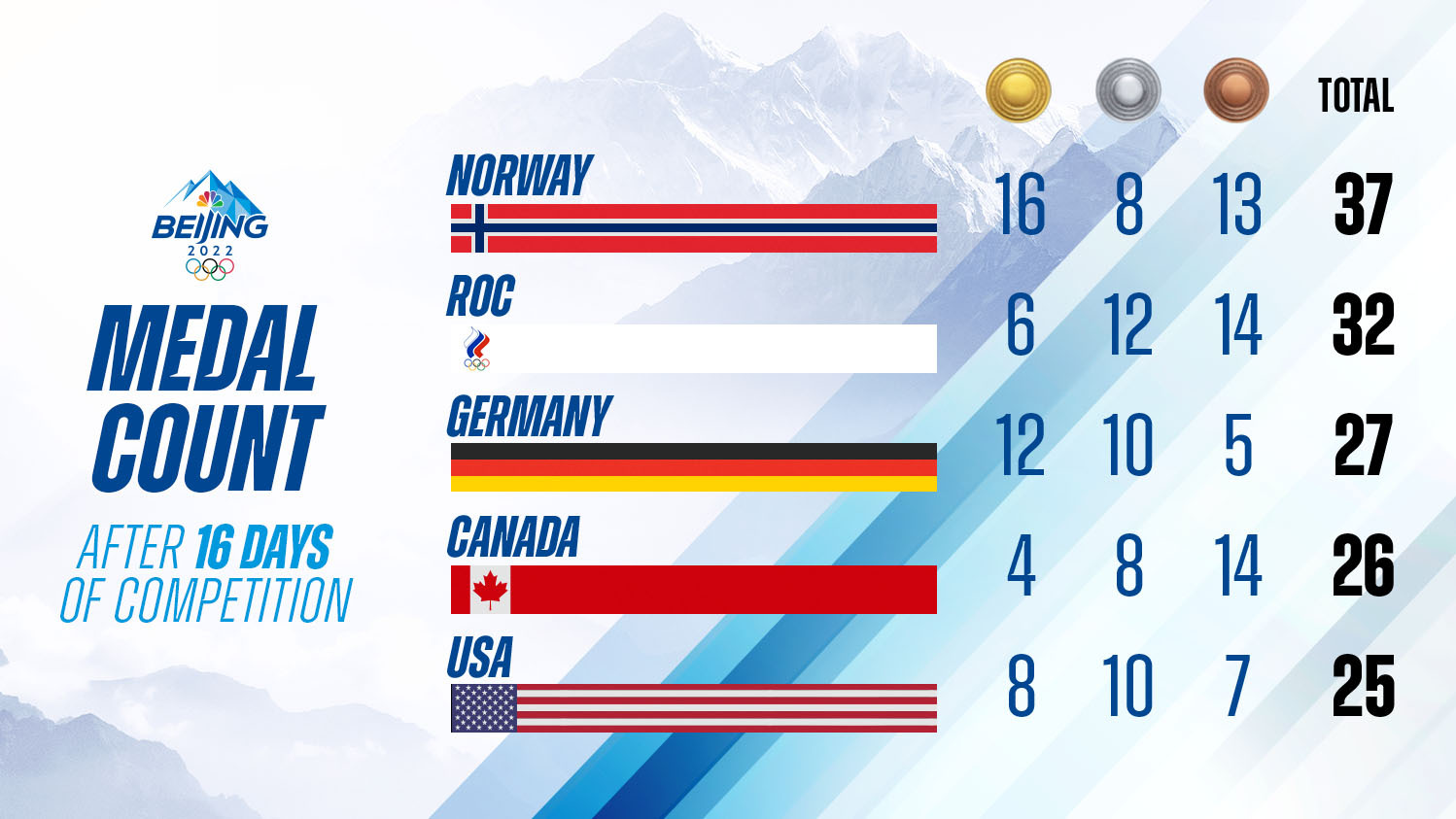
The 2022 Winter Olympics in Beijing concluded with Norway atop the medal table, securing a record-breaking 16 gold medals and 37 total podium finishes. Germany followed with 12 golds, driven by their dominance in sliding sports, while host nation China achieved its best-ever Winter Games performance, finishing third with 9 gold medals.
The XXIV Olympic Winter Games, held from February 4 to February 20, 2022, represented a historic milestone for international winter sports. Despite being staged under stringent "closed-loop" protocols due to the global pandemic, the games delivered world-class performances across 109 events in 15 disciplines. From the icy tracks of Yanqing to the snow-covered slopes of Zhangjiakou, the Beijing 2022 standings reflect a fascinating shift in the geography of winter sports, highlighting both the continued dominance of traditional powerhouses and the emergence of new contenders on the world stage.
The Final Medal Count: Official National Standings
The official ranking of the Olympic Games is primarily determined by the number of gold medals won by a National Olympic Committee (NOC). While total medal counts are often used by media outlets for broader context, the International Olympic Committee (IOC) focuses on the "Golds First" hierarchy.
Norway’s performance was nothing short of historic. By earning 16 gold medals, they surpassed the previous record of 14 (shared by Norway and Germany in 2018 and Canada in 2010) for the most gold medals won at a single Winter Olympics. This achievement was supported by a robust infrastructure for biathlon and cross-country skiing, which accounted for a significant portion of their tally.
The following table provides the full medal standings for the top 20 nations at the 2022 Winter Olympics.
| Rank | National Olympic Committee (NOC) | Gold | Silver | Bronze | Total |
|---|---|---|---|---|---|
| 1 | Norway | 16 | 8 | 13 | 37 |
| 2 | Germany | 12 | 10 | 5 | 27 |
| 3 | China | 9 | 4 | 2 | 15 |
| 4 | United States | 8 | 10 | 7 | 25 |
| 5 | Sweden | 8 | 5 | 5 | 18 |
| 6 | Netherlands | 8 | 5 | 4 | 17 |
| 7 | Austria | 7 | 7 | 4 | 18 |
| 8 | Switzerland | 7 | 2 | 5 | 14 |
| 9 | ROC (Russian Olympic Committee) | 6 | 12 | 14 | 32 |
| 10 | France | 5 | 7 | 2 | 14 |
| 11 | Canada | 4 | 8 | 14 | 26 |
| 12 | Japan | 3 | 6 | 9 | 18 |
| 13 | Italy | 2 | 7 | 8 | 17 |
| 14 | South Korea | 2 | 5 | 2 | 9 |
| 15 | Slovenia | 2 | 3 | 2 | 7 |
| 16 | Finland | 2 | 2 | 4 | 8 |
| 17 | New Zealand | 2 | 1 | 0 | 3 |
| 18 | Australia | 1 | 2 | 1 | 4 |
| 19 | Great Britain | 1 | 1 | 0 | 2 |
| 20 | Hungary | 1 | 0 | 2 | 3 |
Deep Dive into National Performances
Norway: The Winter Sports Juggernaut
Norway’s success is built on a specialized approach to endurance sports. In 2022, the nation focused its resources on biathlon and cross-country skiing. Johannes Thingnes Bø emerged as the most successful athlete of the games, winning four gold medals and one bronze in biathlon. The Norwegian philosophy, which emphasizes community-based sport and long-term athletic development rather than early specialization, continues to pay dividends. Their 37 total medals reinforced their status as the most successful nation in the history of the Winter Olympics.
Germany: Mastery of the Ice
Germany’s second-place finish was almost entirely fueled by their incredible dominance in the sliding center. At the Yanqing National Sliding Centre, Germany swept all four gold medals in luge and won nine out of the ten available medals in the two-man and four-man bobsleigh and skeleton events. This technical superiority is attributed to Germany's advanced engineering in sled design and their world-class training tracks in Altenberg and Königssee.
China: A Breakthrough on Home Soil
China’s third-place finish (9 Gold, 4 Silver, 2 Bronze) marked its most successful Winter Games ever. Previously known as a powerhouse in short-track speed skating, China diversified its medal profile in 2022. The emergence of Eileen Gu (Gu Ailing), who won two golds and a silver in freestyle skiing, catalyzed public interest. China also saw success in aerials, snowboarding, and speed skating, proving that their multi-year "Project 2022" initiative to develop winter sports facilities and talent had reached fruition.
The United States: Consistency and New Blood
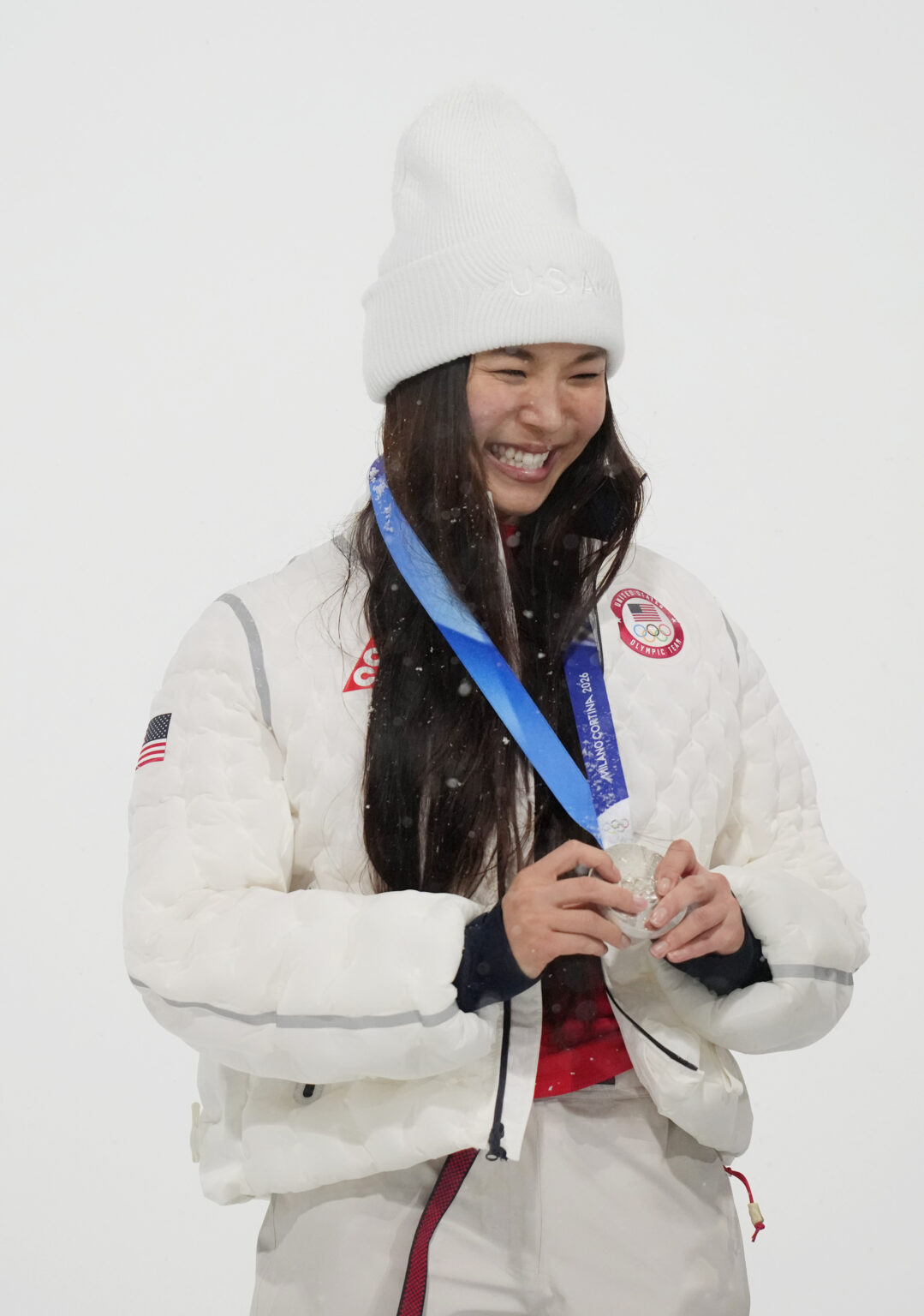
The United States finished fourth with 8 gold medals and 25 total medals. While some traditional stars faced challenges, others stepped into the spotlight. Nathan Chen delivered a masterful performance in men’s figure skating to secure gold, while veteran Chloe Kim defended her title in the snowboard halfpipe. The U.S. also benefited from the introduction of new events, such as the Women’s Monobob, where Kaillie Humphries took the inaugural gold medal.
Individual Highlights and Record-Breaking Moments
The 2022 Winter Olympics were defined as much by individual stories as they were by national standings. Several athletes achieved "legend" status through their performances in Beijing.
Nathan Chen’s Redemption
After a disappointing short program in 2018, American figure skater Nathan Chen arrived in Beijing with immense pressure. His performance to "Rocket Man" in the free skate was a technical marvel, featuring five quadruple jumps. Chen’s gold medal solidified his reputation as the "Quad King" and served as a career-defining moment of redemption.
Eileen Gu: The Face of the Games
Representing the host nation, Eileen Gu became a global icon. At just 18 years old, she competed in three freestyle skiing events: Big Air, Slopestyle, and Halfpipe. She reached the podium in all three, winning gold in Big Air and Halfpipe. Her composure and cross-cultural appeal made her one of the most talked-about figures of the 2022 Olympics.
Irene Schouten’s Triple Gold
The Netherlands maintained its tradition of speed skating excellence, led by Irene Schouten. She won three gold medals (3000m, 5000m, and Mass Start) and a bronze in the Team Pursuit. Her ability to maintain high speeds over long distances set new Olympic records in both the 3000m and 5000m events, cementing her place among the greats of the sport.
The Return of the "Flying Finn" and Others
In cross-country skiing, Iivo Niskanen of Finland dominated the 15km classic, showcasing the traditional strength of Nordic nations. Meanwhile, in the alpine events, Switzerland’s Marco Odermatt lived up to his billing as the world's best giant slalom skier, taking gold in a high-intensity final.
Technological and Structural Highlights of Beijing 2022
The 2022 Games were notable for several firsts and technical achievements that influenced the final standings and the athlete experience.
- Artificial Snow and Climate Challenges: Beijing was the first Winter Olympics to rely almost 100% on artificial snow. This required a massive infrastructure of snow cannons and water reservoirs. While the "man-made" snow provided a consistent and hard surface preferred by elite alpine skiers, it also presented a higher risk of injury due to its icy nature compared to natural powder.
- Sustainability and Venue Reuse: Several venues from the 2008 Summer Olympics were repurposed. The most notable was the "Water Cube," which was transformed into the "Ice Cube" for curling. This approach set a precedent for future Olympic host cities regarding the reduction of "white elephant" stadiums.
- The "Closed Loop" Management: Due to the global health climate, the games were conducted in a strictly controlled bubble. This affected the atmosphere, as spectator capacity was limited, but it ensured the games were completed without significant outbreaks among the 15,000 participants.
- Inaugural Events: Seven new events were added to the program, including Women’s Monobob, Freestyle Skiing Big Air (Men and Women), and mixed team events in Short Track Speed Skating, Ski Jumping, Freestyle Skiing Aerials, and Snowboard Cross. These additions were designed to increase gender parity and appeal to a younger demographic.
Controversies and Medal Reallocations
The 2022 Winter Olympics standings were shadowed by a significant controversy involving the Figure Skating Team Event. A positive test for a prohibited substance by a member of the ROC team led to a multi-year legal battle.
As of 2026, the final standings for that specific event have been resolved following rulings by the Court of Arbitration for Sport (CAS). In early 2024, the ROC was stripped of its gold medal in the team event. The United States was subsequently upgraded to the gold medal, Japan to the silver, and Canada moved into the bronze medal position. This change had a ripple effect on the final "Full Count" standings, reinforcing the importance of the World Anti-Doping Agency (WADA) protocols in maintaining the integrity of the Olympic results.
Looking Back from 2026: The Legacy of 2022
From our vantage point in 2026, the 2022 Winter Olympics are viewed as a turning point for several reasons. It was the last "pandemic-era" mega-event, showcasing the resilience of the Olympic movement. For China, it ignited a massive surge in domestic winter sports participation, with millions of citizens now visiting ski resorts that were built for the games.
For the international sports community, the 2022 results highlighted the need for specialized training. Small nations like New Zealand and Slovenia showed that focused investment in specific disciplines (like snowboarding or ski jumping) can yield gold medals even without a vast winter sports tradition.
Frequently Asked Questions
Who won the most total medals in the 2022 Winter Olympics?
Norway won the most total medals with 37. While the Russian Olympic Committee (ROC) finished with 32 total medals, they were ranked 9th because the official standings prioritize the number of gold medals won. Norway’s 16 golds set an all-time record for a single Winter Games.
Why did China finish so high in the 2022 standings?
China finished 3rd with 9 gold medals, their best performance ever. This was due to significant investment in coaching and facilities leading up to the games. They were particularly successful in freestyle skiing, short track speed skating, and snowboarding, benefiting from both home-field advantage and a new generation of dual-heritage athletes.
What happened to the medals for the figure skating team event?
The medal ceremony for the team event was delayed due to a doping investigation involving the ROC team. Following a 2024 ruling by the Court of Arbitration for Sport (CAS), the ROC was disqualified. The gold medal was officially awarded to the United States, the silver to Japan, and the bronze to Canada.
How many new events were added to the 2022 Winter Olympics?
Seven new events were added: Women’s Monobob, Men’s and Women’s Freestyle Skiing Big Air, and mixed team events in Short Track Speed Skating, Ski Jumping, Snowboard Cross, and Freestyle Skiing Aerials. These events provided more opportunities for athletes and helped increase the total medal count for several nations.
Which athlete won the most gold medals in Beijing?
Johannes Thingnes Bø of Norway was the most successful athlete, winning four gold medals in biathlon (10km sprint, 15km mass start, 4x7.5km relay, and mixed relay). He also earned a bronze in the 20km individual race, bringing his total for the 2022 Games to five medals.
Final Summary of Standings
The 2022 Winter Olympics will be remembered for Norway's numerical dominance, Germany's technical mastery on the ice, and China's emergence as a winter sports power. The final standings provide a snapshot of a global sporting landscape that is increasingly competitive and technologically driven. For those looking to verify specific event results or athlete biographies, the official Olympics website remains the definitive archive for all 109 events and historical data from the Beijing games.