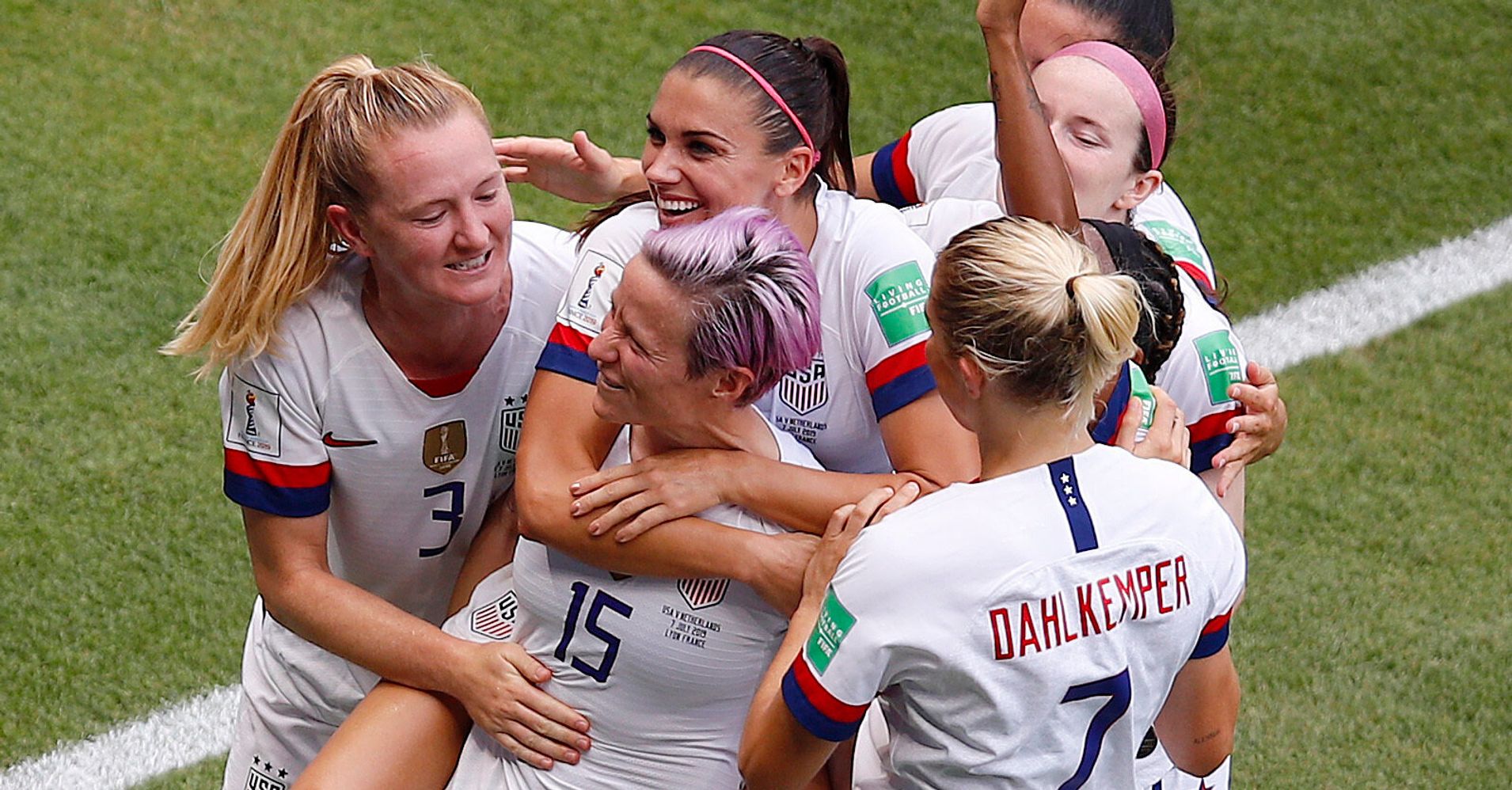
The 2019 FIFA Women’s World Cup, hosted by France, stands as a watershed moment in the history of international sports. From June 7 to July 7, 2019, the tournament captivated a global audience, setting new standards for athletic performance, media coverage, and cultural impact. Whether you are revisiting the tactical genius of the knockout stages or the individual brilliance that defined the month, the 2019 tournament remains a benchmark for excellence in women's football.
The Landscape of the 2019 FIFA Women’s World Cup
The 2019 edition was the eighth installment of the FIFA Women's World Cup. It featured 24 national teams competing across nine host cities in France: Grenoble, Le Havre, Lyon, Montpellier, Nice, Paris, Reims, Rennes, and Valenciennes. The tournament was defined by an increased level of professionalization, with many nations arriving with fully integrated training programs and deeper tactical understanding than in previous cycles.
The tournament began with a dominant performance by the host nation, France, defeating South Korea 4-0 in the opening match at the Parc des Princes. This set the tone for a month characterized by high-scoring encounters and defensive resilience. As the competition progressed, the disparity between established titans and emerging nations began to narrow, leading to some of the most competitive group stages in the history of the competition.
Defining Tactical Trends and Player Performances
One of the most notable aspects of the 2019 tournament was the rapid evolution of tactical play. Coaches emphasized high-pressing strategies and rapid transitions, moving away from more static, long-ball styles. This shift rewarded teams with high levels of physical fitness and technical composure under pressure.
Key performances emerged across the pitch, but the tournament was particularly notable for the emergence of standout goalkeepers and versatile midfielders. Several players redefined their roles, such as the tactical positioning of Megan Rapinoe, who operated with lethal efficiency on the wings, and the defensive wall provided by center-backs like Wendie Renard and Lucy Bronze.
Key Matches and Turning Points
To truly relive the excitement, one must look at the matches that shifted the tournament’s trajectory. The group stages saw heavyweights clash, but it was the Round of 16 that truly captured the world's attention.
- France vs. Brazil: This Round of 16 encounter in Le Havre became an instant classic. It required extra time to decide the winner, with France ultimately triumphing 2-1. The match highlighted the grit required to win deep in the tournament.
- The Quarter-Finals - United States vs. France: Played before a sold-out crowd in Paris, this match was often described as a "de facto final." The United States asserted their control early, weathering a late French surge to secure a 2-1 victory.
- The Final - United States vs. Netherlands: The championship match saw the defending champions, the United States, face off against the reigning European champions. The tactical battle ended in a 2-0 victory for the U.S., powered by a penalty from Megan Rapinoe and a clinical strike from Rose Lavelle.
Comparison of Tournament Stages and Performance Metrics
Understanding the flow of the 2019 World Cup requires looking at the competitive landscape across the tournament's evolution. The following table provides a breakdown of the key elements that defined the success of the knockout stages compared to the group phase.
| Feature | Group Stage | Knockout Stage | Impact |
|---|---|---|---|
| Tactical Approach | Exploratory/Volume-based | High-risk/High-reward | Increased intensity in later rounds |
| Average Goals | 2.8 per match | 2.2 per match | Defensive tightening as stakes rose |
| Key Variable | Squad Rotation | Tactical substitutions | Crucial for late-match shifts |
| Atmosphere | Celebration of diversity | High-pressure rivalry | Increased media scrutiny and demand |
The Legacy of the 2019 Tournament
The 2019 FIFA Women’s World Cup is frequently cited as the catalyst for the current growth in women’s sports investment. The tournament shattered broadcast records, with over 1.12 billion viewers tuning in across all platforms. This massive exposure forced federations and sponsors to re-evaluate the commercial viability of the women's game.
Beyond the numbers, the tournament fostered a cultural conversation regarding equal pay and institutional support for women’s football. The visibility afforded to players like Marta, Sam Kerr, and Vivianne Miedema highlighted their status as global icons, not just national heroes. The 2019 tournament proved that women’s football could command the same emotional investment and analytical rigor as the men’s game.
How to Relive the Highlights Today
If you are looking to revisit these moments in 2026, the best approach is to utilize official FIFA digital archives. FIFA provides access to full match replays and extended highlights through their dedicated streaming platforms.
- Accessing Official Archives: Use the official FIFA+ portal, which hosts a comprehensive library of historical match footage.
- Extended Highlights: For those short on time, the "Extended Highlights" format is the most effective way to catch every goal, near-miss, and tactical change without watching the full 90-minute broadcast.
- Analyzing Tactics: Many sports science outlets and football analysis journals released post-tournament reports in 2019. Searching for "2019 Women's World Cup Technical Report" on educational or sports science databases will provide deeper insight into the tactical evolution witnessed during the event.
Common Questions Regarding the 2019 World Cup
Who was the top goalscorer of the 2019 tournament? Megan Rapinoe, Alex Morgan, and Ellen White all finished with six goals each. Megan Rapinoe claimed the Golden Boot, however, due to the tie-breaking criteria of assists and minutes played.
What was the most attended match? The semi-final between England and the United States, and the final between the United States and the Netherlands, were among the most highly attended, with stadiums filled to their maximum capacities.
How did the use of VAR influence the tournament? The 2019 World Cup was the first to implement the Video Assistant Referee (VAR) system. While controversial at times, particularly regarding penalty area incursions, it provided a layer of officiating accuracy that became a standard expectation for international tournaments thereafter.
Which nations made their debut in 2019? Several nations, including Chile, Jamaica, Scotland, and South Africa, participated in their first-ever FIFA Women’s World Cup, marking a significant expansion of the global footprint of the game.
Why is the 2019 final often considered the turning point for women's football? It served as a demonstration of high-level professional play to a massive, global, non-niche audience. The high quality of the final match specifically helped bridge the gap between "women's sports enthusiasts" and "general sports fans," permanently shifting the sport into the mainstream.
Practical Recommendations for Fans and Researchers
If you are revisiting the 2019 World Cup for research purposes, focus on the contrast between the tactical approaches of the top four teams—the USA, the Netherlands, Sweden, and England. Analyzing their respective routes to the semi-finals reveals how different footballing philosophies (possession-based vs. counter-attacking) fared under the pressures of a knockout tournament.
For the casual fan, simply watching the "Unforgettable Moments" compilations remains the most effective way to appreciate the individual technical excellence, such as the long-range strikes and spectacular saves that characterized the month.
To ensure you are viewing verified history, always prioritize official FIFA media channels over third-party social media clips, which may suffer from poor resolution or biased editing. By utilizing the official archives, you guarantee that you are viewing the events exactly as they unfolded in 2019, ensuring the integrity of the historical record is maintained for your analysis or enjoyment.