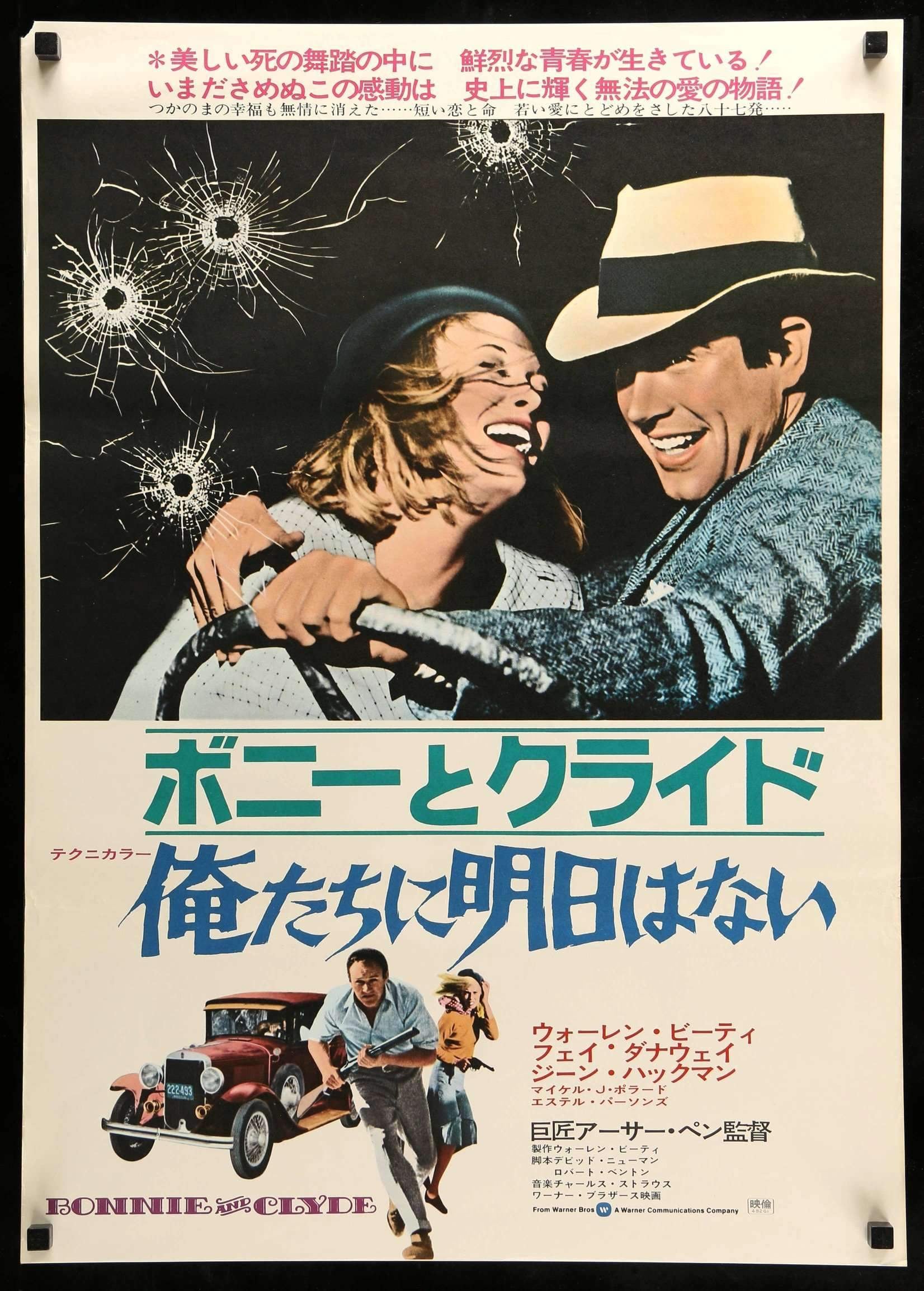
1967 was the pivotal turning point for modern cinema, signaling the end of the traditional Golden Age of Hollywood and the birth of the "New Hollywood" era. Driven by cultural upheaval and the relaxation of censorship, films like The Graduate and Bonnie and Clyde introduced unprecedented realism, moral ambiguity, and stylistic experimentation that continue to influence directors in 2026.
The Cultural Paradigm Shift of 1967
To understand why 1967 is often cited as the most important year in film history, one must look at the collision of social unrest and industry stagnation. By the mid-1960s, the traditional "Big Five" studios were struggling. The lavish, big-budget musicals and historical epics that had defined the 1950s—such as Doctor Dolittle—were failing to connect with a younger, more politically active audience.
The youth of 1967 were preoccupied with the Vietnam War, the Civil Rights Movement, and the burgeoning counterculture. They demanded stories that reflected their disillusionment with the "establishment." This vacuum allowed a new generation of filmmakers, influenced by European art house cinema, to dismantle the rigid structures of the old Studio System. The result was a year of "1967 films" that didn't just entertain; they challenged the viewer's morality and social expectations.
The Death of the Hays Code and the Birth of Adult Cinema
One of the most technical but essential developments of 1967 was the functional collapse of the Motion Picture Production Code, commonly known as the Hays Code. Since the 1930s, this set of industry moral guidelines had prohibited "suggestive" dancing, depictions of "miscegenation," ridicule of the clergy, and excessive violence.
By 1967, the Code was largely ignored or bypassed. This transition period was a precursor to the formal MPAA rating system (G, M, R, X) introduced in late 1968. In 1967, films like The Graduate and Bonnie and Clyde pushed the boundaries of sexual frankness and graphic violence to a degree that would have been censored just twenty-four months earlier. This newfound freedom allowed directors to treat their audiences as adults, capable of handling complex themes of alienation and anti-authoritarianism.
Bonnie and Clyde: The Aesthetics of Violence
If one film embodies the revolution of 1967, it is Arthur Penn’s Bonnie and Clyde. Starring Warren Beatty and Faye Dunaway, the film broke two major taboos simultaneously: it made outlaws sympathetic, and it depicted violence with shocking, visceral realism.
The Influence of the French New Wave
Arthur Penn and editor Dede Allen utilized techniques borrowed from the French New Wave (La Nouvelle Vague). They used jump cuts and shifted tones rapidly between slapstick comedy and tragedy. The ending of the film—a slow-motion "bloody ballet" of gunfire—was a technical marvel for the time. It shattered the old Hollywood trope where characters would simply fall over after being shot. In Bonnie and Clyde, the squibs (small explosive charges used to simulate bullet hits) were used to show blood and tattered clothing, forcing the audience to confront the physical reality of death.
The Anti-Hero Emerges
Bonnie Parker and Clyde Barrow were not portrayed as traditional villains. They were young, stylish, and deeply flawed, reflecting the "us vs. them" mentality of the 1960s youth culture. This shift toward the "anti-hero" became a staple of the New Hollywood era that followed, paving the way for future classics like The Godfather and Taxi Driver.
The Graduate: The Voice of a Displaced Generation
While Bonnie and Clyde captured the violence of the era, Mike Nichols’ The Graduate captured its soul. The story of Benjamin Braddock, a recent college graduate drifting through an aimless summer while being seduced by an older woman (Mrs. Robinson), became a cultural phenomenon.
Sound and Silence
The Graduate was revolutionary in its use of popular music. Rather than a traditional orchestral score, the film utilized the folk-rock songs of Simon & Garfunkel. Tracks like "The Sound of Silence" and "Mrs. Robinson" didn't just play in the background; they functioned as an internal monologue for Benjamin’s feelings of isolation. This pioneered the modern "soundtrack album" as a marketing and narrative tool.
Visual Symbolism
Mike Nichols used innovative cinematography to emphasize Benjamin's feeling of being "underwater." Extensive shots through fish tanks and the use of long lenses to compress space made the suburban landscape of California feel claustrophobic. The famous final shot—where Benjamin and Elaine escape on a bus, only for their triumphant smiles to fade into expressions of uncertainty—remains one of the most analyzed moments in cinematic history. As of 2026, it is still taught as the quintessential example of the "unresolved ending."
Social Commentary: In the Heat of the Night and Guess Who’s Coming to Dinner
1967 was also a landmark year for the representation of race in American cinema, largely centered on the work of Sidney Poitier. Poitier starred in three major hits that year, but In the Heat of the Night and Guess Who’s Coming to Dinner are the most historically significant.
Breaking Racial Barriers
In In the Heat of the Night, Poitier played Virgil Tibbs, a Philadelphia homicide detective who becomes embroiled in a murder investigation in a racist Mississippi town. The film is famous for the "slap heard 'round the world," where Tibbs immediately slaps a wealthy white plantation owner who had struck him. This was a radical departure from the passive roles typically afforded to Black actors in previous decades.
The Dinner Table Debate
Guess Who’s Coming to Dinner tackled the then-controversial topic of interracial marriage. Released only months after the Supreme Court's Loving v. Virginia decision legalized interracial marriage across the United States, the film was a direct response to contemporary legal and social battles. While some critics today view its approach as overly polite or "safe," in 1967, it was a bold statement that used the star power of Spencer Tracy and Katharine Hepburn to force a mainstream audience to confront their prejudices.
Comparison of Major 1967 Films
The diversity of 1967’s output is best understood by looking at the top contenders for the Academy Awards that year.
| Film Title | Director | Primary Genre | Key Innovation / Theme |
|---|---|---|---|
| Bonnie and Clyde | Arthur Penn | Crime / Drama | Graphic realism; French New Wave editing style. |
| The Graduate | Mike Nichols | Comedy / Drama | Use of pop soundtrack; themes of youth alienation. |
| In the Heat of the Night | Norman Jewison | Mystery / Drama | Direct confrontation of systemic racism in the South. |
| Guess Who's Coming to Dinner | Stanley Kramer | Social Drama | Mainstream exploration of interracial marriage. |
| The Dirty Dozen | Robert Aldrich | War / Action | Introduction of the "misfit" ensemble and gritty violence. |
| Cool Hand Luke | Stuart Rosenberg | Prison Drama | The anti-establishment hero as a Christ-figure. |
| Playtime | Jacques Tati | Comedy | High-concept set design and 70mm visual storytelling. |
The Global Perspective: Beyond Hollywood
While Hollywood was undergoing a revolution, international cinema in 1967 was reaching its artistic zenith. European and Asian directors were pushing the medium in directions that Hollywood would eventually copy.
The French Connection
Jean-Pierre Melville released Le Samouraï in 1967, a film that redefined the "cool" of the hitman genre. Alain Delon’s portrayal of a silent, meticulous assassin influenced generations of directors, including Quentin Tarantino and Jim Jarmusch. Meanwhile, Luis Buñuel’s Belle de Jour explored the surreal boundaries of female desire and social repression, winning the Golden Lion at the Venice Film Festival.
European Modernism
In Italy, Michelangelo Antonioni’s influence continued to grow, while in France, Jean-Luc Godard was becoming increasingly radicalized. Godard’s 1967 film Weekend famously ended with the title card "End of Cinema," signaling his belief that traditional narrative structures were no longer sufficient to describe the modern world.
Technical Innovations in 1967
From a technical standpoint, 1967 solidified the dominance of color film over black and white. While black and white was still used for artistic effect (as seen in some sequences of international films), the major studios had almost entirely transitioned to color to compete with the rising popularity of color television.
Furthermore, 1967 saw an increase in the use of:
- Handheld Cameras: Used to create a documentary-style "you are there" feel in films like The Battle of Algiers (which had its wide release around this period).
- Zoom Lenses: Directors began using zooms not just for framing, but as a stylistic choice to create a sense of voyeurism.
- Multi-track Sound Recording: Allowing for more complex soundscapes and the integration of pop music.
The Financial Reality: Why Change Happened
The shift in 1967 was not just motivated by art; it was motivated by the "bottom line." The failure of Doctor Dolittle (1967), which nearly bankrupted 20th Century Fox despite its massive budget and marketing campaign, proved that the old formula was broken. Conversely, The Graduate and Bonnie and Clyde were massive box-office successes produced on relatively modest budgets.
Studio executives realized that to survive, they had to cede creative control to the directors—the "auteurs." This ushered in the era of the director-as-superstar, which lasted until the late 1970s. For the first time, the "art house" sensibility was the "mainstream" sensibility.
Legacy and Impact as Seen from 2026
Standing in 2026, the "1967 film" remains the gold standard for cinematic bravery. Many of the techniques pioneered that year—non-linear storytelling, the use of pop soundtracks, and the gritty, realistic depiction of violence—are now the baseline for modern digital cinema and streaming series.
The year proved that film could be a primary driver of social change. It showed that an audience was willing to embrace "difficult" characters and unhappy endings if the story felt authentic. The 1967 films taught the industry that the "American Dream" was no longer a monolithic concept, but a subject for interrogation.
Common Questions About 1967 Films
Why is 1967 called the year "New Hollywood" began?
The term "New Hollywood" refers to a period from roughly 1967 to 1980 when a new generation of young filmmakers took creative control from the studios. 1967 is the start date because Bonnie and Clyde and The Graduate proved that films breaking traditional rules could be massive commercial hits.
Which 1967 film won the Oscar for Best Picture?
In the Heat of the Night won the Academy Award for Best Picture. It was a significant win because it beat out The Graduate and Bonnie and Clyde, representing a bridge between the traditional "message movie" of old Hollywood and the stylistic experimentation of the new era.
How did 1967 change the way violence was shown on screen?
Before 1967, violence was largely bloodless and stylized due to the Hays Code. Bonnie and Clyde introduced the use of squibs and slow-motion editing to make violence look painful and messy. This forced audiences to consider the consequences of violence rather than seeing it as a harmless plot device.
Were there any major international films in 1967?
Yes, 1967 was a banner year for world cinema. Notable releases include Jacques Tati’s Playtime (France), Luis Buñuel’s Belle de Jour (France/Italy), and Jean-Pierre Melville’s Le Samouraï (France). These films were highly influential on American directors.
Next Steps for Film Enthusiasts
To truly appreciate the seismic shift that occurred in 1967, one should engage in a comparative viewing. Watch a major musical from the early 1960s (like The Sound of Music) and then watch The Graduate. The difference in tone, editing, and thematic depth will clarify why 1967 is considered a revolutionary year. For those interested in the technical side, researching the career of editor Dede Allen or cinematographer Robert Surtees will provide deeper insight into how the visual language of cinema was rebuilt from the ground up during this extraordinary year.