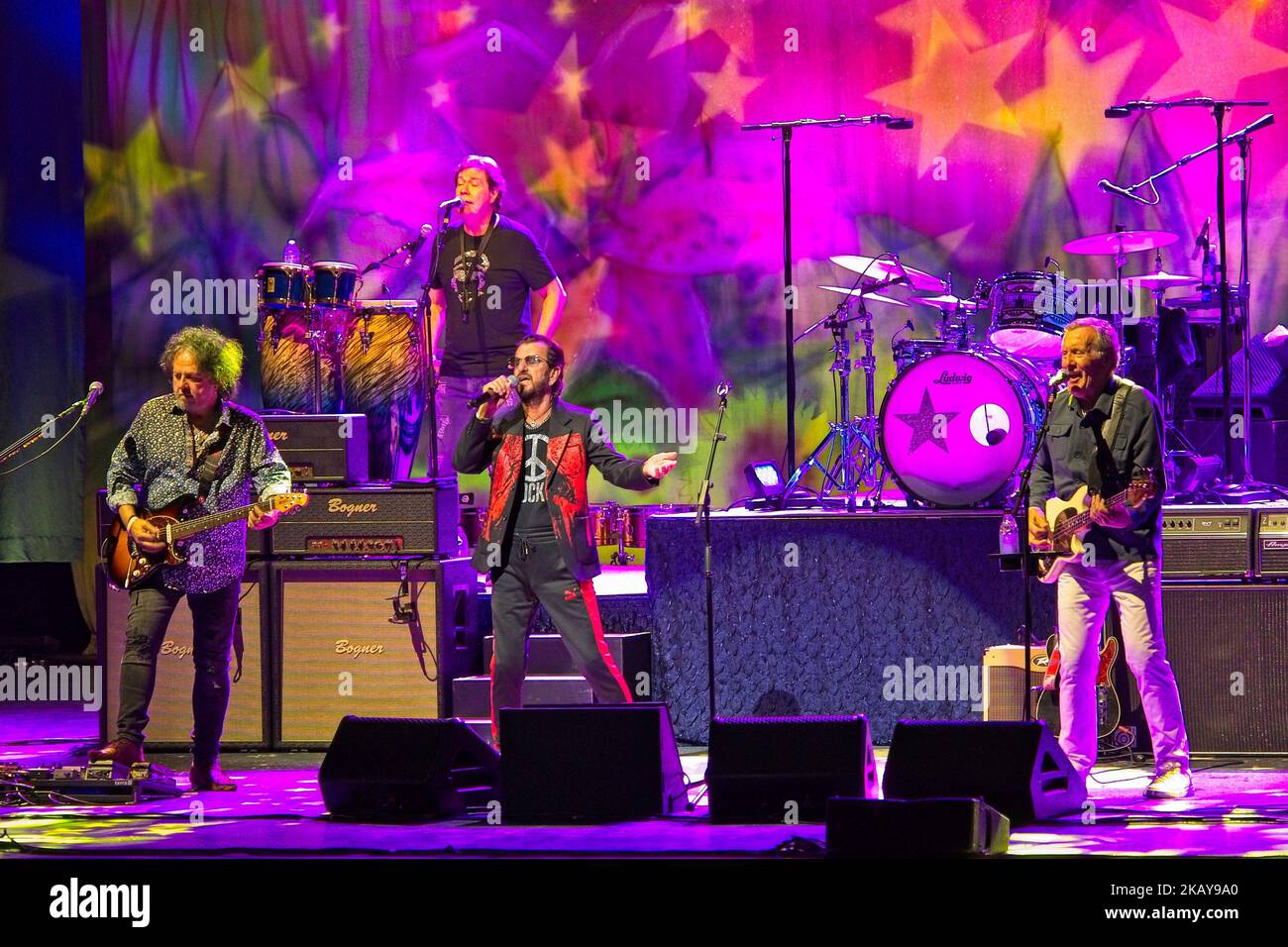
Richard Starkey, known globally by his stage name Ringo Starr, is an iconic English musician, singer, and songwriter who achieved worldwide fame as the drummer for the Beatles. Born in 1940, his journey from a childhood marked by significant health challenges in Liverpool to becoming one of the most recognizable figures in music history defines a career spanning over six decades of innovation, rhythm, and cultural influence.
Early Life and Formative Years in Liverpool
Richard Starkey was born on July 7, 1940, in the Dingle area of Liverpool, Lancashire, England. His childhood was notably difficult, characterized by two separate, life-threatening illnesses. At age six, he suffered from a ruptured appendix, which led to peritonitis and a subsequent coma that lasted several days. A few years later, at age thirteen, he contracted tuberculosis, which necessitated a two-year stay at the Myrtle Street Children's Hospital.
These long periods of convalescence significantly impacted his formal schooling, leaving him with limited literacy skills. However, it was during his recovery in the hospital that he was introduced to music, as the staff encouraged patients to play percussion instruments to improve their coordination. This initial engagement with the drums proved to be the catalyst for his future career. Upon returning to school, he struggled to catch up, leading him to abandon formal education in favor of various labor jobs, including working as a railway messenger and a barman on a ferry, before eventually finding his rhythm as a professional drummer.
The Professional Ascent: Rory Storm and the Hurricanes
Before joining the Beatles, Starkey honed his craft in the vibrant Liverpool music scene of the late 1950s. He joined the Eddie Clayton Skiffle Group and later moved to the Darktown Skiffle Group. His reputation as one of the best drummers in Liverpool grew, and in 1959, he joined the Raving Texans, which soon became Rory Storm and the Hurricanes.
During this period, he officially adopted the stage name "Ringo," a nod to the rings he wore, and "Starr" because it allowed for a drum solo feature known as "Starr Time." The band achieved considerable local success and secured residencies in Hamburg, Germany. It was in the dimly lit clubs of Hamburg—specifically the Kaiserkeller—that Starkey first encountered John Lennon, Paul McCartney, and George Harrison. At the time, the Beatles were using a different drummer, Pete Best. When the Beatles’ producer, George Martin, expressed dissatisfaction with Best's drumming during their first recording sessions in 1962, the band turned to the drummer they had admired most: Richard Starkey.
Becoming the Beatle: Musical Impact and Style
Starkey joined the Beatles in August 1962, just in time for the band's rapid rise to international superstardom. His contribution to the Beatles’ sound was fundamental. While many drummers of the era focused on flashy, technical displays, Starkey’s approach was defined by stability, swing, and an intuitive understanding of song structure. His ability to provide the "perfect" beat for a song—often referred to as "the pocket"—allowed the other three members to focus on their increasingly complex melodic and harmonic arrangements.
His left-handedness on a right-handed drum kit contributed to his unique "stuttering" or "humped" feel, particularly in his fills. He often led with his left hand, which created a distinct sound compared to his contemporaries. His drumming on tracks such as "Ticket to Ride," "Rain," and "Come Together" demonstrates his mastery of subtlety, showing how a drummer can enhance a track by focusing on the song's emotional needs rather than purely technical speed.
Selected Notable Contributions to Beatles Recordings
| Song Title | Notable Drumming Feature | Impact on Track |
|---|---|---|
| Ticket to Ride | Syncopated, heavy beat | Set the tone for mid-sixties rock rhythm |
| Rain | High-energy, complex rolls | Widely considered one of his greatest performances |
| Come Together | Sparse, tom-heavy groove | Provided the essential atmosphere for the song |
| Tomorrow Never Knows | Steady, hypnotic loop | Paved the way for psychedelic rock drumming |
Solo Career and All-Starr Band
Following the dissolution of the Beatles in 1970, Starkey embarked on a prolific solo career. He enjoyed early success with hits like "It Don't Come Easy," "Photograph," and "You're Sixteen," which showcased his knack for accessible, melodic pop-rock. His solo work often featured collaborations with his former bandmates, reinforcing the camaraderie that had defined their earlier years.
In 1989, he founded the All-Starr Band, a touring supergroup that redefined the concept of a concert experience. Unlike a traditional solo tour, the All-Starr Band features a rotating lineup of well-known musicians who each take turns performing their own hits, with Starkey serving as the bandleader and primary vocalist for his own tracks. This format has been highly successful and has allowed him to tour consistently through the 2020s, maintaining a direct connection with his global fanbase.
Artistic Contributions Beyond Percussion
While primarily a drummer, Starkey’s artistic output extends well into other domains. He is a songwriter, most notably contributing "Don't Pass Me By" and "Octopus's Garden" to the Beatles' catalog. He also played an essential role in the band's films, particularly A Hard Day's Night (1964) and Help! (1965), where his natural charisma and comedic timing earned him significant praise.
Furthermore, he has been a dedicated photographer, publishing books that capture behind-the-scenes moments from his time with the Beatles and his life on the road. His interest in visual arts, combined with his long-standing commitment to peace and love—a mantra he has promoted for decades—has solidified his status as an elder statesman of rock and roll.
Recognition and Later Life
By 2026, Richard Starkey remains an active and influential figure in the music industry. He was inducted into the Rock and Roll Hall of Fame twice: once as a member of the Beatles (1988) and once as a solo artist (2015). In 2018, he was appointed a Knight Bachelor by Prince William at Buckingham Palace for his services to music.
His life serves as a testament to resilience. Having overcome early childhood trauma and the immense pressure of the "Beatlemania" phenomenon, he managed to forge a singular path that prioritizes musical service and personal integrity. His continued efforts to promote charitable causes and his enduring engagement with younger generations of musicians underscore his lasting relevance in the 21st century.
Frequently Asked Questions
1. Is Richard Starkey still performing in 2026? Yes. As of 2026, Richard Starkey continues to tour with his All-Starr Band. He maintains a rigorous schedule that includes international dates, continuing his long-standing commitment to live performance and interacting with fans.
2. Why did he change his name to Ringo Starr? He chose the name "Ringo" because of the many rings he wore on his fingers. "Starr" was a variation of his last name that also allowed him to market his drum solos during live performances as "Starr Time," which became a staple of his early sets.
3. What is considered Ringo Starr’s best drumming performance? While musical preference is subjective, many music critics and drummers point to the 1966 track "Rain" as his technical masterpiece. The song features intricate, driving drum fills that were remarkably innovative for the mid-1960s.
4. Did Richard Starkey write many songs for the Beatles? While he was not a primary songwriter like Lennon or McCartney, he did contribute to the songwriting process. He wrote the country-influenced "Don't Pass Me By" and the popular "Octopus's Garden," and he co-wrote several other tracks, including "What Goes On."
5. How did the Beatles’ producer George Martin view his drumming? Initially, during his first session, George Martin was hesitant about Starkey’s abilities, preferring session drummer Andy White. However, once Martin heard Starkey’s playing in a live, studio setting, he became a staunch advocate for his skills, famously praising his ability to play exactly what the song required.
Moving Forward: The Legacy of a Beatle
For those interested in exploring the work of Richard Starkey, the best starting point is to listen to the Beatles' catalog with a specific focus on the percussion. Pay attention to how his drum patterns evolve from the steady, metronomic beats of the early albums to the complex, creative textures of the late 1960s. For his solo work, the album Ringo (1973) is frequently cited by fans and critics as his most cohesive and representative record. As of 2026, his continued dedication to his craft serves as a living record of the evolution of modern rock drumming and popular music.