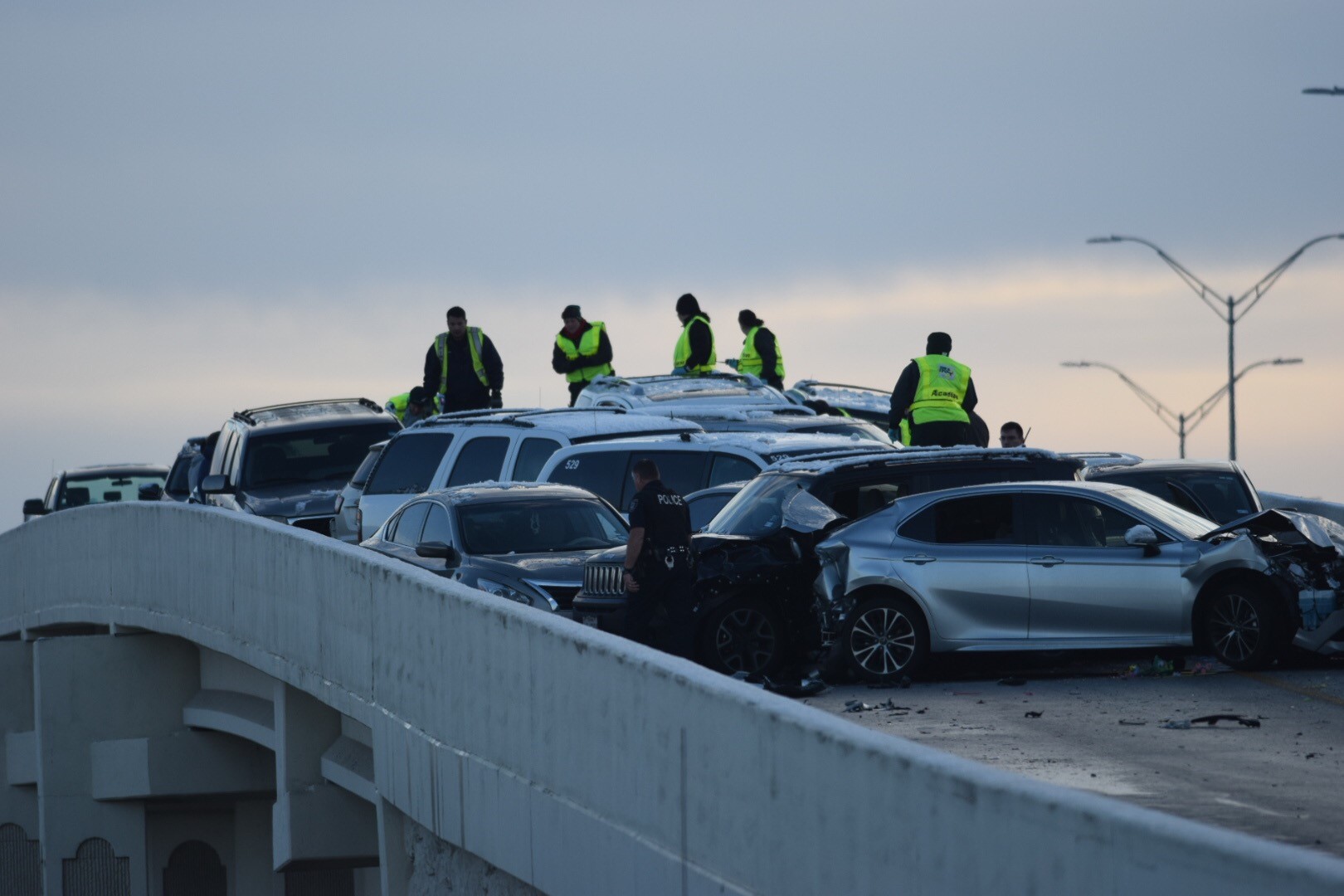
A 30-car pile-up is a catastrophic chain-reaction collision typically triggered by a combination of high-speed travel, limited visibility, and compromised road traction. Survival and recovery in these massive events depend on immediate situational awareness, understanding the mechanics of secondary impacts, and navigating the complex legal and insurance processes that follow such large-scale roadway disasters.
Multi-vehicle collisions, often referred to as "pile-ups" or "chain-reaction crashes," represent some of the most complex challenges for drivers and first responders alike. When the vehicle count reaches 30 or more, the incident shifts from a standard traffic accident to a mass-casualty event requiring regional emergency coordination. As of 2026, despite advancements in vehicle-to-vehicle (V2V) communication and automated braking systems, these events continue to occur, often with devastating results.
The Primary Causes of Massive Multi-Vehicle Collisions
A 30-car pile-up rarely has a single "cause." Instead, it is usually the result of a "perfect storm" of environmental factors and human behaviors that strip drivers of their ability to react effectively.
Environmental Triggers and Visibility
Visibility is the single most significant factor in pile-ups involving dozens of vehicles. In many documented cases, such as those on major interstates, sudden weather shifts create "blind" conditions.
- Superfog and Sudden Fog: This occurs when smoke from nearby fires mixes with cool, moist air, dropping visibility to near zero in seconds. Drivers entering a fog bank at 70 mph have virtually no time to react when they encounter a stationary vehicle.
- Whiteout Conditions: In northern climates, "lake effect" snow or sudden squalls can create whiteout conditions. The loss of a horizon line causes spatial disorientation, leading drivers to maintain speeds that are unsafe for the conditions.
- Black Ice: This transparent coating of ice often forms on bridges and overpasses before it appears on the ground. A single vehicle spinning out on black ice can create a blockade that 29 subsequent vehicles cannot avoid due to a total loss of friction.
Human Psychology and the "Herd" Effect
Psychology plays a massive role in how these accidents scale. Drivers often engage in "platooning," where they follow the lead of the vehicle in front of them rather than assessing the environment independently.
- The Illusion of Safety in Numbers: Drivers often feel that if everyone else is maintaining a certain speed in heavy rain or light fog, it must be safe. This collective overconfidence leads to insufficient following distances.
- Delayed Reaction Times: The average human reaction time is approximately 1.5 seconds. At highway speeds, a vehicle travels over 100 feet in that time. In a 30-car pile-up, the cumulative delay means the 10th or 15th driver in the chain has almost no chance of stopping if they are following too closely.
Infrastructure and Mechanical Factors
Road design can contribute to the severity of a pile-up. Bottlenecks, sharp curves immediately following high-speed straightaways, and lack of emergency shoulders can prevent drivers from finding "escape routes" when the road ahead becomes blocked.
The Immediate Aftermath: What to Expect at the Scene
The moments following the final impact of a 30-car pile-up are chaotic and dangerous. Understanding the logistics of the aftermath can help survivors manage their expectations and stay safe.
The Risk of Secondary Collisions
The initial "pile-up" may last for several minutes. Even after your vehicle has stopped, the danger is not over. Other vehicles, particularly heavy semi-trucks, may continue to slam into the back of the wreckage. The sound of a pile-up is often described as a "continuous thunder" as more vehicles add to the mass.
Emergency Response and Triage
When emergency services arrive at a scene involving 30+ vehicles, they implement Triage Protocols. This means responders will not necessarily help the first person they see. They must quickly categorize victims based on the severity of their injuries:
- Immediate (Red): Life-threatening injuries requiring instant intervention.
- Delayed (Yellow): Serious but not immediately life-threatening.
- Minimal (Green): The "walking wounded" who can wait for treatment.
- Expectant (Black): Those who are deceased or whose injuries are so severe they are unlikely to survive even with care.
The Complexity of Scene Investigation
Clearing 30 vehicles takes hours, if not days. Law enforcement must document the position of every vehicle to determine the sequence of events. This involves drone photography, 3D laser scanning, and mechanical inspections. For survivors, this means being prepared to remain at the scene or a designated staging area for an extended duration.
Critical Safety Tips: During and After the Crash
If you find yourself entering a situation where a pile-up is occurring, your split-second decisions will determine your safety.
While the Crash is Occurring
- Avoid "Panic Braking": If you have space, pump your brakes (if you don't have ABS) or apply steady pressure (with ABS) while looking for an "out." Steer toward the shoulder or a grassy median rather than the rear of a semi-truck.
- Look for Soft Targets: If a collision is inevitable, aim for the "softest" object. A snowbank or a small car is preferable to a concrete barrier or a heavy freight vehicle.
- The Stay-or-Go Decision: This is the most debated safety tip.
- Stay in the car if you are in the middle of the roadway and traffic is still flying in. Your car’s frame and airbags are your best protection against being struck as a pedestrian.
- Exit the car only if you can safely reach a spot behind a guardrail or up an embankment, and only if there is a clear break in oncoming traffic. Never stand between or behind stopped vehicles.
Immediately After the Vehicles Stop
- Check for Fire: If you smell smoke or see flames, you must evacuate the vehicle immediately, regardless of traffic.
- Signal Your Presence: Turn on your hazard lights. If it is dark, use a flashlight or phone light to signal responders, but avoid blinding oncoming drivers.
- Stay Low and Move Away: If you exit the vehicle, move as far away from the road as possible. In many pile-ups, the greatest loss of life occurs when people stand near their cars and are struck by subsequent vehicles.
Comparison of Risk Factors in Multi-Vehicle Accidents
The following table outlines how different variables affect the scale and severity of a pile-up.
| Factor | Low-Risk Scenario | High-Risk Scenario (Pile-Up Trigger) | Impact on Severity |
|---|---|---|---|
| Visibility | > 1 Mile | < 100 Feet (Fog/Smoke) | Prevents early braking; increases impact speed. |
| Road Surface | Dry Asphalt | Black Ice or Hydroplaning | Eliminates steering control; increases slide distance. |
| Traffic Mix | Mostly Passenger Cars | High Percentage of Semi-Trucks | Increases "crush" force and multi-lane blockage. |
| Average Speed | 45-55 mph | 70+ mph | Exponentially increases kinetic energy and stopping distance. |
| Time of Day | Daylight | Night or Twilight | Reduces depth perception and peripheral awareness. |
Navigating the Legal and Insurance Nightmare
Recovering financially from a 30-car pile-up is significantly more difficult than a standard two-vehicle accident.
Determining Liability
In a chain-reaction crash, liability is rarely assigned to just one person. Determining who hit whom first is a forensic challenge.
- Comparative Negligence: Most jurisdictions use comparative negligence rules. For example, if you were speeding but the person who hit you was distracted, the fault may be split 70/30.
- The "First Dominos": Typically, the first 2-3 drivers who lost control are scrutinized most heavily, but every driver who failed to maintain a safe following distance may carry some percentage of liability.
Insurance Policy Limits
In a 30-car accident, the total property damage and medical bills can easily reach tens of millions of dollars. The driver at "fault" likely has policy limits (e.g., $100,000) that are nowhere near enough to cover 29 other cars. This is where Uninsured/Underinsured Motorist (UM/UIM) Coverage becomes vital. Without it, you may be left relying on your own collision coverage and health insurance to cover the gap.
Long-Term Recovery and Psychological Impact
The "aftermath" of a pile-up isn't just about car repairs; it's about mental health. Many survivors of mass collisions suffer from Post-Traumatic Stress Disorder (PTSD) or a phobia of driving (amaxophobia).
- Symptoms to Watch For: Flashbacks of the sound of impact, extreme anxiety when driving near large trucks, or avoidance of highways.
- Seeking Help: It is common for insurance settlements to include provisions for psychological counseling. It is essential to document these mental health struggles just as clearly as physical injuries.
Expert Guidance for Future Prevention
While you cannot control the 29 other drivers on the road, you can significantly reduce your odds of being part of a pile-up by following these 2026 safety standards:
- The Six-Second Rule: In low visibility or wet weather, increase your following distance to at least six seconds. This gives you the physical space needed to react to a crash happening ahead of you.
- Monitor Weather Radio/Apps: Use real-time alerts that specifically mention "variable speed limits" or "fog advisories."
- Tire Maintenance: Ensure your tires have at least 4/32" of tread depth. In a pile-up scenario, the difference of five feet in stopping distance is the difference between a close call and a total loss.
Disclaimer: The information provided in this article is for educational and safety purposes only. It does not constitute legal or medical advice. Procedures and laws regarding traffic accidents vary by jurisdiction. Always consult with a qualified legal professional or healthcare provider following an accident.
Frequently Asked Questions
Who is at fault in a 30-car pile-up?
Fault is rarely assigned to a single driver. It is usually distributed among multiple parties based on forensic evidence. Investigators look for "initial triggers" (e.g., a car that spun out due to speeding) and subsequent contributors (drivers who were tailgating or distracted). In many cases, insurance companies reach a complex settlement agreement to share the costs.
Is it safer to stay in the car or get out during a pile-up?
There is no "one size fits all" answer, but the general rule is: if you can safely reach a spot far away from the roadway (like behind a sturdy barrier or up a hill), get out. If you are on a bridge or in a lane with constant traffic still hitting the pile, your car’s safety cage is likely your best protection.
Will my insurance go up if I’m involved in a mass pile-up?
This depends on whether you are found to be partially at fault. If the investigation determines you were maintaining a safe distance and were simply pushed into others, your "not-at-fault" status may protect your premiums. However, if you are found even 10% liable, your rates may increase.
What should I do if I see a pile-up happening ahead?
Immediately take your foot off the gas—do not slam the brakes, which can cause you to skid. Turn on your hazard lights to warn those behind you. Look for an escape route toward the shoulder or median. If you must stop, try to stop well short of the wreckage to give yourself a buffer.
How do first responders handle such a large number of vehicles?
They use a Unified Command system, often involving multiple fire departments, police agencies, and EMS providers. They establish a "hot zone" (the crash site), a "warm zone" (triage and decontamination), and a "cold zone" (staging and transport).