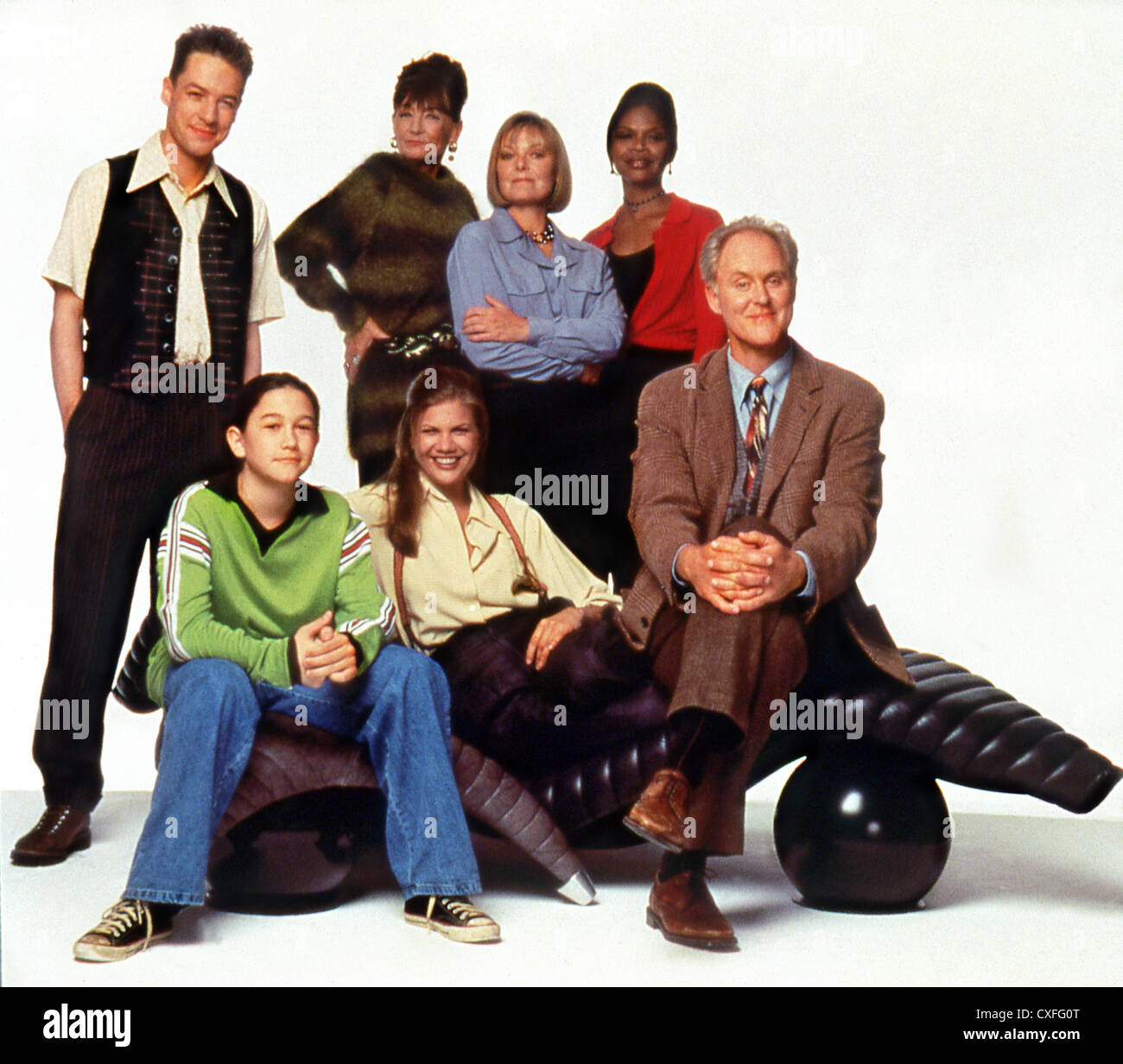
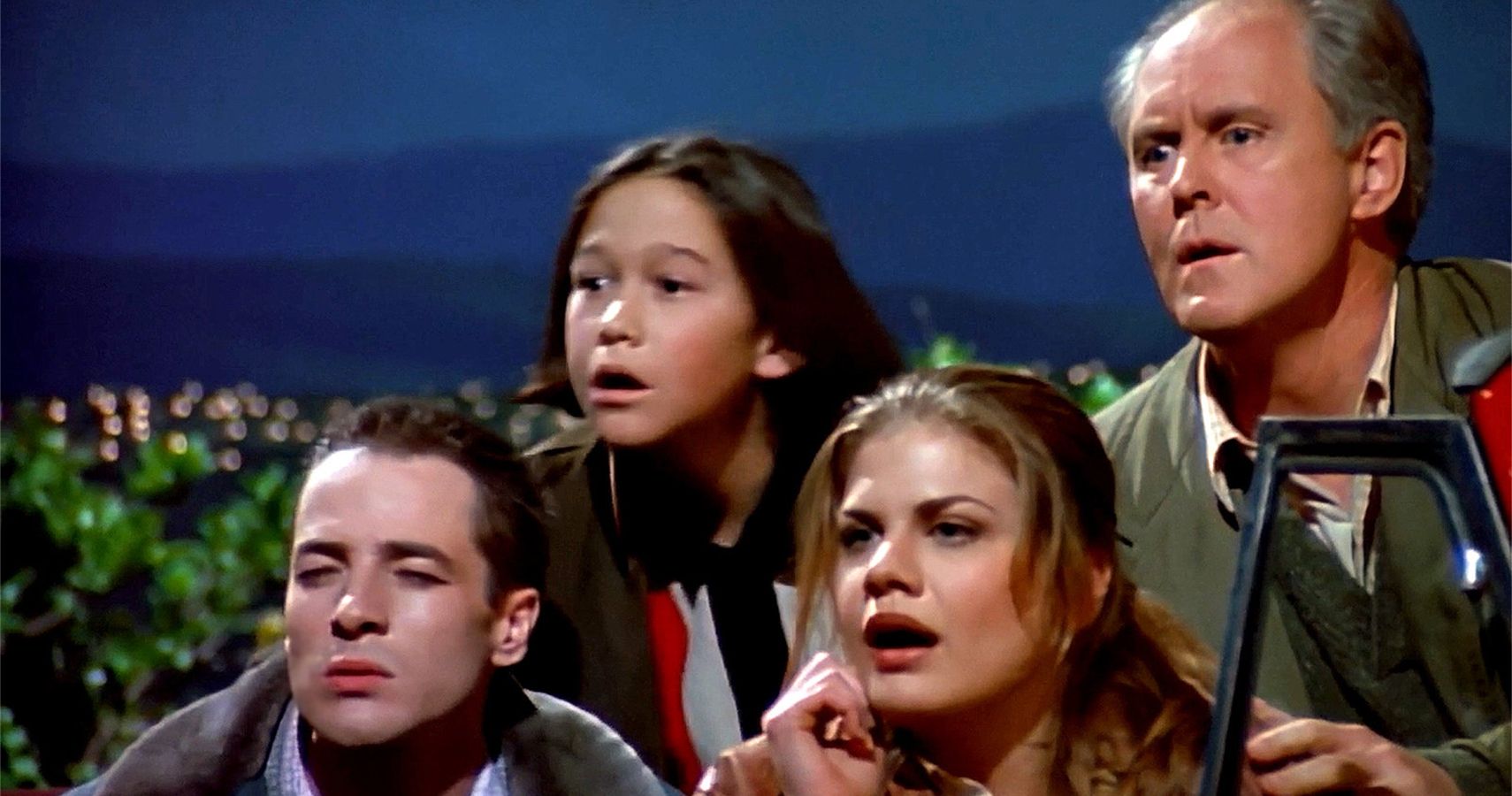
3rd Rock from the Sun stands as a defining multi-camera sitcom of the late 20th century, blending high-concept science fiction with traditional domestic farce. Across six distinct seasons, the series followed a team of extraterrestrial researchers posing as a normal human family in Ohio, anchored by an exceptional ensemble cast led by John Lithgow. Beyond its immediate ratings success and Emmy accolades, the show permanently influenced television comedy through its rapid-fire physical humor, satirical observations of human culture, and a unique structural balance between episodic sitcom tropes and sustained serialized character growth.
The Premise and Creative Origins
Created by Bonnie Turner and Terry Turner, 3rd Rock from the Sun premiered on the National Broadcasting Company (NBC) on January 9, 1996. The foundational concept positioned four inhabitants of an advanced alien civilization on a reconnaissance mission to Earth, designated as the third rock from the sun. To blend in seamlessly with the local population of Rutherford, Ohio, the aliens assumed human form and established a terrestrial household.
The humor stemmed directly from the friction between advanced extraterrestrial detachment and mundane human behavior. The characters viewed daily social constructs, biological necessities, and emotional nuances through an anthropological lens. This setup allowed the writers to critique contemporary American culture, gender roles, and societal institutions without relying on standard topical jokes. Instead, the comedy arose from structural misunderstandings. For instance, sleeping, eating, aging, and falling in love were treated by the characters not as normal lived experiences, but as bizarre, mildly repulsive physical trials they were forced to endure for the sake of the mission.
The production style relied heavily on multi-camera studio staging, filmed before a live audience, which gave the performances a theatrical energy. This format amplified the physical comedy demands placed upon the performers, who frequently engaged in exaggerated sight gags, prop comedy, and theatrical blocking. The show's distinctive tone was further defined by its brisk pacing, sharp dialogue, and willingness to disrupt the fourth wall or execute surreal, high-concept narrative detours.
The Core Cast and Character Dynamics
The success of 3rd Rock from the Sun depended on the chemistry and precise execution of its ensemble cast. Each member portrayed an alien entity assigned a specific hierarchical role within the crew, which translated into domestic family dynamics on Earth.
| Character Name | Actor | Extraterrestrial Role & Duty |
|---|---|---|
| Dick Solomon | John Lithgow | High Commander / Professor |
| Sally Solomon | Kristen Johnston | Information Officer / Security |
| Tommy Solomon | Joseph Gordon-Levitt | Information Specialist / Teenager |
| Harry Solomon | Wayne Knight | Communications Officer / Family |
Dick Solomon (John Lithgow)
As the High Commander of the expedition, Dick Solomon posed as a professor of physics at the fictional Pendelton State University. John Lithgow approached the role with unrestrained theatricality, balancing towering intellectual arrogance with profound emotional immaturity. Dick was obsessed with his status, academic authority, and mastering the complex emotions of love and jealousy, frequently reacting to minor inconveniences with operatic despair or explosive joy. Lithgow’s performance earned him three Primetime Emmy Awards for Outstanding Lead Actor in a Comedy Series during the show's run.
Sally Solomon (Kristen Johnston)
Sally served as the expedition's security officer and military expert, though she was forced to inhabit the body of an attractive human woman. Kristen Johnston utilized her physical height and comedic timing to subvert traditional sitcom depictions of femininity. Sally’s narrative arcs frequently focused on her turbulent exploration of womanhood, dating, and societal expectations regarding gender. Johnston won two Primetime Emmy Awards for Outstanding Supporting Actress in a Comedy Series for her work on the show.
Tommy Solomon (Joseph Gordon-Levitt)
Despite being the oldest and most experienced member of the expedition intellectually, Tommy was assigned the body of a teenage boy, forcing him to endure high school, acne, and adolescent social hierarchies. Joseph Gordon-Levitt navigated the unique challenge of playing an ancient entity trapped in a pubescent body with deadpan exhaustion and sharp comedic timing. As the series progressed, Tommy’s storylines increasingly reflected standard adolescent rebellion, creating rich comedic irony given his true age and rank.
Harry Solomon (Wayne Knight)
Harry acted as the family's sluggish communications link to their home planet, though he was often depicted as the least intellectually gifted member of the crew. Wayne Knight brought an endearing, erratic energy to Harry, who frequently absorbed bizarre human subcultures, television broadcasts, and conspiracy theories with absolute conviction. Harry’s unpredictable employment history and unearned confidence provided a reliable source of surreal secondary humor.
The Terrestrial Supporting Cast
The ensemble was rounded out by key human characters who anchored the sitcom's domestic reality. Jane Curtin starred as Dr. Mary Albright, Dick Solomon’s academic rival, department chair, and primary romantic interest. Curtin’s deadpan, world-weary delivery provided a necessary anchor to Lithgow’s theatricality. Simbi Khali portrayed Nina Campbell, Dick’s sharp-tongued and unimpressed office assistant, while Elmarie Wendel played Mrs. Mamie Dubcek, the Solomons' eccentric landlord who frequently observed their bizarre behavior with casual indifference. John Cleese also made memorable recurring appearances as Dr. Liam Neesam, a rival alien from the same home planet.
Seasonal Progression and Narrative Evolution
Over its six-season run comprising 139 episodes, 3rd Rock from the Sun evolved from a joke-driven premise into a more serialized narrative. The writers balanced standalone episodes featuring academic satire or domestic mishaps with long-term arcs tracking the aliens' growing attachment to Earth.
Early Seasons and Cultural Translation
The first and second seasons focused heavily on establishing the rules of the universe. The humor relied on the basic mechanics of cultural translation: learning how to drive, experiencing a cold for the first time, or understanding the concept of a job interview. Dick and Mary’s academic romance developed slowly, serving as the central emotional anchor. During this period, the show established its signature visual language, which included frequent cutaways to the aliens' home planet or brief transmissions back to their unnamed leader, the "Big Giant Head" (played by William Shatner in recurring guest appearances).
Mid-Series Expansion and Genre Experimentation
By seasons three and four, the writers expanded the scope of the episodes, introducing high-concept stylistic experiments. The show utilized multi-part episodes, holiday specials, and conceptual narrative frameworks. For example, episodes frequently explored alternate realities, musical numbers, and film noir pastiches. The characters began to experience genuine psychological assimilation; they stopped viewing Earth merely as a temporary post and started developing genuine human vulnerabilities, fears, and regional loyalties to Rutherford, Ohio.
Final Seasons and the Conclusion
The fifth and sixth seasons addressed the inevitable consequences of the expedition: the temporary nature of their mission and the threat of recall. The narrative stakes shifted as the characters realized that returning to their home planet would require erasing their memories of Earth and abandoning the human relationships they had cultivated.
The series concluded in May 2001 with a two-part series finale titled "The Dick Solomon Story." In the conclusion, the mission officially ended, and the aliens prepared to depart. Rather than executing a standard sentimental farewell, the finale retained the show's signature irreverent tone while providing a definitive resolution to the emotional attachments the characters had formed. Dick, Sally, Tommy, and Harry faced the choice between returning to their detached extraterrestrial existence or retaining their humanity, bringing thematic closure to the six-year narrative arc.
Critical Reception and Industry Impact
3rd Rock from the Sun was a critical darling during its broadcast run, particularly noted for its willingness to embrace theatrical absurdity within a rigid network television format. The series received substantial recognition from the Academy of Television Arts & Sciences, accumulating numerous Primetime Emmy nominations and wins. John Lithgow’s and Kristen Johnston’s consecutive acting victories highlighted the strength of the physical comedy performances.
From an industry perspective, the series proved that high-concept science fiction could successfully merge with the traditional multi-camera domestic sitcom format. While shows like Mork & Mindy had previously explored the "alien among us" trope, 3rd Rock from the Sun updated the concept for the late 1990s by introducing a collective family unit rather than a solitary visitor, allowing for complex interpersonal dynamics among the disguised extraterrestrials.
Furthermore, the series served as an early showcase for the versatility of its cast. Joseph Gordon-Levitt transitioned successfully from child television actor to a prominent adult film career following the series' conclusion. John Lithgow solidified his reputation as a master of both dramatic stage work and broad comedic character acting, while Kristen Johnston and Wayne Knight cemented their status as foundational figures in modern television comedy ensemble work.
Lasting Influence on Television Comedy
The legacy of 3rd Rock from the Sun persists through its influence on subsequent television comedies that utilize high-concept premises to examine human sociology. The show demonstrated several enduring principles for serialized sitcom writing:
- Comedic Anthropological Satire: By filtering mundane human rituals through an external perspective, the series provided a template for using naive, alien, or artificial intelligence protagonists to critique modern social norms—a technique later utilized by comedies like The Good Place or Resident Alien.
- Physical Commitment in Multi-Camera Formats: The show revived and pushed the boundaries of physical slapstick within a soundstage environment, proving that broad theatrical movement could coexist with sharp, verbally sophisticated dialogue.
- Ensemble Hierarchy Maintenance: The strict division of labor and authority within the Solomon family established a durable dynamic for workplace and domestic ensembles, where ideological disagreements mask deep functional interdependence.
Despite shifts in television production toward single-camera setups and streaming distribution models in the decades following its conclusion, 3rd Rock from the Sun remains a benchmark for execution in network television comedy. Its balance of intellectual wordplay, absurd physical humor, and eventual emotional resonance ensures its status as a distinctive artifact of 1990s television culture.
Frequently Asked Questions
How many seasons of 3rd Rock from the Sun were produced?
The series ran for six seasons, comprising a total of 139 episodes broadcast on NBC between January 1996 and May 2001. The production maintained a consistent schedule, delivering a full slate of episodes each television season before concluding naturally with its two-part series finale.
Who played the leader of the alien expedition?
John Lithgow portrayed Dick Solomon, the High Commander of the expedition who posed as a physics professor at Pendelton State University. While Dick served as the operational leader on Earth, the characters occasionally received transmissions from their home planet's supreme leader, known as the "Big Giant Head," played by William Shatner.
Did the main characters ever return to their home planet?
Yes, the series concluded in the two-part series finale titled "The Dick Solomon Story," in which the mission officially ended. The characters were forced to confront the reality of returning to their home planet and losing their human identities, forming the emotional core of the final episodes.
What awards did the cast win for the series?
The cast received significant critical acclaim, most notably through Primetime Emmy Awards. John Lithgow won three awards for Outstanding Lead Actor in a Comedy Series (1996, 1997, 1999), and Kristen Johnston won two awards for Outstanding Supporting Actress in a Comedy Series (1997, 1999).
Where was Rutherford, Ohio located in the show?
Rutherford, Ohio was a fictional town created for the series to serve as a typical, unassuming American Midwestern setting. This location provided an effective backdrop of mundane suburban and academic environments to contrast with the aliens' bizarre behaviors and cosmic origins.
Conclusion and Recommendations
For viewers seeking to revisit or discover 3rd Rock from the Sun, the series is widely accessible across various digital streaming platforms and physical media releases. To fully appreciate the trajectory of the show, viewers should examine the early episodes of seasons one and two to observe the initial establishment of the premise, followed by the mid-series episodes where the writers expanded into high-concept stylistic experiments. Paying close attention to the physical comedy choreography of John Lithgow and Kristen Johnston reveals the technical precision that sustained the multi-camera format across its six-year run.