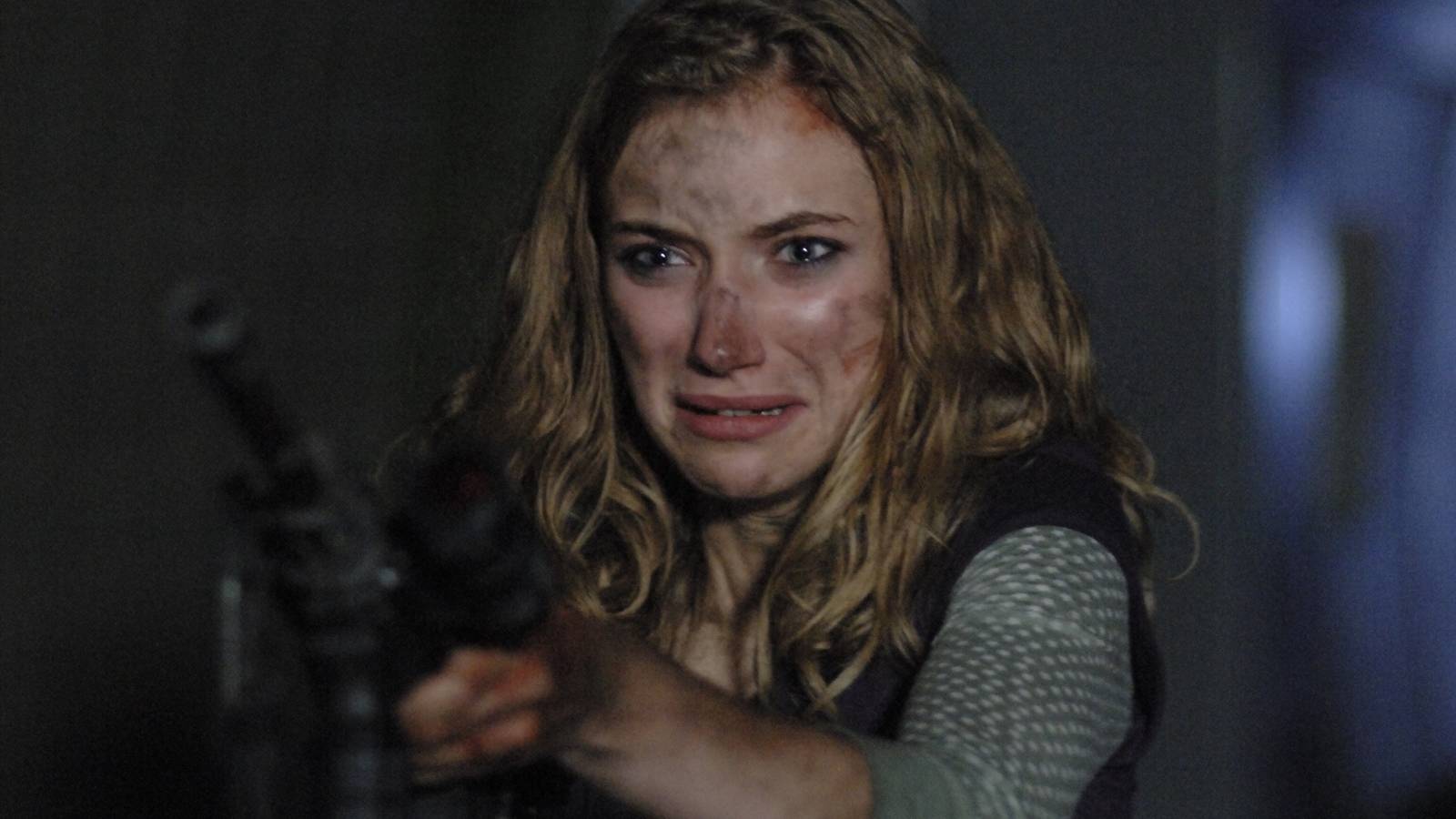
As of 2026, the 28 Days Later franchise has evolved from a cult-classic British horror film into a sprawling cinematic trilogy that redefined the "infected" subgenre. The series currently consists of three primary feature films: the original 28 Days Later (2002), its first sequel 28 Weeks Later (2007), and the long-awaited revival 28 Years Later (2025), which has since birthed a new era of expansion.
The franchise is celebrated for its grounded, terrifyingly plausible take on societal collapse triggered by the "Rage Virus." Unlike traditional zombie cinema involving the supernatural reanimation of the dead, this series focuses on a viral infection that turns the living into hyper-aggressive, mindless predators. This guide explores the development, narrative arcs, and cultural significance of each entry in this landmark horror saga.
The Foundation: 28 Days Later (2002)
To understand the sequels, one must understand the radical departure the original film took from established horror tropes. Directed by Danny Boyle and written by Alex Garland, 28 Days Later was filmed on low-resolution Canon XL-1 digital cameras, giving it a gritty, news-like aesthetic that felt disturbingly real at the time of its release.
The Plot and the Rage Virus
The story begins with animal rights activists releasing a chimpanzee infected with "Rage" from a Cambridge research lab. Twenty-eight days later, Jim (Cillian Murphy), a bicycle courier, wakes up from a coma in a deserted London hospital. The film follows Jim and a small group of survivors—Selena (Naomie Harris), Frank (Brendan Gleeson), and Hannah (Megan Burns)—as they navigate a decimated United Kingdom.
The core innovation of this film was the "fast zombie." By making the antagonists living humans driven by pure adrenaline and fury, Boyle and Garland injected a sense of kinetic terror that slower-paced films lacked. The film concludes with the group's arrival at a military blockade, exploring the dark realization that the uninfected military, led by Major Henry West (Christopher Eccleston), poses as much of a threat as the infected themselves.
Cultural Significance
28 Days Later is credited with revitalizing the horror genre in the early 2000s. It moved away from the "slasher" trends of the 90s, focusing instead on post-9/11 anxieties, social isolation, and the breakdown of civil order. Its influence can be seen in everything from The Walking Dead to World War Z.
The Immediate Aftermath: 28 Weeks Later (2007)
Five years after the original, director Juan Carlos Fresnadillo took the helm for 28 Weeks Later. While Boyle and Garland remained as executive producers, the sequel shifted the focus from intimate survival to a larger-scale military and political drama.
Restoring Order and the Second Outbreak
The sequel is set during the efforts of the U.S. Army to repopulate a "Green Zone" in District 1 (the Isle of Dogs) in London. The Rage Virus is believed to have died out due to the starvation of the infected. However, the story centers on a carrier—Alice (Catherine McCormack)—who is biologically immune but still capable of transmitting the virus.
When her husband, Don (Robert Carlyle), makes contact with her, he unknowingly triggers a second, even more catastrophic outbreak within the confined safe zone. The film is famous for its visceral opening sequence and its brutal depiction of "Code Red" protocols, where the military is ordered to execute both the infected and the healthy to contain the spread.
Critical and Technical Shift
Unlike the digital grit of the first film, 28 Weeks Later was shot on 35mm film, offering a sharper, more traditional cinematic look while maintaining the "shaky-cam" intensity for action sequences. It expanded the lore by introducing the concept of asymptomatic carriers and the international implications of the virus, ending on a cliffhanger showing the infection reaching mainland Europe via Paris.
The Modern Revival: 28 Years Later (2025/2026)
After nearly two decades of rumors and development hell, the franchise officially returned with 28 Years Later. This film marked the monumental reunion of Danny Boyle as director and Alex Garland as writer, alongside the return of Cillian Murphy as Jim.
Recontextualizing the Apocalypse
Set nearly three decades after the initial outbreak, 28 Years Later explores a world that has fundamentally adapted to the presence of the Rage Virus. The film moves away from the immediate chaos of an outbreak and focuses on a "new normal." Jim, now much older and more cynical, serves as a bridge between the old world and the new societal structures that have emerged in the ruins of the UK.
The production of this film utilized high-end modern digital cinematography but attempted to honor the "raw" feel of the 2002 original. The narrative serves as the first chapter of a planned new trilogy, focusing on the long-term biological evolution of the virus and the persistent resilience of human tribalism.
The New Trilogy Structure
As of 2026, the franchise has expanded beyond a simple sequel. Following the success of 28 Years Later, production moved immediately into the second part of the trilogy, titled 28 Years Later Part II: The Bone Temple, directed by Nia DaCosta. This expansion ensures that the franchise remains a pillar of the horror genre for a new generation.
Comparison of the Primary Films
| Feature | 28 Days Later (2002) | 28 Weeks Later (2007) | 28 Years Later (2025) |
|---|---|---|---|
| Director | Danny Boyle | Juan Carlos Fresnadillo | Danny Boyle |
| Primary Theme | Isolation & Human Nature | Failed Reconstruction | Legacy & Survivalism |
| Visual Style | Lo-fi Digital (MiniDV) | 35mm Gritty Action | Modern High-End Digital |
| Primary Location | London / Cumbria | London (District 1) | Northern England / UK |
| Protagonist | Jim (Cillian Murphy) | Don / Tammy / Andy | Jim (Cillian Murphy) |
| Antagonist | The Infected / The Military | The Infected / Code Red | Evolutionary Threats / Factions |
Expanded Media: Graphic Novels and Lore
To fully understand the 28 Days Later sequels and their connections, fans often look to the expanded media released by Fox Atomic Comics and BOOM! Studios. These stories bridge the significant time gaps between the films.
28 Days Later: The Aftermath
This graphic novel serves as a direct bridge between the first and second films. It provides essential backstory on the origins of the Rage Virus, detailing the "Patient Zero" incident more clearly and showing the initial collapse of London from multiple perspectives. It also explains how the virus was initially contained before the events of 28 Weeks Later.
The Selena Comic Series
Published by BOOM! Studios, this series follows Selena (from the first film) as she attempts to return to Great Britain as a guide for a team of journalists during the events leading up to the second film. This series is vital for fans who wanted to know the fate of the original survivors, as Selena is portrayed as a hardened, expert survivor who understands the virus better than the incoming American military forces.
Key Themes Across the Franchise
The Deconstruction of Authority
A recurring motif in all 28 Days Later sequels is the failure of institutional authority. In the first film, the British Army collapses into a predatory cult. In the second, the U.S. military’s attempts at "reconstruction" lead to a scorched-earth policy that kills thousands of innocents. In the third, the "new" authorities are often shown as fragmented and survival-obsessed, suggesting that the Rage Virus didn't just break the law—it broke the social contract.
Science vs. Nature
The Rage Virus is consistently framed as a man-made perversion of nature. Whether it is the laboratory origin in the first film or the genetic mutations explored in the sequels, the series avoids supernatural explanations. This "bio-horror" approach grounds the sequels in a reality that feels uncomfortably close to contemporary global health anxieties.
The Evolution of the Infected
Across the franchise, the "Infected" are shown to be vulnerable to the same biological needs as humans. They can starve, they can be killed by physical trauma, and they do not "turn" others by eating them, but by simple fluid contact. The sequels explore how the virus survives when the initial host population dies off, introducing concepts like dormant carriers and environmental adaptation.
Production History and the "Lost" Sequels
The path to the 2025 revival was not linear. For years, Alex Garland expressed doubt about a third film, often citing creative differences and a lack of a "strong enough idea." Between 2007 and 2023, various iterations of a sequel titled 28 Months Later were proposed.
At one point, there were discussions about setting a sequel in Russia or the United States to show the global impact. However, Danny Boyle eventually insisted that the series was fundamentally a British story. The decision to skip "Months" and go straight to "Years" was a strategic creative choice to allow the characters and the world to age significantly, providing a fresh canvas for the 2025 relaunch.
Frequently Asked Questions
Do I need to watch 28 Days Later before the sequels?
Yes. While each film has a distinct cast (with the exception of Jim's return in the 2025 film), the lore of the Rage Virus and the emotional weight of the setting are established in the first movie. The sequels rely on the viewer understanding how the infection spreads and the speed at which society originally collapsed.
Why did it take so long for 28 Years Later to be made?
The delay was primarily due to rights issues and the busy schedules of Danny Boyle, Alex Garland, and Cillian Murphy. All three saw massive career surges after 2002. It wasn't until 2023 that a script was finalized that satisfied all original creators, leading to the high-budget revival that launched in 2025.
Is the Rage Virus real?
No, the Rage Virus is a fictional creation. However, the writers based the concept on a mutated strain of rabies mixed with Ebola. In the films, it is a highly contagious blood-borne pathogen that affects the brain's limbic system, causing permanent, uncontrollable aggression.
Are there alternate endings to the films?
The first film is famous for having several filmed endings. The theatrical version is optimistic, showing Jim, Selena, and Hannah being spotted by a jet. An alternate ending shows Jim dying in the hospital, which would have fundamentally changed the 2025 sequel. The sequels generally follow the "optimistic" ending as the canon timeline.
Will there be more movies after 28 Years Later?
Yes. As of 2026, the franchise is currently in the middle of a new trilogy. 28 Years Later (Part I) was the first, with Part II: The Bone Temple already in production and a third untitled installment planned to conclude this specific narrative arc.
Final Recommendation for Viewers
To get the most out of the 28 Days Later franchise, viewers should watch the films in chronological order. Pay close attention to the sound design and music by John Murphy, particularly the track "In the House - In a Heartbeat," which has become the sonic signature of the series across all sequels. If you find yourself captivated by the world-building, seeking out the 28 Days Later: The Aftermath graphic novel is the best next step to bridge the gaps between the cinematic entries.