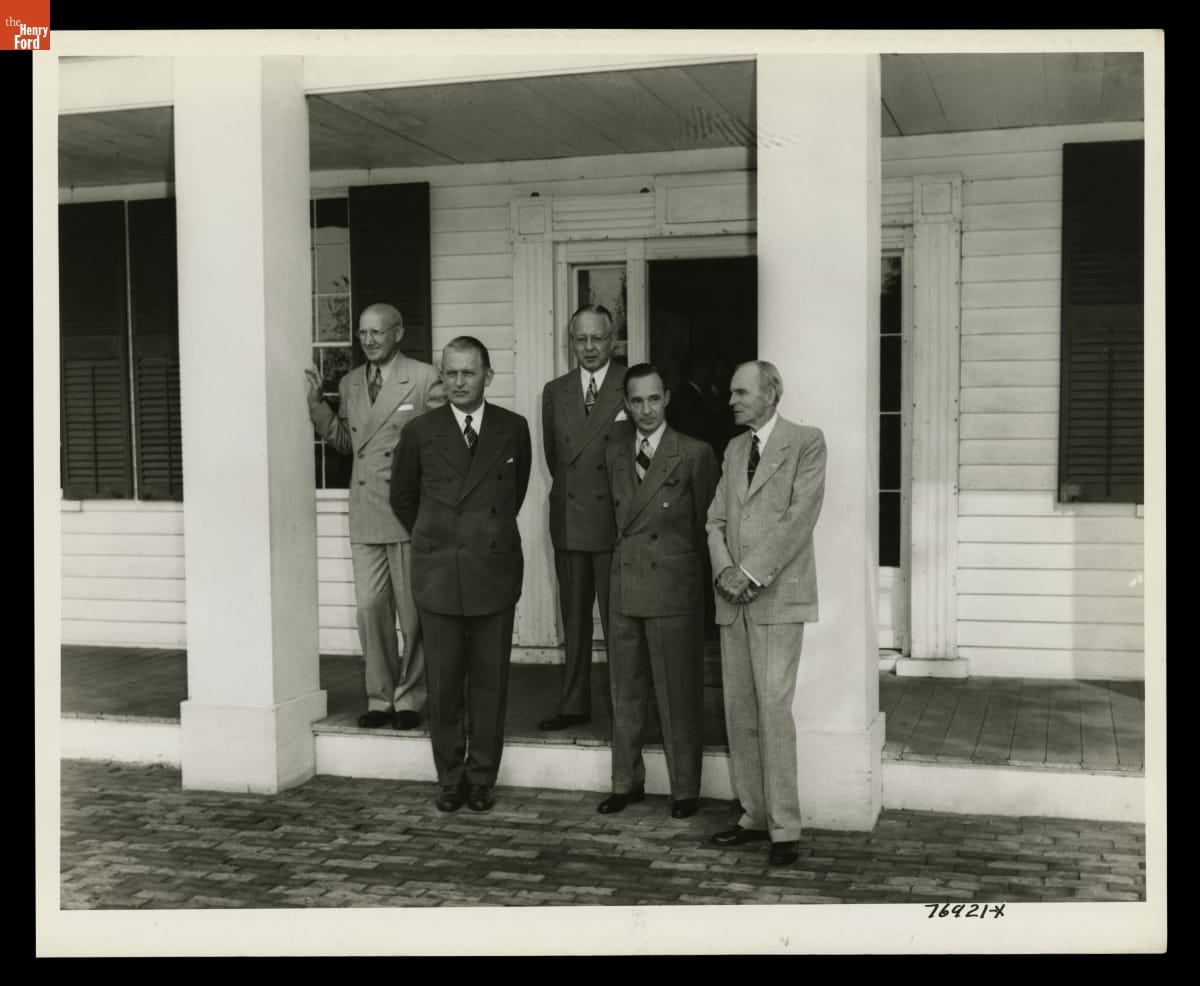
Edsel Ford, the only child of Henry Ford, served as the president of Ford Motor Company from 1919 until his untimely death in 1943. While his father was the quintessential industrialist focused on mass production and efficiency, Edsel provided the aesthetic vision, design sensibility, and corporate modernization that kept the company relevant during a transformative era in American automotive history. His legacy is defined by his patronage of the arts, his influence on vehicle styling, and his successful management of the company through the Great Depression and the early years of World War II.
Early Life and Integration into the Family Business
Born on November 6, 1893, in Detroit, Michigan, Edsel Bryant Ford grew up surrounded by the rapidly evolving automotive industry. Unlike his father, who possessed a singular, almost obsessive focus on the mechanics of the Model T, Edsel was exposed to a broader world. He was educated at the Hotchkiss School in Connecticut, which provided him with a sophisticated worldview that balanced his father’s utilitarian upbringing.
By the time he turned 21, Edsel had become a director at Ford Motor Company. His upbringing was marked by a constant tug-of-war between his desire to implement modern, customer-centric practices and his father’s autocratic grip on the firm’s operations. Despite this, Edsel demonstrated remarkable patience, learning to navigate his father’s volatile temperament while gradually introducing professional management structures to a company that had largely operated as an extension of Henry Ford’s personal will.
Assuming the Presidency: 1919–1943
Edsel Ford took the helm of Ford Motor Company in 1919. This transition was as much a political maneuver as a succession event; the appointment allowed Henry Ford to maintain indirect control while nominally distancing himself from day-to-day operations.
During his tenure, Edsel faced the immense pressure of transitioning the company from the aging Model T to the Model A. While Henry Ford famously resisted change—famously stating that customers could have any color as long as it was black—Edsel recognized the threat posed by General Motors, which was already capitalizing on consumer demand for style, comfort, and color options. Edsel’s persistent lobbying for the Model A was a landmark moment for the company, signaling the shift from pure manufacturing to design-led engineering.
Key Contributions and Strategic Initiatives
Under Edsel's leadership, the company underwent significant diversification and expansion:
- The Lincoln Motor Company Acquisition: In 1922, Edsel persuaded his father to purchase Lincoln, providing Ford with a luxury brand to compete with Cadillac and Packard.
- Design Evolution: Edsel hired E.T. "Bob" Gregorie, the company’s first professional designer, to create the iconic 1939 Mercury, which bridged the gap between the affordable Ford and the luxury Lincoln.
- Aviation Ventures: Edsel oversaw the development of the Ford Tri-Motor, nicknamed the "Tin Goose," which became one of the most successful airplanes in the early era of commercial aviation.
- Corporate Philanthropy: He established the Edsel Ford Institute for Medical Research and was a significant benefactor to the Detroit Institute of Arts, reflecting his commitment to social progress beyond the assembly line.
Net Worth and Financial Standing
Determining the exact net worth of Edsel Ford is complex due to the private nature of the Ford family’s holdings and the shifting valuations of the company throughout the 1920s and 1930s. At the time of his death in 1943, his estate was valued at approximately $80 million (equivalent to over $1.4 billion in 2026 adjusted for inflation).
The majority of his wealth was tied to his ownership stake in Ford Motor Company. His financial situation was often complicated by the fact that he was technically the owner of a vast fortune, yet he was restricted by his father’s control over the company’s cash flow. Henry Ford frequently reinvested profits into the factory and plant upgrades, limiting the dividend payouts to family members. Consequently, while Edsel was arguably one of the wealthiest men in America, his liquid assets were significantly less than his total net worth suggested.
Financial Influence and Institutional Impact
| Asset Type | Primary Role in Portfolio |
|---|---|
| Ford Motor Company Stock | Core wealth; provided control and voting power. |
| Real Estate Holdings | Family estates in Grosse Pointe and Maine; personal legacy. |
| Art Collection | Significant investment in European and American masterpieces. |
| Diversified Securities | Managed wealth outside of the automotive sector to mitigate risk. |
The Legacy of Design and Cultural Influence
Edsel Ford’s impact on the automotive world transcends production figures. He was the primary force behind the "styling" movement in the American auto industry. By insisting that automobiles should be beautiful objects rather than mere transportation tools, he set the standard for what the public expected from a vehicle.
His influence is clearly visible in the 1932 Ford V-8, a car that combined high performance with an elegant design that appealed to a younger, more style-conscious demographic. Furthermore, his personal car collection—which included custom-bodied Ferraris and custom Lincolns—set a standard for bespoke automotive design that influences modern luxury car manufacturers today.
Challenges and Relationships at Ford Motor Company
The relationship between Edsel and his father, Henry, remains one of the most studied dynamics in business history. Henry’s habit of publicly undermining Edsel’s decisions, often through the support of his right-hand man, Harry Bennett, created a toxic corporate environment. Bennett, who ran the company’s "Service Department," used intimidation and surveillance to maintain control, often creating friction with the board and the employees who reported to Edsel.
Despite these hurdles, Edsel maintained a reputation for fairness and professional composure. His ability to modernize the company’s manufacturing processes, such as the introduction of the V-8 engine, was done despite his father's initial skepticism. This internal struggle defined his later years, leading to chronic health issues, including stomach cancer, which claimed his life at the age of 49 in 1943.
Frequently Asked Questions
1. Was Edsel Ford considered a successful leader compared to his father? Yes, but in different ways. While Henry Ford was an industrial innovator who perfected mass production, Edsel was a corporate leader who understood market trends, design, and branding. His ability to modernize the firm made the company’s transition to the modern era possible.
2. Why was the acquisition of Lincoln important to Edsel? Edsel recognized that Ford had no product for the luxury buyer. By acquiring Lincoln, he allowed the company to offer a comprehensive range of vehicles, capturing customers as their income and status improved.
3. Did Edsel Ford have a role in the war effort? Yes. In the lead-up to and during the early years of World War II, Edsel was instrumental in retooling Ford plants to support the "Arsenal of Democracy," including the massive production of B-24 Liberator bombers at the Willow Run facility.
4. How did Edsel’s death change Ford Motor Company? Following his death, the company briefly faltered under the aged Henry Ford, leading to a period of turmoil until Edsel’s son, Henry Ford II, took over the company in 1945 and implemented a top-to-bottom management restructuring.
5. Is there a museum or location where I can see Edsel’s work? The Edsel and Eleanor Ford House in Grosse Pointe Shores, Michigan, serves as a testament to his life and aesthetic contributions. It is preserved and open to the public for tours, offering a glimpse into his personal life and legacy.
Conclusion and Recommendations
Edsel Ford was the essential bridge between the era of the mechanical pioneer and the modern, design-driven automotive corporation. His leadership style, defined by diplomacy and an appreciation for artistic design, provided the necessary counterbalance to his father’s rigid methods.
For those interested in exploring his legacy, a visit to the Edsel and Eleanor Ford House in Michigan provides the most accurate and immersive look at his life. Furthermore, examining his correspondence and corporate records—many of which are housed in the Benson Ford Research Center—offers a firsthand look at the administrative challenges he navigated. His story serves as a reminder that the longevity of a large-scale institution often depends on the foresight of those who can balance innovation with tradition.