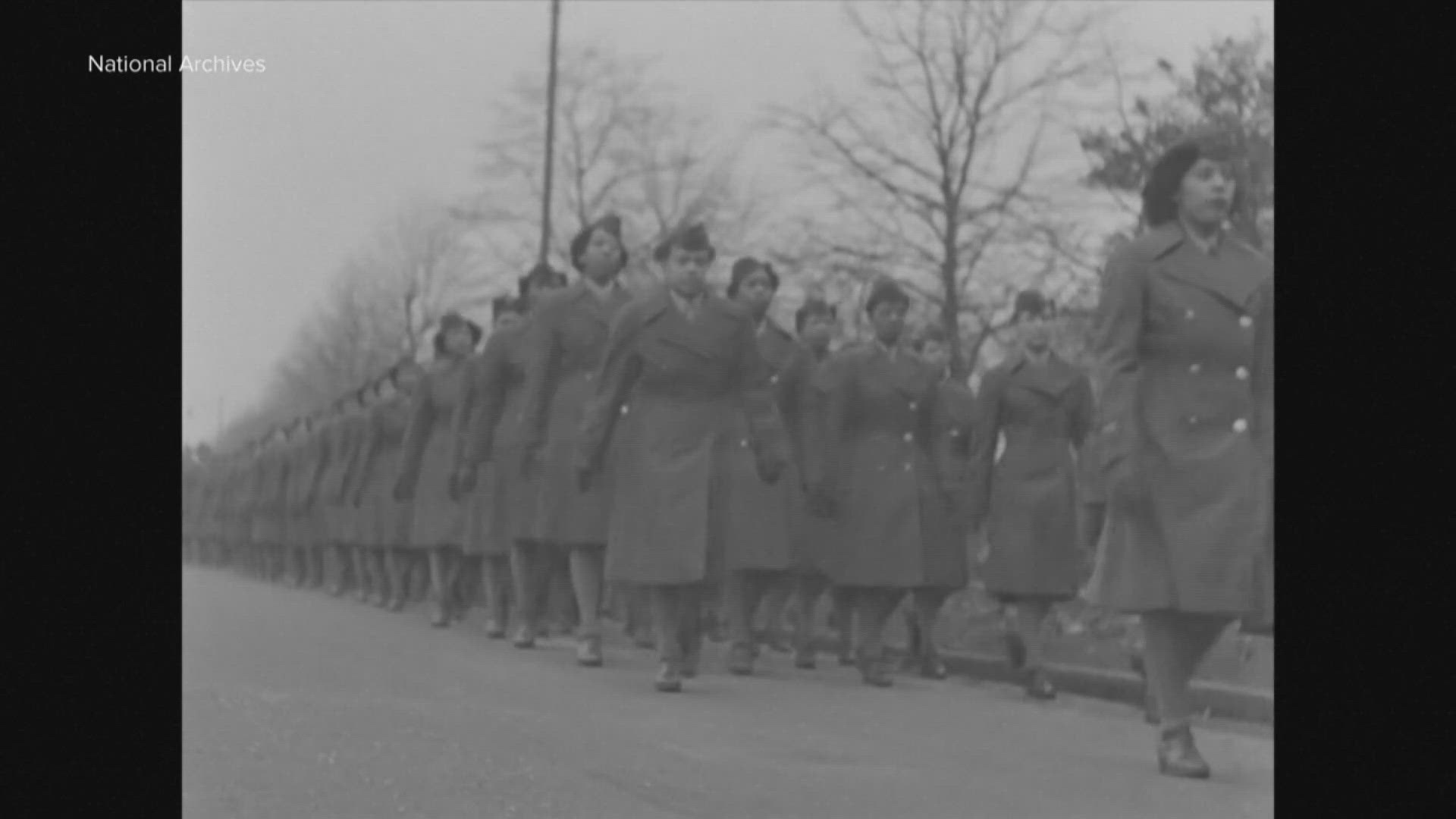
The 6888th Central Postal Directory Battalion, also known as the "Six Triple Eight," was the only all-Black, all-female unit of the Women’s Army Corps (WAC) to serve overseas during World War II. Tasked with clearing a monumental backlog of undelivered mail intended for millions of American service members in the European Theater of Operations, the unit demonstrated exceptional organizational efficiency, overcoming systemic racial and gender discrimination to ensure the morale of the Allied forces remained intact.
Historical Context and the Crisis of Mail
By 1945, the Allied war effort in Europe had reached a critical stage, but the logistical systems supporting the troops were nearing a breaking point. Millions of pieces of mail—letters, packages, and parcels—had accumulated in massive warehouses across England and later France. These items were addressed to service members who had frequently changed locations, been hospitalized, or had even been killed in action. The existing postal system, designed for peacetime efficiency, was overwhelmed by the sheer volume of personnel movement and the chaos of the front lines.
For the average soldier, the delivery of mail was more than a logistical convenience; it was a primary source of morale. Soldiers serving thousands of miles from home relied on letters from family as a vital lifeline to their civilian lives. When mail delivery failed, feelings of isolation and abandonment deepened, which military leadership feared would eventually erode the fighting spirit of the U.S. Army.
The task assigned to the 6888th was unprecedented: to reorganize the entire postal distribution system for the European Theater of Operations (ETO). They were tasked with creating a searchable, accurate directory that could track millions of individuals in a transient, volatile environment.
Formation and Deployment of the 6888th
The 6888th Central Postal Directory Battalion was formed by the United States Army in early 1945. It was comprised of 855 women, including 824 enlisted women and 31 officers, under the command of Major Charity Adams Earley. The battalion was unique in the U.S. military at the time, as it was the only unit composed entirely of African American women deployed to Europe.
Prior to their deployment, the women underwent standard military training, though they faced restricted access to many resources due to the segregationist policies prevalent in the U.S. Armed Forces of the 1940s. Upon arrival in Birmingham, England, in February 1945, they were faced with an overwhelming environment: vast, cold, unheated hangars filled with millions of pieces of undelivered mail stacked from floor to ceiling.
Overcoming Operational Challenges
The "Six Triple Eight" operated under the motto "No Mail, Low Morale." Their primary operational strategy involved working in three shifts, 24 hours a day, seven days a week. The battalion set up a manual card index system to track individual soldiers. They processed approximately 65,000 pieces of mail per shift. By establishing a rigorous system of address verification and forwarding, they managed to process the entire existing backlog in just three months—a task that military leadership had estimated would take significantly longer.
| Feature | Operational Detail |
|---|---|
| Primary Goal | Clearing the backlog of ETO mail |
| Work Schedule | 3 shifts, 24/7 rotation |
| Total Personnel | 855 women (all-Black, all-female) |
| Key Metric | 65,000 pieces of mail per shift |
| Primary Tool | Manual card index and directory system |
Institutional Barriers and Racial Segregation
The members of the 6888th faced challenges on two fronts: the intense operational demands of the war and the pervasive prejudice of the era. Within the U.S. military, Black soldiers and women were frequently relegated to menial roles and experienced substandard living conditions. The 6888th was no exception; they often worked in drafty, poorly lit warehouses and were subjected to the segregationist culture that permeated the Allied military establishment.
Despite these hurdles, the women of the 6888th maintained a high degree of discipline and professional excellence. They held themselves to a standard of military appearance and conduct that exceeded the expectations of their peers and superiors. Major Charity Adams Earley, the battalion’s commander, became a symbol of leadership, frequently challenging the discriminatory practices of the white male officers who oversaw them. Her insistence on fair treatment and her demand for the necessary resources for her troops were instrumental in the unit’s success.
From England to France: Moving the Mission
Following their success in Birmingham, the 6888th was transferred to Rouen, France, in the spring of 1945, following the Allied push across the continent. In France, they were tasked with clearing even larger backlogs of mail as the front lines moved rapidly eastward. The living conditions in France were even more austere, yet the battalion continued to meet their goals with impressive speed.
They also deployed to Paris, where they handled mail for the increasing number of troops stationed in the liberated city. By the time the war in Europe concluded in May 1945, the battalion had processed an estimated 17 million pieces of mail. Their work allowed millions of soldiers to receive letters from home, significantly bolstering the mental health and stability of the troops during the transition to post-war occupation duties.
Post-War Recognition and Long-Term Legacy
For decades, the contributions of the 6888th were largely unrecognized in mainstream historical accounts of World War II. It was not until the late 20th and early 21st centuries that their story began to receive formal attention from historians and the federal government.
In 2022, the United States Congress passed legislation, and the President signed into law the "6888th Central Postal Directory Battalion Congressional Gold Medal Act." This act awarded the Congressional Gold Medal to the members of the unit, formally recognizing their exceptional service and the barriers they overcame to serve their country. This recognition served as a milestone for acknowledging the intersectional history of African American women in the armed forces.
Frequently Asked Questions
1. Why was the 6888th Battalion formed? The battalion was formed to address the critical failure of the military postal system in Europe. The U.S. Army faced a massive backlog of millions of pieces of mail that could not be delivered because soldiers were constantly moving, which threatened the morale of the troops in the European Theater.
2. What made the 6888th unique in the U.S. Army? The 6888th was the only unit of the Women’s Army Corps during World War II that was comprised entirely of African American women deployed to an overseas location. Their success in clearing the mail backlog was a significant achievement in both logistics and civil rights representation.
3. How long did it take the 6888th to clear the mail? Upon arriving in Birmingham, England, in 1945, the unit processed the massive backlog of mail in just three months, exceeding the initial expectations of their military superiors.
4. Did the 6888th serve in locations other than England? Yes, after their mission in England, the battalion was transferred to Rouen, France, and later to Paris, to continue managing the mail distribution as the Allied forces moved across Europe.
5. What is the current status of the battalion's recognition? In 2022, the members of the 6888th were awarded the Congressional Gold Medal, the highest civilian honor in the United States, in recognition of their distinguished service during World War II.
The Continuing Value of the 6888th Narrative
The history of the 6888th is often utilized as a case study in effective organizational management under extreme pressure. Their ability to design a tracking system that could handle millions of individual records without digital tools remains a feat of logistical ingenuity. Modern military personnel continue to study their methods as an example of how administrative efficiency directly correlates to the human element of warfare.
Beyond logistics, the unit serves as a vital historical bridge, documenting the resilience of African American women who pursued the right to serve in a country that denied them full citizenship rights at home. Their legacy is not just one of military success, but of personal courage in the face of institutionalized inequality.
For those interested in historical documentation, primary records regarding the 6888th—including rosters, operational logs, and correspondence—are preserved in the National Archives and Records Administration. These documents provide the most accurate account of their day-to-day operations and the specific challenges they encountered. Researching these archives provides a deeper, primary-source perspective on how the battalion functioned and the specific individuals who made the mission possible.
Next steps for those looking to learn more should include reviewing the archived records held by the U.S. Army Center of Military History, which maintains an extensive collection on the Women’s Army Corps. By focusing on the administrative reports and the unit diaries, one can gain a granular understanding of the specific processes used to sort and route millions of items of mail, providing a clear window into the professional standard maintained by the 6888th.