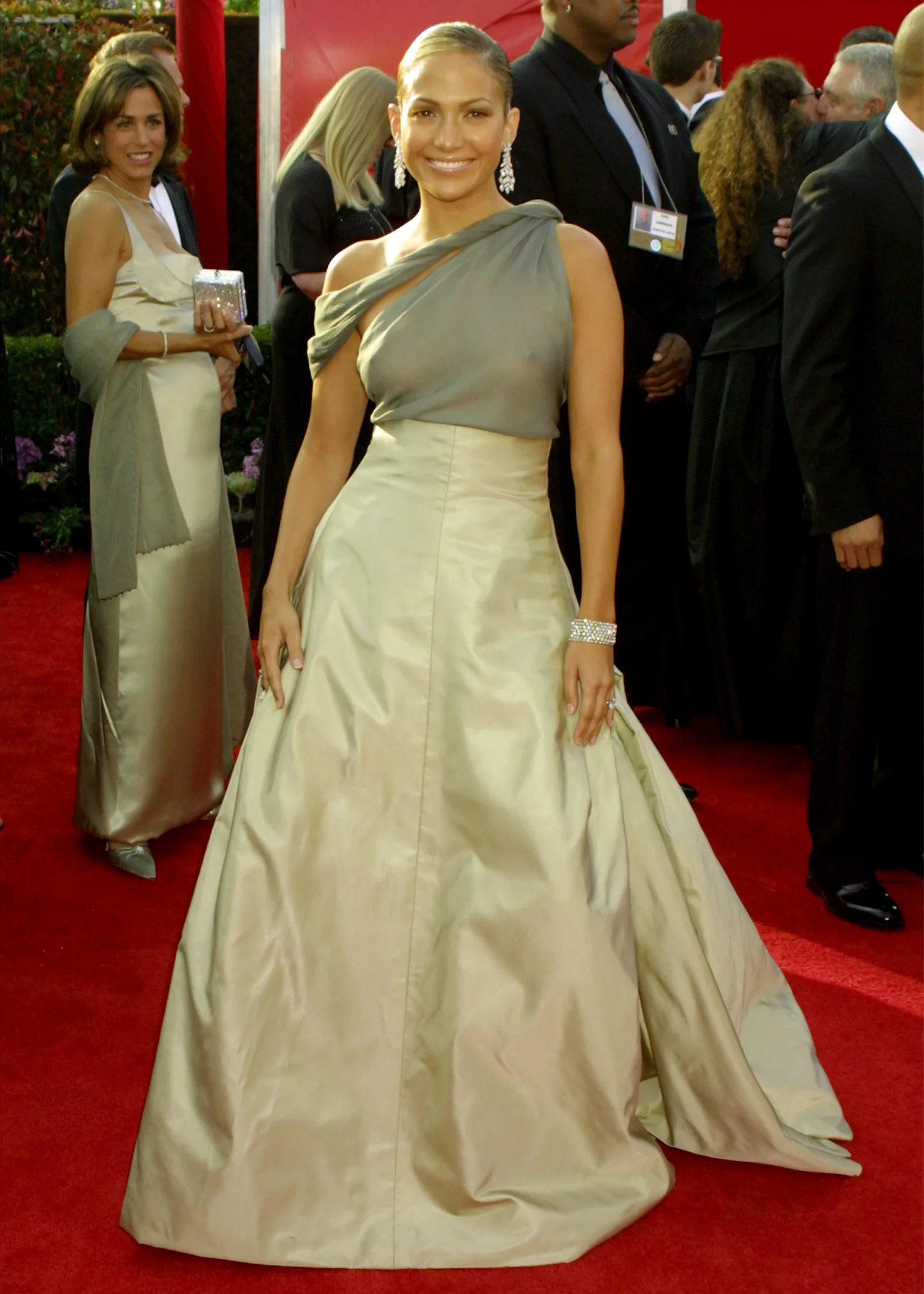
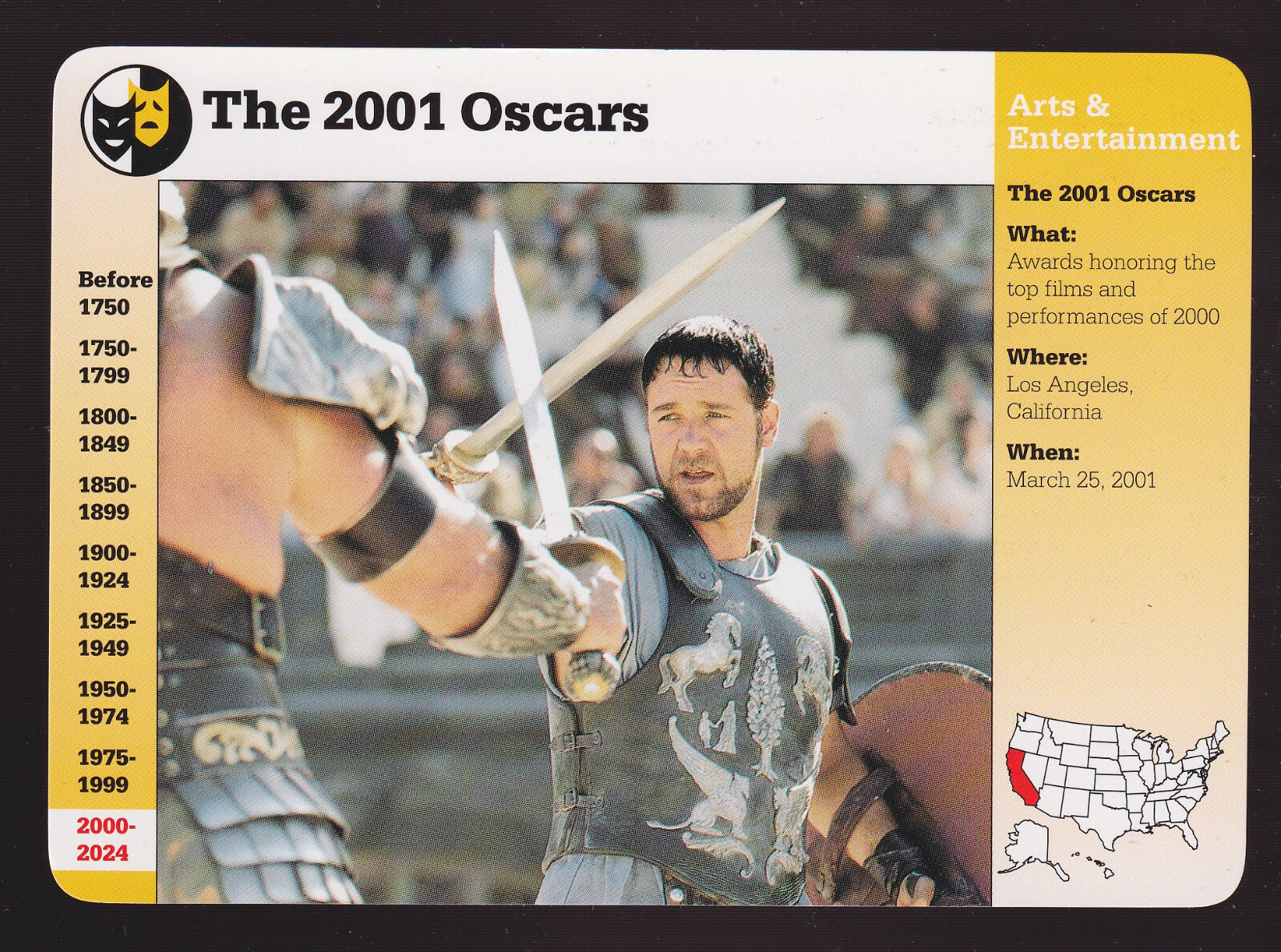
The 73rd Academy Awards ceremony, honoring the best films of 2000, took place on March 25, 2001, at the Shrine Auditorium in Los Angeles, California. Hosted by Steve Martin, this milestone event celebrated a cinematic year defined by historical epics, dark psychological dramas, and critical independent breakouts, highlighted by Ridley Scott's massive blockbuster Gladiator dominating the major categories.
The Historical Context of the 2001 Academy Awards
The 73rd Academy Awards ceremony captured a transitional period in Hollywood history. Stepping into the new millennium, the film industry was experiencing a shift in production scales, where massive historical epics coexisted alongside gritty, independent filmmaking that challenged traditional studio formulas. The year 2000 had been a robust box-office period, and the Academy of Motion Picture Arts and Sciences (AMPAS) reflected this dual identity in its nominations.
Produced by Laura Ziskin, the 2001 broadcast aimed to modernize the pacing and visual presentation of the show while honoring traditional cinematic excellence. Steve Martin’s hosting debut injected a sophisticated comedic tone into the evening, famously arriving on stage via a dramatic sequence that played on the night's cinematic themes. The ceremony faced the typical logistical pressures of managing a live global broadcast, yet it successfully delivered a streamlined program that balanced commercial blockbusters with auteur-driven cinema.
Major Winners and Nominees
The race for Best Picture at the 73rd Academy Awards featured a diverse slate of nominees that demonstrated the breadth of storytelling in 2000. Ridley Scott’s Gladiator entered the night with 12 nominations, tying with Ang Lee’s Crouching Tiger, Hidden Dragon for the most recognized film of the year.
Gladiator ultimately triumphed, taking home five Academy Awards, including Best Picture, Best Actor for Russell Crowe, Costume Design, Sound, and Visual Effects. The victory signaled a revival for the sword-and-sandal historical epic, a genre that had laid dormant for decades. Meanwhile, Crouching Tiger, Hidden Dragon achieved historic milestones, winning four Oscars—Best Foreign Language Film, Art Direction, Original Score, and Cinematography—making it one of the most decorated non-English language films in Academy history.
Steven Soderbergh achieved a rare feat by receiving two simultaneous nominations for Best Director: one for the environmental drama Erin Brockovich and another for the complex drug-trade narrative Traffic. Soderbergh won the category for Traffic, while Julia Roberts claimed the Best Actress award for her powerhouse performance as the titular legal assistant in Erin Brockovich.
Summary of Major Category Winners
| Category | Winner | Film |
|---|---|---|
| Best Picture | Douglas Wick, David Franzoni, and Branko Lustig (Producers) | Gladiator |
| Best Director | Steven Soderbergh | Traffic |
| Best Actor | Russell Crowe | Gladiator |
| Best Actress | Julia Roberts | Erin Brockovich |
| Best Supporting Actor | Benicio del Toro | Traffic |
| Best Supporting Actress | Marcia Gay Harden | Pollock |
| Best Original Screenplay | Cameron Crowe | Almost Famous |
| Best Adapted Screenplay | Stephen Gaghan | Traffic |
Detailed Breakdown of Key Categories and Notable Contenders
Best Picture and Directing Races
The competition for Best Picture was fierce, featuring Gladiator, Chocolat, Crouching Tiger, Hidden Dragon, Erin Brockovich, and Traffic. While Traffic offered a sweeping, multi-layered look at the American war on drugs and Soderbergh secured the Best Director trophy, the Academy ultimately rewarded the grand scale and populist appeal of Gladiator.
Ridley Scott’s direction of Gladiator was praised for revitalizing action choreography and classical filmmaking techniques, though he lost the direct directorial contest to Soderbergh. The dual presence of Soderbergh in the directing category remains a unique statistical anomaly in Academy history, underscoring his prolific output during the year 2000.
Acting Honors
The acting categories featured a mix of established superstars and character actors receiving career-defining recognition.
- Best Actor: Russell Crowe secured his first Academy Award for his portrayal of the betrayed Roman general Maximus Decimus Meridius, edging out a competitive field that included Tom Hanks (Cast Away), Ed Harris (Pollock), Geoffrey Rush (Quills), and Javier Bardem (Before Night Falls).
- Best Actress: Julia Roberts captured her first Oscar after a decade-long status as a box-office titan, winning for her grounded, empathetic performance in Erin Brockovich. She competed against stellar performances by Ellen Burstyn (Requiem for a Dream), Joan Allen (The Contender), Laura Linney (You Can Count on Me), and Juliette Binoche (Chocolat).
- Best Supporting Actor: Benicio del Toro delivered a mesmerizing, critically acclaimed performance as honest Mexican police officer Javier Rodríguez in Traffic, sweeping nearly every major precursor award before taking the Oscar.
- Best Supporting Actress: In one of the evening's slight surprises, Marcia Gay Harden won for her portrayal of artist Lee Krasner in Ed Harris's biographical drama Pollock, overcoming frontrunners like Kate Hudson and Frances McDormand.
Technical and Artistic Achievements
Beyond the major revenue-generating categories, the 73rd Academy Awards recognized exceptional craftsmanship across technical disciplines. Crouching Tiger, Hidden Dragon dominated the artistic categories, showcasing Peter Pau's breathtaking cinematography, Tim Yip's intricate art direction, and Tan Dun's sweeping musical score, which blended traditional Asian instrumentation with western orchestration.
Sound design and visual effects categories highlighted the growing integration of computer-generated imagery (CGI) in historical filmmaking. Gladiator relied heavily on digital set extensions to recreate the grandeur of ancient Rome and the Colosseum, a milestone technique that bridged traditional practical set design with emerging digital wizardry. Additionally, Almost Famous captured writer-director Cameron Crowe’s semi-autobiographical love letter to 1970s rock journalism, winning Best Original Screenplay and cementing its status as a cultural touchstone.
Frequently Asked Questions
Which film won Best Picture at the 2001 Oscars?
Gladiator, directed by Ridley Scott and produced by Douglas Wick, David Franzoni, and Branko Lustig, won the Academy Award for Best Picture at the 73rd Academy Awards.
Who hosted the 73rd Academy Awards ceremony?
Comedian and actor Steve Martin hosted the ceremony, marking his first time presiding over the Academy Awards broadcast.
How many nominations did Gladiator and Crouching Tiger, Hidden Dragon receive?
Both films led the pack at the 73rd Academy Awards, with Gladiator and Crouching Tiger, Hidden Dragon earning 12 and 10 nominations respectively.
Why was Steven Soderbergh's nomination historic?
Steven Soderbergh received two separate nominations for Best Director in the same year—for Erin Brockovich and Traffic—ultimately winning the category for Traffic.
Where was the 2001 Oscars ceremony held?
The ceremony took place at the Shrine Auditorium in Los Angeles, California, on March 25, 2001.
Next Actions and Further Exploration
For researchers, film historians, and cinema enthusiasts looking to explore the 73rd Academy Awards further, reviewing the complete archival logs provided by the Academy of Motion Picture Arts and Sciences offers granular data on every nominee and technical category. Analyzing the full list of acceptance speeches and red-carpet retrospectives provides a deeper appreciation of Hollywood's landscape at the turn of the millennium.