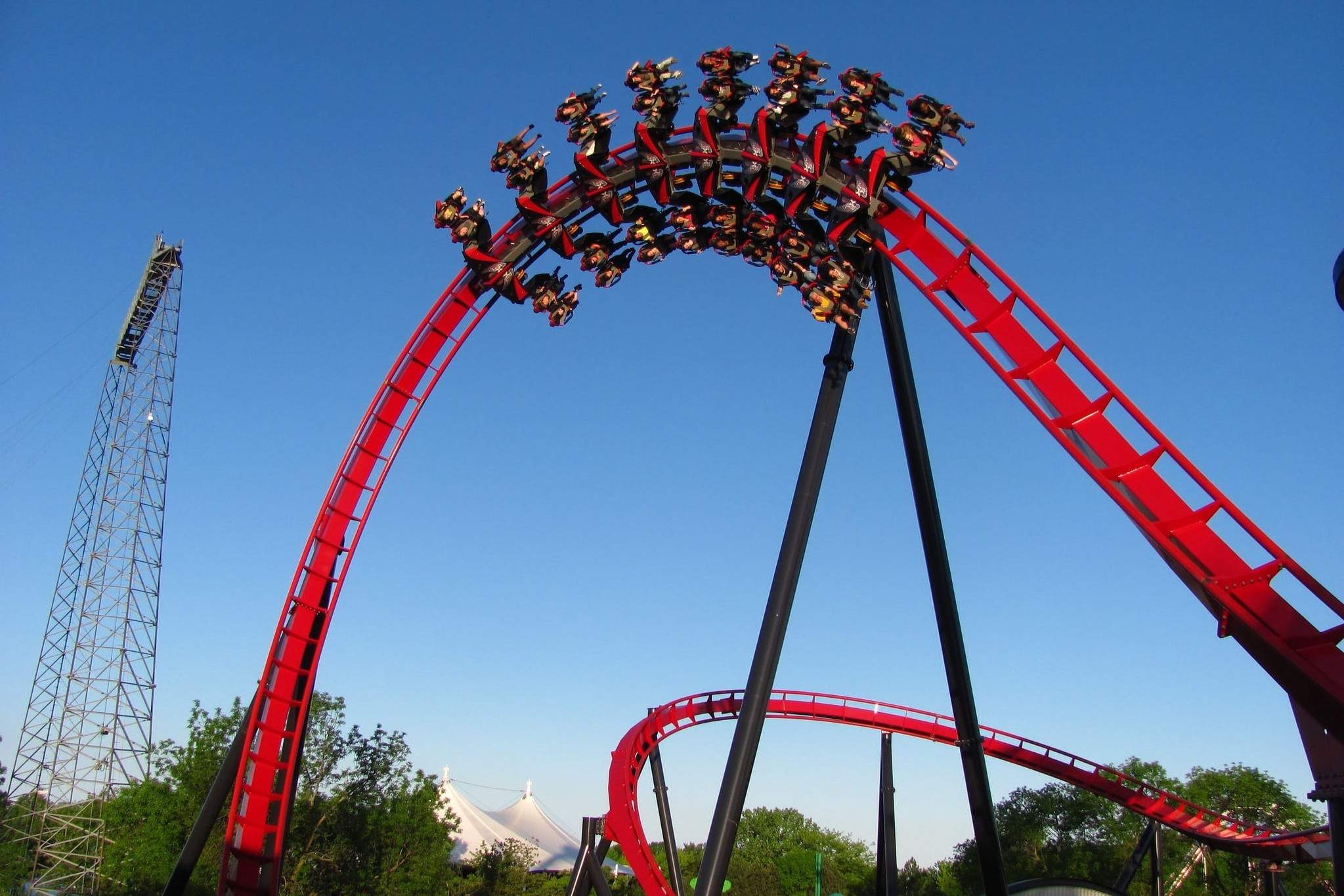
Six Flags Great America in Gurnee, Illinois, has recorded three deaths since its opening in 1976. These fatalities include a mechanical-related collision on the Whizzer (1980), an employee accident on Batman: The Ride (2002), and a medical-related death on Raging Bull (2003). Statistically, the park remains extremely safe, with millions of annual visits.
Historical Safety Record and Context
Six Flags Great America, originally opened as Marriott's Great America in 1976, has been a staple of Midwestern entertainment for half a century. As of 2026, the park features dozens of high-speed attractions, complex mechanical systems, and a massive throughput of guests. To understand the background of fatalities and incidents at this specific location, one must look at the intersection of mechanical engineering, human behavior, and medical variables.
While any loss of life is tragic, amusement parks are among the most regulated and statistically safe environments for recreation. In the United States, the risk of serious injury on a fixed-site amusement ride is roughly 1 in 15.5 million. At Six Flags Great America, the recorded deaths have stemmed from three distinct categories: mechanical failure/design, restricted area incursions (employee safety), and pre-existing medical conditions.
The evolution of safety standards at the park reflects broader industry changes. In the early 1980s, ride control systems relied on simpler logic and manual operations. Today, modern coasters utilize sophisticated Programmable Logic Controllers (PLCs) and "block systems" that prevent two trains from occupying the same section of track simultaneously. Despite these advancements, the historical record provides important lessons for both operators and the public.
Documented Fatalities at Six Flags Great America
Over its 50-year history, three primary incidents have resulted in the loss of life within the park’s gates. These incidents are often researched by enthusiasts and safety advocates to understand how park protocols have changed over time.
The 1980 Whizzer Collision
The first and perhaps most notable fatality occurred on March 29, 1980, on the attraction then known as Willard’s Whizzer. This steel coaster, which features a unique spiral lift hill and low-to-the-ground turns, suffered a mechanical failure in the braking system.
A 13-year-old boy was killed when his train, which was stationary in the station, was struck from behind by a second train. The collision occurred because the braking system failed to stop the approaching train. Following this tragedy, the park implemented significant safety upgrades to the ride, including an entirely new braking system and improved computer sensors to monitor train positions. The ride was eventually renamed "The Whizzer" and continues to operate today as one of the few remaining "Speedstipple" coasters in the world, now bolstered by decades of modernized safety protocols.
2002 Batman: The Ride Employee Fatality
In June 2002, a 58-year-old groundskeeper was killed while working near Batman: The Ride. Unlike ride failures, this incident involved a breach of safety protocol regarding restricted areas.
The staff member was working in a fenced-off, restricted zone under the coaster’s track. He was struck in the head by the dangling legs of a passenger while the train was traveling at high speeds. The employee sustained massive head trauma and later died. This incident led to a rigorous review of employee training and "lockout-tagout" procedures, ensuring that no staff members enter the "envelope of protection" while a ride is in operation. It also highlighted the danger that inverted coasters pose to ground staff if strict communication and safety barriers are not maintained.
2003 Raging Bull Medical Incident
In May 2003, an 11-year-old girl died after riding Raging Bull, the park’s popular hyper-coaster. This case is categorized as a medical fatality rather than a mechanical or operational failure.
According to the Lake County Coroner’s report, the girl had a pre-existing, undiagnosed congenital heart condition (cardiomegaly). The physical stress and adrenaline of the high-speed ride triggered a cardiac event. While the ride functioned exactly as designed, the incident emphasized the importance of the park’s posted health warnings. These warnings advise guests with heart conditions or high blood pressure to refrain from riding high-intensity attractions.
Notable Non-Fatal Incidents and "Near Misses"
Not all significant safety events at Six Flags Great America resulted in fatalities, but several have shaped the park’s reputation and safety culture. Understanding these "near misses" provides a complete picture of the park's operational history.
The 1984 Edge Elevator Drop
One of the most famous accidents in the park's history occurred on The Edge, a "first-generation" free-fall ride. In May 1984, a support cable snapped while a car carrying three teenagers was being lifted to the top of the tower. The car fell nearly 60 feet into the mechanism below.
Miraculously, there were no fatalities, though the passengers sustained significant injuries. The ride was closed, extensively tested, and eventually removed from the park. This incident contributed to a global shift in how vertical lift mechanisms are designed, leading to redundant safety "dogs" (mechanical catches) that prevent a car from falling even if the primary cable fails.
2022 Parking Lot Shooting
On August 14, 2022, a non-ride-related incident occurred when shots were fired from a vehicle in the parking lot, injuring three people. While not a death, this event forced a massive security overhaul. The park responded by implementing state-of-the-art Evolv weapons detection systems at the front gates and increasing the presence of the Gurnee Police Department on the grounds. This incident highlighted the shift in theme park safety from purely mechanical concerns to broader public security challenges.
Safety Regulations and Oversight in Illinois
Six Flags Great America is subject to some of the most stringent amusement ride regulations in the United States. In Illinois, the Amusement Ride Safety Act governs the operation of all carnivals and fairs.
The Illinois Department of Labor (IDOL) is the primary regulatory body. Their Carnival and Amusement Ride Safety Division performs the following functions:
- Annual Inspections: Every ride at Great America must undergo an exhaustive annual inspection before the park opens for the season.
- Permitting: No ride can operate without a valid state permit, which is only issued after mechanical, electrical, and structural integrity is verified.
- Unannounced Inspections: State inspectors may visit the park at any time during the operating season to ensure that daily maintenance logs and operator training records are being kept accurately.
- Incident Reporting: Any injury requiring a physician’s visit must be reported to the IDOL within a strictly defined timeframe.
In addition to state laws, Six Flags employs its own team of certified maintenance technicians and third-party engineers who inspect the tracks and trains daily, often using non-destructive testing (NDT) methods like X-rays and magnetic particle inspections to find microscopic cracks in the steel.
Summary of Major Historical Incidents
The following table summarizes the key historical safety incidents at Six Flags Great America through 2026.
| Date | Attraction / Location | Type of Incident | Outcome |
|---|---|---|---|
| March 1980 | Whizzer | Mechanical / Collision | 1 Fatality |
| May 1984 | The Edge | Mechanical / Cable Failure | 3 Injuries |
| June 2002 | Batman: The Ride | Restricted Area Incursion | 1 Fatality (Employee) |
| May 2003 | Raging Bull | Pre-existing Medical Condition | 1 Fatality |
| August 2022 | Parking Lot | Security / External Violence | 3 Injuries |
Understanding Risk vs. Perception
When discussing deaths at Six Flags Great America, it is essential to distinguish between "ride-caused" fatalities and "incidental" deaths. The 1980 Whizzer accident is the only instance in the park's history where a mechanical failure directly caused a guest's death. The other fatalities involved either an employee entering a dangerous zone or a guest with a hidden medical vulnerability.
The "fear factor" of roller coasters is a designed experience. Coasters are engineered to provide the sensation of danger while maintaining a massive margin of safety. For example, the lap bars and over-the-shoulder restraints (OTSR) on rides like X-Flight or Maxx Force are designed with redundant locking mechanisms; if one hydraulic cylinder fails, a mechanical ratchet remains engaged.
Furthermore, the park uses "Block Logic." A roller coaster track is divided into "blocks" separated by brakes. The computer system is programmed so that a train cannot leave Block A until the train ahead of it has cleared Block B. If a train stops unexpectedly, the computer automatically engages the brakes on all preceding blocks, making a collision physically impossible under normal operating conditions.
FAQs About Safety at Six Flags Great America
How many people have died at Six Flags Great America?
As of 2026, there have been three recorded deaths within the park since it opened in 1976. One was caused by a ride collision (1980), one was an employee accident (2002), and one was due to a guest’s pre-existing heart condition (2003).
Is the Whizzer still safe to ride?
Yes. Following the 1980 accident, the Whizzer underwent a total overhaul of its braking and control systems. It is now monitored by modern sensors and computers that were not available when the ride first opened. It passes daily inspections and is considered a "classic" family coaster with a solid safety record over the last four decades.
What is the most dangerous ride at the park?
Statistically, no single ride is "most dangerous." Injury reports are typically spread across various attractions and often involve minor issues like heat exhaustion, dizziness, or small bumps. High-thrill rides like Goliath or Raging Bull have more intense physical forces, which is why they have stricter health requirements.
How often are the rides inspected?
Rides are inspected multiple times. Maintenance crews perform a "walk-around" and a mechanical check every morning before the park opens. In addition, the Illinois Department of Labor conducts comprehensive annual inspections, and third-party safety consultants often audit the park's procedures.
Can a roller coaster car fall off the track?
Modern roller coasters, including those at Great America, use "up-stop" wheels. This means the train has wheels on top of the track, on the side of the track, and underneath the track. This triple-wheel design effectively "locks" the train to the rail, making it physically impossible for the car to fall off, even if it were to go upside down and stop.
Practical Recommendations for Visitors
To ensure a safe visit to Six Flags Great America, guests should prioritize personal health and adherence to park rules. The majority of modern theme park injuries occur when guests attempt to circumvent safety measures or ignore their own physical limits.
- Respect All Posted Warnings: If a sign says not to ride with heart or neck problems, take it seriously. The physical forces (G-forces) can exceed 4Gs on some rides, which can strain the cardiovascular system.
- Secure Loose Articles: Objects like phones and glasses can become dangerous projectiles at high speeds. Use the provided lockers or bins.
- Stay Within Fences: Never enter a restricted area or climb over a fence to retrieve a lost item. Ask a park employee for assistance; they have specific protocols to retrieve items during ride downtime.
- Hydrate and Rest: Many "medical emergencies" at the park are actually cases of severe dehydration or heat stroke, which can be mistaken for more serious ailments.
- Follow Operator Instructions: Ensure your restraint is clicked and locked as instructed. Do not attempt to leave a "gap" between your body and the restraint for more "airtime," as this reduces the effectiveness of the safety system.
By following these guidelines and understanding the park's rigorous safety history, visitors can enjoy the thrills of Six Flags Great America with confidence in the engineering and oversight that protects them.