As of 2026, the South Korean K2 Black Panther, manufactured by Hyundai Rotem, remains the most expensive main battle tank in the world currently in production, with a unit cost ranging between $8.5 million and $10.5 million. This price varies based on specific configuration requirements, export logistics, and the inclusion of advanced active protection systems.
The modern battlefield is a high-cost environment where survival depends on the integration of cutting-edge electronics, modular armor, and sophisticated propulsion systems. While older tanks like the French AMX-56 Leclerc historically held the title for the highest development-adjusted cost, the K2 Black Panther represents the pinnacle of current financial investment per unit in the armored vehicle sector. This cost is driven by its unique "kneeling" suspension, an advanced autoloader, and a fire control system capable of tracking targets autonomously.
The Manufacturer: Hyundai Rotem and the Evolution of the K2
The K2 Black Panther is the flagship product of Hyundai Rotem, a subsidiary of the Hyundai Motor Group based in South Korea. The development of the K2 began in the late 1990s and early 2000s under the Agency for Defense Development (ADD), with the goal of replacing the aging K1 series and countering the armored threats posed by regional adversaries.
Hyundai Rotem’s approach to tank manufacturing emphasizes extreme technological density. Unlike Western manufacturers who often favor incremental upgrades to existing platforms (like the M1 Abrams or Leopard 2), South Korea built the K2 from the ground up to be a digitally native tank. This required massive investments in precision engineering and high-end electronics, which contribute significantly to the final sticker price. By 2026, the K2 has seen significant export success, most notably in Poland, where the "K2PL" variant has established South Korea as a premier global supplier of heavy armor.
Technical Specifications: What Makes a $10 Million Tank?
The exorbitant cost of the K2 Black Panther is not merely a result of branding; it is a reflection of its internal components. Every system within the tank represents the highest tier of military hardware currently available.
Powerplant and Mobility
The K2 is powered by a 1,500-horsepower engine. While early units utilized German MTU 883 engines and Renk transmissions, the "Fourth Batch" and export versions in 2026 often utilize the indigenous Doosan Infracore engine paired with an SNT Dynamics automatic transmission. This domestic "powerpack" development cost billions of won, a cost amortized across each production unit.
One of the K2's most expensive features is its In-arm Suspension Unit (ISU). Unlike traditional torsion bar suspensions found on most tanks, the K2's suspension allows for individual control over every bogie wheel. This enables the tank to "sit," "stand," or "kneel," and even lean to one side. This capability is crucial for mountain warfare, allowing the main gun to depress further than its physical limits would normally allow by tilting the entire chassis.
Armament and Fire Control
The primary weapon is a 120mm / L55 smoothbore gun, manufactured under license from Rheinmetall but significantly modified by South Korean engineers. It is longer than the L44 gun found on standard M1 Abrams variants, providing higher muzzle velocity and better penetration.
The fire control system (FCS) is where much of the $10 million is spent. It includes:
- Millimeter-wave radar system: Linked to the FCS, it allows the tank to track projectiles and low-flying aircraft.
- Laser rangefinder and thermal sights: Capable of detecting targets at distances exceeding 10 kilometers.
- Automatic Target Tracking: The gunner can "lock" onto a target, and the computer will keep the gun laid on that target even as both the tank and the enemy move across rugged terrain.
Protection Systems
The K2 utilizes a modular composite armor package, the exact composition of which remains highly classified. However, it is reinforced by Explosive Reactive Armor (ERA) blocks that are designed to neutralize shaped-charge anti-tank missiles. Furthermore, the 2026 iterations are equipped with a Hard-kill Active Protection System (APS). This system uses sensors to detect incoming projectiles and launches a counter-munition to destroy the threat before it impacts the hull.
Why the K2 Costs More Than Its Rivals
When comparing the K2 Black Panther to the American M1A2 SEPv3 or the German Leopard 2A8, several factors explain the price discrepancy.
- Low Initial Production Volume: For much of its early life, the K2 was produced in relatively small batches for the Republic of Korea Army (ROKA). Without the massive economies of scale enjoyed by the M1 Abrams (thousands produced), each K2 unit must carry a larger share of the research and development costs.
- High-End Electronics: The K2 includes a C4I (Command, Control, Communication, Computer, and Intelligence) suite that is among the most advanced in the world, facilitating real-time data sharing between tanks, drones, and infantry.
- The Autoloader: The K2 uses a chain-belt type autoloader, similar to the one found on the French Leclerc. This removes the need for a fourth crew member (the loader), but the mechanism itself is a masterpiece of expensive, high-tolerance machinery that must function perfectly under the stress of combat and high-G maneuvers.
Comparison of the World’s Most Expensive Main Battle Tanks (2026)
| Tank Model | Manufacturer | Estimated Unit Cost (USD) | Primary Armament | Weight |
|---|---|---|---|---|
| K2 Black Panther | Hyundai Rotem (South Korea) | $8.5M - $10.5M | 120mm L/55 Smoothbore | 55 Tons |
| Leopard 2A8 | KNDS (Germany) | $11M - $15M (Export Price) | 120mm L/55 Smoothbore | 67 Tons |
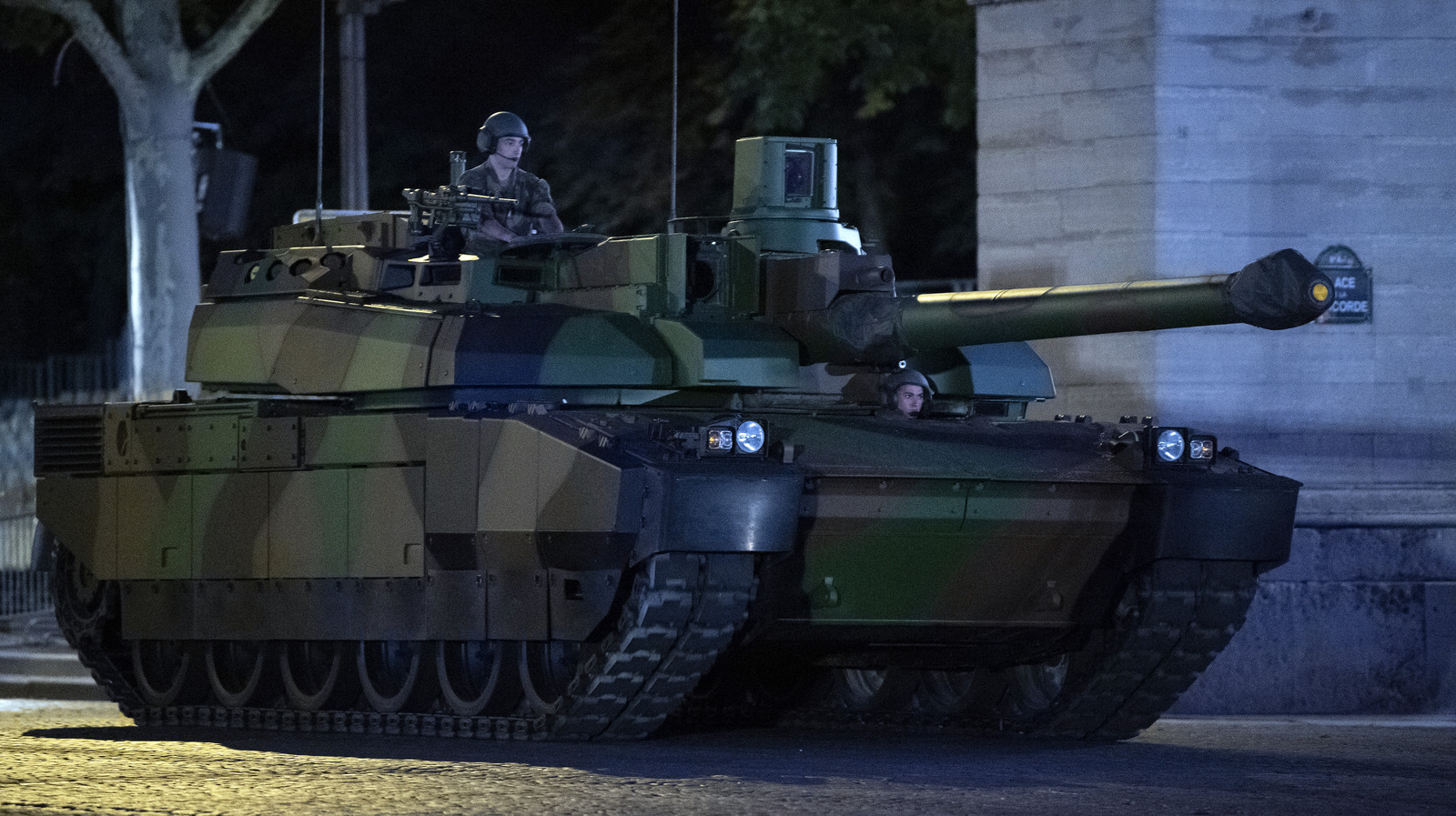
| AMX-56 Leclerc | Nexter (France) | $9.3M (Inflation Adj.) | 120mm L/52 Smoothbore | 56 Tons |
| M1A2 SEPv3/SEPv4 | General Dynamics (USA) | $8.5M - $9.5M | 120mm L/44 Smoothbore | 73 Tons |
| Challenger 3 | RBSL (UK) | $8.0M - $9.0M | 120mm L/55 Smoothbore | 66 Tons |
Note: Export prices for the Leopard 2A8 often include extensive training and spare parts packages, sometimes pushing the "per-unit" contract price higher than the K2's base manufacturing cost.
Other High-Cost Contenders: The Leopard 2A8 and M1A2 SEPv3
While the K2 is the most expensive in terms of pure manufacturing complexity per ton, other tanks frequently reach similar price points in 2026 due to different economic factors.
The German Leopard 2A8
The Leopard 2A8 is the newest standard for European armor. While its base manufacturing cost is high, its price in the mid-2020s skyrocketed due to the urgent demand for tank replacements across NATO. Small-batch orders from countries like Norway, the Czech Republic, and Germany itself have seen contract prices that effectively reach $15 million per unit when support infrastructure is included. Technically, the 2A8 features the Trophy APS as standard, which adds roughly $1 million to the cost of the vehicle.
The American M1A2 SEPv3 and the M1E3
The United States has moved toward the M1E3 program by 2026, focusing on reducing the weight of the massive M1A2 SEPv3. The SEPv3 is expensive primarily because of its massive power generation requirements and revamped armor packages (Next Generation Armor Package - NGAP). Because the US produces these in larger numbers and often refurbishes older hulls, the price is kept slightly more competitive than the "all-new" K2 Black Panther, despite the M1A2's formidable capabilities.
The Role of Export Contracts in 2026 Pricing
In the defense industry, the "cost" of a tank is rarely a fixed number. By 2026, the price of the K2 Black Panther is heavily influenced by "Offset Agreements." For example, the massive deal between South Korea and Poland involved not just the sale of tanks, but the transfer of technology (ToT) to allow Poland to manufacture the K2PL variant locally.
When a country buys a tank, they are also buying:
- The Supply Chain: Guaranteed access to parts for 30 years.
- Training Simulators: High-fidelity digital environments for crew training.
- Customization: The K2PL, for instance, features increased armor on the sides and top to protect against "top-attack" munitions and drones, adding to the base price.
Technical Depth: The KSTAM Ammunition
One cannot discuss the cost of the K2 without mentioning its specialized ammunition, specifically the KSTAM (Korean Smart Top-Attack Munition). This is a "fire-and-forget" projectile fired from the main gun. Unlike a traditional shell, the KSTAM is launched in a high trajectory. Once over the target area, it deploys a parachute, searches for a target using its own dual-mode radar and infrared sensors, and then fires an explosively formed penetrator (EFP) into the thin top armor of an enemy tank. A single KSTAM round can cost as much as a luxury vehicle, further contributing to the overall high operational cost of the K2 platform.
Maintenance and Operational Costs
The initial purchase price of $10 million is only the beginning of the financial commitment. Heavy armor platforms like the K2 require intensive maintenance schedules.
- Fuel Consumption: The 1,500-hp engine is thirsty, consuming vast amounts of diesel, especially during cross-country maneuvers.
- Track Wear: The rubber pads and steel links of the tracks must be replaced frequently, especially when operating on asphalt or rocky terrain.
- Electronic Calibration: The millimeter-wave radar and various sensors require specialized technicians to maintain, meaning a nation must invest in a high-tech workforce just to keep the tanks operational.
Common Misconceptions About Tank Costs
A common mistake in analyzing tank prices is comparing the "unit flyaway cost" with the "program cost." The AMX-56 Leclerc is often cited as the most expensive because the total development budget was divided by the small number of tanks France eventually produced, resulting in a "per tank" cost that seems astronomical. However, in terms of the actual price to manufacture one additional unit in 2026, the K2 and the latest Leopard variants are the true leaders.
Furthermore, price does not always equate to "best." A tank's value is determined by its suitability for its environment. The K2's high cost is justified for South Korea because its specialized suspension is necessary for the country's mountainous geography. For a country with flat plains, a cheaper tank with a standard suspension might be more cost-effective.
Frequently Asked Questions
Which tank has the highest maintenance cost?
The M1A2 Abrams series traditionally has the highest maintenance cost, largely due to its AGT1500 gas turbine engine. While powerful and quiet, the turbine is more complex to maintain and consumes more fuel at idle than the diesel engines found in the K2 or Leopard 2.
Is the Russian T-14 Armata more expensive than the K2?
While the T-14 Armata was touted as a high-cost, high-tech tank, its production has been so limited and its development so opaque that reliable pricing is difficult to establish. Most estimates place it below the K2 in terms of manufacturing cost, though its "program cost" is high due to its failure to enter mass production.
Why is the French Leclerc no longer the most expensive?
The Leclerc is no longer in active production. While it was the most expensive at the time of its debut due to its revolutionary (at the time) electronics and autoloader, modern production techniques and the even more advanced electronics of the K2 and Leopard 2A8 have surpassed it in nominal cost.
Does the K2's price include the Active Protection System?
In most 2026 export contracts, the APS is an optional but highly recommended "add-on." Including a hard-kill APS like the KAPS (Korean Active Protection System) typically adds $1 million to $1.5 million to the base unit price.
How many people are in the K2 crew?
The K2 has a three-person crew: a commander, a gunner, and a driver. The fourth person (the loader) is replaced by an automatic loading system, which contributes to the tank's high cost but allows for a smaller, harder-to-hit profile.
Final Recommendation for Defense Analysts
When evaluating the "most expensive" tank, it is vital to look beyond the base price and consider the Total Cost of Ownership (TCO). For a modern military, the K2 Black Panther represents a high-capital investment that offers unparalleled performance in mountainous terrain and high-tech connectivity. If your requirements involve rapid deployment and integration with digital battlefield networks, the K2's price tag is a reflection of its role as a force multiplier. However, for nations without the need for specialized "kneeling" suspension or domestic technology transfer, the M1E3 or Leopard 2A8 may offer better value through shared NATO logistics and larger existing parts pools.