Lee Israel was an American biographer and writer who became infamous in the early 1990s for a sophisticated criminal enterprise involving the forgery of letters written by deceased literary figures. Her transition from a moderately successful professional author to a prolific forger remains one of the most studied cases of literary fraud in modern American history, serving as a cautionary narrative regarding the intersection of professional decline, personal desperation, and the exploitation of the memorabilia market.
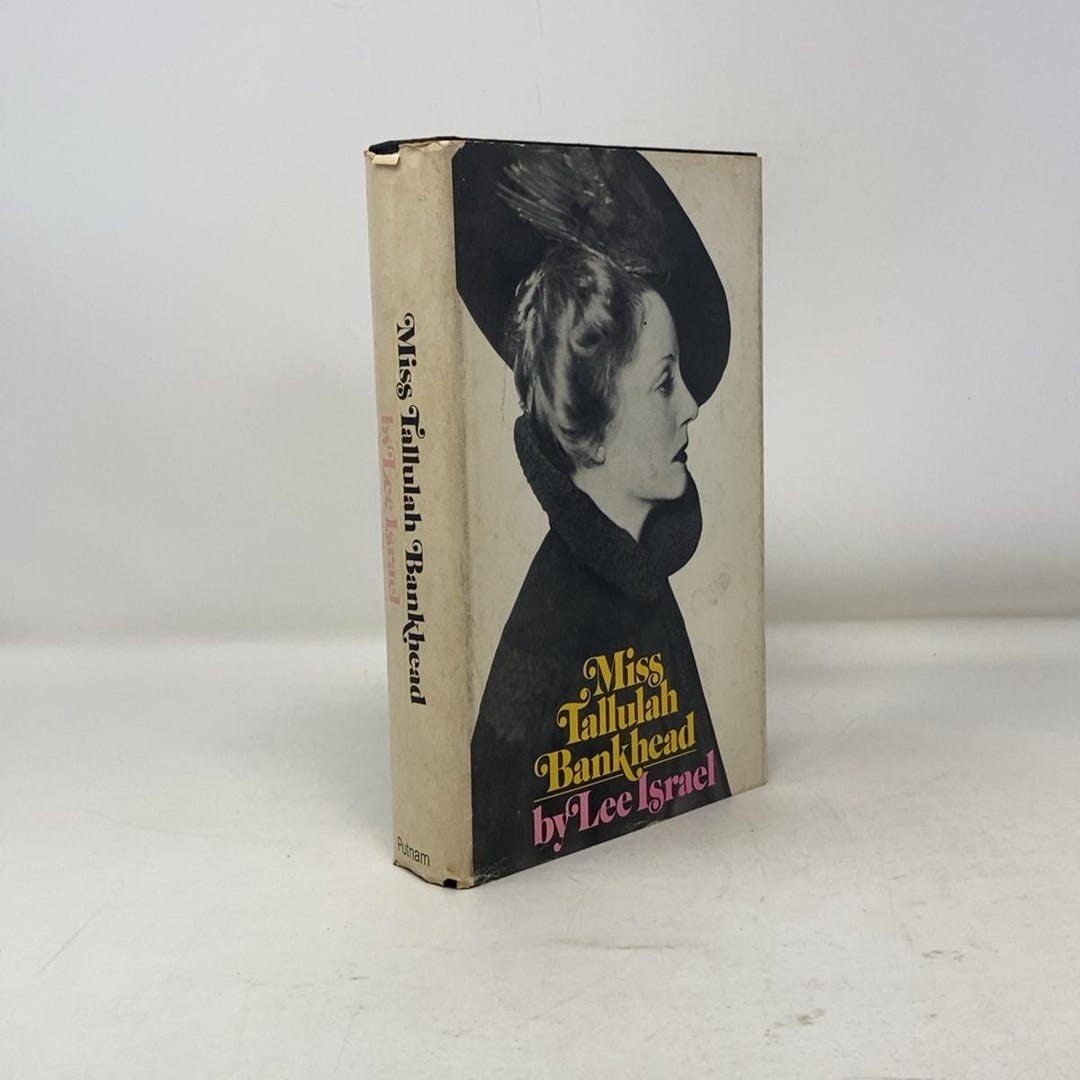
To understand Lee Israel is to examine the precipitous decline of a working writer in an era where the publishing industry shifted beneath her feet. Born in Brooklyn in 1939, Israel spent the 1960s and 70s building a career as a freelance journalist and later as a biographer. She authored successful, critically acclaimed profiles of major celebrities, including Miss Tallulah Bankhead (1972) and Estée Lauder: Beyond the Magic (1985). However, by the late 1980s, her ability to secure publishing contracts waned, leading to financial instability and a deepening sense of professional alienation.
The Trajectory of a Literary Career
Before her descent into forgery, Lee Israel established herself as a competent, sharp-tongued interviewer and writer. Her style was noted for its directness and refusal to engage in the sycophantic tone often required for celebrity journalism. Her biography of Tallulah Bankhead was a significant achievement, reaching the New York Times Best Seller list and solidifying her reputation as a formidable researcher.
Throughout the 1970s, Israel moved through the upper echelons of New York’s media culture, but her career began to falter in the 1980s. She struggled to keep up with the changing expectations of publishers and faced personal challenges that exacerbated her isolation. The combination of dwindling advances, the loss of her literary agent, and a growing dependence on alcohol created the environment in which her criminal activity was conceived.
The Genesis of the Forgery Enterprise
The forgery scheme began in 1991 when Israel, while researching a biography of Fanny Brice, discovered a letter from the comedian in the archives of the New York Public Library. She realized that by acquiring authentic archival paper, she could produce documents that appeared to be historical artifacts. Using a vintage typewriter that matched the period and style of the subjects she was "channeling," she began creating letters attributed to figures like Dorothy Parker, Noël Coward, and Edna Ferber.
Israel did not merely copy existing letters; she wrote entirely new content that captured the distinct, witty, and often biting voices of these authors. By adding specific, verifiable historical details to the text, she made the documents appear authentic to collectors and memorabilia dealers. She would then "age" the paper using tea or chemicals and, in some cases, add forged postmarks or annotations.
Operational Methodology and Market Exploitation
Israel’s success in the forgery market relied on three specific pillars: technical precision, deep research, and the inherent trust placed in provenance by the antiquarian book and autograph trade.
- Technical Acquisition: Israel became adept at sourcing typewriters that were historically accurate for the periods in which her targets were active. She also mastered the use of period-correct ribbons and ink pads.
- Target Selection: She chose subjects with high market value whose estates were either unmonitored or whose existing correspondence provided a template for her creative writing.
- Market Placement: Rather than attempting to sell the letters at major, high-profile auctions where scrutiny was intense, she targeted smaller, specialized independent dealers. These dealers were often less equipped to perform forensic analysis and were eager to acquire "newly discovered" literary treasures.
| Subject | Known Forgery Focus | Primary Appeal to Collectors |
|---|---|---|
| Dorothy Parker | Witty, sardonic anecdotes | High demand for humor and cynicism |
| Noël Coward | Theatrical commentary | International collector base |
| Edna Ferber | Literary gossip | Historical literary significance |
| Fanny Brice | Personal, intimate reflections | Rarity of existing correspondence |
Investigation and Legal Consequences
The enterprise began to collapse in 1992 when the FBI and the United States Postal Inspection Service initiated an investigation. The suspicion was triggered by alert archivists and dealers who began noticing inconsistencies in the influx of "rare" letters hitting the market simultaneously.
When federal authorities confronted Israel, the evidence was overwhelming. She had forged hundreds of documents and sold them to unsuspecting dealers across the United States. In 1993, Israel pleaded guilty to conspiracy to transport stolen property and was sentenced to five years of probation, including six months of house arrest. Following her sentencing, she was effectively blacklisted from the publishing industry, though she eventually documented her experiences in the 2008 memoir, Can You Ever Forgive Me?.
The Legacy of the Deception
The case of Lee Israel is frequently analyzed in the context of ethics in the antiquarian trade. Her actions exposed significant vulnerabilities in the authentication processes used by dealers. Because the memorabilia market often relies on informal assessments of "gut feeling" and stylistic analysis rather than scientific forensic testing, it remains susceptible to high-quality forgeries.
Since the early 1990s, the trade has implemented stricter protocols for provenance verification, though the digital era has introduced new challenges. The "Israel effect"—the heightened awareness that even seemingly innocuous documents must be subjected to rigorous authentication—changed how archives and dealers handle literary correspondence.
Frequently Asked Questions
Did Lee Israel ever sell her forgeries to major museums? No. Israel generally avoided large institutions, which typically possess the resources for carbon dating, ink analysis, and expert comparison. She focused on smaller dealers who were less likely to perform extensive forensic verification.
How did she get caught? The scheme unraveled largely because of the volume of material she introduced to the market. Archivists at institutions like the New York Public Library and Columbia University noticed that multiple "unique" letters were appearing at various dealerships, leading to cross-communication that eventually involved federal law enforcement.
Was her work considered "good" writing? Literary critics have noted that Israel’s forgeries were technically impressive. She was a professional biographer who understood the cadence, vocabulary, and temperament of her subjects, which allowed her to create documents that were not just convincing forgeries, but also compelling pieces of writing in their own right.
What was the motivation behind her actions? While financial desperation was the primary driver, Israel's memoir suggests that her actions were also a form of artistic outlet and an expression of resentment toward an industry she felt had discarded her. She found a perverse satisfaction in fooling the experts who had previously dismissed her as a writer.
How do experts authenticate letters today? Modern authentication involves a combination of provenance tracing, forensic analysis of paper fibers, chemical testing of ink compositions, and microscopic inspection of typewriter impression patterns. Collectors are now encouraged to insist on documentation that tracks the ownership of a letter back to the original source.
Expert Guidance for Collectors
For those interested in the collection of literary autographs and correspondence, the lessons of the Lee Israel case are paramount. Authenticity is not a static quality; it is a hypothesis that must be tested. When purchasing or archiving historical documents, one should never rely on the "story" behind the discovery of a document.
Always demand a chain of custody that is traceable. If you are dealing with a private sale, consider employing an independent third-party authenticator who specializes in the specific era and medium of the document in question. In the current market, verify that the seller offers a lifetime guarantee of authenticity, and understand that in the world of rare manuscripts, if a discovery appears too perfect or happens too conveniently, it warrants extreme caution.