The 1996 Everest deaths refer to a tragic sequence of events on May 10–11, 1996, when a sudden, fierce blizzard struck Mount Everest, trapping multiple commercial expeditions near the summit. Eight climbers lost their lives over these two days, making it one of the deadliest single seasons in the mountain’s history at the time and permanently altering the commercialization, regulation, and ethical framework of high-altitude mountaineering.
Historical Context and the Rise of Commercial Mountaineering
To understand why the 1996 disaster occurred, one must examine the rapid evolution of Mount Everest mountaineering during the late 20th century. For decades after the first successful ascent by Sir Edmund Hillary and Tenzing Norgay in 1953, Everest was primarily the domain of national teams, elite mountaineers, and heavily funded expeditions utilizing military-style logistics. By the early 1990s, however, a profound shift took place. Guided commercial expeditions began offering paying clients the opportunity to reach the summit of the world's highest peak, provided they had sufficient financial resources and a basic level of physical fitness.
This commercialization democratized extreme high-altitude climbing, but it also introduced severe systemic risks. Companies such as Mountain Madness, led by charismatic American climber Scott Fischer, and Adventure Consultants, led by respected New Zealand guide Rob Hall, marketed Everest ascents to wealthy hobbyists, physicians, lawyers, and business executives. Clients paid upwards of $65,000 (equivalent to over $120,000 adjusted for inflation) for logistical support, fixed ropes, oxygen supplies, and the expertise of Western guides and Sherpa climbing support.
While these commercial operators provided high levels of support, the presence of dozens of amateur climbers on the mountain created unprecedented traffic jams in the "Death Zone"—the altitude above 8,000 meters (26,247 feet) where human bodies can no longer acclimatize and begin to deteriorate rapidly. The presence of multiple competing commercial teams, independent groups, and scientific expeditions on the South Col route set the stage for operational friction, bottlenecking, and compromised decision-making under extreme cognitive duress caused by hypoxia.
Chronology of the Disaster on May 10, 1996
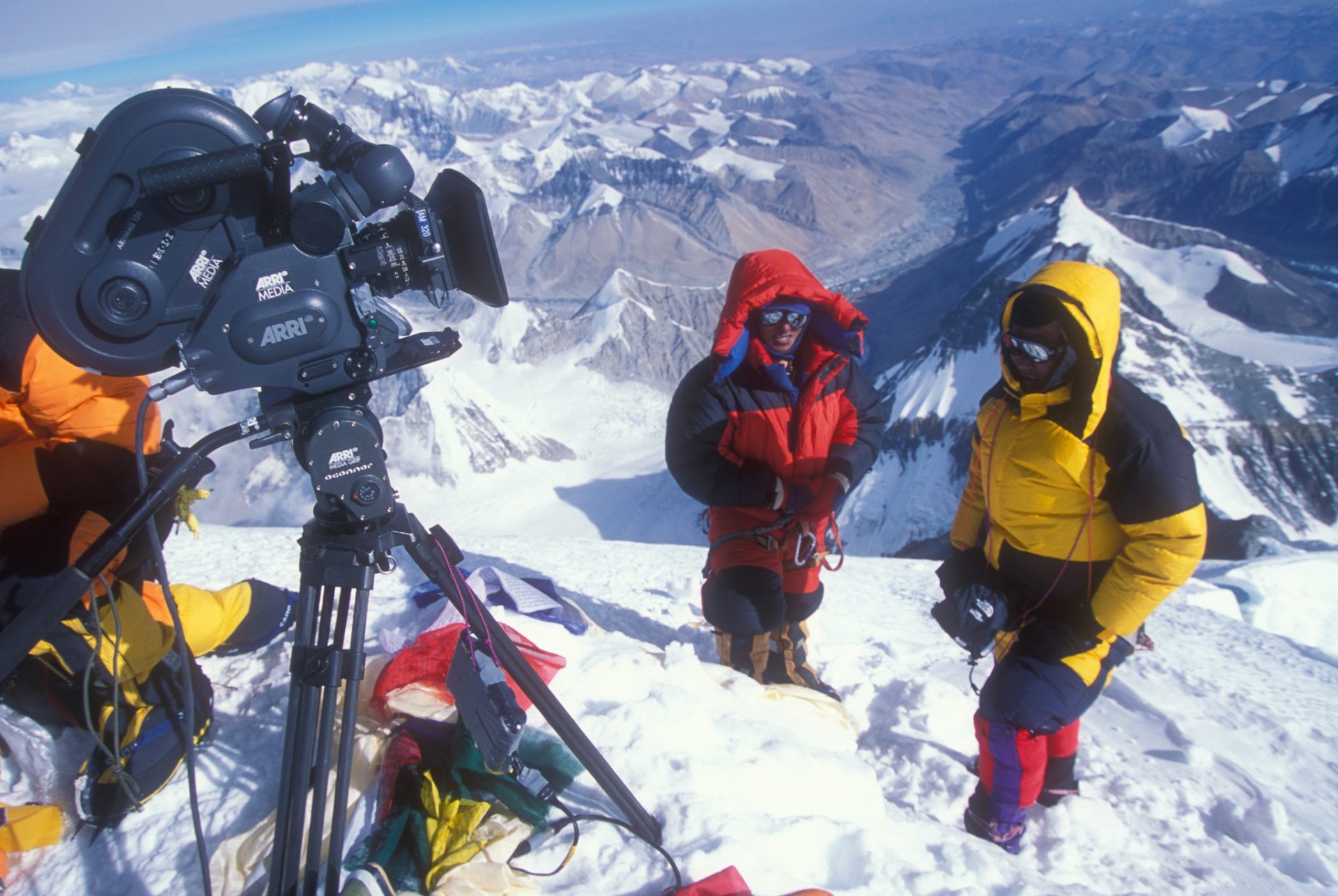
The events of May 10, 1996, unfolded as a confluence of logistical delays, adverse weather, and human error. Both Adventure Consultants and Mountain Madness had coordinated their summit bids for the same day, sharing fixed-rope installation duties alongside other teams like IMAX filming expeditions and Taiwanese commercial groups.
| Time (May 10, 1996) | Event / Milestone | Operational Significance |
|---|---|---|
| 12:00 AM – 3:00 AM | Summit pushes begin from Camp IV (South Col) | Climbers depart into the dark, relying on stable weather forecasts. |
| 5:30 AM – 7:30 AM | Delays at the Hillary Step | Fixed ropes are not fully in place, causing severe bottlenecks and halting progress. |
| 1:00 PM – 3:00 PM | Mandatory turnaround time breached | Guides and clients continue pushing toward the summit hours past the safe limit. |
| 3:00 PM – 4:00 PM | Late summits achieved | Several climbers reach the peak dangerously late in the afternoon. |
| 5:00 PM – 6:00 PM | Blizzard strikes the South Col | A ferocious storm with hurricane-force winds and whiteout conditions hits the mountain. |
| Nightfall | Bivouacs in the open | Disoriented climbers are trapped near the Balcony and South Summit without shelter or oxygen. |
The primary catalyst for the disaster was a severe bottleneck at the Hillary Step—a nearly vertical 40-foot rock face near the summit ridge. Because guides had failed to fix ropes along this section prior to the morning push, climbers had to wait in long queues. This delay pushed summit times back by several hours. According to standard high-altitude safety protocols, climbers must reach the summit by 1:00 PM or 2:00 PM to allow enough daylight and energy to descend safely to Camp IV before nightfall and freezing temperatures set in.
Several key figures, including Rob Hall and client Doug Hansen, did not reach the summit until past 3:00 PM. By that time, extreme fatigue, depleted supplemental oxygen bottles, and diminishing daylight had severely compromised the descending teams. Shortly after 4:00 PM, a sudden and violent blizzard engulfed the upper slopes of the mountain, dropping temperatures drastically and reducing visibility to near zero.
Key Casualties and Profiles
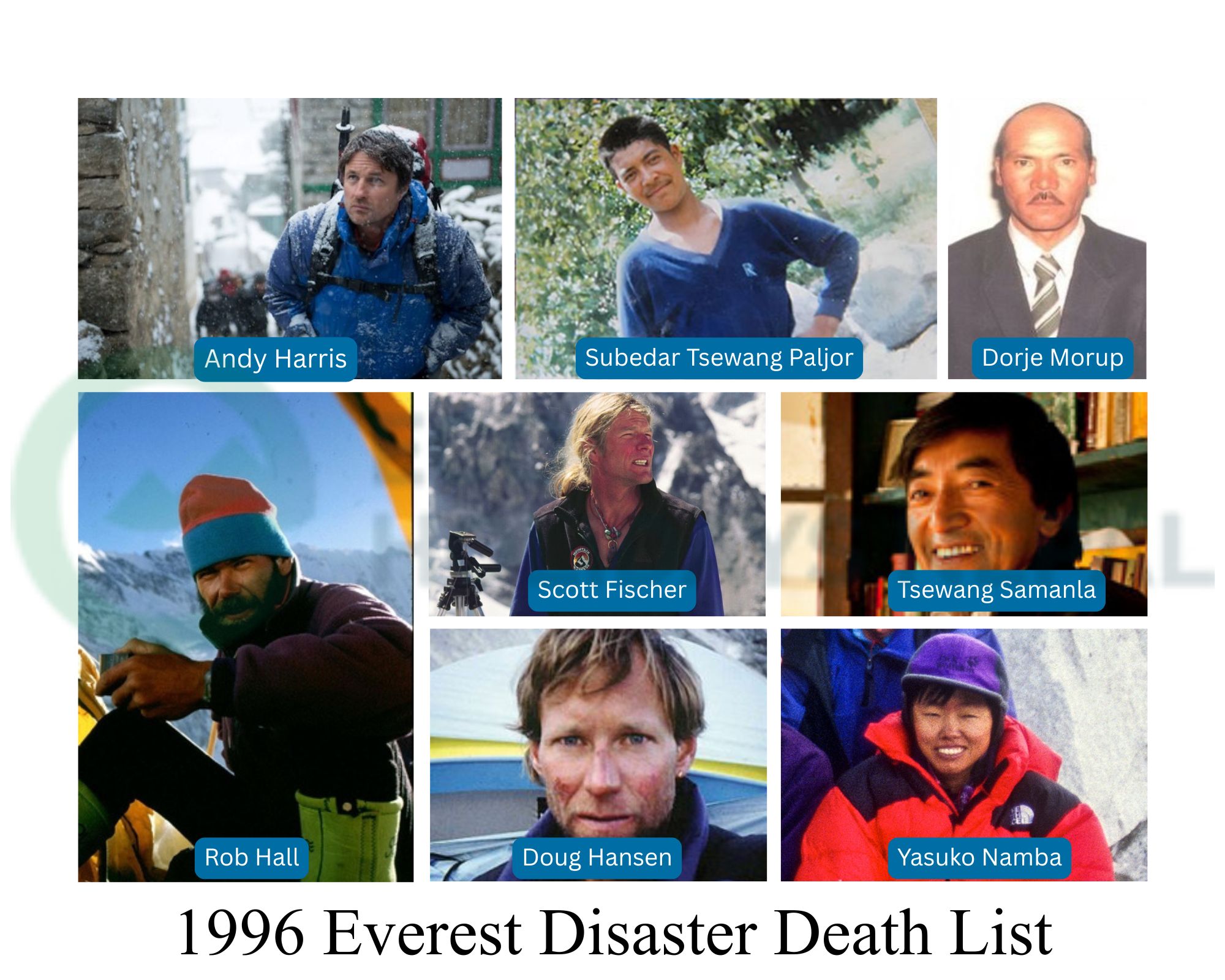
The disaster claimed the lives of eight individuals over the course of May 10 and 11, hailing from commercial teams as well as support staff. The loss of life deeply impacted the global mountaineering community and sparked intense media scrutiny.
- Rob Hall: Co-founder and lead guide of Adventure Consultants. He stayed behind near the South Summit to assist client Doug Hansen, who had collapsed. Hall survived the night in the open but succumbed to exposure the following day, communicating via radio with his pregnant wife in New Zealand before his death.
- Scott Fischer: Lead guide of Mountain Madness. Fischer was physically exhausted and suffering from high-altitude pulmonary edema (HAPE) or cerebral edema (HACE) during the descent. He was left in a snow hollow by his team during the storm and died of exposure and exhaustion.
- Andy Harris: A guide with Adventure Consultants who perished trying to assist Hall and Hansen, though the exact circumstances of his disappearance remain partially obscured by hypoxia-induced confusion.
- Doug Hansen: A postal worker and returning Adventure Consultants client who had narrowly missed the summit in 1995. Hall felt a personal responsibility to help him summit, a decision that contributed to both men remaining in the Death Zone too late.
- Yasuko Namba: A Japanese businesswoman and experienced seven-summit climber who climbed with Adventure Consultants. Overcome by exhaustion and severe hypothermia during the descent, she was left for dead alongside Fischer when rescuers deemed them unresponsive.
- Three Indian Border Security Force climbers: Tsewang Samanla, Dorje Morup, and Tsewang Paljor, climbing on a separate expedition from the North Side (Tibetan side), also perished in the same storm system after becoming separated from their group.
Immediate Aftermath and Rescue Efforts
The rescue efforts executed on the night of May 10 and the morning of May 11 represent some of the most harrowing operations in Himalayan history. Amid howling winds and blinding snow, Ukrainian guide Anatoli Boukreev—working for Scott Fischer’s Mountain Madness team—braved the storm multiple times from Camp IV to rescue stranded clients who had collapsed near the tents. Boukreev’s actions saved the lives of several climbers, including Tim Madsen, Neal Beidleman, and Sandra Pittman, though his solo rescue style later sparked intense debate regarding the responsibilities of commercial guides.
Meanwhile, on the South Col, climbers trapped in the open faced catastrophic frostbite and hypothermia. When the storm temporarily abated on the morning of May 11, rescuer teams discovered American lawyer and Adventure Consultants client Beck Weathers and Japanese climber Yasuko Namba left for dead in the snow. Both had been declared unresponsive due to severe freezing. While Namba had already passed away, Weathers miraculously regained consciousness and staggered into Camp IV under his own power, suffering from catastrophic frostbite to his face and hands that later required extensive amputations.
Post-Mortem Analysis and Cultural Impact
The 1996 disaster became a watershed moment for high-altitude mountaineering, analyzed extensively through journalism, literature, and medical research. The tragedy was thrust into global public consciousness largely due to the firsthand account written by journalist Jon Krakauer, a client on the Adventure Consultants team, in his bestselling 1997 book Into Thin Air. Opposing viewpoints and alternative narratives were subsequently published by other survivors, most notably Anatoli Boukreev in his book The Climb.
Examinations of the disaster highlighted several critical systemic failures:
- Commercial Pressure and Hubris: The financial investment of clients and the competitive nature of commercial guiding companies sometimes created an atmosphere where turning back was viewed as a commercial failure rather than a prudent safety measure.
- Communications and Weather Forecasting: Meteorological forecasting technology in 1996 was far less advanced and reliable than modern satellite tracking systems, leaving teams vulnerable to unexpected weather shifts.
- Guide-to-Client Ratios: The ratio of experienced guides to paying amateurs proved insufficient when multiple clients required emergency intervention simultaneously.
- The Myth of Oxygen Independence: Over-reliance on supplemental bottled oxygen created a false sense of security; when delivery systems malfunctioned or bottles ran empty, climbers collapsed rapidly.
Long-Term Changes to Everest Expeditions
The events of May 1996 fundamentally changed how commercial expeditions operate on Mount Everest in the 21st century. Regulatory bodies, including the Nepalese Ministry of Culture, Tourism and Civil Aviation, alongside international guiding associations, instituted significant operational reforms:
- Stricter Permitting and Crowd Management: Authorities implemented structured time windows for summit pushes, requiring teams to coordinate departure schedules to minimize bottlenecks at the Hillary Step and Balcony.
- Mandatory Guide Credentials: Commercial operators are now subjected to higher standards regarding the certification, medical training, and experience levels of their Western guides and local Sherpa staff.
- Advanced Weather Forecasting: Modern expeditions utilize dedicated meteorologists who provide real-time, high-precision satellite weather data to base camps, significantly reducing the likelihood of teams getting caught unawares by sudden jet-stream shifts.
- Enhanced Medical Infrastructure: High-altitude clinics staffed by specialized emergency physicians at Everest Base Camp and Pheriche now provide rapid diagnostic evaluations, portable hyperbaric chambers (Gamow bags), and advanced pharmaceutical interventions for HAPE and HACE.
Despite these modern safety protocols, Mount Everest remains an inherently lethal environment where sudden weather changes, avalanches, and objective hazards can still claim lives. The lessons learned from the 1996 disaster serve as a permanent reminder of the unforgiving nature of high-altitude mountaineering and the critical balance between commercial ambition and human survival.
Frequently Asked Questions
How many people died on Mount Everest in 1996?
A total of eight climbers died during the storm on May 10 and 11, 1996, making it the deadliest single event on the mountain up to that time. Over the entire 1996 calendar year, 15 people lost their lives on Everest across various expeditions, representing one of the deadliest overall years in the mountain's history.
What caused the 1996 Everest disaster?
The disaster was caused by a combination of factors, including a sudden and severe blizzard, severe bottlenecks at technical sections like the Hillary Step, severe delays in reaching turnaround times, communication breakdowns, and the cognitive impairment of climbers due to high-altitude hypoxia.
Who were the lead guides involved in the 1996 tragedy?
The two main commercial teams involved were Adventure Consultants, led by Rob Hall, and Mountain Madness, led by Scott Fischer. Both guides tragically lost their lives during the rescue and descent efforts, alongside Adventure Consultants guide Andy Harris.
Did Jon Krakauer survive the 1996 Everest disaster?
Yes, American journalist Jon Krakauer survived the disaster. He was on the mountain on assignment for Outside magazine as a client of Rob Hall’s Adventure Consultants team. He subsequently documented his experiences in the internationally acclaimed book Into Thin Air.
How has Everest climbing changed since 1996?
Modern Everest expeditions benefit from vastly improved weather forecasting, stricter adherence to mandatory turnaround times, professionalized guide certifications, advanced medical support at base camps, and better crowd management to reduce dangerous bottlenecks in the Death Zone.