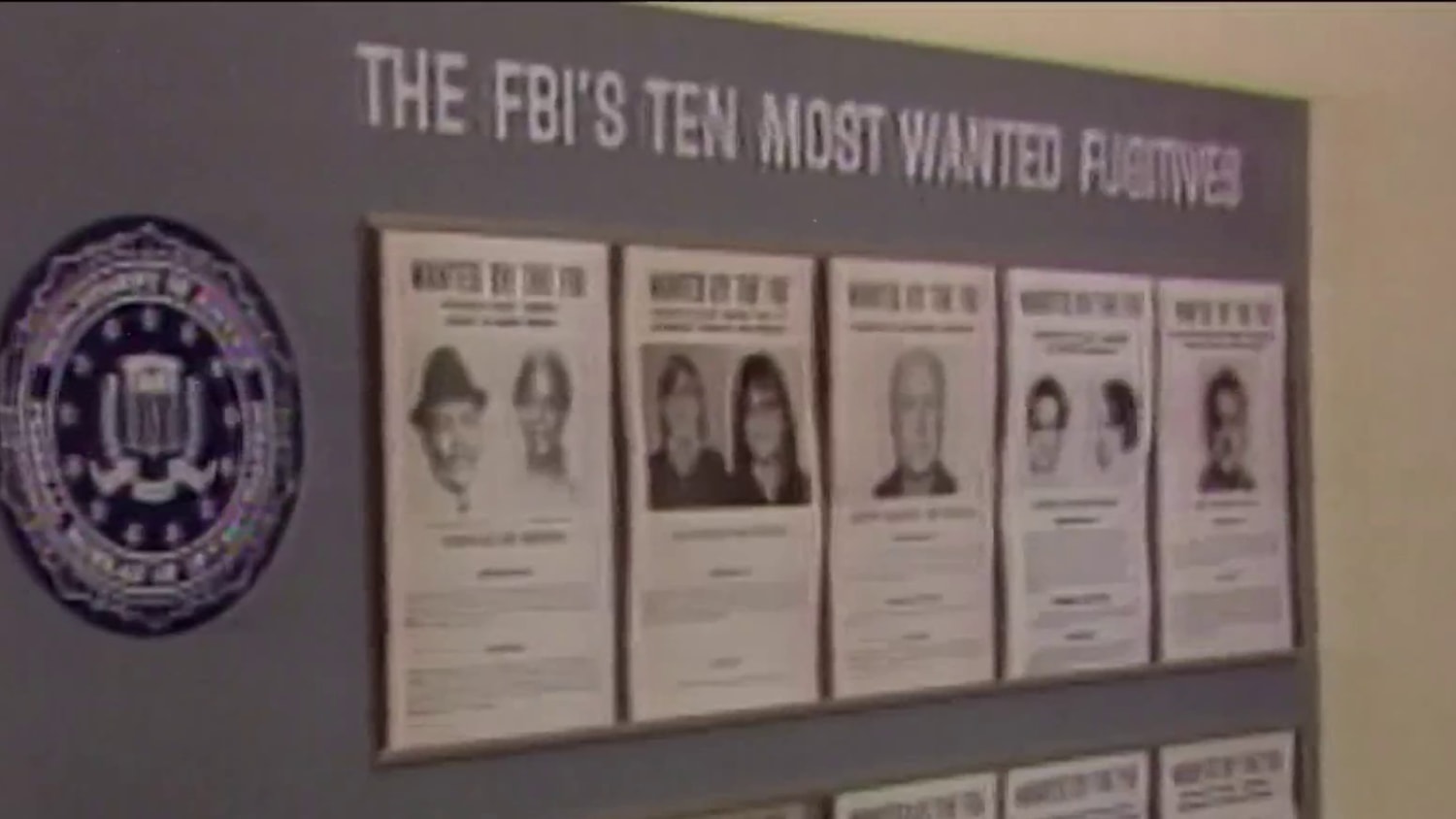
Interpol does not publish an official, ranked "Top 10" list; instead, it issues Red Notices requesting member countries to locate and provisionally arrest individuals. International law enforcement agencies prioritize high-profile fugitives charged with transnational organized crime, terrorism, murder, and massive financial fraud. The following profiles detail ten of the world's most hunted Red Notice subjects, their alleged crimes, and their latest operational status.
Understanding Interpol’s Red Notice System
Popular culture often portrays the International Criminal Police Organization (Interpol) as an international investigative agency with field agents who track and arrest international criminals across borders. In reality, Interpol serves as an intergovernmental communication network connecting police forces across 196 member countries. Interpol does not possess sovereign enforcement powers, its personnel do not carry firearms, and the organization cannot independently arrest anyone.
The cornerstone of Interpol’s fugitive tracking operations is the Red Notice. A Red Notice is not an international arrest warrant; rather, it is a standardized alert circulated to border agencies and law enforcement worldwide. It informs member states that an individual is wanted by a requesting national jurisdiction or an international tribunal for prosecution or to serve a criminal sentence. Each member country determines independently whether a Red Notice carries the domestic legal weight required to arrest an individual, subject to national extradition treaties and local statutory law.
While national agencies like the United States Federal Bureau of Investigation (FBI) maintain statutory "Ten Most Wanted" lists, Interpol maintains a vast database of thousands of active Red Notices. International task forces identify priority targets based on public safety threats, the severity of human rights violations, scale of transnational financial damage, and the risk of continued flight across sovereign jurisdictions.
Detailed Profiles of 10 Priority Interpol Red Notice Fugitives
1. Ruja Ignatova ("The Cryptoqueen")
- Primary Jurisdictions: United States, Germany
- Key Charges: Wire fraud, conspiracy to commit wire fraud, securities fraud, money laundering
- Estimated Illicit Gains: $4 billion+
Ruja Ignatova, a German national born in Bulgaria, founded the fraudulent cryptocurrency project OneCoin in 2014. Marketed as a revolutionary alternative to Bitcoin, OneCoin operated as a global multi-level marketing pyramid scheme. Ignatova and her associates sold educational packages bundled with tokens that supposedly generated massive returns, backed by proprietary blockchain technology. Forensic investigations later revealed that OneCoin never operated an actual public blockchain; the values displayed on user dashboards were fabricated internally.
In October 2017, after federal prosecutors in the United States unsealed a sealed indictment against her and intercepted communications from a wiretapped apartment belonging to her American boyfriend, Ignatova boarded a commercial flight from Sofia, Bulgaria, to Athens, Greece. She vanished upon arrival.
Latest Status: Active fugitive. Ignatova remains on the FBI Ten Most Wanted Fugitives list and subject to an active Interpol Red Notice, with multi-million-dollar rewards offered for information leading to her capture. Investigative reporting has suggested potential ties to Bulgarian organized crime figures and unverified claims of her death in Greece in 2018. However, international law enforcement agencies treat her as alive and evading capture using forged identities, altered physical appearances, and private wealth.
2. Nemesio Rubén Oseguera Cervantes ("El Mencho")
- Primary Jurisdictions: Mexico, United States
- Key Charges: Continuing criminal enterprise, international cocaine, methamphetamine, and fentanyl trafficking, violent weapons offenses
- Organization: Cártel de Jalisco Nueva Generación (CJNG)
Nemesio Oseguera Cervantes is the supreme commander of the Jalisco New Generation Cartel (CJNG), one of Mexico’s most heavily armed and violent transnational criminal syndicates. Rising from regional drug rings in Michoacán and Jalisco, Oseguera Cervantes orchestrated the aggressive expansion of CJNG across Mexico, systematically deploying military-grade weapons, weaponized drones, and armored vehicles against rival cartels and Mexican security forces.
Under his leadership, CJNG established expansive smuggling corridors delivering bulk fentanyl, methamphetamine, cocaine, and heroin into North America, Europe, and parts of Asia. The United States Department of State placed a multi-million-dollar bounty under the Narcotics Rewards Program on his capture.
Latest Status: Active fugitive. Oseguera Cervantes is believed to remain concealed in the mountainous, heavily fortified terrain spanning the borders of Jalisco, Michoacán, and Colima. Mexican military intelligence operations have periodically targeted his inner security circles, but "El Mencho" continues to evade direct capture while orchestrating cartel operations through operational lieutenants.
3. Dawood Ibrahim Kaskar
- Primary Jurisdictions: India, United Nations Sanctions Committee
- Key Charges: Terrorism, murder, targeted extortions, illegal arms smuggling, narcotics trafficking
- Organization: D-Company
Dawood Ibrahim heads "D-Company," an Indian organized crime syndicate originating in the underworld of Mumbai during the 1970s and 1980s. Indian judicial authorities identify Ibrahim as the central mastermind behind the March 1993 Mumbai serial bombings, a coordinated terror attack that detonated twelve vehicular bombs across commercial and civilian hubs, killing 257 people and injuring over 700.
Beyond terrorism, Ibrahim built an international network spanning gold smuggling, real estate manipulation, counterfeit currency distribution, and illicit betting networks across South Asia and the Middle East. The United Nations Security Council designated him a global terrorist under the Al-Qaida Sanctions Committee.
Latest Status: Active fugitive. Indian intelligence agencies have long maintained that Ibrahim resides under tight state-protected security in the upscale Clifton area of Karachi, Pakistan—a claim consistently denied by Pakistani authorities. Despite intermittent reports of chronic health deterioration, Ibrahim remains an active Interpol Red Notice target with an unexecuted international sanctions warrant.
4. Semion Mogilevich ("The Brainy Don")
- Primary Jurisdictions: United States, Ukraine, Russia
- Key Charges: Multi-million-dollar stock manipulation fraud, money laundering, racketeering, mail fraud, wire fraud
- Organization: Red Mafia / Solntsevskaya Bratva Syndicate
Regarded by intelligence agencies as one of the world's most sophisticated organized crime leaders, Semion Mogilevich earned degrees in economics in Ukraine before establishing an international criminal network. During the 1990s, Mogilevich orchestrated a complex cross-border financial fraud scheme centered on YBM Magnex International, a publicly traded Canadian shell company operating from Pennsylvania. The scheme defrauded global investors of more than $150 million through falsified audits, fake shipping manifests, and wash sales.
Mogilevich is also associated with international weapons distribution networks, contract enforcement, and energy-sector money laundering spanning Central and Eastern Europe.
Latest Status: Unextraditable / Active Red Notice. Mogilevich was arrested in Moscow in 2008 on domestic tax evasion charges, but Russian authorities subsequently dropped the charges in 2011. Because the Constitution of the Russian Federation explicitly bars the extradition of Russian citizens to foreign powers, Mogilevich resides openly in Moscow, effectively immune to physical apprehension on his American Red Notice unless he travels beyond Russian borders.
5. Evgeniy Mikhailovich Bogachev ("lucky12345")
- Primary Jurisdictions: United States, United Kingdom
- Key Charges: Computer fraud, bank fraud, aggravated identity theft, racketeering, wire fraud
- Software Weapon: Gameover Zeus Botnet
Evgeniy Bogachev created and directed Gameover Zeus, one of the most destructive and technologically sophisticated banking malware networks in internet history. Unlike conventional centralized malware, Gameover Zeus deployed an encrypted peer-to-peer (P2P) command-and-control infrastructure that made remote remediation extremely difficult.
The malware compromised hundreds of thousands of corporate and financial networks globally, intercepting online banking credentials and conducting unauthorized wire transfers that siphoned over $100 million directly from small businesses, municipal governments, and financial institutions. Bogachev also used the botnet to deploy Cryptolocker ransomware, extorting private entities for digital decryption keys.
Latest Status: Active fugitive / Sanctioned. In May 2014, an international operation led by the FBI and law enforcement partners severed the botnet’s technical infrastructure. Bogachev was formally indicted in Pennsylvania and Nebraska. Like Mogilevich, Bogachev resides within Russian territory (principally in the Black Sea resort area of Anapa), sheltered from Western extradition treaties while maintaining personal assets under domestic jurisdiction.
6. Yulan Adonay Archaga Carías ("Porky")
- Primary Jurisdictions: Honduras, United States
- Key Charges: Racketeering (RICO), conspiracy to import cocaine, weapons offenses involving machine guns
- Organization: Mara Salvatrucha (MS-13)
Yulan Adonay Archaga Carías is the highest-ranking commander of the Mara Salvatrucha (MS-13) gang in Honduras. Under his direction, the gang evolved from localized extortion crews into a disciplined transnational trafficking network. Archaga Carías managed contract killings, weapons procurement, and the importation of multi-ton shipments of cocaine from Colombia and Venezuela through Honduras into the United States.
In 2020, Archaga Carías was in custody at a judicial courthouse in El Progreso, Honduras, when an armed commando team disguised in military police uniforms staged a violent raid, executing multiple security officers and breaking him out of custody.
Latest Status: Active fugitive. Archaga Carías was subsequently added to the FBI Ten Most Wanted Fugitives list, the DEA Most Wanted list, and Interpol’s highest-priority distribution alerts. He operates as an elusive fugitive moving between clandestine safe houses in Central America while coordinating transnational MS-13 operations.
7. Bhadreshkumar Chetanbhai Patel
- Primary Jurisdictions: United States (State of Maryland)
- Key Charges: First-degree murder, second-degree murder, first-degree assault, second-degree assault, unlawful flight to avoid prosecution
Bhadreshkumar Chetanbhai Patel is wanted by federal and local authorities in Maryland for the violent premeditated murder of his wife, Palak Patel, inside a commercial kitchen in Hanover, Maryland, in April 2015. Both Patel and his wife were working an evening shift at a food service franchise when, according to surveillance footage and forensic evidence, Patel lured his wife into an area out of customer view, attacked her with a large kitchen knife, and fled the premises.
Patel returned to his nearby apartment, retrieved personal belongings and cash, took a taxi to a hotel near Newark Liberty International Airport in New Jersey, and was last seen boarding an airport shuttle.
Latest Status: Active fugitive. Patel vanished without utilizing his genuine Indian passport for manifest commercial air travel, suggesting assistance from personal networks or fraudulent travel documentation. The FBI offers an exceptional six-figure reward for his apprehension under an active Interpol Red Notice, targeting communities across the United States, Canada, and India.
8. Fausto Isidro Meza Flores ("Chapo Isidro")
- Primary Jurisdictions: Mexico, United States
- Key Charges: International conspiracy to distribute heroin, methamphetamine, cocaine, and marijuana, violent firearms offenses
- Organization: Meza Flores Transnational Criminal Organization (formerly affiliated with the Beltrán-Leyva Cartel)
Fausto Isidro Meza Flores gained prominence within the Sinaloa-based criminal landscape as a principal armed lieutenant and enforcer for the Beltrán-Leyva Organization (BLO). When violent rivalries erupted between the Beltrán-Leyva brothers and the Sinaloa Cartel leadership headed by Joaquín "El Chapo" Guzmán, Meza Flores led private shock troops in northern Sinaloa, holding tactical control over key transit points.
Following the death and arrest of historical BLO founders, Meza Flores consolidated his own autonomous criminal syndicate, the Meza Flores Transnational Criminal Organization. He controls vast clandestine processing laboratories and international maritime distribution pipelines moving tons of illicit synthetic and plant-based drugs into the United States.
Latest Status: Active fugitive. Indicted in the U.S. District Court for the District of Columbia, Meza Flores remains an elusive target in Mexico. Despite persistent law enforcement operations by the Mexican Navy (SEMAR) in his primary operational hubs in Guasave and Los Mochis, he avoids capture by maintaining deep intelligence networks and mobile security perimeters.
9. Alexis Flores
- Primary Jurisdictions: United States (Commonwealth of Pennsylvania)
- Key Charges: Kidnapping, unlawful flight to avoid prosecution, murder of a child
Alexis Flores is wanted for the July 2000 abduction, sexual assault, and murder of five-year-old Iriana DeJesus in Philadelphia, Pennsylvania. The child was reported missing from her neighborhood and was discovered five days later inside the basement of a nearby abandoned apartment complex, strangled to death.
At the time of the crime, Flores was known in the neighborhood by the alias "Carlo," an itinerant worker given shelter by local residents. Flores fled the area immediately following the murder. In 2004, Flores was arrested in Arizona under the alias "Alexes Contreras" for identity fraud and forgery. After serving an Arizona state sentence, he was deported to his native Honduras in 2005 before automated DNA database cross-checks matched his profile to evidence collected from the Philadelphia murder scene.
Latest Status: Active fugitive. Once the national DNA database (CODIS) confirmed the forensic match in 2006, federal arrest warrants and an Interpol Red Notice were executed. Authorities suspect Flores is sheltering within remote rural regions of Honduras or neighboring Central American nations under altered personal identities.
10. Ryan James Wedding ("El Jefe")
- Primary Jurisdictions: United States, Canada
- Key Charges: Continuing criminal enterprise, murder in connection with a continuing criminal enterprise, conspiracy to distribute cocaine, export offenses
- Background: Former Olympic Snowboarder turned Transnational Cartel Kingpin
Ryan James Wedding represented Canada as an Olympic snowboarder at the 2002 Winter Olympics in Salt Lake City before turning to international narcotics trafficking. Wedding served a prior federal prison sentence in the United States for drug trafficking charges in the late 2000s, but upon release, he established relationships with Mexican cartels, including the Sinaloa Cartel.
In 2024, the United States Department of Justice unsealed a sweeping federal indictment charging Wedding with orchestrating an enterprise that moved multi-ton shipments of cocaine from Colombia through Mexico and California into Canada. The indictment explicitly links Wedding to contract murders carried out against perceived informants and witnesses, transforming him into one of North America's most wanted international fugitives.
Latest Status: Active fugitive. Wedding fled his residence in Montreal, Canada, and is believed to be residing in Mexico under the direct physical protection of Mexican cartel factions. Federal authorities in the United States and Canada, backed by an active Interpol Red Notice, continue to target his financial and logistics infrastructure.
Comparative Matrix: High-Priority Fugitives
| Name | Primary Alleged Crime | Requesting Country | Est. Flight Year | Current Presumed Location |
|---|---|---|---|---|
| Ruja Ignatova | $4B+ Cryptocurrency Wire Fraud / MLM Scheme | United States / Germany | 2017 | Unknown (Europe / Middle East) |
| Nemesio Oseguera Cervantes | Transnational Fentanyl / Methamphetamine Trafficking | United States / Mexico | 2011 | Jalisco / Michoacán, Mexico |
| Dawood Ibrahim | Terrorism (1993 Mumbai Bombings), Racketeering | India | 1993 | Karachi, Pakistan |
| Semion Mogilevich | Public Company Stock Fraud, Transnational Money Laundering | United States | 2003 | Moscow, Russian Federation |
| Evgeniy Bogachev | Cyber Theft ($100M+ Banking Malware), Wire Fraud | United States | 2014 | Anapa, Russian Federation |
| Yulan Archaga Carías | MS-13 Transnational Leadership, Murder, Drug Importation | United States / Honduras | 2020 | Central America |
| Bhadreshkumar Patel | First-Degree Murder (Spousal Homicide) | United States | 2015 | Unknown (India / North America) |
| Fausto Meza Flores | Large-Scale Cocaine, Heroin, and Methamphetamine Distribution | United States | 2012 | Sinaloa, Mexico |
| Alexis Flores | Child Kidnapping, Sexual Assault, Premeditated Murder | United States | 2005 | Honduras / Central America |
| Ryan James Wedding | Transnational Cocaine Trafficking, Contract Murders | United States / Canada | 2024 | Mexico |
How Law Enforcement Coordinates Cross-Border Extraditions
Tracking an international fugitive across borders requires coordination between international databases, national investigative bureaus, and bilateral diplomatic channels. The apprehension and repatriation lifecycle follows a strict sequence:
- National Warrant Issuance: An authorized judicial authority in a sovereign state issues a domestic warrant for an individual's arrest based on probable cause or criminal conviction.
- NCB Submission: The state's National Central Bureau (NCB)—the designated domestic office interfacing with Interpol, such as Interpol Washington in the United States—reviews the warrant to ensure it complies with the Constitution of the International Criminal Police Organization. Article 3 of Interpol's constitution strictly forbids requests based on political, military, religious, or racial matters.
- Red Notice Publication: Interpol’s General Secretariat in Lyon, France, evaluates the submission through a dedicated compliance task force. Once vetted, the notice appears on international police surveillance networks.
- Border Interdiction and Provisional Arrest: When an individual enters a foreign port or passes a biometric passport control terminal, a hit against the Red Notice triggers an alert. The host country temporarily detains the individual under a provisional arrest framework, pending diplomatic notification.
- Formal Extradition Hearings: The requesting state receives notice of detention and must submit a formal extradition package within statutory deadlines (frequently between 30 and 60 days, dictated by relevant bilateral treaties). The domestic courts of the arresting nation examine the evidence to confirm dual criminality—meaning the alleged offense constitutes a crime in both jurisdictions.
- Executive Surrender: Once cleared by judicial authorities and signed by the executive branch (such as a Ministry of Justice or Department of State), the fugitive is surrendered into the physical custody of marshals or federal agents from the requesting state for transport.
Legal Limitations and Sovereignty Challenges
Interpol’s operations encounter significant structural barriers rooted in international public law, realpolitik, and sovereign constitutional protections.
Extradition Prohibitions for Nationals
Many sovereign nations, including the Russian Federation, France, Germany, and Brazil, maintain clear constitutional provisions that strictly forbid the extradition of their own citizens to foreign jurisdictions. When high-priority fugitives like Semion Mogilevich or Evgeniy Bogachev reside within their native borders, foreign Red Notices cannot trigger extradition. The requesting state must either convince the host nation to initiate domestic prosecution under local laws or wait for the target to travel through a jurisdiction willing to extradite them.
State-Sponsored Safe Harbors and Disputed Borders
Fugitives charged with state-linked cyber activity, financial crimes, or political espionage often operate with the tacit approval or active protection of domestic intelligence services. When cross-border political relations deteriorate, mutual legal assistance treaties (MLATs) and law enforcement channels break down, rendering Interpol alerts functionally dormant within those non-cooperative states.
The Abuse of Article 3 and Political Notices
Authoritarian regimes have historically attempted to weaponize the Red Notice system to target political dissidents, exiled journalists, and business rivals. While the Commission for the Control of INTERPOL's Files (CCF) filters out unlawful requests, sovereign member states occasionally scrutinize Red Notices with skepticism, requiring independent judicial review before initiating arrests.
Frequently Asked Questions
Does Interpol have its own armed agents to arrest fugitives?
No, Interpol does not employ armed tactical field agents and has no authority to make physical arrests. Interpol functions strictly as an administrative, technical, and communication network. Every apprehension triggered by an Interpol alert must be carried out exclusively by local, sovereign law enforcement officers operating within the domestic laws of the host nation.
What is the practical difference between an Interpol Red Notice and an arrest warrant?
An arrest warrant is a domestic legal instrument signed by a judge or magistrate authorizing police to seize an individual within that specific country's jurisdiction. An Interpol Red Notice is an international notification requesting foreign law enforcement agencies to locate and provisionally arrest that person pending formal extradition proceedings. A Red Notice cannot compel a foreign state to make an arrest.
Can an individual check if they have an active Interpol Red Notice?
A person can formally petition the Commission for the Control of INTERPOL's Files (CCF) in Lyon, France, to request disclosure of whether their personal data is retained within Interpol databases. While Interpol displays a segment of Red Notices on its public website for community tracking purposes, many remain classified under law enforcement-only access to prevent alerting fugitives to ongoing investigations.
How long does an Interpol Red Notice remain active?
An Interpol Red Notice remains valid for an initial statutory duration of five years. However, the requesting National Central Bureau can apply to renew the notice indefinitely if the underlying domestic arrest warrant remains active and the subject has not been located or extradited. If the requesting state withdraws the domestic warrant, or if the CCF rules the notice non-compliant with Interpol rules, the notice is removed immediately.
Why does the United States FBI maintain a Ten Most Wanted list while Interpol does not?
The FBI Ten Most Wanted Fugitives list is an American administrative program established in 1950 to generate public tips for specific federal investigations. Interpol represents 196 distinct sovereign nations with widely divergent judicial priorities. Ranking ten individuals above thousands of other fugitives across hundreds of jurisdictions would create political friction between member states. Instead, Interpol treats all validated Red Notices as actionable law enforcement notifications.
Reporting Sightings and Next Actions
If you obtain verifiable intelligence regarding the location of an individual subject to an active Interpol Red Notice:
- Do Not Attempt Direct Apprehension: Fugitives subject to Red Notices often operate within violent transnational networks, maintain armed bodyguards, or carry lethal weapons.
- Submit Information to Domestic Police: Contact local or national police departments immediately. Domestic law enforcement agencies coordinate directly with their respective National Central Bureau to alert foreign partners.
- Use Official Tip Portals: Verified tips can be submitted via the official Interpol Contact Form or national agency equivalents, such as the FBI Tips platform or the United States Department of State Rewards for Justice portal, which manage multi-million-dollar rewards for qualified fugitive information.