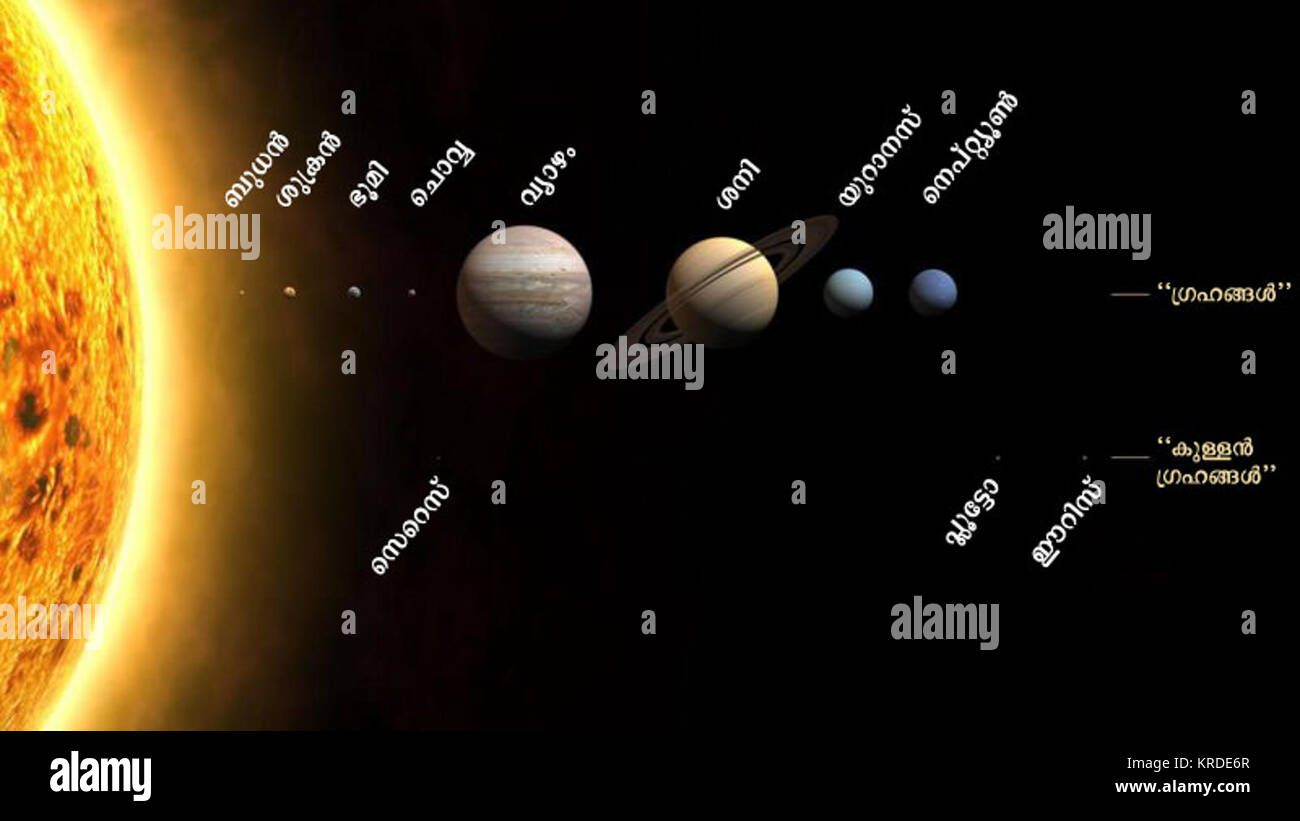
Exploring the universe reveals a breathtaking variety of worlds, ranging from scorching rocky spheres to massive gas giants and mysterious worlds orbiting distant stars. This guide takes you on an immersive journey across six fascinating planets, spanning our own solar system and reaching out into the uncharted depths of extrasolar space to examine what makes each destination unique.
Planetary science is a dynamic branch of astronomy that combines geology, physics, atmospheric chemistry, and astrobiology. By examining planetary formation, orbital mechanics, and magnetospheres, researchers piece together how celestial bodies evolve and whether they might harbor the conditions necessary for life. Whether looking at the dense, crushing pressure of Venus or the frigid, hydrocarbon lakes of Saturn's largest moon, each planetary body serves as a natural laboratory for understanding universal laws. This guide explores six extraordinary planets—highlighting their physical characteristics, atmospheric dynamics, and scientific significance.
1. Mercury: The Extreme Messenger
Mercury is the smallest and closest planet to the Sun. Despite its proximity to our star, it is not actually the hottest planet—that title belongs to Venus—but it experiences the most extreme temperature fluctuations in the solar system.
Surface Characteristics and Geology
Mercury’s surface closely resembles Earth's Moon, heavily cratered and scarred by ancient impacts. It features massive cliffs known as lobate scarps, which formed billions of years ago as the planet's iron core cooled and contracted, causing the crust to buckle. Because Mercury lacks a substantial atmosphere to trap heat or weather down impact sites, these geological features remain remarkably well-preserved over eons.
Atmospheric Thinness and Temperature Extremes
The planet possesses an extremely thin exosphere rather than a true atmosphere, composed primarily of oxygen, sodium, hydrogen, helium, and potassium, stripped from the surface by solar wind and meteorite impacts. Without an insulating blanket of air, daytime temperatures on Mercury can skyrocket to 430 degrees Celsius (800 degrees Fahrenheit), while nighttime temperatures plummet to minus 180 degrees Celsius (minus 290 degrees Fahrenheit). Remarkably, radar observations have detected water ice tucked inside permanently shadowed craters at the planet's poles, where sunlight never reaches.
2. Venus: Earth's Toxic Twin
Venus is often called Earth’s twin because of their similar size, mass, and rocky composition. However, running away down a greenhouse-effect spiral turned Venus into a hostile, hellish world.
The Runaway Greenhouse Effect
Venus is enveloped in a thick, dense atmosphere composed primarily of carbon dioxide, with clouds of corrosive sulfuric acid. This thick layer traps incoming solar radiation in a runaway greenhouse effect, driving surface temperatures up to 465 degrees Celsius (870 degrees Fahrenheit)—hotter than Mercury. The atmospheric pressure at the surface is equivalent to being nearly 900 meters (3,000 feet) underwater on Earth, or roughly 92 times Earth's atmospheric pressure.
Surface Features and Volcanism
Radar mapping by spacecraft such as NASA's Magellan has revealed a landscape dominated by vast volcanic plains, highland regions, and unique structures called corona—large, circular ring-like formations caused by upwelling magma plumes. While tectonic plate activity like Earth's does not occur on Venus, global volcanic resurfacing events have heavily shaped its modern topography.
3. Mars: The Red Planet and Search for Past Life
Mars has captured human imagination for generations as the most accessible and Earth-like world for potential colonization and the search for biosignatures.
Geology and Topography
The Red Planet gets its distinctive color from iron oxide (rust) dust covering its surface. Mars is home to dramatic topographical extremes, including Olympus Mons, the tallest volcano in the solar system, which stands nearly three times the height of Mount Everest. It also features Valles Marineris, a colossal system of canyons that would stretch across the entire United States.
Water History and Habitability
Orbiter data, surface rovers, and landers have provided definitive proof that ancient Mars possessed liquid water, flowing rivers, and standing lakes. Today, water on Mars is locked away as ice in polar caps and subsurface permafrost. Studying Martian geology helps scientists understand planetary climate shifts and assess whether microbial life could have existed there billions of years ago.
| Planet | Distance from Sun (AU) | Primary Composition | Surface Temperature Range | Notable Feature |
|---|---|---|---|---|
| Mercury | 0.39 | Rock, Iron Core | -180°C to 430°C | Extreme thermal shifts and lobate scarps |
| Venus | 0.72 | Rock, Carbon Dioxide | ~465°C constant | Runaway greenhouse effect and crushing pressure |
| Mars | 1.52 | Rock, Iron Oxide | -143°C to 35°C | Olympus Mons and ancient river valleys |
| Jupiter | 5.20 | Hydrogen, Helium | -110°C (cloud tops) | Great Red Spot and massive magnetic field |
| Saturn | 9.58 | Hydrogen, Helium | -140°C (cloud tops) | Extensive, bright ring system |
| HD 209458 b | ~153 light-years | Gas (Exoplanet) | ~1,000°C+ | Evaporating hydrogen tail (Hot Jupiter) |
4. Jupiter: The King of the Solar System
Jupiter is the largest planet in our solar system, possessing more mass than all other planets combined. It serves as a celestial anchor, and its immense gravity helps shape the orbital dynamics of the entire system.
Atmospheric Bands and Storms
As a gas giant, Jupiter has no solid surface; it is composed primarily of hydrogen and helium under increasing pressure. Its upper atmosphere is organized into distinct colorful belts and zones driven by powerful zonal winds. The most iconic feature is the Great Red Spot, a colossal storm larger than Earth that has been raging for at least three centuries.
Magnetosphere and Moons
Jupiter generates the largest and most powerful planetary magnetic field in the solar system, spanning millions of kilometers into space. It also commands an extensive system of at least 95 recognized moons, including the four Galilean satellites: Io (volcanically active), Europa (possessing a subsurface liquid ocean), Ganymede (the solar system's largest moon), and Callisto (heavily cratered and ancient).
5. Saturn: The Crown Jewel of the Rings
Saturn is famed for its breathtaking and complex ring system, making it one of the most visually distinctive objects in the cosmos.
The Ring System
Saturn’s rings are not solid structures; instead, they are composed of countless billions of individual particles ranging in size from microscopic dust grains to house-sized boulders. Made almost entirely of pure water ice with rocky impurities, these rings span hundreds of thousands of kilometers in width while remaining remarkably thin—often less than 10 meters thick in most places.
Internal Dynamics and Enceladus
Like Jupiter, Saturn is a gas giant with a swirling atmosphere of hydrogen and helium, featuring high-speed jet streams and hexagonal storm patterns at its north pole. One of Saturn's smaller icy moons, Enceladus, has captured intense scientific interest due to geysers erupting from its south pole, spewing water vapor, salt, and organic molecules from a global subsurface ocean into space.
6. HD 209458 b (Osiris): The Exotic Exoplanet
Stepping beyond our solar system into extrasolar territory introduces us to worlds that defy conventional expectations, such as HD 209458 b, informally known as Osiris.
Discovery and Classification
Located roughly 153 light-years away in the constellation Pegasus, HD 209458 b was a historic milestone in astronomy: it was the first exoplanet to be detected via the transit method (blocking starlight as it passes in front of its parent star) and the first whose atmosphere was directly spectroscopically analyzed.
Extreme Physics and Atmospheric Evaporation
Classified as a "Hot Jupiter," this planet orbits extremely close to its parent star—completing a full orbit in just 3.5 Earth days. Because of this intense stellar proximity, surface temperatures soar past 1,000 degrees Celsius. Ultraviolet observations have revealed that the star's heat is literally boiling away the planet's atmosphere, stripping off hydrogen, carbon, and oxygen to form a giant evaporating comet-like tail stretching behind it.
Conclusion
From the cratered, sun-scorched plains of Mercury to the evaporating fringes of distant exoplanets like HD 209458 b, planetary science demonstrates the vast diversity of physical laws in action. Studying these six worlds provides essential context for understanding Earth's climate history, its place in the cosmos, and the ongoing search for habitable environments across the galaxy.