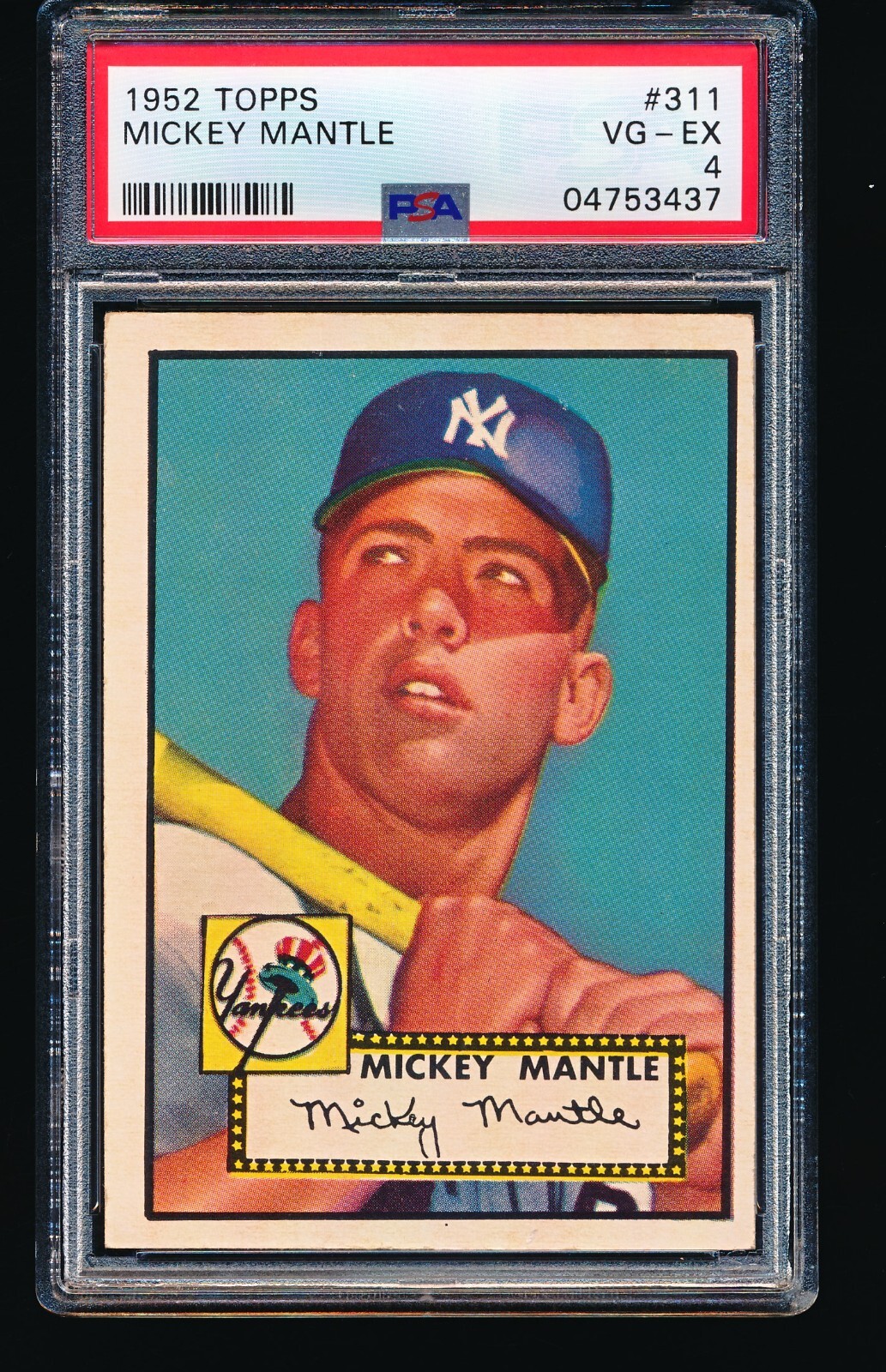
The 1952 Topps baseball card set is widely considered the most important post-war issue in the hobby, serving as the blueprint for modern trading cards. Featuring the debut of the iconic 2-5/8" by 3-3/4" card size and the legendary Mickey Mantle rookie card, the set remains the primary benchmark for vintage baseball card collecting, investment, and historical sports documentation in 2026.
The Genesis of the 1952 Topps Revolution
In the early 1950s, the baseball card industry was dominated by the Bowman Gum Company. Topps, a New York-based chewing gum manufacturer, sought to disrupt this monopoly. Under the leadership of Sy Berger, the company designed a set that was markedly different from the smaller, square-shaped cards produced by their competitors. The 1952 set was significantly larger, utilizing a vivid, color-forward design that included team logos, player autographs, and detailed biographies on the reverse side.
This set was distributed in series throughout the 1952 season, a tactical decision that unintentionally created one of the most famous rarities in collecting history. The first few series were distributed widely, but the final series—cards numbered 311 through 407—saw poor sales and limited distribution. Many of these cards sat in a warehouse for years before eventually being dumped into the Atlantic Ocean in 1960. This event cemented the status of high-number cards, particularly the #311 Mickey Mantle, as the most sought-after prizes in the hobby.
Identifying and Verifying Authentic Cards
Due to the immense value of the 1952 Topps set, verification of authenticity is the most critical step for any collector or investor. The market is saturated with high-quality reprints and sophisticated forgeries. Before purchasing any high-value card, you must understand the physical characteristics that differentiate original 1952 stock from reproductions.
Physical Characteristics to Inspect
- Card Dimensions: Original cards measure exactly 2-5/8" by 3-3/4". Any deviation in these dimensions is an immediate red flag.
- Card Stock: Original cards were printed on a thick, off-white to cream-colored porous cardboard. Reprints often utilize bright white, clay-coated, or glossy modern card stock.
- Printing Process: The 1952 set was printed using a lithographic process. Under a 10x jeweler’s loupe, authentic cards show a distinct dot pattern consistent with 1950s printing technology. Modern digital reprints often show a solid ink flow or a modern, uniform CMYK rosette pattern that looks synthetic.
- Back Consistency: The card backs feature a distinct, specific grey or beige tone. The ink used for the biographies should appear slightly absorbed into the paper, not sitting on top of a glossy finish.
The Mickey Mantle Factor: Card #311
The Mickey Mantle card (#311) is the pillar of the 1952 Topps set. While not technically his true rookie card (which is his 1951 Bowman issue), it is his first Topps card and serves as the definitive icon of the vintage era.
The scarcity of this card is amplified by its position in the high-number series. Because it was released late in the season, fewer were pulled from packs. Combined with the aforementioned destruction of the high-number inventory, the card’s scarcity is a matter of historical fact. When evaluating a Mantle #311, focus on centering, corner sharpness, and surface integrity. Given the high price points in the 2026 market, professional grading from organizations like PSA, SGC, or CGC is strongly recommended to confirm condition and authenticity.
Categorization of the Set
The set consists of 407 cards, which can be grouped into segments based on rarity and demand. Understanding these categories is essential for anyone attempting to build a collection or calculate the financial requirements for entry.
| Segment | Card Numbers | Significance |
|---|---|---|
| Low Numbers | 1–80 | Common, widely distributed, high volume of surviving stock. |
| Mid Numbers | 81–310 | Steady availability; includes several Hall of Famers. |
| High Numbers | 311–407 | Scarce, including the Mantle #311 and Jackie Robinson. |
| Stars/Short Prints | Various | Cards featuring legends with high visual appeal or scarcity. |
Investment and Maintenance Considerations
Investing in the 1952 Topps set in 2026 requires a high degree of risk management. Because the cards are printed on porous paper, they are extremely susceptible to environmental degradation. Humidity can cause the cards to warp, while ultraviolet light will cause the vibrant colors to fade.
Best Practices for Preservation
- Climate Control: Maintain a consistent humidity level between 40% and 50%. Excess moisture leads to foxing (brown spots caused by fungal growth).
- UV Protection: Store cards in UV-protected slabs or holders. Never display original 1952 cards in direct sunlight, regardless of the frame quality.
- Handling: Always use clean, dry hands. Even small amounts of natural skin oil can cause long-term staining on the porous card stock of the early 1950s.
- Grading: For investment-grade cards, professional grading is not optional. A graded card provides a standardized evaluation of the card’s condition, which is the primary driver of its market value.
Common Pitfalls for New Collectors
One of the most frequent mistakes made by newcomers is failing to distinguish between "reprints" and "originals." Topps has produced several anniversary sets over the decades (such as the 1996 or 2002 sets) that replicate the 1952 design. While these are collectible in their own right, they have significantly lower market values than the 1952 originals.
Another pitfall is the "trimmed" card. Because corners are a primary factor in the grade of a card, dishonest sellers sometimes trim the edges of a card to make rounded or frayed corners appear sharp. If you are purchasing a high-grade card, ensure the certificate of authenticity specifically states that the card has not been trimmed or altered.
Frequently Asked Questions
Are all 1952 Topps cards equally valuable? No. Value is determined by player prominence, card condition, and scarcity. While common players from the low-number series may be affordable, high-number cards and star players carry significant premiums.
How do I identify a 1952 Topps reprint? Most modern reprints include a "Topps" logo watermark on the back, or they may be labeled as "Reprints" or "Anniversary" editions. If a card looks brand new, lacks the natural aging of 74-year-old paper, and is being sold for a fraction of the market rate for an original, it is almost certainly a reprint.
Why is the 1952 Topps set more popular than the 1951 Bowman set? The 1952 Topps set is favored for its larger size, vivid color photography, and the inclusion of the Mickey Mantle card. It essentially created the standard visual language for the modern baseball card.
What is the "Atlantic Ocean Find"? This refers to the historical fact that in 1960, Topps management, needing warehouse space, dumped millions of unsold 1952 high-number series cards into the Atlantic Ocean. This drastically reduced the supply, making the high-number cards far more valuable today.
Is it safe to buy raw (ungraded) 1952 Topps cards? Buying raw cards is inherently risky, even for experienced collectors. Unless you have significant expertise in identifying authentic card stock and printing techniques, it is safer to purchase cards that have already been authenticated and graded by a major grading service.
Final Action Plan for Collectors
If you are looking to acquire a piece of 1952 Topps history, start by defining your goal: are you looking for a single high-profile card, such as the Jackie Robinson or Mickey Mantle, or are you attempting to collect a "set-builder" grade collection of common players?
For your first purchase, target a mid-number common player in a lower grade (such as PSA 2 or 3). This allows you to study the authentic paper, the printing process, and the specific texture of the card stock without the massive financial barrier of a high-grade star card. Once you are comfortable with the feel and look of an original, you can move toward more significant acquisitions. Always prioritize purchasing from reputable dealers or established auction houses that provide a guarantee of authenticity and a clear return policy.